
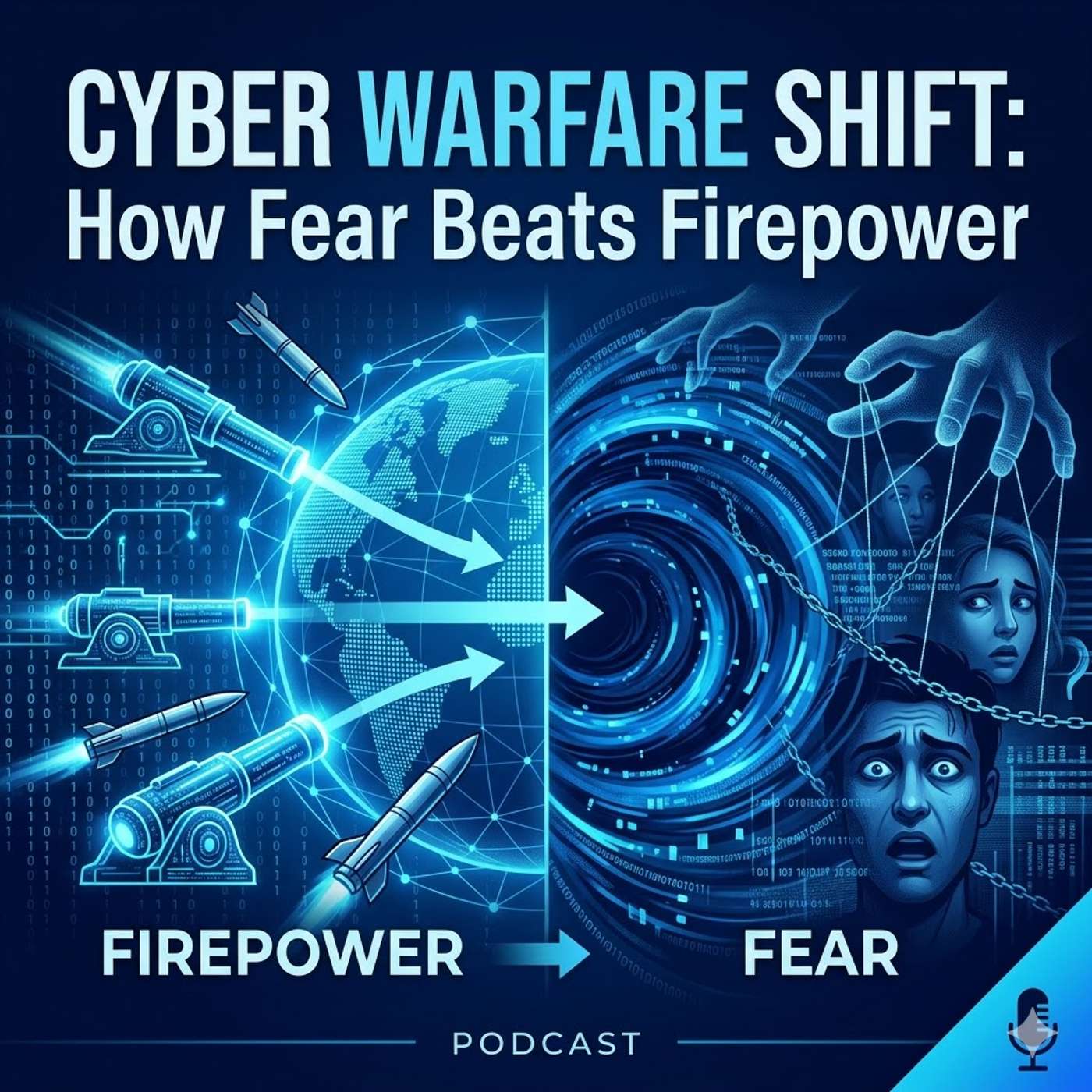





What happens when a cyberattack does not need to destroy your systems to change your behavior?
In this episode of Vipod.ai, Mike and Susan explore the growing role of threat projection in modern cyber conflict — a strategy where the perception of a massive digital threat can be more powerful than the actual technical attack behind it.
The conversation begins with a surprising contrast: some nations may not have the most advanced hacking tools, but they can still create major political and economic impact by manipulating fear, uncertainty, and public perception. Instead of relying only on sophisticated malware or zero-day exploits, these actors amplify minor disruptions into narratives of total network domination.
You’ll hear how Mike and Susan break down:
- Why modern cyber conflict is no longer just a technical arms race
- How threat projection turns small incidents into major crises
- Why public fear can create more damage than the breach itself
- How ransomware groups use bluffing, countdown clocks, and panic
- Why cyber operations are often tied to real-world physical attacks
- How digital claims can disrupt shipping, insurance, and supply chains
- Why cyber activity may continue even after kinetic conflict pauses
- How transparency can weaken psychological cyber warfare
The episode also examines how cyber intimidation connects to broader geopolitical pressure. From corporate boardrooms to global trade routes, exaggerated digital threats can force expensive decisions, restrict movement, and create economic friction — even when the actual technical capability remains unclear.
Mike and Susan also bring the lesson back to everyday digital life. Phishing emails, breach rumors, and disinformation campaigns all rely on the same psychological mechanism: triggering fear before facts can catch up.
This episode is a sharp, timely look at cyber warfare, information manipulation, ransomware tactics, geopolitical risk, and the importance of radical transparency in an era where perception can become a weapon.
Subscribe to Vipod.ai for more conversations on cybersecurity, digital conflict, information warfare, geopolitics, and the forces shaping the future of trust online.