
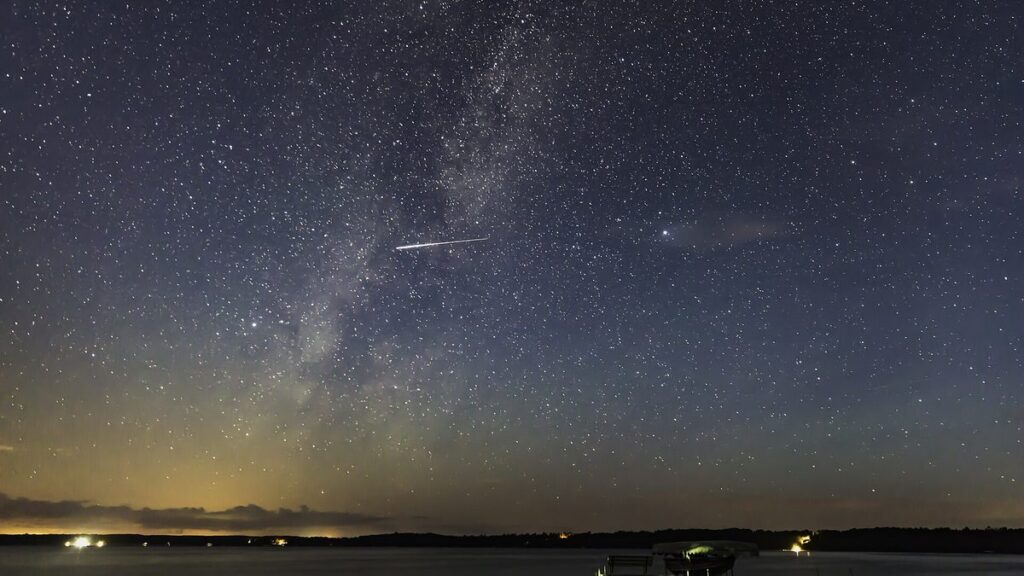
- The 2026 Perseids peak on the night of August 12–13, with the predicted maximum at 14:53 UTC on August 13 and strong rates on both surrounding nights.
- A new moon falls on August 12 — the same day as the peak — so the sky stays moon-free all night, something recent Perseid years didn’t get.
- The best viewing is always between midnight and dawn, because the shower’s radiant point climbs high in the sky during those hours.
- Under truly dark rural skies, observers often report 50 to 90 meteors per hour near the peak; suburbs and cities see far fewer.
- The same new moon that darkens the Perseids also causes a total solar eclipse over Greenland, Iceland, and Spain on August 12 — two sky events from one lineup.
Every August, Earth flies through a river of comet dust, and the sky puts on its best free show of the year. But here’s the thing most people don’t know: the Perseid meteor shower 2026 is not just another August rerun. This year, the peak night of August 12–13 lands on the exact same day as a new moon. That means no moonlight at all — just deep, dark sky from dusk to dawn. The last few summers, a bright moon washed out most of the show. In 2026, the lights are finally off. If you’ve been waiting for the right year to drive somewhere dark and really see this thing, this is the year. Let’s walk through exactly when to watch, where to go, and what you’ll actually see.
Why the 2026 Perseids Are a Once-in-Several-Years Setup
Here’s the simple truth about meteor showers: the meteors don’t change much from year to year. The Perseids deliver roughly the same amount of comet dust every August. What changes — wildly — is the Moon. A bright moon acts like a giant streetlight parked in the sky. It washes out every faint meteor, and faint meteors make up most of the show. So the real question every Perseid year is not “how good is the shower?” It’s “where is the Moon?”
In 2026, the answer is: gone. The new moon arrives on August 12 at 17:37 UTC, according to EarthSky — the very same day the shower reaches maximum. A new moon sits right next to the Sun in the sky, so it rises and sets with the Sun and never shows up at night. That gives you a completely moonless sky for the entire peak night, and for several nights on either side of it. The American Meteor Society lists the Moon at 0% full for the 2026 peak and calls the conditions optimum.
Now compare that to what skywatchers just lived through. In 2025, the peak came only a few days after a full moon, so a waning gibbous moon — roughly 85% lit — hung in the sky through the best viewing hours and erased all but the brightest streaks. Many stargazing guides told people to skip the peak entirely that year and watch in late July instead. That’s how much the Moon matters: it can turn a 75-meteor hour into a 10-meteor hour without the shower itself changing at all. A peak-night new moon like 2026’s only lines up once every several years, because the Moon’s phases drift about 11 days earlier each year relative to the calendar. When the drift and the peak finally meet, you get a year like this one. Don’t waste it.
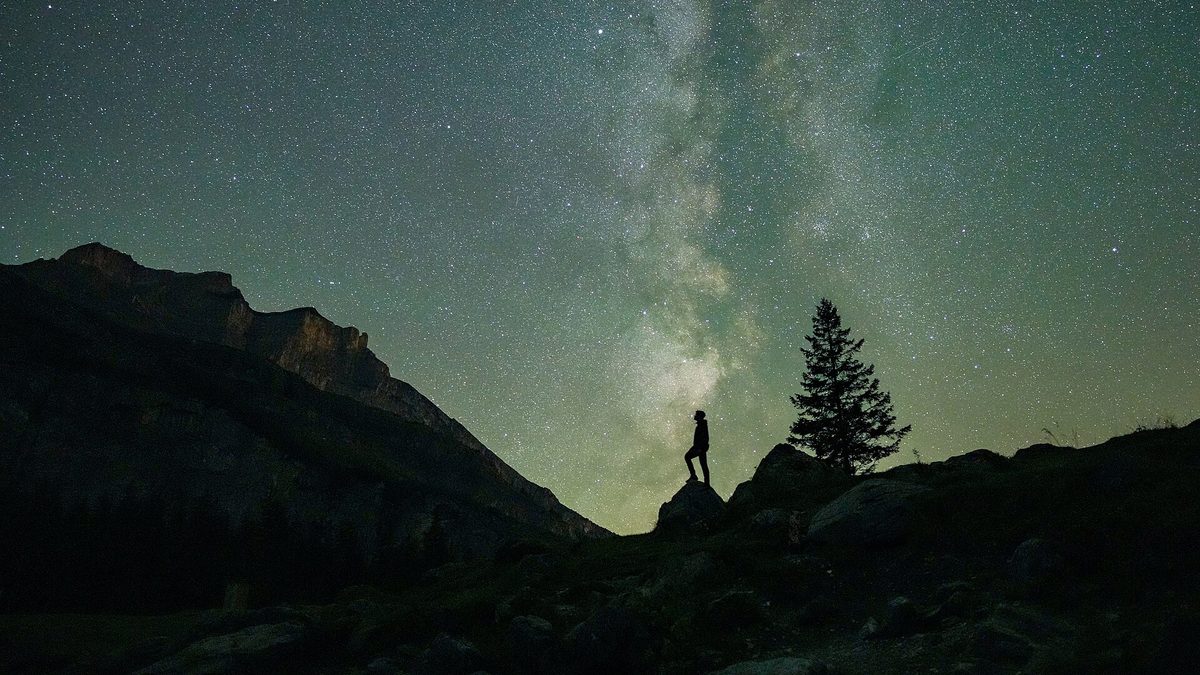
When the Perseid Meteor Shower 2026 Peak Happens in Your Time Zone
Astronomers predict the exact moment of maximum activity — the Perseid meteor shower 2026 peak — at 14:53 UTC on August 13. Here’s the catch: that instant falls in the middle of the morning for the United States. At 14:53 UTC it’s 10:53 a.m. in New York and 7:53 a.m. in Los Angeles. The Sun is up. You can’t watch a meteor shower at brunch.
So what do you do? You watch the dark hours that bracket the peak. The Perseids don’t spike and vanish in a single hour; the shower builds for weeks and stays near its best for a day or more around maximum. For the mainland U.S., that means two prime windows: the pre-dawn hours of Wednesday, August 12, and the pre-dawn hours of Thursday, August 13. The morning of August 13 sits closest to the predicted maximum, so if you can only pick one alarm to set, pick that one. East Coast watchers on the morning of the 13th are only about six to seven hours ahead of the peak instant — close enough to catch rates near their best.
| Time Zone | Peak Instant (Aug 13) | Best Dark-Sky Windows |
|---|---|---|
| Eastern (EDT) | 10:53 a.m. (daylight) | Midnight–4:45 a.m. on Aug 12 and Aug 13 |
| Central (CDT) | 9:53 a.m. (daylight) | Midnight–4:45 a.m. on Aug 12 and Aug 13 |
| Mountain (MDT) | 8:53 a.m. (daylight) | Midnight–4:45 a.m. on Aug 12 and Aug 13 |
| Pacific (PDT) | 7:53 a.m. (daylight) | Midnight–4:30 a.m. on Aug 12 and Aug 13 |
| Alaska (AKDT) | 6:53 a.m. (twilight) | 1:00–4:00 a.m. on Aug 12 and Aug 13 |
| Hawaii (HST) | 4:53 a.m. (still dark) | Midnight–5:30 a.m. on Aug 13 — includes the actual peak |
One more planning note. The shower is active from about July 17 through August 24, per the American Meteor Society. Rates climb slowly through late July and early August, then fall off faster after the peak. So if clouds ruin your peak night, the nights just before the peak — August 10 and 11 — are better backup choices than the nights after. And because the Moon is new on the 12th, every one of those backup nights is dark too. That’s the quiet superpower of a new-moon year: your Plan B nights are almost as good as Plan A.
Why Watching Before Dawn Beats the Evening Every Single Time
Ask any meteor watcher and they’ll tell you the same thing: the show gets better the later you stay up. That’s not superstition. It’s geometry, and once you see it, you’ll never plan a meteor night the same way again.
Every meteor in this shower traces back to one small patch of sky in the constellation Perseus, called the radiant. Think of driving through falling snow: the flakes seem to stream out of one point ahead of you. Meteors do the same thing, and the radiant is that point. Here’s why it matters: the amount of sky that can “catch” meteors depends on how high the radiant sits. When Perseus is barely above the horizon — which is where it sits in the evening — half of the incoming meteors burn up below your horizon where you can’t see them. The math is simple and a little brutal: with the radiant about 30 degrees up, you see roughly half the meteors you’d see with it overhead. Lower than that, even less.
Perseus rises in the northeast around 9 or 10 p.m. local time in mid-August and climbs all night long. By 4 a.m. it’s high in the sky, the atmosphere above you is catching dust at full efficiency, and there’s a bonus: after midnight, your side of Earth rotates onto the planet’s leading edge. You’re now on the windshield of the car instead of the rear window, plowing face-first into the dust stream. Meteors hit faster and more often. That’s why the hour or two before first light — roughly 3 to 4:30 a.m. for most of the U.S. in August — is reliably the richest hour of the whole night. The evening isn’t worthless, though. When the radiant sits low, the rare meteors you do see are “earthgrazers” — slow, long streaks that skim the top of the atmosphere almost sideways and can cross half the sky. You might only see a few, but they’re the kind people remember for years.
The Comet Dust Story Behind Every Streak You See
So what is a Perseid, actually? It’s a piece of a comet — usually no bigger than a grain of sand, sometimes as big as a pea — hitting our air at incredible speed. The comet is called 109P/Swift–Tuttle. It’s a mountain of ice and rock about 16 miles (26 kilometers) across, and it loops around the Sun once every 133 years. Every pass, the Sun boils dust off its surface, and that dust spreads out along the comet’s entire orbit like a trail of crumbs. The comet itself last swung by in 1992 and won’t return until the 2120s. It doesn’t need to be here. The crumbs are.
Earth crosses that crumb trail at the same point of its orbit every year — which is exactly why the Perseids show up on the same August dates every year, like clockwork. And we don’t just drift through the trail; we slam into it nearly head-on. Perseid dust hits the top of our atmosphere at about 37 miles per second, or around 133,000 miles per hour. At that speed, a sand grain doesn’t gently burn like a match. It rams the air ahead of it so hard that the air itself glows white-hot and strips the grain apart, atom by atom, in a second or two. That flash happens high above you — typically 50 to 70 miles up — which is why a meteor over one state can be seen from several states away.
The details in each streak tell you what’s burning. Flashes of orange-yellow usually come from sodium atoms in the dust; green often comes from glowing oxygen and magnesium. The brightest Perseids — fireballs — can outshine every star in the sky and leave a “persistent train,” a faint glowing scar of energized air that hangs there for several seconds after the meteor is gone. If you catch one through binoculars, you can sometimes watch high-altitude winds bend and twist it. None of this dust ever reaches the ground, by the way. The whole show is a demolition happening ten times higher than airliners fly.
How Many Meteors You Will Actually See in 2026
Time for some honest numbers, because this is where meteor articles usually oversell. You’ll see “100 meteors per hour!” in headlines every August. That figure is real, but it comes with fine print, and the fine print is your sky.
Under Truly Dark Rural Skies the Show Comes Close to the Headline Numbers
Get yourself under a genuinely dark sky — the kind where the Milky Way looks like spilled sugar — and 2026 will deliver. On the Bortle scale, which grades sky darkness from 1 (pristine wilderness) to 9 (inner city), this means a class 1 to 3 site: remote public land, a dark-sky park, a mountain trailhead far from town. Under those conditions, in the pre-dawn hours of the peak, EarthSky notes that observers frequently report 90 meteors per hour or more in a moonless year. A more typical honest experience at a very good site is 50 to 75 per hour near the radiant’s high point — roughly one meteor a minute, with bursts where two or three arrive in quick succession.
What makes 2026 special is that dark-site observers get this rate all night without strategy. In a normal year you’d be checking moonset times and cramming your session into a narrow moonless gap. This year the gap is the entire night. Arrive at 11 p.m., watch the earthgrazers, nap in a lawn chair, and be awake for the 3 a.m. flood. That full-night arc — slow start, building rhythm, pre-dawn crescendo — is the version of the Perseids most people have never actually seen.
Suburban Skies Cut the Count More Than Most People Expect
Here’s the part that surprises people: a typical suburb doesn’t cut the show in half. It cuts it by three-quarters or more. A Bortle 5 to 6 suburban sky has a limiting magnitude around 5.5 — about one full magnitude brighter than the reference sky — and that one magnitude erases most of the faint meteors, which are also the most numerous ones. Realistic suburban expectations for the 2026 peak: perhaps 15 to 30 meteors per hour in the best pre-dawn window, if you position yourself away from direct streetlights and let your eyes fully adapt.
That’s still a good night! One or two meteors every few minutes will keep a family entertained, and the Perseids’ healthy share of bright meteors punches through suburban glow better than most showers. But this is also the year the upgrade math is most in your favor. Driving 45 to 90 minutes out of town typically buys you two or three Bortle classes of darkness, which can triple or quadruple your hourly count. In a moon-washed year, that drive buys you less, because the Moon follows you. In 2026, darkness is fully purchasable with gas money.
City Skies Leave Only the Fireballs
From a bright city — Bortle 8 or 9, limiting magnitude around 4 — the honest number is a few meteors per hour, even at the peak. The skyglow simply outshines the faint majority. What survives are the fireballs, and here the Perseids give city dwellers a real consolation prize: NASA’s all-sky camera network has repeatedly ranked the Perseids among the top fireball producers of any annual shower, because Swift–Tuttle sheds a good supply of larger pea-to-marble-size grains that burn brilliantly.
If the city is where you’re stuck, play the odds intelligently. Get to a rooftop, a waterfront, or a large park that blocks direct line-of-sight to streetlights and billboards — shielding your eyes from glare matters almost as much as the skyglow itself. Face northeast toward Perseus after midnight and give it a full hour, not ten impatient minutes. You won’t get the meteor-a-minute show, but a single slow fireball splitting the sky over a skyline is its own kind of unforgettable. And that glowing dome of light that drowns the stars, by the way, is the same physics of scattered light that explains why the sky turns pink at twilight — air is very good at bouncing light around, whether it comes from the Sun or a parking lot.
Where to See the Perseid Meteor Shower 2026 at Its Best
“Where should I go?” is really the question “how dark can I get?” wearing a trench coat. Figuring out where to see the Perseid meteor shower 2026 comes down to three moves: find real darkness, pick ground with open sky, and don’t sabotage the site once you’re there.
Check a Light-Pollution Map Before You Trust Your Memory
Most people dramatically misjudge how dark their favorite spot is, because our eyes never see the comparison side by side. Before the peak, spend five minutes with a free light-pollution map (lightpollutionmap.info is a popular one) or a dark-site finder. You’re looking for green, blue, or gray zones — roughly Bortle 4 and darker — within a drive you can genuinely tolerate at 2 a.m. For most U.S. metro areas, that zone starts 45 to 90 minutes out, usually in the direction away from the next big city down the highway.
Direction matters more than distance. Sixty miles north of a city can be far darker than sixty miles along the corridor toward the next city, because skyglow domes stack along urban chains. Also check which way the darkest horizon lies from your candidate spot: Perseus rises in the northeast, so a site with a city glowing exactly northeast of you steals from the most important slice of sky. Flip the map around until the glow sits behind your back.
Pick Open Ground High Enough to Beat Haze and Horizon Clutter
Once you’ve found a dark zone, pick terrain that gives you sky. You want a wide bowl of open view — a field, a beach, a lakeshore, a ridgeline pullout — not a pretty forest clearing where trees eat everything below 40 degrees. Remember that meteors can appear anywhere in the sky, not just near Perseus; a site that shows you 80% of the dome will beat a “darker” site that shows you 30%.
Elevation helps for a sneaky reason: August air is humid, and moisture plus haze near the ground scatters whatever stray light exists, brightening the lowest 20 degrees of sky. A few hundred feet of elevation, or even just getting above a valley fog layer, hands you cleaner, more transparent air. High-elevation sites in the West — mountain passes, high desert — are famous Perseid spots for exactly this reason. Coastal beaches work well too, because the ocean horizon is naturally dark and the sea breeze keeps haze moving.
Make Your Backyard Work if Leaving Home Is Not an Option
No car, no drive, kids asleep upstairs? You can still salvage a lot. The goal shrinks from “find darkness” to “kill every light you control and hide from the rest.” Turn off porch and interior lights, ask a neighbor nicely if theirs is blasting your yard, and position yourself so a fence, shed, or wall blocks direct view of streetlights. Direct glare in your eye is the enemy of dark adaptation — shielding it can double what you see without changing the sky at all.
Then commit to the good hours. A backyard session from 10 to 11 p.m. will disappoint almost anywhere; the same backyard from 3 to 4:30 a.m. on August 13 — radiant high, city traffic lights dimmed, many businesses dark — can genuinely surprise you. Lie back on a recliner or an air mattress facing the darkest quarter of your sky, not necessarily northeast. In 2026 you have one advantage backyard watchers almost never get: zero moonlight. Every improvement you make actually counts, instead of being drowned by a gibbous moon.
Simple Steps That Turn a Good Meteor Night Into a Great One
1 Give Your Eyes a Full 30 Minutes to Switch Into Night Mode
Your eyes have a night mode, and it’s slow. In darkness, your retinas rebuild a light-sensitive pigment called rhodopsin, and sensitivity keeps improving for half an hour or more — by the 30-minute mark you can detect light thousands of times fainter than when you stepped outside. Most disappointed meteor watchers never got there. They walked out, stared up for ten minutes with half-adapted eyes, saw two faint streaks, and went back in.
Plan around the chemistry instead. Get comfortable, start a timer, and treat the first half hour as warm-up — stars will visibly multiply as your eyes come online. Then protect the investment. Every glance at a bright screen partially bleaches that pigment and restarts the clock.
2 Lie Flat and Claim as Much Sky as Your Eyes Can Hold
Meteor watching is a wide-angle sport. Streaks can appear anywhere in the dome, and your peripheral vision — which is actually more light-sensitive than the center of your gaze — is your best detector. Standing with your neck cranked back shrinks your view, tires you out in minutes, and makes you miss everything behind your head. The single biggest gear upgrade for a meteor night isn’t a telescope; it’s a reclining lawn chair, an air mattress, or a blanket on the ground.
Lying flat, you take in most of the sky at once and can stay comfortable for the full hour-plus that a proper session needs. Skip the telescope and binoculars entirely for the main event — they show you a soda-straw of sky and a meteor crosses it maybe once an hour. Save binoculars for one job only: examining a persistent train in the seconds after a bright fireball.
3 Aim Your Gaze Away From Perseus Rather Than Straight at It
It feels logical to stare directly at the radiant — that’s where the meteors come from, right? But meteors near the radiant are coming almost straight at you, so their streaks foreshorten into brief points. The long dramatic trails appear a good distance away from Perseus, where the geometry stretches each meteor’s path sideways across your view. Seasoned observers center their gaze roughly 45 to 60 degrees away from the radiant — for the Perseids, that means looking toward the darkest part of your sky while keeping Perseus off to one side.
Height matters too. Hug your gaze too close to the horizon and you’re looking through a thick, hazy slab of atmosphere that dims everything passing through it.
4 Pack for October Even Though the Calendar Says August
Sitting motionless outdoors from 2 to 5 a.m. is a different climate than an August afternoon. Clear nights — the very nights you want — are the coldest ones, because with no clouds, the ground radiates its heat straight to space. Add pre-dawn dew, which soaks blankets and chairs by 3 a.m., and an unprepared watcher usually quits an hour before the best part of the night.
The kit is simple: layers you’d rate for fall, a waterproof layer under your blanket or bag, a hat, warm drinks in a thermos, and bug spray for the first hour before the air cools. Bring snacks and water — a comfortable observer stays out for the pre-dawn crescendo, and the pre-dawn crescendo is the whole point of the 2026 setup. The difference between a “meh, saw a few” night and a “we counted ninety” night is often nothing more than who stayed warm until 4 a.m.
The Total Solar Eclipse That Shares a Date With the 2026 Peak
Here’s the twist that makes August 12, 2026 one of the strangest days on the astronomical calendar: the same new moon that blacks out the sky for the Perseids also slides directly in front of the Sun that day, producing a total solar eclipse. That’s not a coincidence stacked on a coincidence — it’s one event with two payoffs. A total solar eclipse can only happen at a new moon, and a new moon is exactly what a meteor shower wants. Same moon, same day, two spectacles.
The path of totality crosses Greenland, western Iceland, and northern Spain on the evening of August 12 — widely noted as mainland Europe’s first total solar eclipse since 1999. In Spain, totality arrives with the Sun hanging low over the horizon near sunset, which should make for one of the most photogenic eclipses in living memory. A low Sun and Moon glow through a long slab of atmosphere, the same thick-air light filtering that explains why the Moon can look orange when it sits near the horizon. And skywatching guides have pointed out a delicious possibility: the Perseids are active on eclipse day, so observers standing in that brief midday-turned-night could, in principle, catch a bright Perseid streaking through totality.
For everyone in the U.S., the eclipse itself is a non-event — the path doesn’t touch North America. But it’s worth knowing about for one practical reason: it tells you exactly how perfect the Moon situation is. Eclipse day means the Moon is as close to the Sun in the sky as it ever gets, which means your Perseid nights on August 11, 12, and 13 are as moon-free as physics allows. When you’re lying in the dark at 3 a.m. watching meteors pour out of Perseus, the Moon isn’t just dim. It’s standing next to the Sun on the other side of the planet, busy blocking daylight for someone in Spain.
Frequently Asked Questions
What nights are best for the Perseid meteor shower 2026?
The single best window for most of the U.S. is midnight to dawn on the night of Wednesday, August 12 into Thursday morning, August 13 — that’s the closest dark window to the predicted 14:53 UTC peak. The night before (August 11–12) is a very close second.
Because the Moon is new, the nights of August 10 through 15 are all dark and worthwhile. If your forecast shows clouds on the peak night, favor the earlier backup nights over the later ones — Perseid rates fall faster after the peak than they rise before it.
What time should I go outside to watch?
Aim to be settled in by 1 or 2 a.m. local time, with the richest hour usually between 3 a.m. and first light around 4:30 to 5 a.m. That’s when the radiant in Perseus is highest and your location has rotated onto Earth’s leading edge, which boosts both the number and speed of meteors.
If a pre-dawn alarm is a dealbreaker, 10 to 11 p.m. can still reward you with a few rare, long earthgrazer meteors that skim the atmosphere sideways. Just set your expectations: the evening show is a trickle, the pre-dawn show is the flood.
Do I need a telescope or binoculars to see the Perseids?
No — and using one actually makes the show worse. Meteors flash across huge stretches of sky in a second or two, while a telescope or binoculars show you a tiny circle of it. Your unaided eyes, taking in the whole dome at once, are the perfect instrument.
The only gear that genuinely upgrades a meteor night is comfort gear: a reclining chair or blanket, warm layers, and a red flashlight to protect your night vision.
Can I still see the Perseids from a city?
Yes, but honestly: expect a few meteors per hour rather than dozens, because skyglow erases the faint majority. Your best city strategy is to block all direct lights from your eyes, face the darkest quarter of your sky after midnight, and give it a full hour.
The good news is that the Perseids are one of the best fireball showers of the year, and fireballs punch through city glow. In a moonless year like 2026, even urban watchers get the best version of their limited deal.
Which direction should I look in the sky?
Meteors can appear anywhere, so face the darkest, most open part of your sky — but keep the radiant in Perseus, low in the northeast before midnight and high toward morning, roughly 45 to 60 degrees off to one side of your gaze. That’s where streaks look longest.
Center your view about two-thirds of the way up the sky rather than hugging the horizon, where haze and thick air dim everything.
Why was 2025 such a bad year for the Perseids compared to 2026?
The shower itself was normal in 2025 — the Moon ruined the viewing. The peak landed a few days after a full moon, so a waning gibbous moon around 85% lit glared through the prime pre-dawn hours and washed out all but the brightest meteors.
In 2026 the situation flips completely: the new moon falls on peak day itself, August 12. Same shower, same dust, but this time the sky stays black all night — which is why astronomy guides are flagging 2026 as the year to make the effort.
Are Perseid meteors ever dangerous to us on the ground?
Not at all. Nearly all Perseid particles are the size of sand grains or peas, and they vaporize completely 50 to 70 miles overhead — about ten times higher than passenger jets fly. Nothing from the shower reaches the ground.
Their parent comet, Swift–Tuttle, is on a stable, well-mapped 133-year orbit and poses no threat on any timescale that matters to us. The only thing Perseid dust ever hits is air — spectacularly.
About the Author
Elena Brooks
Elena Brooks is the person her group chat texts when something at home stops working or a health trend starts trending. She’s spent years turning that instinct into a job — digging into the research behind everyday questions, calling the experts, and writing up what holds up and what doesn’t. Her beat is wherever curiosity points: kitchens, cars, pets, sleep, money, and the occasional meteor shower.