

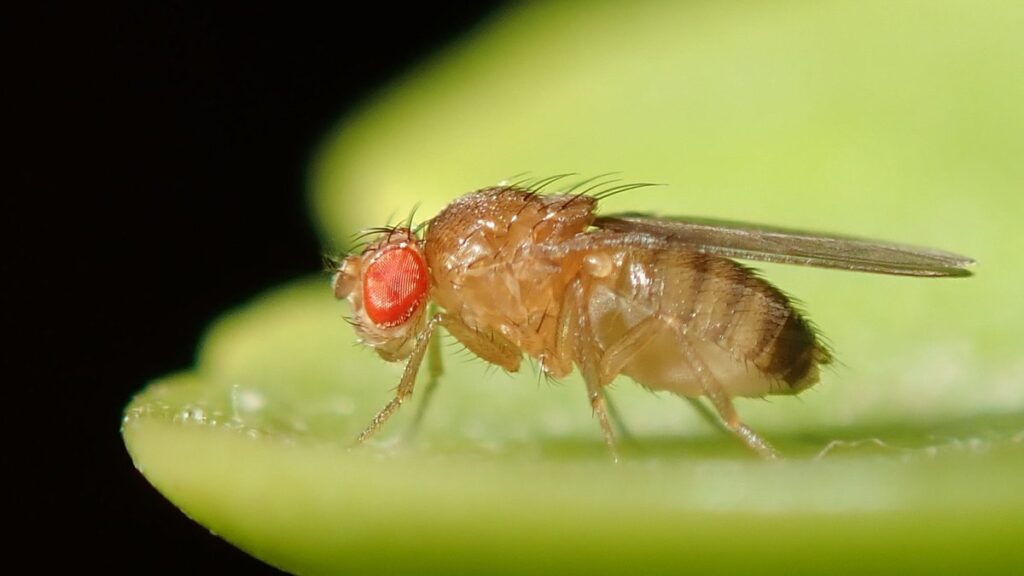
- Fruit flies breed in hidden wet gunk: rotting produce, the kitchen drain, trash, recycling, and damp rags. Kill the source or they keep hatching.
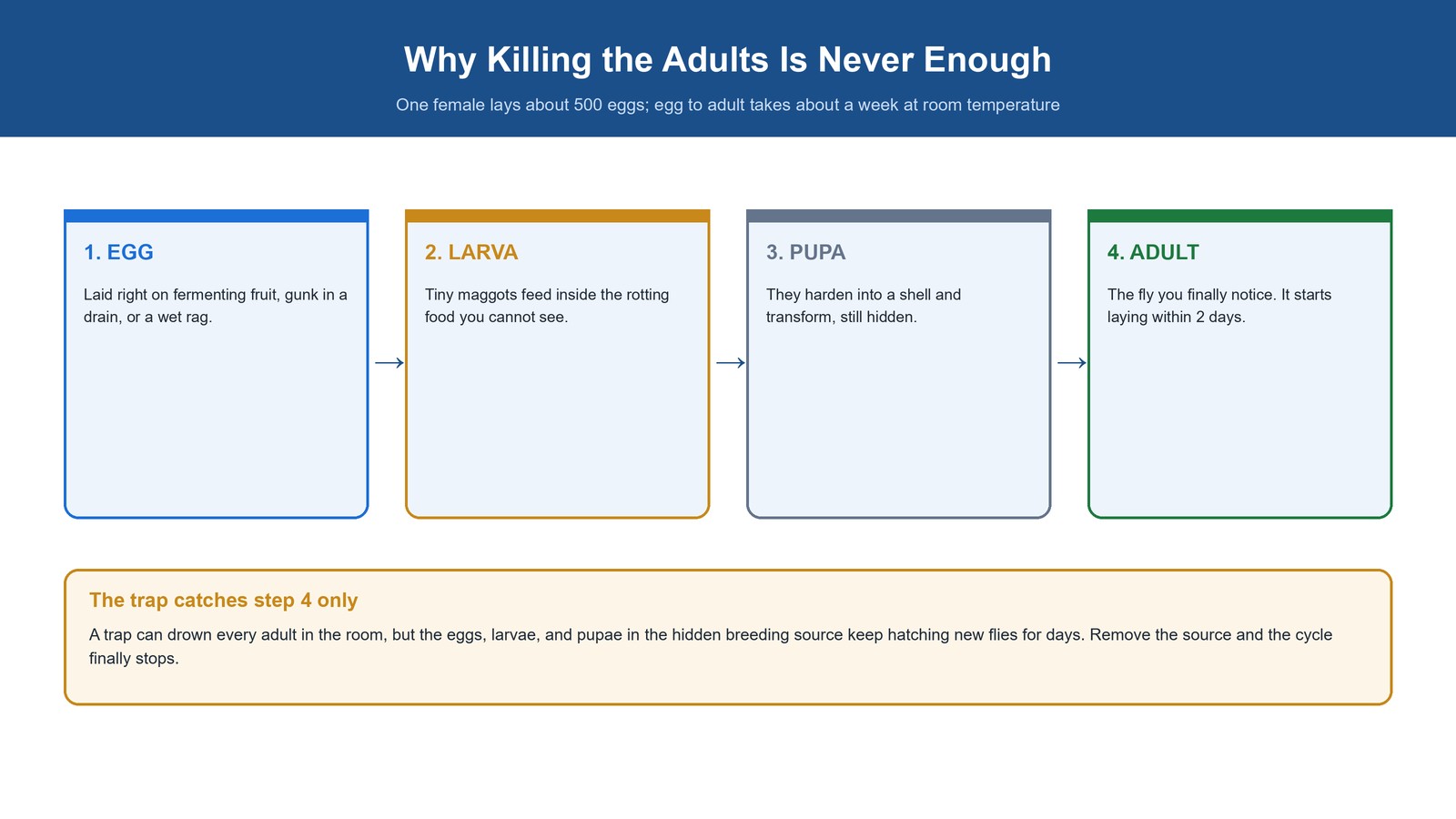
- One female can lay about 500 eggs, and a new batch goes from egg to adult in about a week, which is why the problem explodes so fast.
- A trap only catches the adults you can see. It is half the job, never the whole job.
- The apple cider vinegar and dish soap trap works because the soap breaks the water’s surface tension so the flies sink instead of standing on top.
- If flies keep coming and your produce is clean, they are almost certainly breeding in a drain. There’s a simple overnight test to prove it.
- Store-bought traps like Terro and FlyPunch make the “catch the adults” step hands-off while you deal with the source.
You wiped the counter. You threw out the bananas. You even set a little cup of vinegar by the sink. And this morning? They’re back, doing their slow, drunken loops around your kitchen like nothing happened.
Here’s the thing almost nobody tells you. The fruit flies you can see are not really the problem. They are the last step of a hidden factory that is running somewhere in your kitchen right now. So if you only kill the flies buzzing around your face, you are bailing water out of a boat with a hole still in it.
Flies aren’t the only uninvited guests — here’s how to get rid of ants in the house and get rid of mice.
This guide is about finding and plugging that hole. We’ll cover exactly how to get rid of fruit flies by killing where they breed, not just where they fly, including the drain trick most articles skip completely. Do it this way and they don’t come back in three days. They’re just gone.
Why Fruit Flies Feel Impossible to Get Rid Of
Let’s start with why these things feel like they have superpowers, because once you get this, everything else makes sense.
A fruit fly is tiny, only about an eighth of an inch, with a tan body and those little red eyes. It does not live very long, maybe a week or two. But in that short life, a single female can lay about 500 eggs, according to University of Kentucky entomologist Michael Potter, and a fresh egg becomes a flying, egg-laying adult in about a week. Do that math for a second. A handful of flies today can become a cloud by the weekend.
And she doesn’t lay those eggs out in the open. She lays them right on the fermenting stuff they love: the brown spot on a banana, the film of sludge inside a drain, the sticky ring at the bottom of a recycling bin. The eggs and the little maggots that hatch from them are so small you will never spot them.
So picture what is actually happening when you see adult flies. Behind them, out of sight, sits a pile of eggs, larvae, and pupae that are all going to become new flies over the next several days. You can kill every adult in the room tonight and wake up to a brand-new batch tomorrow, because the factory never stopped.
The Top 5 Places Fruit Flies Are Actually Breeding
Okay, so we need to find the factory. In a normal home there are only a handful of places it can be, and once you know the list, you can check them all in about ten minutes. Go through these in order, because the first two catch the vast majority of cases.
1 Overripe Fruit and Vegetables on the Counter
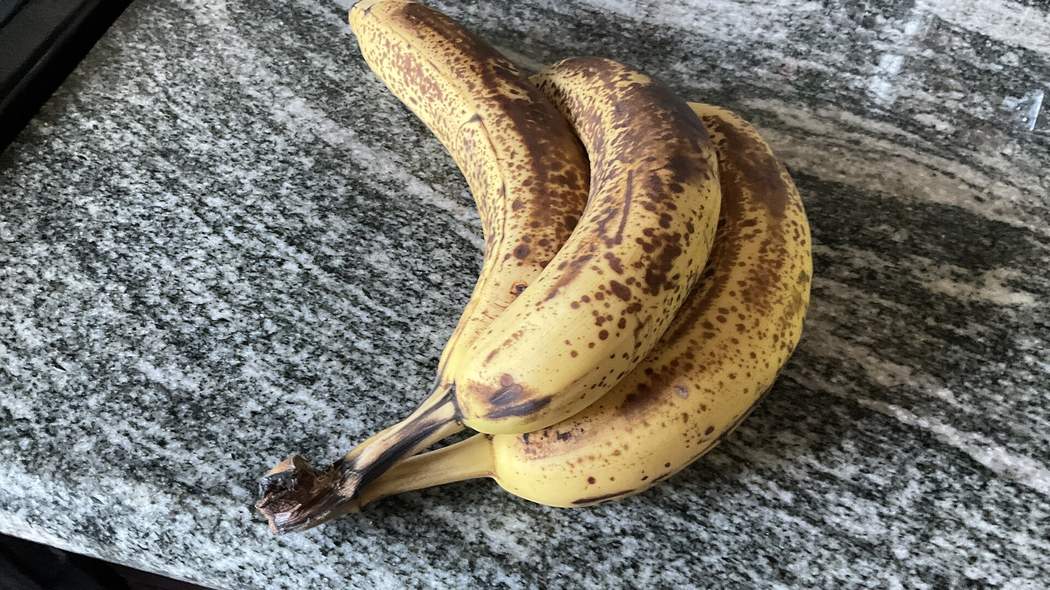
This is the obvious one, and it’s obvious because it’s usually right. That bowl of fruit on the counter, the potatoes in the pantry, the onion that’s gone a little soft, the tomatoes ripening on the windowsill. Any of it can be the nursery.
The trap here is thinking “but my fruit looks fine.” It doesn’t have to be dramatically rotten. A single banana with a few brown freckles, or a nectarine with one bruised spot, is a five-star maternity ward for a fruit fly. And the piece doing the damage is often the one you can’t see, like a potato that’s gone bad at the bottom of the bag or a clove of garlic turning to mush in the back of a drawer.
2 The Kitchen Drain and Garbage Disposal
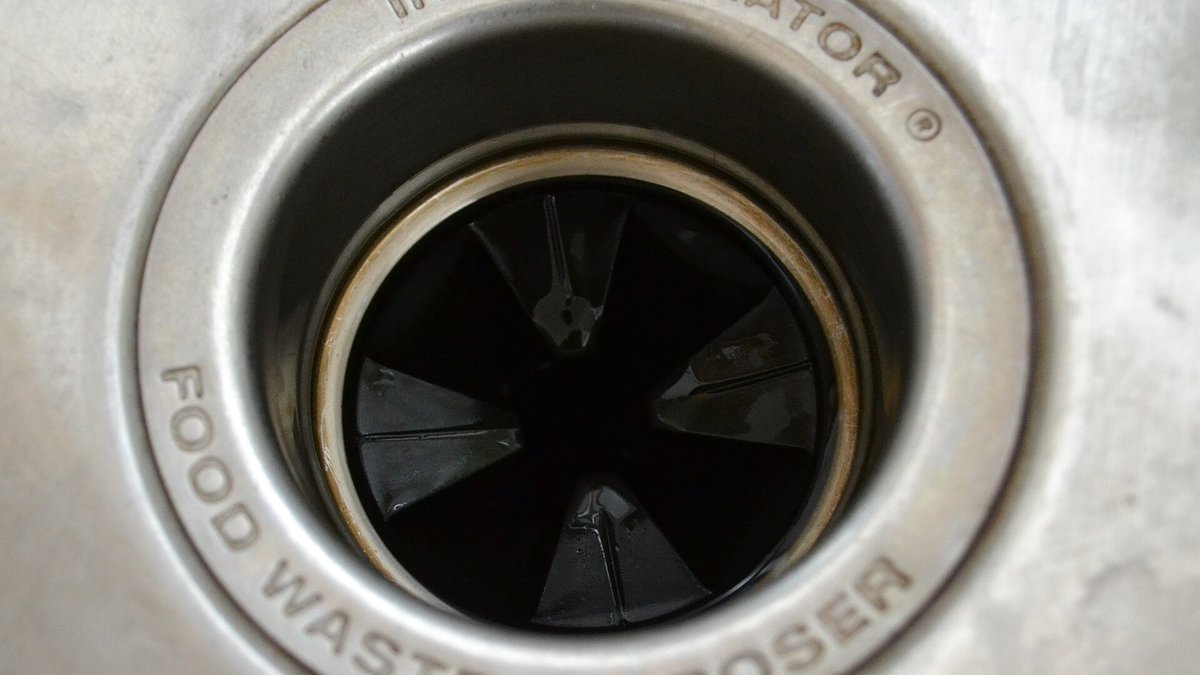
This is the big one that most guides breeze right past, and it’s the reason so many people “solve” their fruit fly problem and then watch it come right back.
Think about what lives inside your kitchen drain. Years of tiny food scraps, grease, and soap have built up into a thin, slimy film coating the inside of the pipe and the underside of the disposal. To a fruit fly, that gunk is a perfect, moist, food-rich place to raise a family, and it’s completely hidden from you. You can throw out every scrap of produce in the house and the flies will keep coming, because they were never in the fruit bowl to begin with.
3 The Trash Can and the Recycling Bin
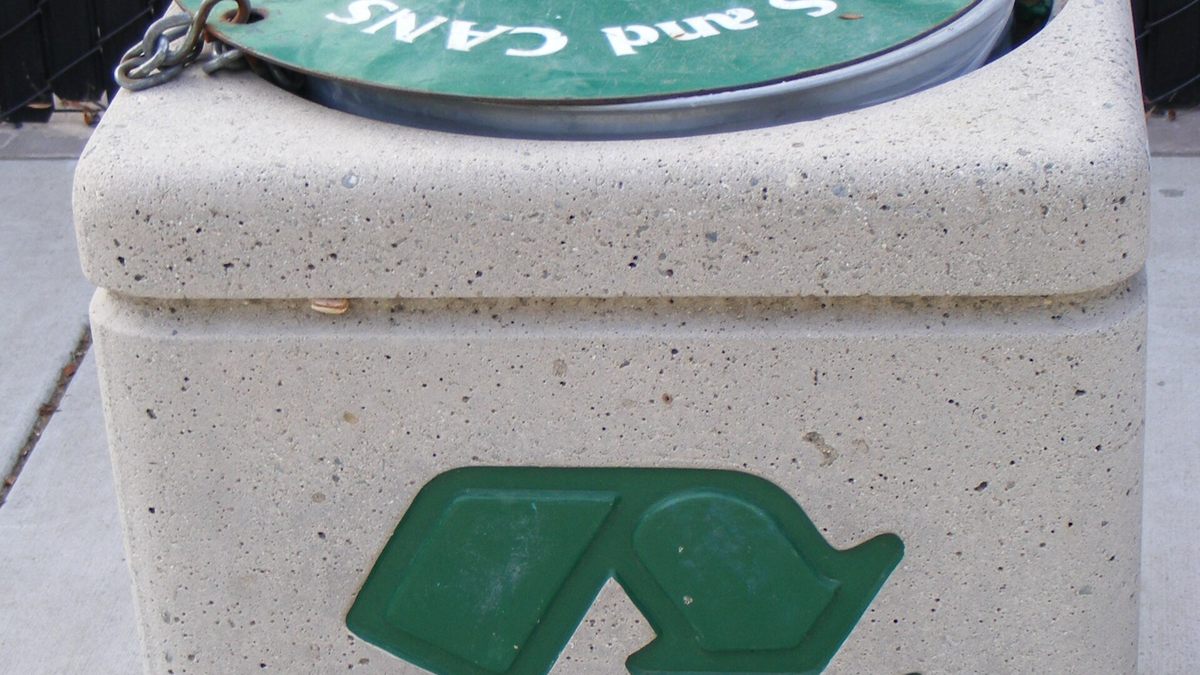
Your trash is an easy suspect, but the recycling bin is the sneaky one. That “empty” beer bottle, soda can, or wine bottle still has a sugary, fermenting film inside it. To a fruit fly, a lightly-rinsed recycling bin full of bottles and cans is basically a buffet with a built-in nursery.
The bottom of the trash can matters too. Even with a bag in it, juice and food liquid seep down and pool at the very bottom, under the bag, where it sits and ferments for weeks.
4 Damp Mops, Sponges, and Cleaning Rags
Here’s one that surprises people. A mop head left damp in a bucket, a sponge sitting in a puddle by the sink, or a dish rag that never fully dries can hold enough trapped food and moisture to breed fruit flies all on its own. The University of Kentucky specifically lists mops and cleaning rags as fruit fly breeding sites, right alongside drains and trash.
If your kitchen looks spotless but the flies won’t quit, sniff around your cleaning gear. A forgotten sour-smelling sponge or mop is a classic hidden source.
5 Juice Spills Under and Behind Appliances
The last hiding spot is the one you have to get on your knees for. A splash of juice or soda that ran under the refrigerator, a spill behind the trash can, a sticky drip down the side of a cabinet. It dries into a thin sugary crust, and to a fruit fly that’s plenty.
Pull out the trash can and take a look at the floor and wall behind it. Slide a flashlight under the fridge and dishwasher. If you find a sticky patch, you may have just found your factory.
The Two-Front Rule for Getting Rid of Fruit Flies
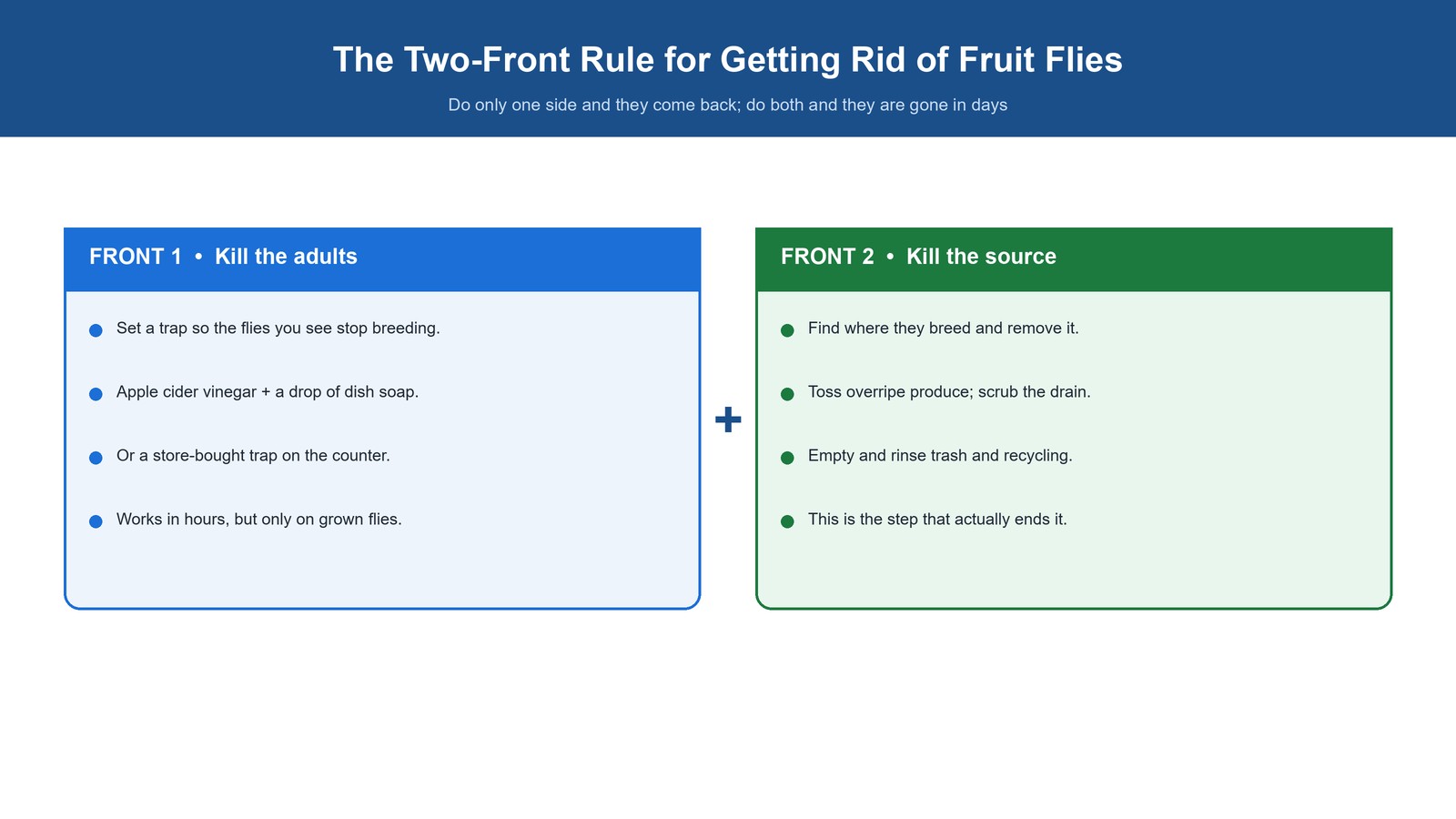
Now that you know where they breed, here’s the strategy that actually works. Getting rid of fruit flies is a two-front war, and you have to fight both fronts at the same time.
Front one is the adults. These are the flies you can see, and every one of them is a female-in-waiting looking for a new place to lay eggs. You knock these down with a trap, which we’ll get to next. This part is fast, it’s satisfying, and it stops the population from growing while you work.
Front two is the source. This is the hidden breeding site we just hunted down: the rotten onion, the sludgy drain, the fermenting recycling. You remove it or clean it out. This is the part that actually ends the infestation, because it shuts off the supply of new flies.
Here’s why you need both. If you only trap the adults, the eggs keep hatching and you’re trapping forever. If you only kill the source, the adults you already have keep breeding on whatever they can find for the next week. Do them together and the math flips in your favor: no new flies being made, and the existing ones dying off in a matter of days.
The Fruit Fly Trap Methods That Actually Work
Traps are front one, and they’re the fun part because you get to watch the little pests actually fall for it. But you have to understand what a trap does and does not do. A trap catches adults. That’s it. It will never touch the eggs in your drain. So a trap is not a cure, it’s a way to thin the herd while you kill the source.
With that said, here are the traps that work, and the small details that decide whether they work great or barely at all.
1 The Apple Cider Vinegar and Dish Soap Trap

This is the classic, and it’s popular because it’s basically free and it works. Pour an inch of apple cider vinegar into a glass or mug. Add one drop of dish soap. Done. Set it wherever the flies gather.
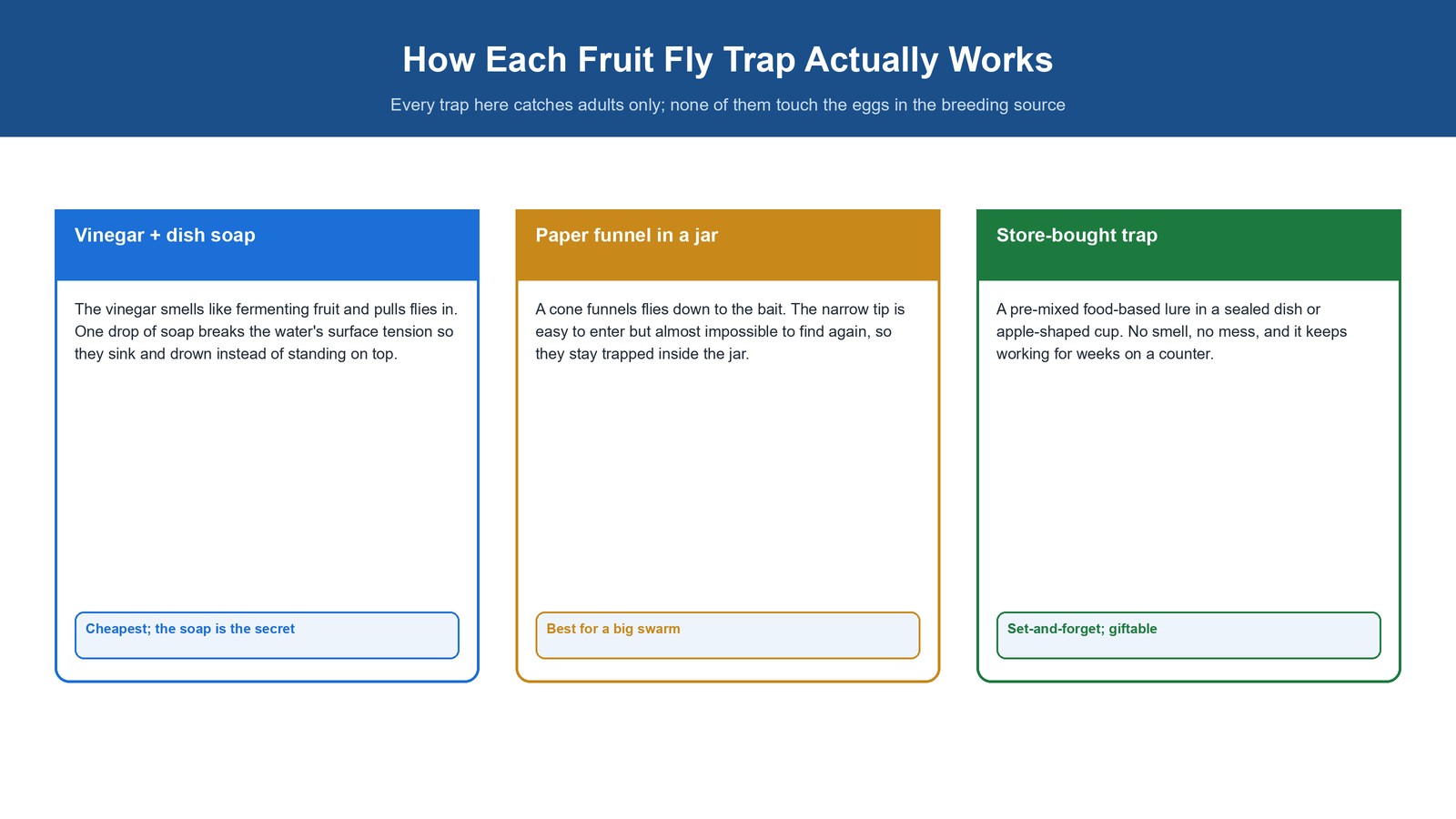
The vinegar is the bait. It smells like fermenting fruit, which is exactly the “come lay your eggs here” signal a fruit fly is hunting for. But the soap is the part everyone gets wrong or skips, and it’s the whole trick. Vinegar on its own has a springy surface, and a fruit fly is light enough to land on it and drink without falling in. That one drop of dish soap breaks the surface tension of the liquid, so the second a fly touches down, the surface gives way and it sinks. No soap, and most of your flies just have a nice drink and leave.
2 The Paper Funnel Trap in a Jar
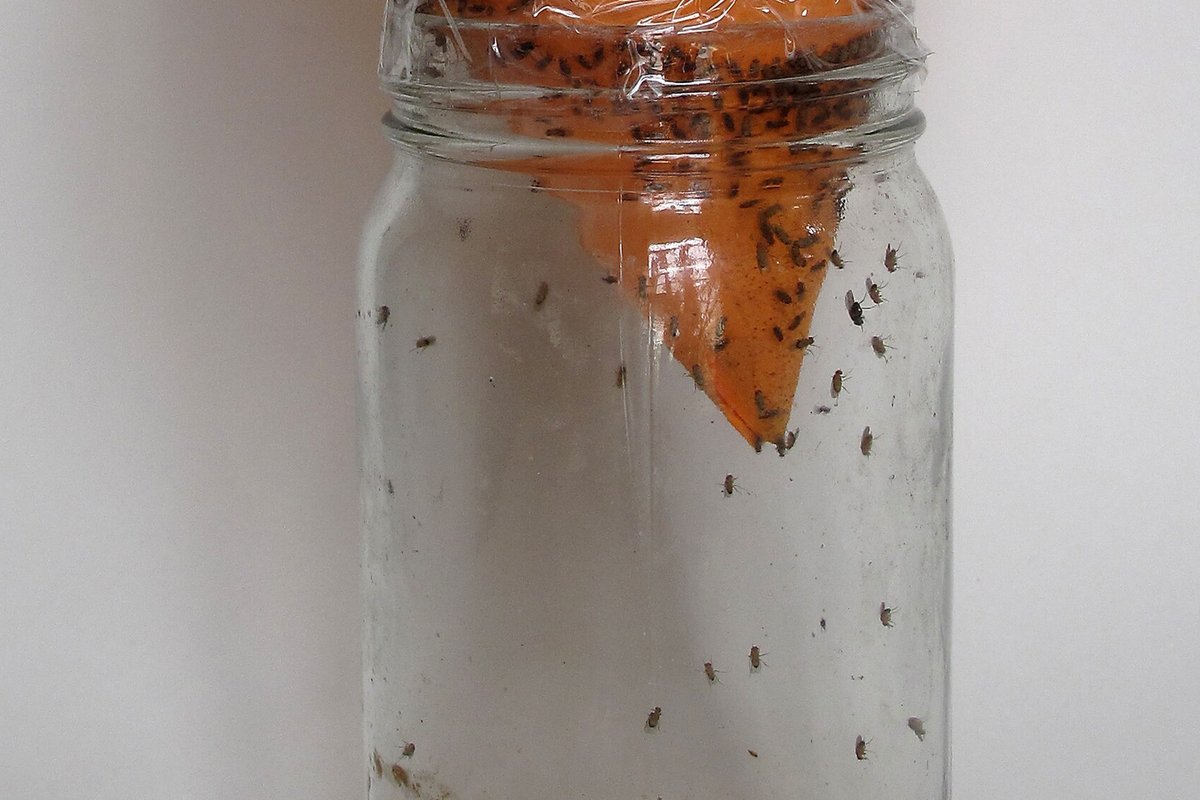
If you’re dealing with a real swarm, this one out-catches the open cup. Put your bait in the bottom of a jar (apple cider vinegar, or a chunk of overripe fruit and a splash of water). Roll a piece of paper into a cone, and set it point-down in the jar so the narrow tip hangs just above the bait, without touching it.
The flies smell the bait and crawl down through the wide top of the cone to reach it. Then they can’t figure out how to get back out through that tiny hole. They’re stuck in the jar, and you can watch the catch pile up. It’s the same idea as a lobster trap, just fruit-fly sized.
3 Store-Bought Traps Like Terro and FlyPunch
If you’d rather not fuss with cones and cups, this is where a product earns its keep. A couple of well-known ones do the exact same job as the DIY traps, just tidier and hands-off.
The Terro Fruit Fly Trap is a small apple-shaped cup with a non-toxic, food-based liquid lure already inside. You pop it open, set it on the counter, and it quietly draws in and drowns adult flies for weeks. Because it’s sealed and looks like a little apple, it’s the one to reach for if an open cup of vinegar on the counter drives you nuts.
FlyPunch is a similar idea in a different shape: a small tub of liquid bait that you simply uncap and leave out. Same principle, ready to go, no mixing.
The Drain-Breeding Case Most Guides Miss
Let’s give the drain its own section, because this is the one that turns a two-week nightmare into a two-day fix, and it’s the one almost everyone overlooks.
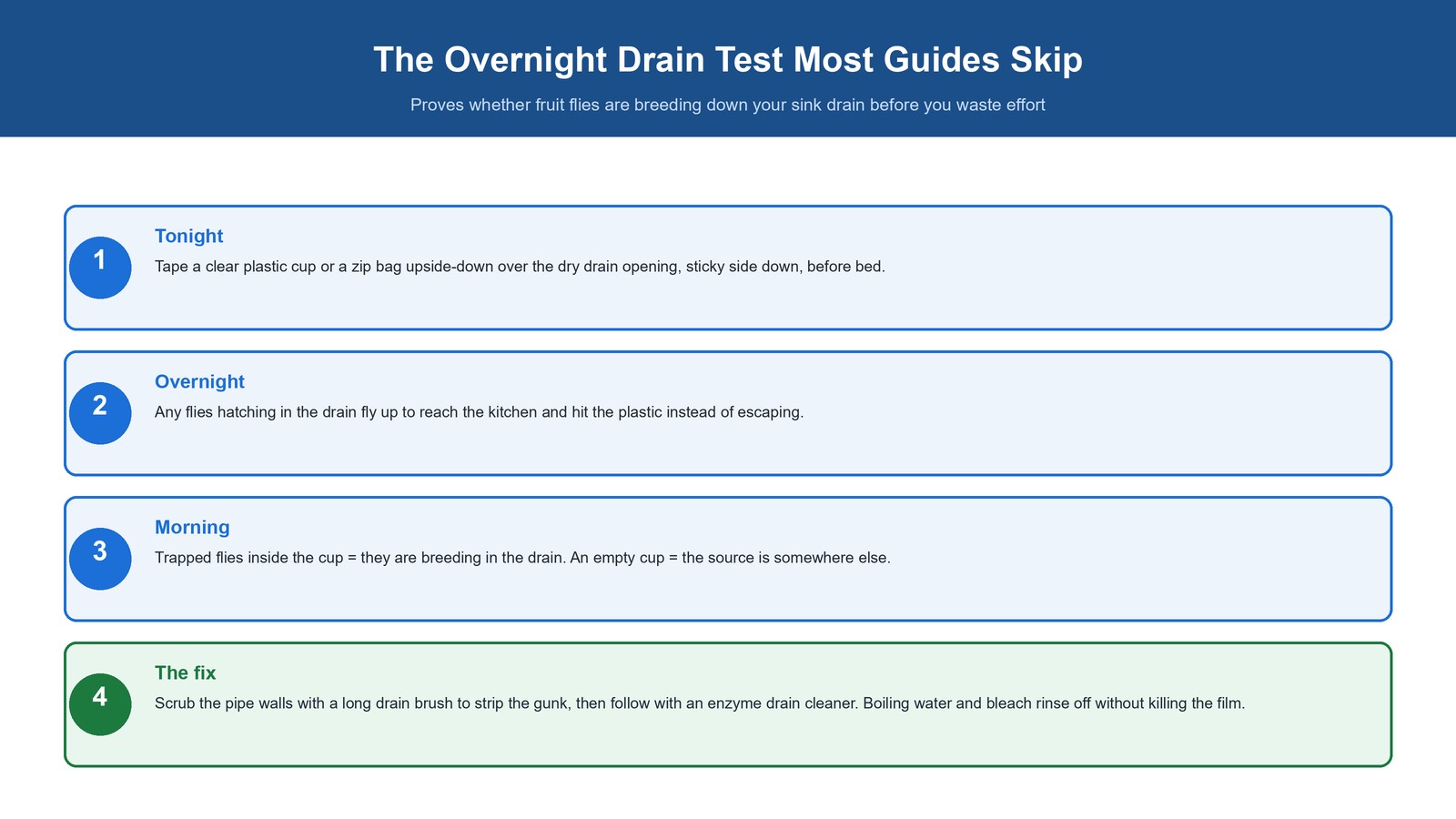
If you’ve tossed the bad produce, taken out the trash, and flies are still appearing, you need to test the drain before you do anything else. And there’s a dead-simple way to prove it, no tools required.
Tonight, before bed, dry off the area around your sink drain and tape a clear plastic cup or a zip-top bag upside-down right over the drain opening. In the morning, look inside. If there are fresh fruit flies trapped under the plastic, you’ve got your answer: they hatched down in the drain and flew up, only to hit your little roadblock. If it’s empty, the source is somewhere else and you can cross the drain off your list.
Once you’ve confirmed it, here’s the part that matters: cleaning a drain properly is a mechanical job, not a chemical one. The flies are breeding in that slimy film stuck to the pipe walls, and the fix is to physically scrub it off.
Get a long, stiff drain brush, push it down into the drain and disposal, and scrub the walls all the way around to strip that gunk off. Follow up by pouring in an enzyme-based drain cleaner, the kind that digests organic gunk over several hours, to eat away what the brush couldn’t reach. Do that, and you’ve bulldozed the factory. If your sink has a garbage disposal, our full guide on how to clean a garbage disposal walks through the safe, thorough version of this same job.
How to Get Rid of Fruit Flies Fast When Company Is Coming
Sometimes you don’t have three days. You have three hours before people show up. You can’t fully kill a breeding source that fast, but you can absolutely crash the adult population and make the kitchen presentable.
First, do a 60-second sweep and remove every bit of exposed produce, either into the fridge or straight into a sealed outdoor bin. No bait left in the open. Second, set up several traps, not just one: put a vinegar-and-soap cup on the counter, one by the sink, and one near the trash. More traps means more of the swarm pulled down fast. Third, take the kitchen trash and recycling all the way outside now, not later.
The honest truth is that “fast” only handles the flies you can see. The eggs are still out there. So after the guests leave, come back and do the real source hunt, or you’ll be right back where you started tomorrow.
How to Get Rid of Fruit Flies in the Bathroom
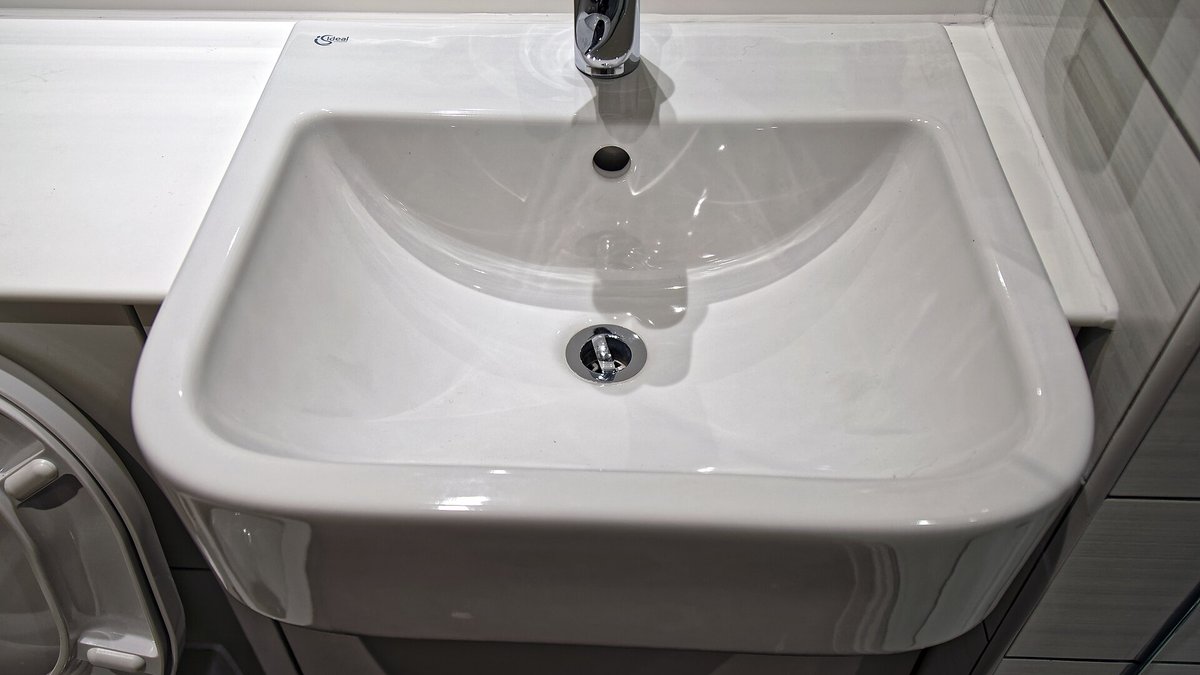
Fruit flies in the bathroom throw people off, because there’s no fruit in there. But remember the rule: they breed in wet organic gunk, and a bathroom has plenty.
The usual suspect is the drain again, this time the sink or shower drain, coated in the same kind of biofilm from soap scum, hair, and skin. The overnight cup test works exactly the same here: tape a clear cup over the drain before bed and check it in the morning.
Treat the bathroom drain the same way you treat the kitchen one: scrub the walls with a drain brush and follow with an enzyme cleaner. While you’re at it, check for a damp bath mat, a leaky trap under the sink, or a forgotten cup of sugary drink, since any standing organic moisture can host them.
How to Get Rid of Fruit Flies in the Refrigerator
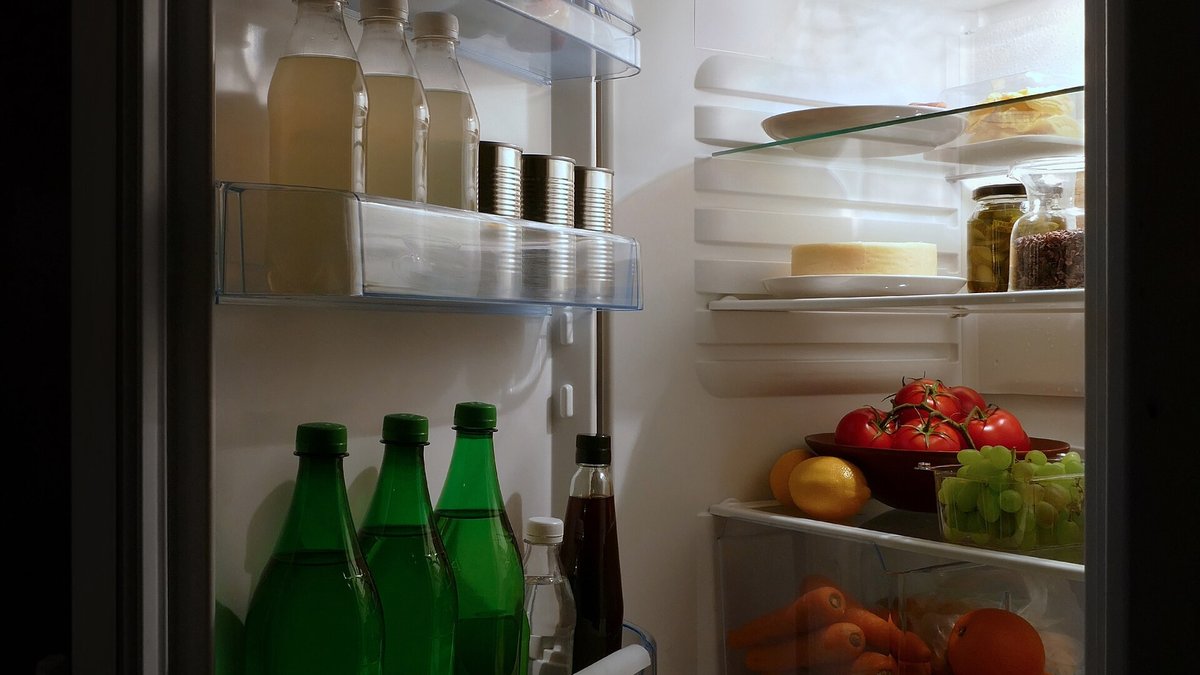
Finding fruit flies in a cold fridge feels wrong, and it tells you something specific. Cold slows a fruit fly’s whole life cycle way down, so a fridge is a lousy place for them to breed. What almost always happened is that the eggs came in on a piece of produce you bought, riding along on the skin, and a few managed to hatch inside.
So the fix is about the food, not the fridge itself. Pull out your produce and inspect it. Anything soft, bruised, or clearly past it goes in the outdoor bin, not the kitchen trash. Check the crisper drawers especially, since that’s where a forgotten, leaking vegetable likes to hide.
Then wipe the shelves and drawers, paying attention to any sticky spill or juice puddle, because that little bit of residue is what the hatched flies are feeding on. A cloth with a bit of vinegar does the job and leaves nothing behind for them.
How to Get Rid of Fruit Flies Without Apple Cider Vinegar
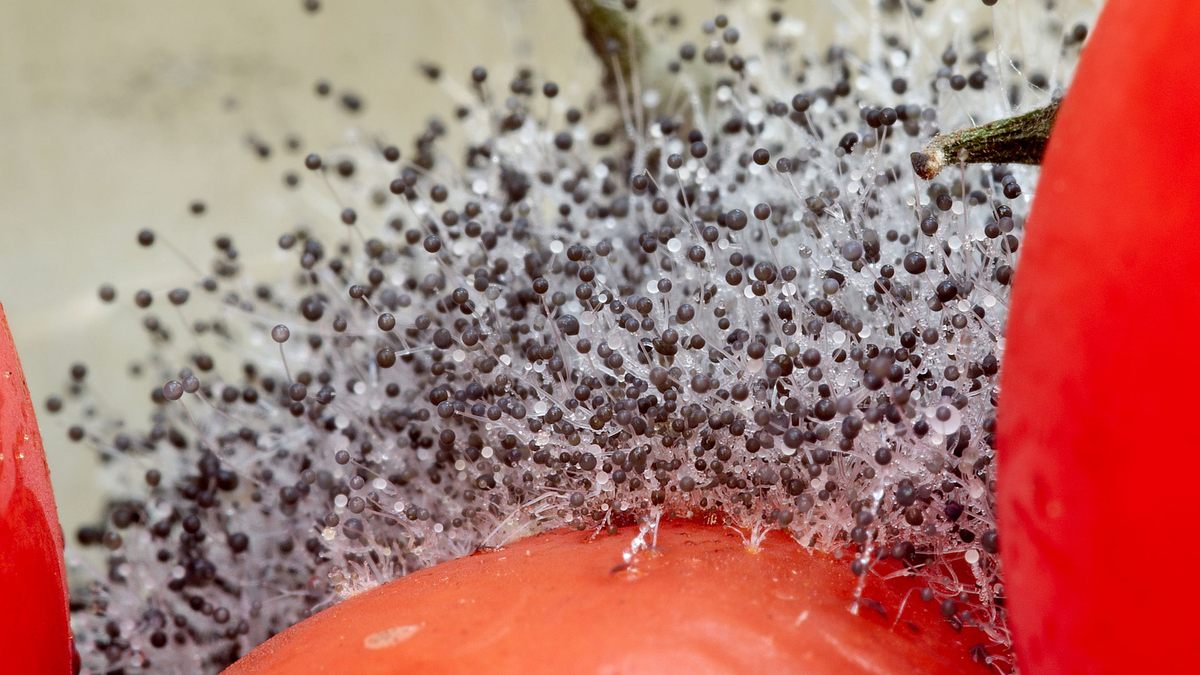
Out of apple cider vinegar? No problem. The vinegar was never magic, it was just a cheap way to fake the smell of fermenting fruit. Anything that smells fermented and sugary works as bait, so you’ve got plenty of options already in the house.
The easiest swap is old wine or beer. That last inch in a bottle you were about to recycle is a fantastic lure, especially red wine, since it’s already fermented and reeks of exactly what a fruit fly wants. Add a drop of dish soap to break the surface, same as always, and set it out.
A splash of balsamic vinegar works too, and so does a spoonful of an overripe piece of fruit mashed into a cup with a little water. You can even make your own ferment: mix a bit of sugar and a pinch of yeast into warm water, and as the yeast gets going it puts off the same fermenting smell that pulls flies in.
The Store-Bought Solutions That Do the Work for You
You can beat fruit flies with nothing but a cup of vinegar and some elbow grease, and plenty of people do. But a few inexpensive products make each step easier and more reliable, especially the two you’ll do over and over: catching adults and scrubbing drains. Here’s what actually helps, matched to the job.
1 Terro Fruit Fly Trap for Hands-Off Adult Catching
The Terro Fruit Fly Trap is the tidy version of your vinegar cup. It’s a little apple-shaped container pre-filled with a non-toxic, food-based liquid lure, so you just open it and set it down. It’s the pick if an open cup of vinegar on the counter bothers you, or if you want something you can leave out for weeks without thinking about it.
2 FlyPunch for a Ready-to-Go Liquid Bait
FlyPunch does the same job in a small open tub. Uncap it, set it near where the flies gather, and the liquid bait draws them in and drowns them. It’s a grab-and-go option when you don’t want to mix your own bait at all.
3 A Drain Brush and Enzyme Cleaner for the Real Fix
This is the pair that actually ends a drain infestation, so if you buy anything, buy these. A long, stiff drain brush lets you physically scrub the biofilm off the pipe walls where the flies breed, and an enzyme-based drain cleaner digests the organic gunk the brush can’t reach. Together they do what bleach and boiling water can’t: remove the breeding surface instead of just rinsing over it.
4 Apple Cider Vinegar as the Cheapest Bait There Is
Plain old apple cider vinegar is still the best-value trap bait you can get. A single bottle costs almost nothing and makes dozens of traps. Pair it with the dish soap you already own, and you’ve got front one covered for pennies. It’s the ingredient that makes the whole “catch the adults” step basically free.
How to Keep Fruit Flies From Coming Back
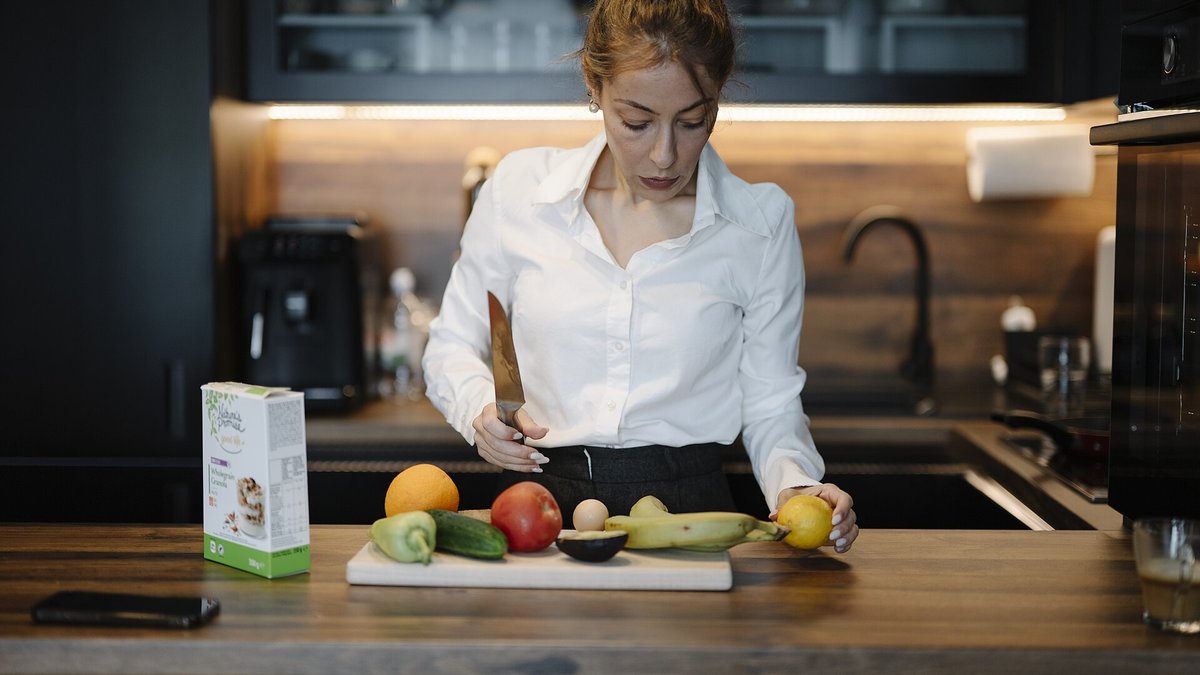
Once they’re gone, staying fly-free is mostly about not handing them a nursery in the first place. A few small habits do almost all the work.
Keep ripe produce in the fridge instead of on the counter, especially in summer, since cold stops them from breeding on it. Take out the kitchen trash and recycling often, and rinse bottles and cans before they go in the bin. Give your drains a quick scrub every few weeks so the biofilm never builds up into a breeding site. And don’t let sponges, rags, or mops sit around damp, since even those can host a batch.
One last note on summer. Warmth speeds up everything about a fruit fly, from how fast eggs hatch to how quickly the adults breed. That’s why a problem you’d barely notice in winter explodes in August. If you keep seeing a few flies in the warm months, that’s normal, and it just means the fridge-and-drains routine matters most exactly when it’s hot. If you’re not even sure the little pests you’re seeing are fruit flies, our guide on telling apart the tiny flies in your home, how to get rid of gnats in the house, helps you nail down which one you’ve actually got.
Frequently Asked Questions
Why do I still have fruit flies when there’s no fruit in my house?
Because they were probably never breeding in your fruit. Fruit flies are just as happy in the film inside a kitchen drain, the residue in a recycling bin, a damp sponge, or a juice spill under the fridge. If your produce is gone and flies keep appearing, run the overnight drain test: tape a clear cup over the drain before bed and check for trapped flies in the morning.
How long does it take to get rid of fruit flies completely?
If you kill the breeding source and trap the adults at the same time, most people are fly-free in about three to four days. That’s roughly how long it takes for the last adults to die off once no new ones are hatching. If you only trap the adults and leave the source alone, it can drag on for weeks because fresh flies keep emerging.
Does the apple cider vinegar trap actually work?
Yes, but only if you add dish soap. The vinegar attracts the flies, and the one drop of soap breaks the liquid’s surface tension so they sink and drown instead of standing on top and drinking. A cup of plain vinegar with no soap catches almost nothing, which is why so many people think the trap is a myth.
Are fruit flies in the bathroom the same as in the kitchen?
Often they aren’t. Kitchen flies are usually true fruit flies, while bathroom ones are frequently drain flies, a slightly fuzzier, moth-like cousin. It doesn’t really matter which you have, because both breed in the gunk inside drains and both are killed the same way: scrub the drain walls with a brush and follow with an enzyme cleaner.
Will bleach down the drain kill fruit flies?
Not reliably. Bleach and boiling water mostly rinse over the greasy film where the eggs and larvae live without actually removing it, so the breeding surface survives. You might knock the smell back for a day, but the flies return. Mechanically scrubbing the pipe walls with a drain brush is what truly clears it.
How do I keep fruit flies away for good?
Refrigerate ripe produce instead of leaving it on the counter, take out and rinse trash and recycling regularly, scrub your drains every few weeks, and don’t leave sponges or mops sitting damp. Those four habits remove every common breeding site, so the flies have nowhere to start. It matters most in summer, when warmth makes them breed fastest.
The Bottom Line on Fruit Flies
Fruit flies feel unbeatable only because most of us fight the wrong half of the battle. We swat and trap the adults, feel good for a day, and never touch the hidden factory quietly pumping out new ones.
Flip that around and it gets easy. Hunt down the breeding source, whether it’s a soft onion, a sludgy drain, or a fermenting recycling bin, and shut it off. Set a trap to mop up the adults while the source dies. Do both at once, and within a few days the loops around your kitchen just stop. That’s the whole secret to how to get rid of fruit flies: kill where they breed, not just where they fly.
About the Author
Elena Brooks
Elena Brooks is the person her group chat texts when something at home stops working or a health trend starts trending. She’s spent years turning that instinct into a job — digging into the research behind everyday questions, calling the experts, and writing up what holds up and what doesn’t. Her beat is wherever curiosity points: kitchens, cars, pets, sleep, money, and the occasional meteor shower.