

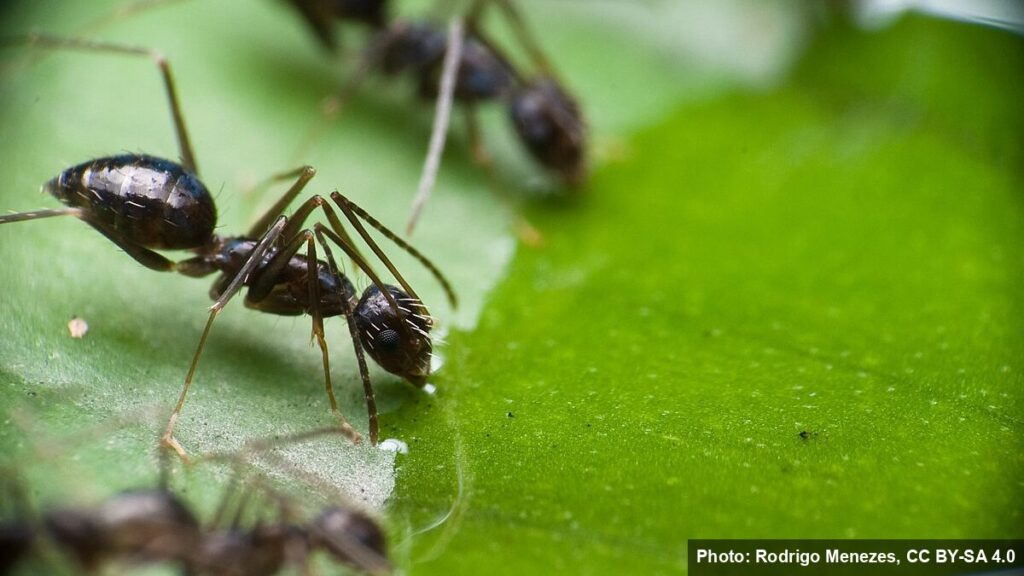
- The ants on your counter are foragers — a small slice of the colony. Killing them does nothing to the nest, which is why sprayed trails keep coming back.
- The University of California’s pest experts are blunt about it: baits are “the only type of insecticide recommended in most situations,” because sprays “kill only foraging ants without killing the colony and the queens.”
- Bait works because it’s slow. Workers carry it home and pass it mouth-to-mouth to other workers, the larvae, and the queen before anyone dies — so one bait station can wipe out a whole nest.
- Do not spray your ant trails while baiting. Spray repels ants and scatters the colony into new hidden nests, which makes everything worse. Clean trails with soapy water instead.
- Natural fixes have real jobs: soapy water erases the scent trail, diatomaceous earth is a mechanical (non-poison) killer, and peppermint repels. But repelling is not the same as killing the nest.
- Prevention is the actual finish line: seal entry gaps, wipe up food and water, and cut back plants touching the house. An ant that can’t get in or find a crumb has no reason to send scouts.
You see one ant on the counter. Then three. Then a thin dark line marching from a crack by the window all the way to a crumb under the toaster. So you grab the spray, hose down the line, wipe up the bodies, and feel like you won. And for a few hours, you did.
Then they come back. Same trail, maybe a little to the left, like they took a detour around a puddle. And now you’re standing in your kitchen at 11pm wondering if these things are unkillable.
Here’s the secret nobody tells you about how to get rid of ants in the house: the ants you can see are not the problem. They’re the scouts and the grocery runners, a tiny fraction of the colony sent out to find food. The real target, the part that actually makes more ants, is the nest, hidden in a wall void or under the slab, with a queen laying eggs all day long. Spray the scouts and you’ve swatted the messengers while the factory keeps running. That’s why the line comes back.
So we’re going to do the opposite of what your instincts say. Instead of killing the ants you see, you’re going to feed them, on purpose, with slow-acting bait they carry home and share, so the poison reaches the queen and the whole colony collapses from the inside. It’s slower for a day or two, and it feels deeply wrong the first time you watch a hundred ants happily drink the stuff. But it’s the method that ends it. Let’s do this right.
Winged pests are a different beast — here’s how to get rid of wasps safely.
Why Spraying the Ants You See Makes It Worse
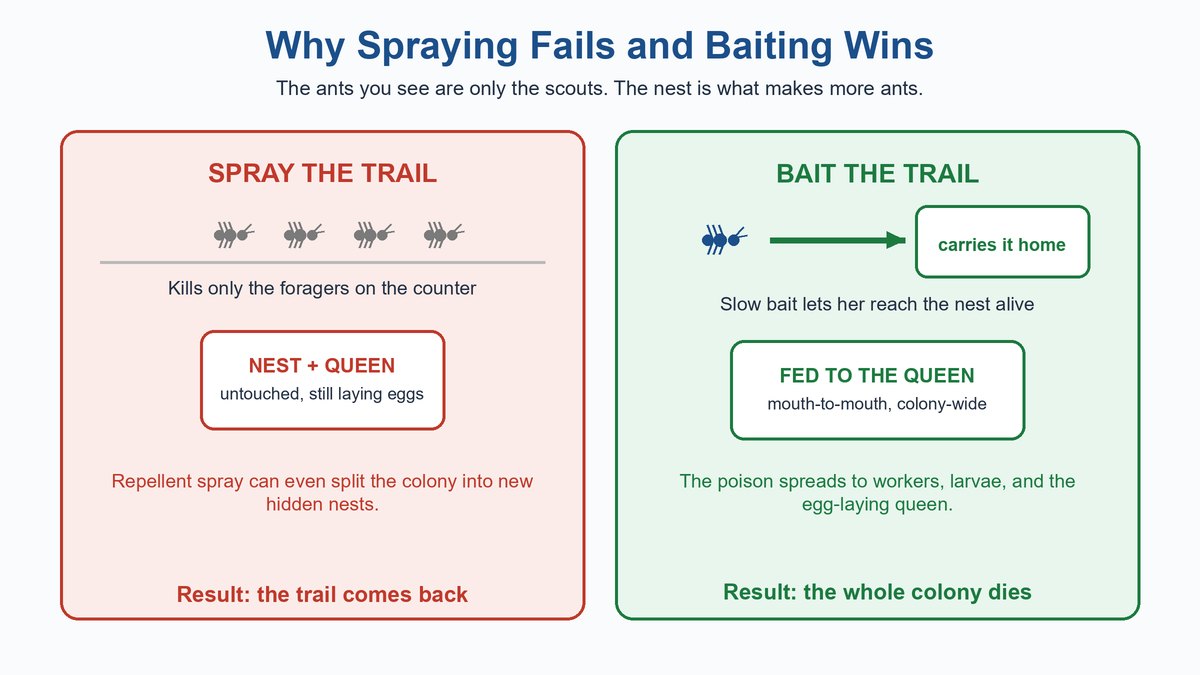
Let’s start with the mistake almost everyone makes, because understanding why it fails is the whole key to doing it right.
When you spray a visible ant trail with a bug killer, two things happen, and both of them help the ants. First, you kill the foragers — the workers out looking for food. That feels like progress, but foragers are cheap and disposable to a colony. A healthy nest can lose its scouts all day and simply send more. The queen and the brood, safe in the wall, don’t even notice.
Second, and this is the part that really backfires: most sprays are repellent. Ants can smell the treated zone and they avoid it. In a small colony that sometimes just reroutes the trail. But in a big colony, spraying can trigger what pest experts call budding — the colony splits and scatters, with satellite groups and new egg-laying queens setting up in fresh hidden spots. You started with one nest and one trail. Now you’ve got three nests and no trail to follow. This is exactly how a minor kitchen visit becomes a whole-house infestation.
The University of California’s IPM program — about as neutral and expert a source as exists on this — puts it plainly: “Spraying ants indoors with pesticides will not prevent more ants from entering,” because the visible ants are only a sliver of the population. Their recommendation is that baits are “the only type of insecticide recommended in most situations.”
So if not spray, then what? You bait. But before you can bait well, you need to know one thing about your particular ants.
Figure Out Which Ants You Have First
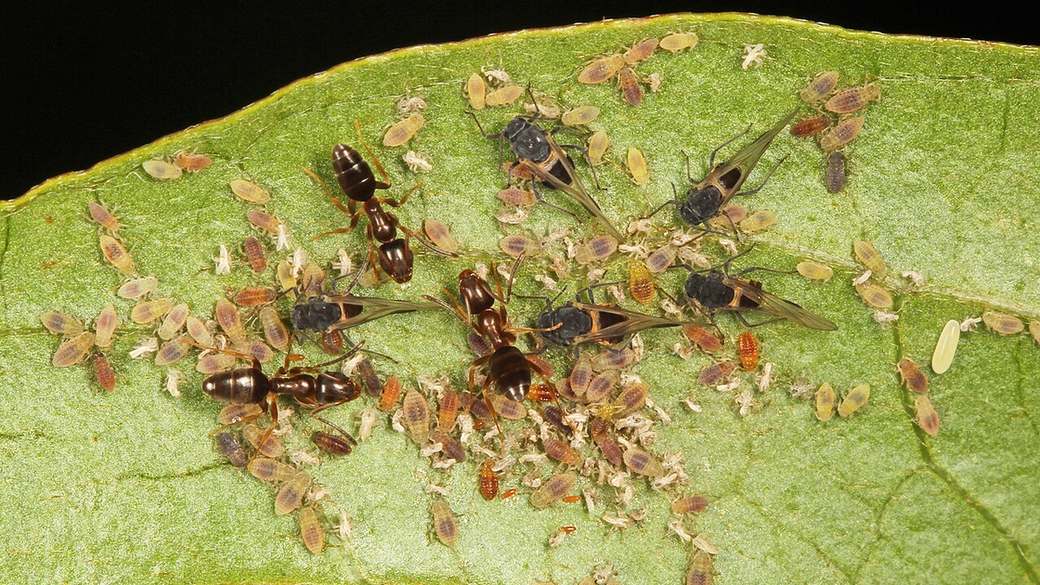
Not all ants are the same, and the differences change how you win. The big split is between the ants you can bait to death and the one kind that needs a totally different plan.
Most of the ants that march across a kitchen are small household foragers — odorous house ants, Argentine ants, pavement ants, pharaoh ants, little black ants. For all of these, the bait-the-colony method below is exactly right. The one important exception is carpenter ants: big black ants, often a quarter-inch or more, that don’t eat your food so much as chew tunnels in damp wood to nest in. They can be baited too, but if you’re seeing large black ants and little piles of what looks like sawdust, you may have a moisture and wood-damage problem hiding behind the ant problem, and that’s worth taking seriously.
Here’s a quick field guide to the usual suspects. You don’t need to be an entomologist — you just need to sort “small food-seeking ant” from “big wood-nesting ant,” and get a hint about whether yours prefer sweets or grease, because that decides which bait they’ll actually eat.
| What you see | Likely ant | What they want | The right move |
|---|---|---|---|
| Tiny brown ants; crushed one smells like rotten coconut | Odorous house ant | Sweets, especially | Sweet liquid bait |
| Trails of small dark ants along pavement cracks and indoors | Pavement ant | Sweets and grease | Sweet + protein/grease bait |
| Endless trails, many nests, never seem to end | Argentine ant | Sweets | Sweet liquid bait, be patient |
| Very tiny pale yellow ants, often in kitchens/bathrooms | Pharaoh ant | Sweets and protein | Bait ONLY — never spray (they bud badly) |
| Large black ants, ¼-inch+, sawdust piles nearby | Carpenter ant | Nesting in damp wood | Bait + find and fix the moisture |
Once you know roughly what you’re dealing with, the actual method is simple, and it’s the same two steps for nearly all of them.
The Two-Step Method That Actually Kills the Colony
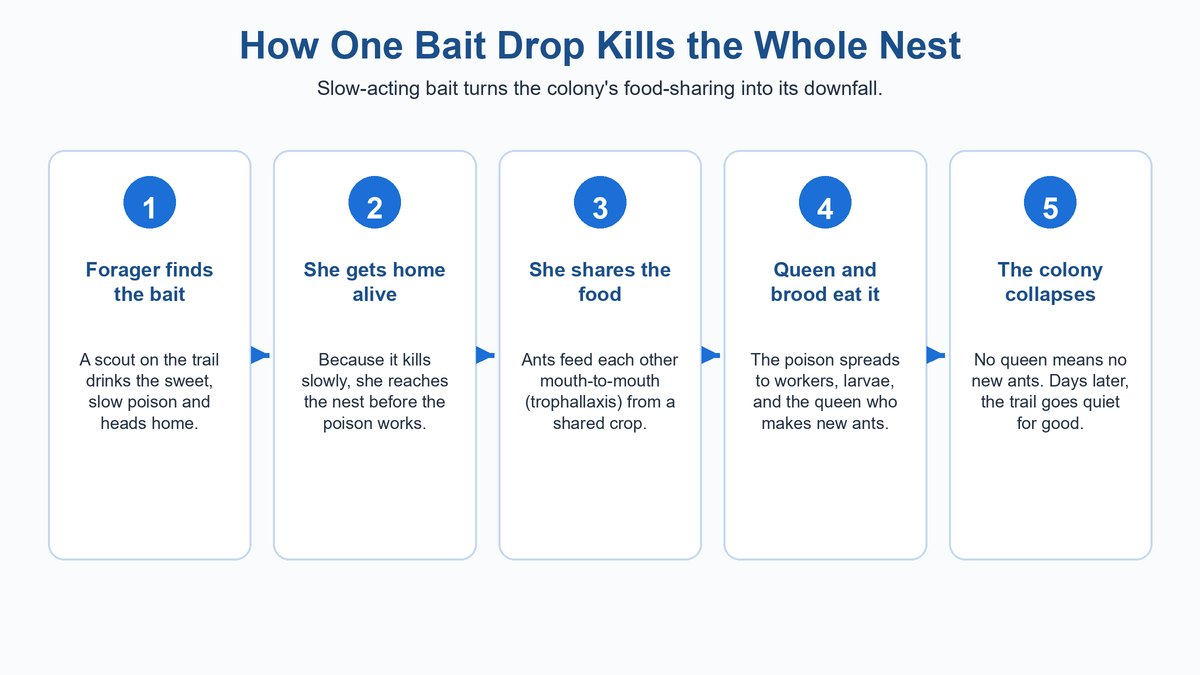
This is the heart of it. Everything else in this guide supports these two steps. Get them right and the ants end — not for a week, for good, until a new colony wanders in months later.
The logic comes straight from how ants live. A colony survives on sharing. Foragers don’t eat much themselves; they carry food home and pass it mouth-to-mouth to nestmates in a process called trophallaxis — basically ants feeding each other from a shared crop, like a communal stomach. That sharing is normally the colony’s strength. Bait turns it into the colony’s fatal weakness. You hand a forager a bit of poisoned food, she carries it home thinking she’s a hero, and she feeds the poison to the workers, the larvae, and the queen. UC IPM describes exactly this: “Workers carry small portions of the bait back to the nest where it is transferred mouth to mouth to other workers, larvae, and queens to kill the entire colony.”
The magic ingredient is slowness. A good bait is deliberately weak — it kills over a day or two, not on contact. That delay is a feature, not a flaw. As UC IPM explains, “Bait products must be slow-acting so that the foraging ants have time to make their way back to the nest and feed other members of the colony before they are killed.” A bait that kills too fast drops the forager on the counter before she ever gets home, and the queen never gets her share. So when you see ants still merrily feeding at your bait station on day two, that’s not failure. That’s the delivery system working.
1 Step One: Put Down the Right Bait and Then Leave It Alone
Set bait stations right on the ant trail, where the ants already walk — not where you think a nest is. The whole plan depends on foragers finding it fast, so meet them where they are. Place stations at the entry point (that crack by the window), along the counter trail, under the sink, wherever you see the line.
Now the hard part: leave them alone. Do not wipe the trail. Do not spray. Do not move the station because “it’s not working.” For the first day or two you will often see more ants, not fewer, because the bait is recruiting the whole colony to come drink it. That surge is good news — it means the poison is being carried home in bulk. Resist every instinct to clean it up. Give it a solid week or two of undisturbed feeding.
2 Step Two: Kill the Trail Only After the Colony Is Gone
Once the feeding drops to nothing and the trail goes quiet for a few days, the colony is likely dead. Now you clean. Wipe every trail and entry point with soapy water. This does something specific and important: it erases the invisible scent trail the ants laid down.
That scent trail is a chemical breadcrumb path (pheromones) that foragers follow like a highway. As long as it’s there, the next ant that wanders by has a map straight to your kitchen. UC IPM recommends you “clean up invading ants with a sponge and soapy water as soon as they enter to remove the scent trail they leave behind.” A cheap spray bottle with a few drops of dish soap in water is all you need — it kills any stray ant on contact and wipes the map at the same time. Just save the heavy trail-cleaning for after baiting, so you don’t erase the highway your bait needs the foragers to use.
Natural Ways to Get Rid of Ants in the House
Plenty of people want to get rid of ants naturally, without commercial insecticides — because of kids, pets, or just preference. Good news: several natural methods genuinely work, as long as you’re honest about what each one actually does. The trap is expecting a repellent to kill a nest. Repelling ants and killing the colony are two different jobs, so match the tool to the outcome you want.
1 Soapy Water Erases the Scent Trail
This is the most underrated home remedy of all, because it’s not really about killing ants — it’s about deleting their map. A spray bottle of water with a few drops of dish soap does two jobs at once: it coats and suffocates any ant it hits, and wiping the surface removes the pheromone trail that guides the rest. It’s the one natural method the pest scientists actively recommend. Keep a bottle on the counter and hit stragglers on sight, saving the full trail wipe-down for after your bait has done its work.
2 Diatomaceous Earth Is a Mechanical, Non-Poison Killer
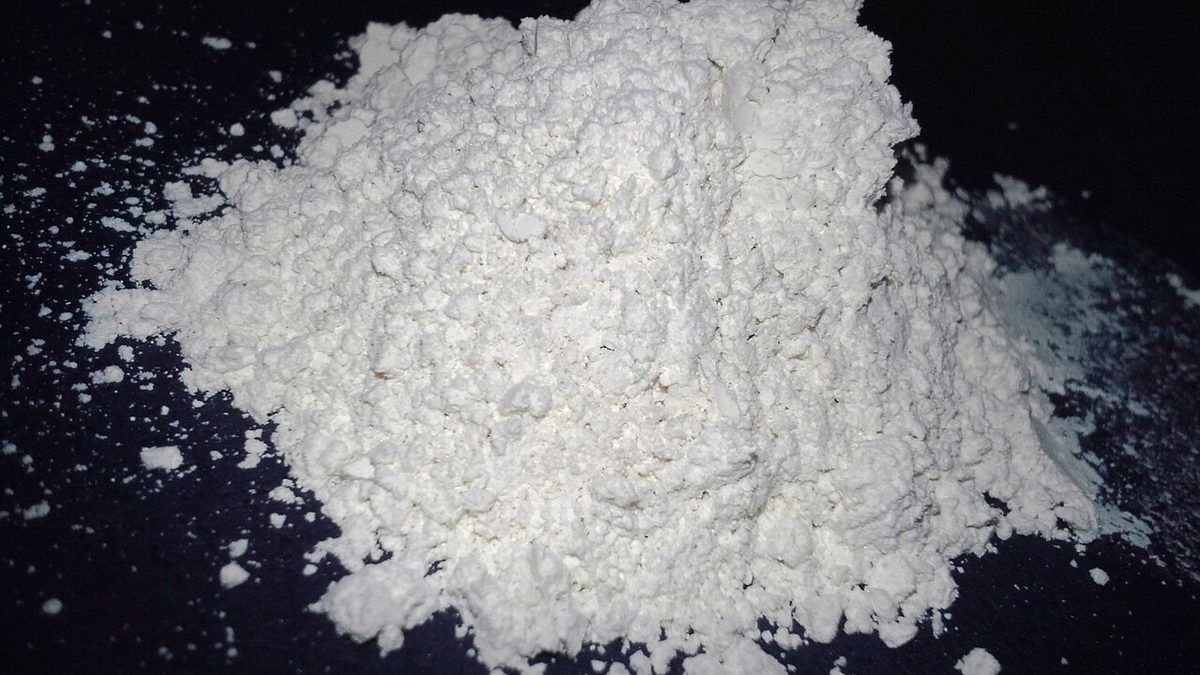
Diatomaceous earth (say it “dye-uh-tuh-may-shus”) is a fine powder made from the fossilized shells of tiny ancient algae. It kills bugs without any poison at all — mechanically. According to the National Pesticide Information Center, it “causes insects to dry out and die by absorbing the oils and fats from the cuticle of the insect’s exoskeleton,” and “its sharp edges are abrasive, speeding up the process.” An ant walks through it, the powder scratches and dries out its waterproof coating, and the ant dehydrates. Dust a thin line in cracks, along baseboards, and under appliances where ants travel.
3 Peppermint and Essential Oils Repel, They Don’t Kill
Strong scents like peppermint, tea tree, and citrus oil genuinely bother ants — their world runs on smell, and these oils drown out the scent trails they navigate by. Wiping a diluted peppermint solution along entry points and counters can make ants avoid an area and lose their path. It smells lovely, and it’s a fine deterrent to keep them off a specific surface.
But be clear-eyed: repelling is not killing. A peppermint spray pushes ants somewhere else; it does nothing to the nest, and the colony keeps growing and probing for a new way in. Worse, if you spray it over a bait trail, you can drive foragers away from the bait you need them to eat. Use scents at the doorways to say “not here,” and let bait do the killing.
4 The DIY Borax Bait You Can Make Tonight
Here’s the natural method that actually kills the colony, because it is a bait. Borax (a laundry-aisle mineral, sodium borate) mixed into something sweet is the classic homemade version of a commercial liquid bait, and it works on the same principle. UC IPM lists borate baits among the recommended options precisely because borax is slow-acting — foragers carry the sweet poison home and share it before it kills them.
The recipe: mix about half a teaspoon of borax into a few tablespoons of warm water and an equal amount of sugar or honey until it dissolves, soak it into a cotton ball, and set it on a bottle cap right on the trail. Keep the concentration low — roughly 1 part borax to well over 10 parts sugar syrup — because if it’s too strong it kills too fast and never reaches the queen. Slow is the point.
How to Get Rid of Ants When You Have Pets
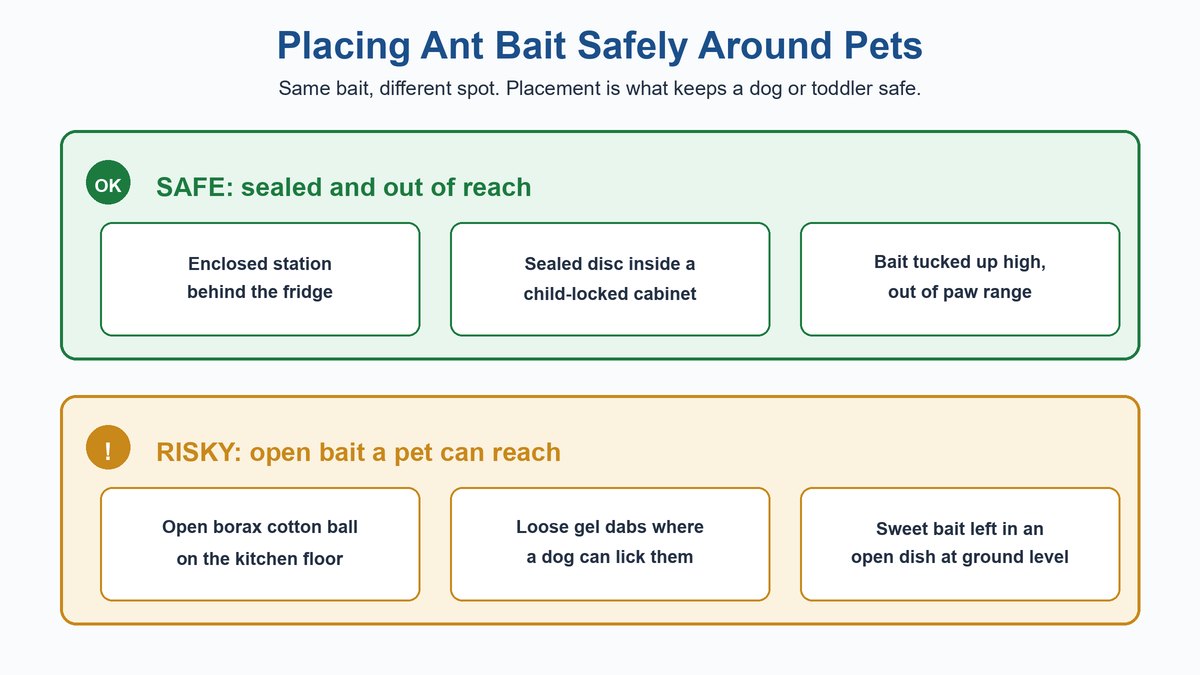
If you’ve got a dog nosing around the kitchen or a cat that treats every counter as public property, the “just put poison down” advice gets stressful fast. The reassuring truth: you can absolutely clear an ant colony without putting your pets at risk. It’s about placement and product choice, not giving up on baiting.
The safest single tool is the enclosed bait station — the little plastic disc or box where the bait sits sealed inside and only ant-sized visitors can get to it. Tuck these where the ants walk but the pets can’t nose in: behind the fridge, under the sink at the back, inside a cabinet, along a wall gap. Your dog can lick the outside of a sealed station all day and get nothing.
Start with the truly pet-friendly natural layer, too. Soapy water is harmless once dry and does real work erasing trails. Food-grade diatomaceous earth is safe enough that NPIC notes it’s even used on pets for fleas — just apply thin lines in cracks pets don’t lounge in, since the dust can irritate lungs if it’s kicked up in clouds. And skip the open homemade borax cotton balls in a pet home; the sealed commercial version does the same job without the exposed sweet poison.
How to Choose the Best Products That Do the Baiting for You
You can absolutely fight ants with a homemade cotton ball, and it works. But the commercial baits exist for good reasons: the dose is pre-measured, the station is sealed against pets and kids, and the formula is engineered for that slow-kill timing that’s fiddly to get right at home. If you want the reliable, do-it-for-you version of the method above, here’s what actually earns its place. We describe how each one works; check the current label and price on the product page, because formulas and sizes change.
TERRO Liquid Ant Baits Are the Sweet-Ant Default
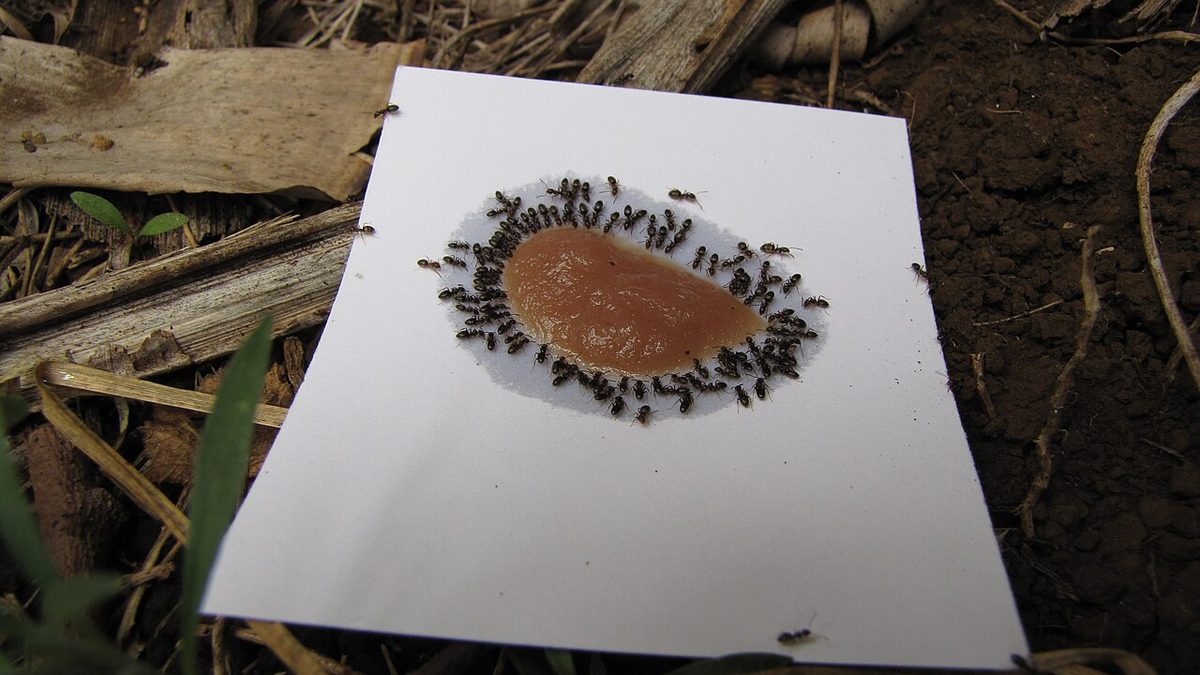
If you’ve got small sweet-loving ants — the odorous house ants and Argentine ants that make up most kitchen invasions — this is the one most people should start with. TERRO’s liquid ant baits are borax-based sweet bait in pre-filled plastic stations: you snap off the tab, set them on the trail, and the ants swarm in to drink. It’s the store-bought version of the borax-and-sugar cotton ball, sealed and dosed for you. The liquid format matters, because sweet ants prefer to drink their food, and a liquid keeps recruiting them for days.
Because it’s borax and deliberately slow, expect the same “more ants before fewer ants” surge for a day or two — that’s the design working, ferrying poison back to the queen. Set several stations right where the trail is heaviest and leave them undisturbed.
Advion Ant Gel Is the Pro-Grade Bait for Stubborn Colonies
When a sweet station isn’t closing the deal, a professional gel bait is the next step up, and Advion Ant Gel is the one pest control operators reach for. It’s a gel you pipe in tiny dots along trails, into cracks, and behind appliances — no station, just precise dabs exactly where ants travel. Its draw is broad appeal: it tends to attract a wide range of household ant species, sweet- and protein-leaning alike, which takes the guesswork out of the two-bait test.
Like all proper baits, it’s designed for delayed kill and transfer through the colony, so the same patience rules apply: place it, don’t spray over it, and let the sharing do its work.
Combat Max Ant Killing Gel and Bait Stations Cover Both Diets
Combat is the widely-available drugstore-and-hardware option, and it comes in two useful forms: pre-sealed bait stations and a squeeze gel. The stations are the pet-and-kid-friendly pick — sealed plastic discs you place on the trail — while the gel lets you hit cracks and corners a disc can’t sit on. Combat’s lineup is built to appeal to both sweet and grease preferences, so it’s a reasonable single-purchase hedge when you’re not sure which your ants want.
Same rules as every bait here: set it on the active trail, keep competing food away, and give it a week or two of undisturbed feeding before you judge it.
Food-Grade Diatomaceous Earth Is the No-Poison Backstop
For entry gaps, wall voids, and dry cracks where you’d rather not put any poison — or as a pet-conscious perimeter — food-grade diatomaceous earth is the honest non-toxic tool. It’s the same mechanical, dry-out-the-ant powder from the natural section, sold in bulk bags. Puff a thin line into the crack that the trail comes from, in the garage, along the sill plate, anywhere dry that ants funnel through.
Treat it as a supporting player: a contact killer and barrier that thins the foragers and blocks routes, working alongside bait rather than replacing it.
Check Food-Grade Diatomaceous Earth on Amazon · NPIC diatomaceous earth fact sheet
Why Ants Suddenly Show Up in Your Kitchen
You cleaned nothing differently, and overnight there’s a trail. It feels random. It isn’t. Ants invade on a schedule that tracks the weather, and understanding it tells you when to expect them and why the entry points matter so much.
Most home ant invasions spike when the weather outside stops suiting the colony. A long dry, hot spell dries up their outdoor water and food, so foragers push indoors hunting for moisture — that’s why ants often appear around sinks and dishwashers in summer. Heavy rain does the opposite: it floods the nest and drives the colony to higher, drier ground, which can mean your walls. Spring warm-ups wake colonies up hungry and send scouts everywhere. In every case, the trigger is outside; your kitchen just became the most appealing restaurant in range.
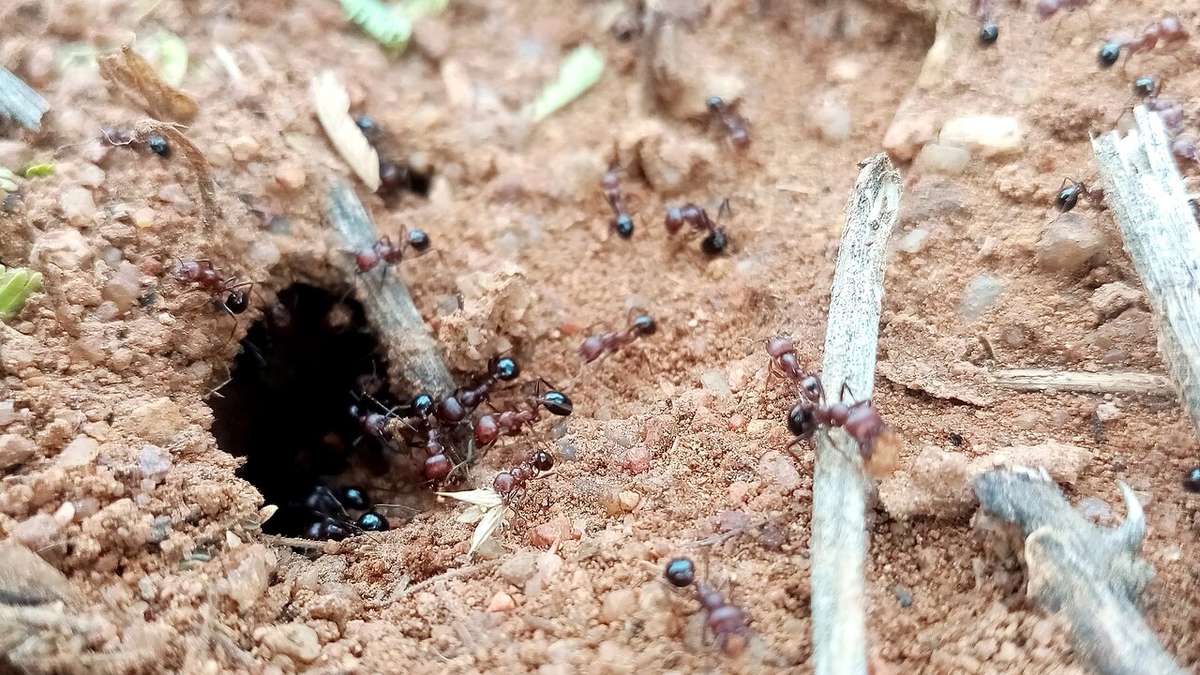
And they only get in because there’s a door. Ants are tiny, and the gaps around utility pipes, under thresholds, behind baseboards, and along foundation cracks are wide-open highways to them. One scout finds a gap and a crumb, lays a scent trail on the way home, and by morning the whole colony is following her path. That’s the chain you’re breaking with bait and with sealing — kill the colony that found you, then close the doors so the next scout finds nothing worth reporting.
If you keep chasing mystery pests and damp smells around the house, the same hidden-moisture logic shows up again and again — our guide to why a house smells musty walks the same hunt for the wet spots that draw uninvited life indoors.
How to Keep Ants From Coming Back Permanently
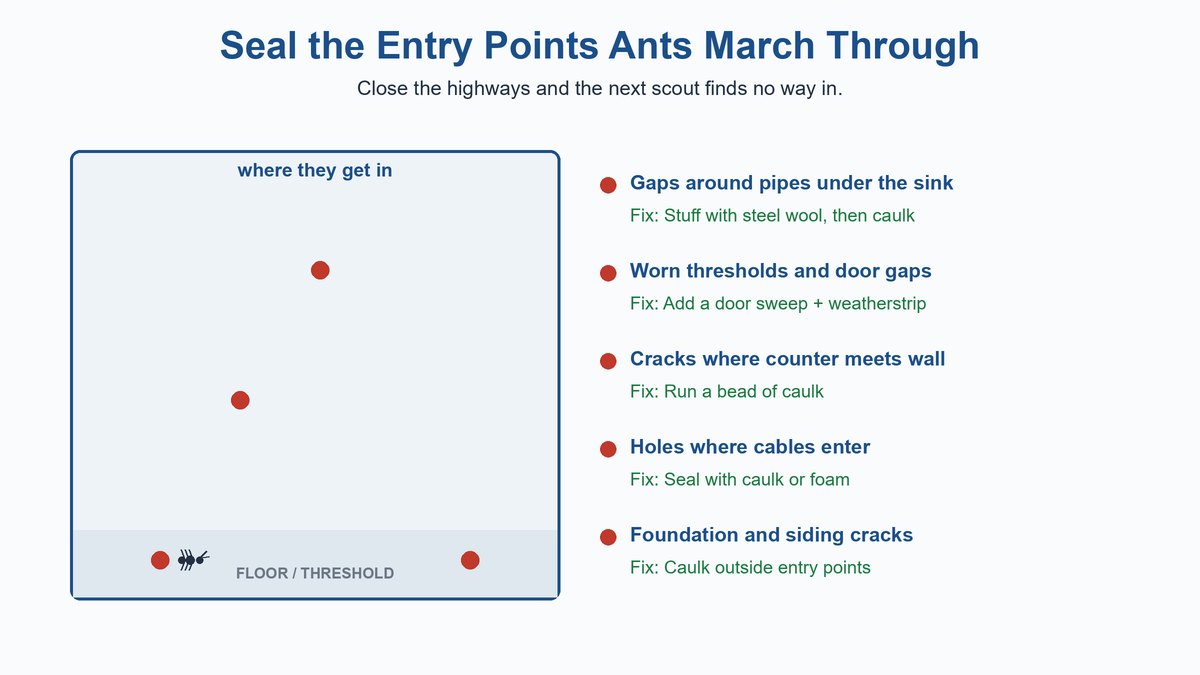
Killing this colony is half the win. The other half — the part that makes it permanent — is turning your home into a place the next colony can’t enter and doesn’t want to. Every step below closes one of the doors we just talked about. Do these and “gone for good” actually means it.
Seal the Cracks and Gaps They March Through
Walk your kitchen and exterior and hunt for the highways: gaps around pipes under the sink, worn weatherstripping under doors, cracks where the counter meets the wall, holes where cables enter. Caulk the small ones, add door sweeps and weatherstripping to the big ones, and stuff steel wool into gaps around pipes before caulking. You will never seal a house perfectly — but every closed gap is one less scout-approved entrance, and it dramatically cuts how often you get invaded.
Erase Every Food Crumb and Sticky Spill
Ants come for food, and “food” to an ant is a smear you can barely see. Wipe counters and sweep floors daily, clean up spills the moment they happen, and pay special attention to the sticky stuff — honey jars, syrup bottles, the ring under the trash can, pet-food bowls. Store sweets and pantry staples in sealed containers, not opened bags. A kitchen with no findable food gives a scout nothing to write home about, and no report means no trail.
Cut Off Their Water Supply
Ants need water as much as food, and a lot of “sudden” invasions are really moisture invasions. Fix dripping faucets and leaky pipes, wipe down wet sinks before bed, don’t leave standing water in trays or pet bowls overnight, and run the bathroom fan to keep things dry. In a dry summer, indoor water is the single biggest thing pulling ants inside — take it away and you remove the main reason they came.
Trim the Living Bridges Touching Your House
Tree branches, shrubs, and vines that touch your walls or roof are literal ant bridges from the yard straight past your foundation and inside. Trim vegetation back so nothing touches the house, keep mulch and soil a few inches below the siding line, and move firewood and leaf piles away from the walls — those are prime outdoor nesting sites right against your entry points. Push the colony’s world back from the house and fewer scouts ever reach it.
Keep a Soapy Spray Bottle on Standby
Prevention includes staying alert. Keep that dish-soap spray bottle handy and hit the very first scouts you see, wiping their trail before it becomes a highway. Catching one scout and erasing her map today prevents the hundred-ant trail tomorrow. It’s the cheapest, fastest tool you own, and it stops a new colony’s beachhead before it establishes.
If ants aren’t your only uninvited houseguests, the same seal-clean-dry playbook works on the rest of them — our walkthrough on why there are so many spiders in your house and the guide to getting rid of gnats both come down to closing gaps and removing what drew them in.
Frequently Asked Questions
What is the fastest way to get rid of ants in the house?
The honest answer is that “fast” and “permanent” pull in opposite directions. For instant relief tonight, wipe the trail with soapy water — it kills the ants you see on contact and erases their scent path, so the visible line disappears in minutes. But that’s cosmetic; the nest is untouched and the trail will return. To actually end it, set out slow-acting bait and leave it alone for a week or two while the colony carries the poison home to the queen. Do both: soapy water for immediate calm, bait for the real kill. Just don’t spray the trail, which only scatters the colony and drags the fight out.
Does killing the ants I see get rid of the colony?
No, and this is the single most important thing to understand. The ants you see are foragers — a small fraction of the colony sent out to find food. The queen and the brood that make new ants stay hidden in the nest and never come out. You can kill every forager you ever see and the colony just sends more. That’s the whole reason bait works and swatting doesn’t: bait uses those foragers as unwitting delivery drivers to carry poison back to the part you can’t reach.
Why do I suddenly have so many ants when my house is clean?
Because ants aren’t hunting for mess — they’re hunting for moisture, a single crumb, and an open door, and clean homes have all three. A dry, hot spell outside pushes ants indoors looking for water, so they turn up around sinks and dishwashers in a spotless kitchen. A tiny gap around a pipe is a wide-open highway to a bug that small. And once one scout finds even a barely-visible smear and lays a scent trail, the colony follows. A clean counter doesn’t rule any of that out, so seal the gaps and cut the indoor water rather than assuming you did something wrong.
Are natural remedies like vinegar and peppermint enough on their own?
For a small, new trail, sometimes — but understand what they do. Vinegar and peppermint are repellents and trail-erasers: they wipe the scent path and make ants avoid a surface, which can be enough to break up a minor visit. What they don’t do is kill the nest. If you’ve got an established colony sending daily trails, repelling just moves the problem around while the nest keeps growing. The one natural method that actually kills the colony is a homemade borax-and-sugar bait, because it is a bait that gets carried home. Use scents to say “not here” and borax bait to say “goodbye.”
How long does ant bait take to work?
Plan on one to two weeks, and expect it to look worse before it looks better. For the first day or two you’ll often see more ants swarming the bait — that’s the colony recruiting foragers to haul it home, which is exactly what you want. The slow-acting poison then spreads through the nest over several days as ants share food, and the queen’s death ends new egg-laying. You’ll usually see the trail thin out and then stop within one to two weeks. If it’s still going strong after two weeks, you likely have the wrong bait type (sweet when they want grease) or a competing food source stealing their attention.
Is it safe to use ant bait around pets and kids?
Yes, if you choose and place it carefully. Enclosed commercial bait stations are the safe pick — the bait is sealed inside a plastic disc that only ant-sized visitors can enter, so a pet licking the outside gets nothing. Put stations where pets and toddlers can’t physically reach or chew them: behind appliances, inside cabinets with child locks, up high. Skip open homemade borax cotton balls in a pet home, since the sweet poison is exposed; borax is low-toxicity but not harmless if a dog eats a lot. Food-grade diatomaceous earth is another low-risk option — just avoid kicking up clouds of the dust indoors.
Should I ever call a professional exterminator?
Bait handles the vast majority of household ant problems, so try it first — it’s cheap and it works. Call a pro when the evidence points past a normal food invasion: large black carpenter ants with piles of sawdust-like debris (a sign they’re tunneling in structural wood), a colony that shrugs off correct baiting for several weeks, or repeated whole-house invasions no sealing seems to stop. Pharaoh ants are another case for expert help, because the wrong treatment makes them split and spread through a building. A good pro identifies the species and finds the nest, which is exactly the information that turns a stubborn infestation into a solved one.
About the Author
Elena Brooks
Elena Brooks is the person her group chat texts when something at home stops working or a health trend starts trending. She’s spent years turning that instinct into a job — digging into the research behind everyday questions, calling the experts, and writing up what holds up and what doesn’t. Her beat is wherever curiosity points: kitchens, cars, pets, sleep, money, and the occasional meteor shower.