

- Seal before you trap. Mice squeeze through a gap the width of a pencil, about 1/4 inch. If you do not close the holes, you are trapping forever.
- Steel wool plus caulk beats spray foam. Mice chew straight through expanding foam. They cannot chew through steel wool packed tight and locked in with caulk.
- Snap traps still win. Cheap, fast, and humane when placed right. Electronic traps do the same job with no touching. Skip glue boards.
- Placement matters more than bait. Set traps against walls, trigger facing the wall, 6 to 10 feet apart. Mice run the edges of a room, not the middle.
- Ultrasonic repellers barely work. Sound does not pass through walls, and mice tune it out in days. Do not rely on it.
- Cut off food, water, and shelter. No trap holds a house that still offers a free buffet and a warm bed.
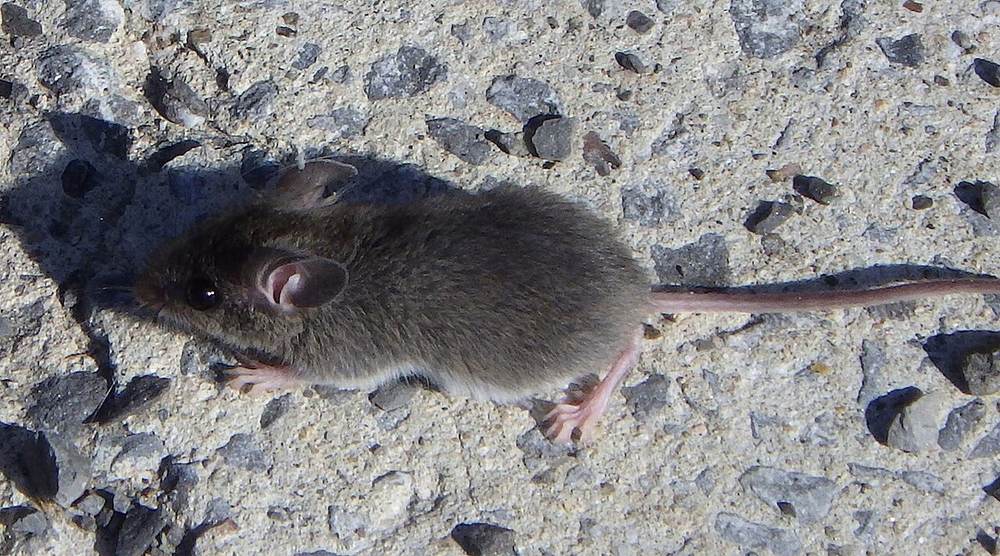
You heard it last night. That soft scratching behind the wall, or a tiny shadow darting under the stove. Now you want the fastest way to make it stop. Here is the honest truth about how to get rid of mice in your house: setting a few traps is the easy part, and it is also the part that fails most people. Trap a mouse today and two more walk in tomorrow through the same gap it used. The real fix is to close the door first, then deal with whoever is already inside.
Mice handled? Then tackle fruit flies and wasps next.
So that is exactly how we are going to do this. Seal the house so no new mice can get in. Trap the ones already here. Then clean up so the whole thing never starts again. It is not hard. It just has to happen in that order.
A quick, honest note: some of the products below are ones we may earn a small commission on if you buy through our links. It costs you nothing extra, and we only point to gear that actually does the job. Pick whatever brand you trust.
Why Mice Pick Your House in the First Place
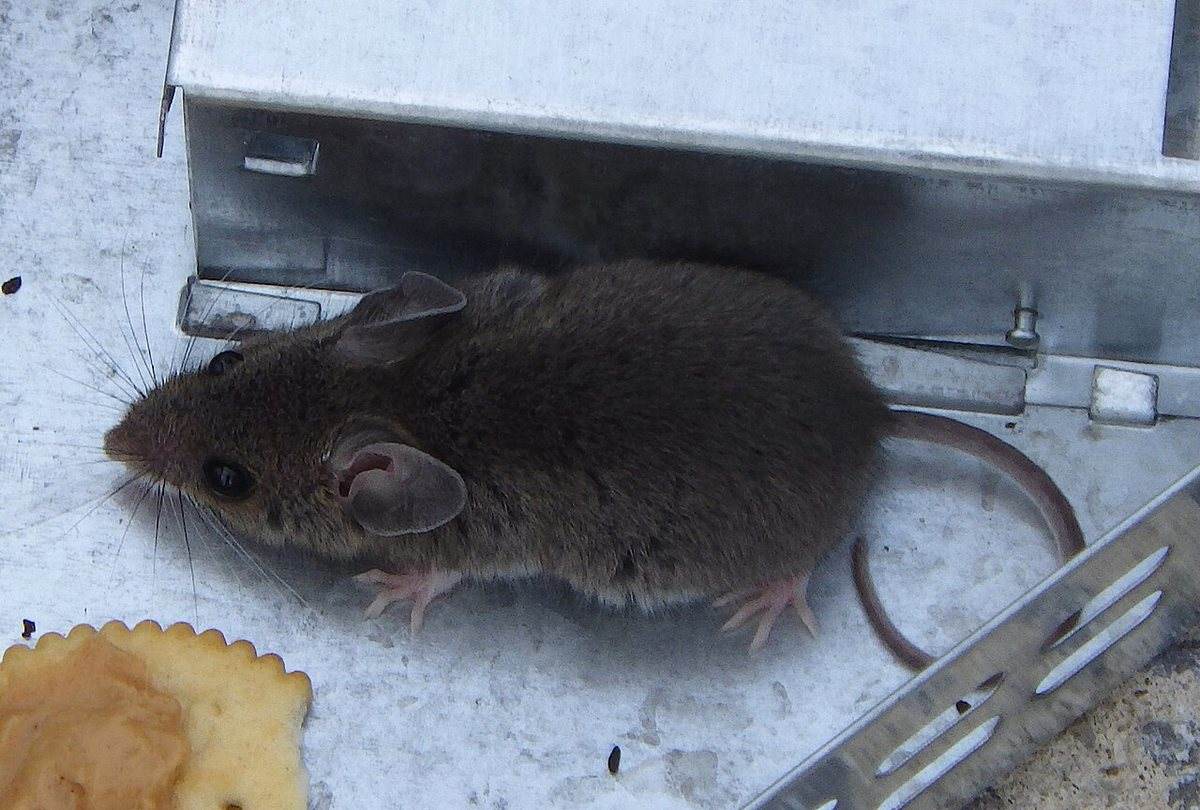
A mouse did not wander in by accident. It came for three things every house quietly hands out: something to eat, somewhere warm, and a way in. Your kitchen crumbs, the pet food bag, the cozy gap behind the dishwasher. To a mouse, your home is a heated pantry with the door propped open.
Here is the part that should light a fire under you. Mice breed fast, really fast. The University of California Statewide IPM Program confirms a single female can have five to ten litters in a year, with about half a dozen pups each time, and those pups can start breeding at around six weeks old. So the one mouse you saw is almost never just one mouse. It is a scout, and the clock is already running. This is why “how to get rid of mice in your house” is a job you want to finish this week, not next month.
The good news is that the same things that invited them in are the exact levers you get to pull to push them back out. Take away the entry, the food, and the shelter, and a mouse has no reason to stay and no way to return. Everything below is just doing that in a smart order.
How to Seal Every Gap Before You Set a Single Trap

This is the step almost every quick guide skips, and it is the reason people end up trapping mice for months. Think about it. If your basement wall has a gap the size of a nickel, you can catch mice all winter and the parade never ends, because the door is still open. Sealing is what turns “getting rid of mice” from an endless chore into a one-time fix.
The number that surprises everyone: a young mouse can flatten itself through a gap about 1/4 inch wide, roughly the width of a pencil. Their skull is the only truly rigid part of the body, so if the head fits, the whole mouse fits. An adult still slips through a gap barely wider than a pencil, roughly 3/8 inch, smaller than you’d ever suspect. That means the crack you would never think twice about is a wide-open front door to them. A young rat needs more room, closer to 1/2 inch, which is exactly why you seal every gap to the smallest offender in the house, not just the biggest one.
Find the Entry Points Mice Are Actually Using
Grab a flashlight and get low, because you need to see the house the way a mouse does: from the floor. Check where pipes and wires pass through walls under the sink and behind appliances. Check the gaps under and around exterior doors, the corners of the garage, the spot where the foundation meets the siding, and any vent or dryer duct. Look for the tells too: little dark droppings the size of rice, greasy smudge marks along baseboards where oily fur rubs the wall, and shredded paper or insulation.
Pack Gaps With Steel Wool, Then Lock It In With Caulk
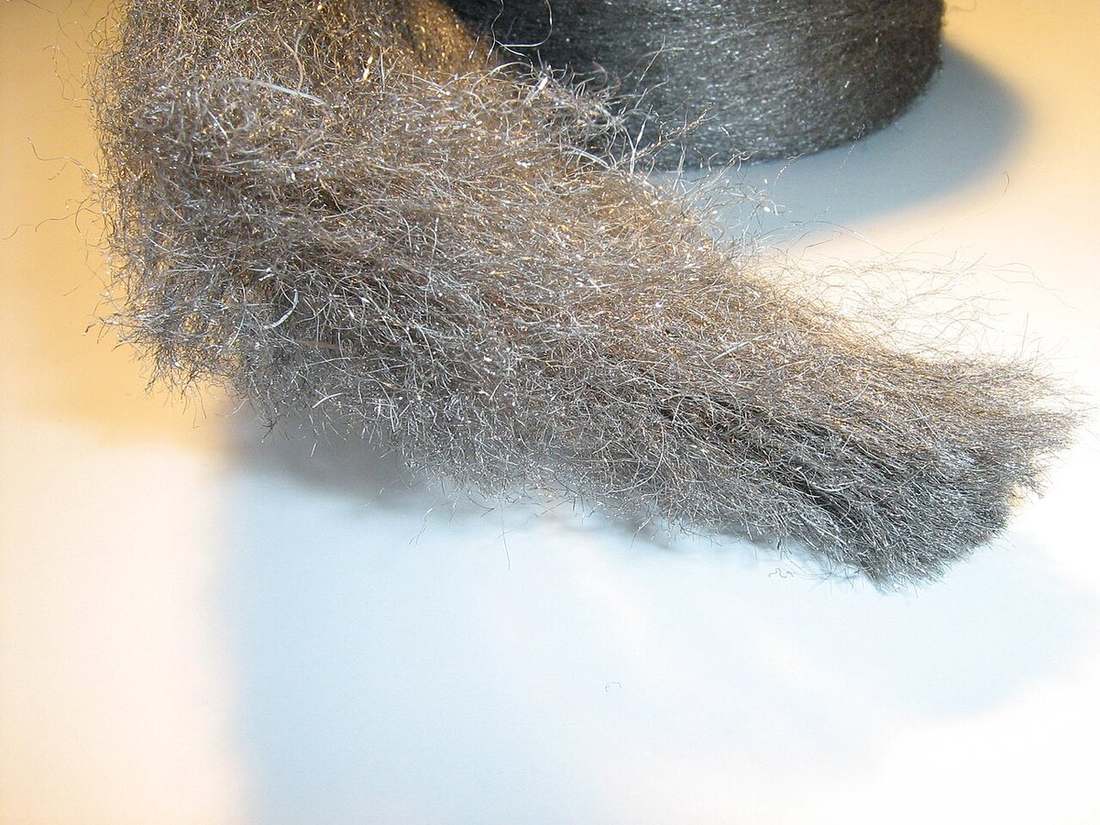
Here is the two-part trick that actually holds. First, stuff the gap tight with coarse steel wool. Mice hate chewing it because the sharp metal fibers hurt their mouths and they cannot get a grip on it, so they give up. Pack it in firmly with a screwdriver until the hole is dense and full.
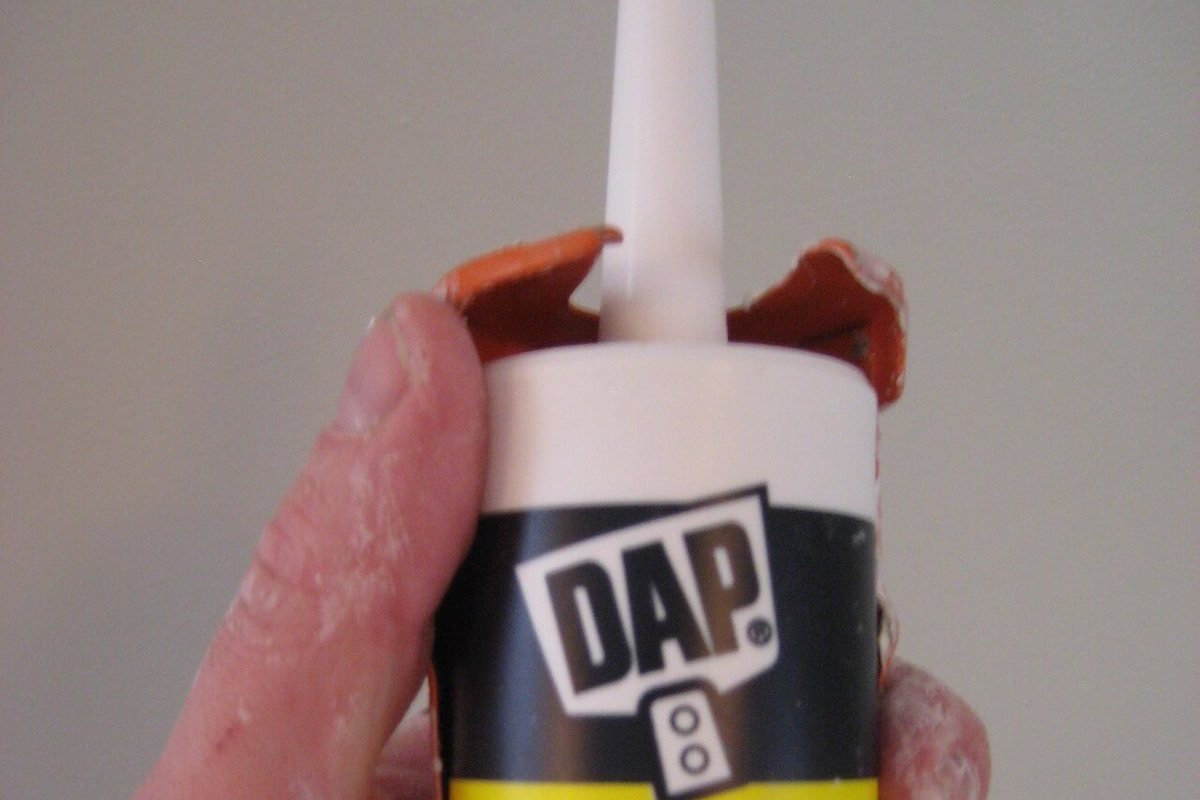
Steel wool alone can eventually be tugged loose or can rust, so you lock it in place. Run a bead of silicone caulk over and around the packed steel wool so it is glued in and weatherproofed. Now the gap is both mouse-proof and sealed against drafts and damp. For a hole bigger than a coin, back the steel wool with hardware cloth (a stiff metal mesh) or a patch of sheet metal before you caulk, since a determined mouse can worry loose a plug that is only wool.
Why Expanding Foam Fails and What Beats It
It is tempting to grab a can of expanding spray foam and blast every hole shut. Do not. Mice chew through standard expanding foam like it is a marshmallow, and they will happily tunnel a fresh doorway right through your handiwork within a week. Foam looks sealed to you and reads as “soft, chewable, and warm” to them.
Caulk works because it is only ever the outer skin over a metal plug, not the barrier itself. The steel wool is the thing a mouse cannot beat; the caulk just holds it and finishes the seal. If you only remember one line from this whole article, make it this: metal stops mice, foam invites them. There are rodent-blocking foams sold with embedded fibers, but plain steel-wool-plus-caulk is cheaper, easier to find, and proven.
The Main Types of Mouse Traps and Which to Use
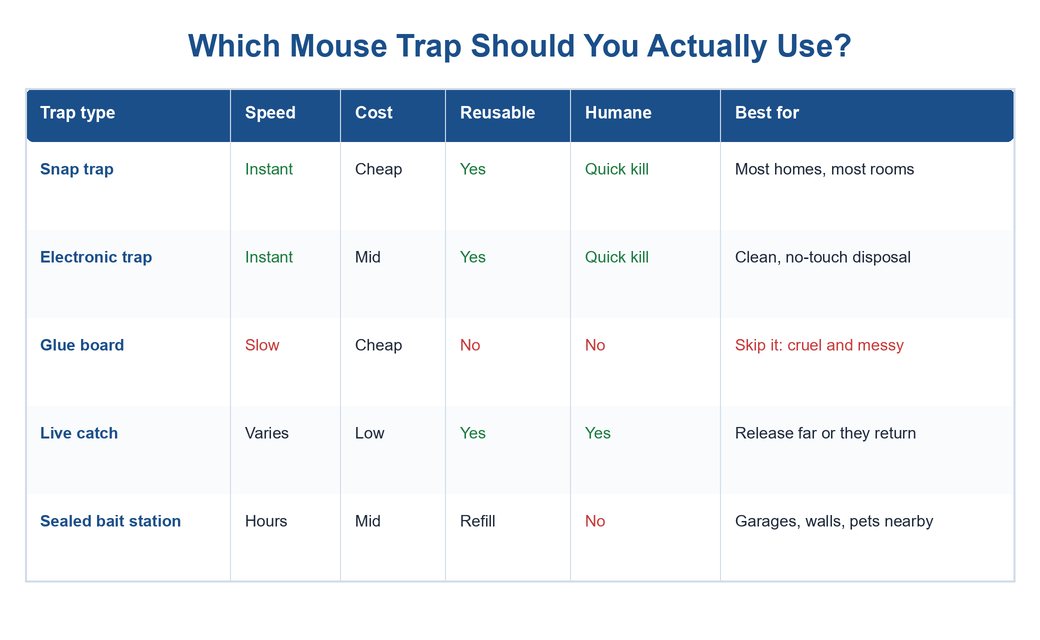
With the house sealing up behind you, now you go after the mice already inside. There are a handful of trap types and they are genuinely not equal. Here is the honest rundown so you buy the right thing once instead of the wrong thing three times.
1 Classic Snap Traps, the Cheap Reliable Workhorse
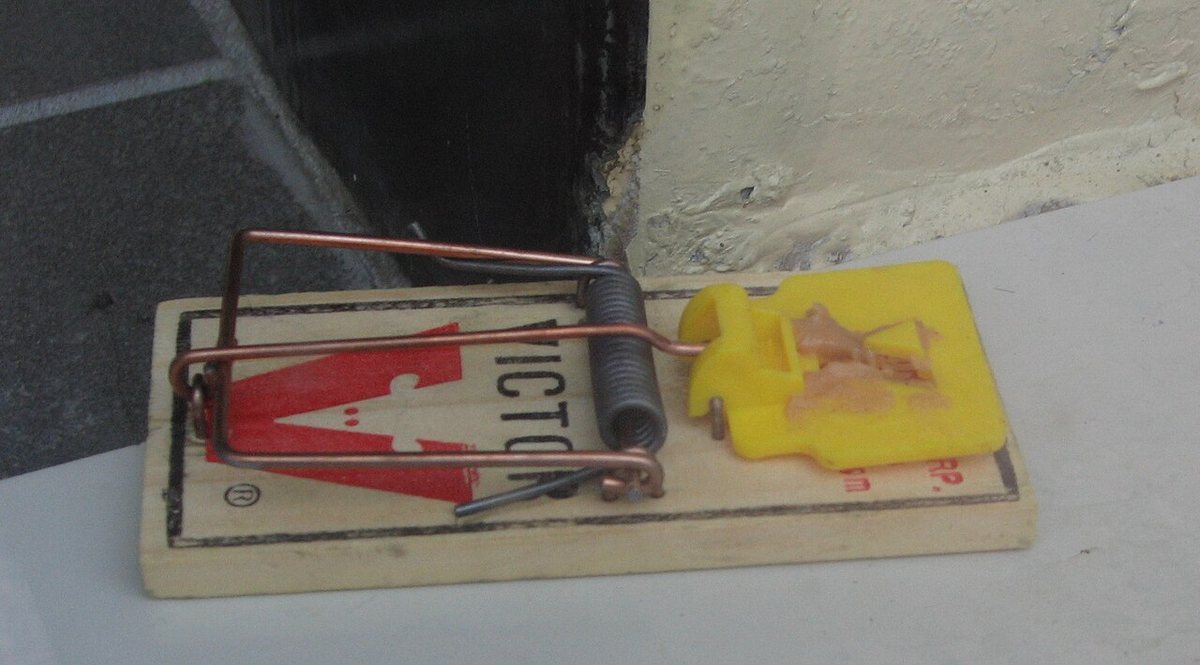
The old wooden snap trap is still the one most pros reach for, and for good reason. It costs about a dollar, it kills instantly (which is more humane than a slow death), and you can set out a dozen at once without spending real money. The classic Victor wooden snap trap is the icon of the category, and it flat-out works.
The secret is the bait and the setting. Skip the cartoon cheese. Use a tiny smear of peanut butter, which is sticky and smelly and forces the mouse to really work the trigger. Set the trap so the baited trigger end sits flat against the wall, because that is the path the mouse is already walking. Bait it without setting it for the first night or two so the mice learn to trust it, then arm it. That patience roughly doubles your catch rate.
2 Electronic Traps for a Clean, No-Touch Kill
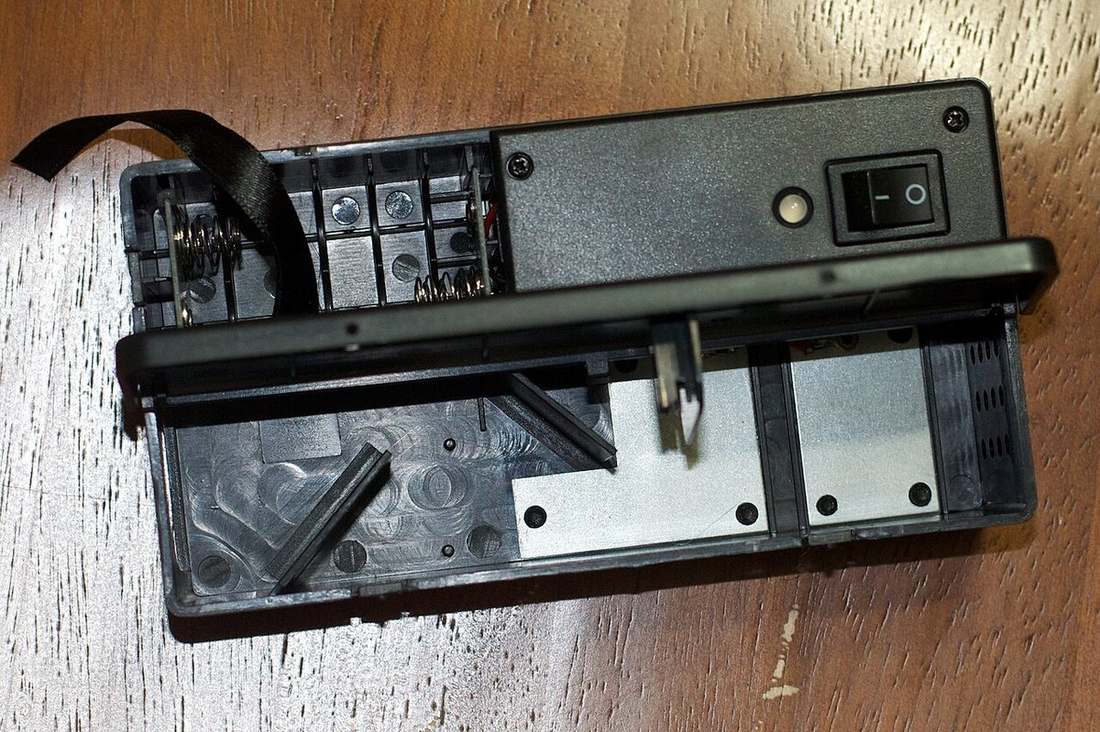
If the idea of emptying a snap trap makes you queasy, an electronic trap is your friend. The mouse walks into an enclosed chamber, completes a circuit, and gets a quick high-voltage jolt that kills it fast and out of sight. You never see or touch the mouse. When a light blinks to signal a catch, you just tip the whole thing into the trash and reset it.
They cost more than snap traps, usually somewhere in the twenties to forties per unit, and they run on batteries you have to keep fresh. But for a squeamish household or anyone who wants a tidy, repeatable kill in the kitchen or pantry, a reusable Victor electronic trap earns its price fast. Place them the same way as snap traps: flush against a wall on the mouse’s travel route.
3 Glue Boards and Live Traps, and Why I Skip One
Glue boards are the cheap sticky trays sold everywhere, and I will be blunt: skip them. A mouse caught on glue does not die quickly. It struggles for hours, and you are left to deal with a living, panicking animal stuck to a tray. Many people find that far more distressing than a snap trap, and several places restrict them for good reason. They also fail the moment they collect dust or hair.
Live catch traps are the other end of the spectrum. They shut a door behind the mouse so you can release it unharmed. If that fits your conscience, go for it, but know two things. You have to check the trap often, because a trapped mouse can die of stress or cold within a day, and you have to release it far away, at least a couple of miles, or it simply runs back to your warm house before you do.
4 Sealed Bait Stations for Garages and Wall Voids
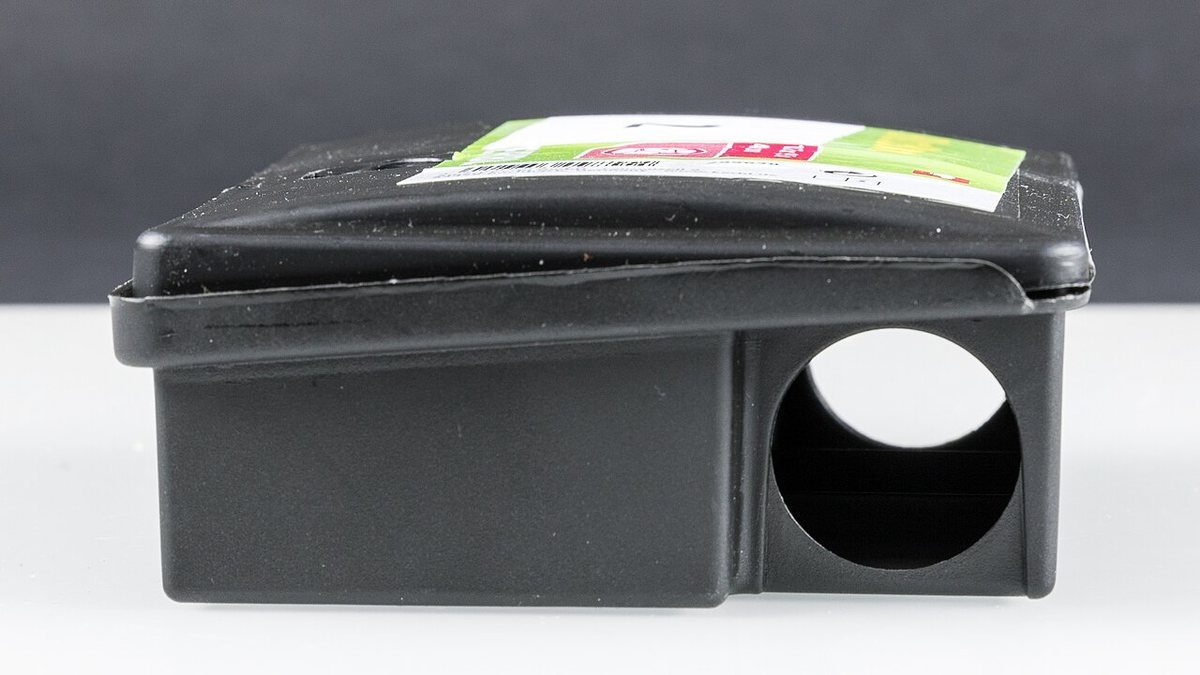
A sealed rodent bait station is a locked plastic box that holds rodenticide bait behind a small entry hole. The point of the box is safety: the poison is enclosed so a curious dog, cat, or child cannot reach it. These make the most sense in spots you cannot easily reach or watch, like a garage, a shed, or along an exterior wall where mice travel.
Be careful and honest with yourself about poison, though. A poisoned mouse often crawls off to die inside a wall, which leaves you with a smell you cannot ignore for a week or two. Poison also carries a real risk to pets and wildlife, both directly and through secondary poisoning when a cat or owl eats a poisoned mouse. The U.S. Environmental Protection Agency restricts the strongest rodenticides to professionals and requires tamper-resistant bait stations wherever kids or pets can reach. For most indoor infestations, traps are the cleaner, safer choice, and bait stations are a backup for the outdoor edges.
Where to Place Mouse Traps So They Actually Catch
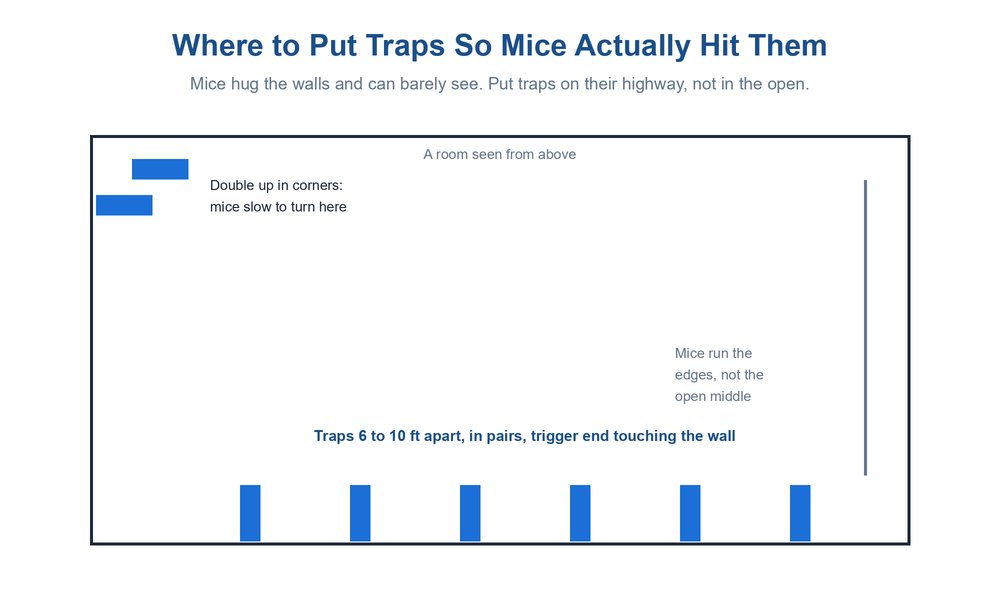
You can buy the best traps in the store and catch nothing if you set them in the middle of the floor. Placement is where most people quietly lose. Mice have terrible eyesight and they are nervous in open space, so they almost never stroll across the middle of a room. Instead they hug the walls, using their whiskers to feel the edge as they go. Your traps have to sit on that highway.
So set traps flush against the wall, with the trigger end touching the baseboard, so a mouse running the edge steps right onto it. Place them in pairs a few inches apart, because a mouse dodging one may trip the other. Space groups of traps every 6 to 10 feet along a wall where you have seen activity, and double up in corners, where mice slow down to turn. Behind the stove, under the sink, along the back of a pantry, and in the garage against the wall are all prime spots.
Whether Ultrasonic Repellers Are Worth Your Money
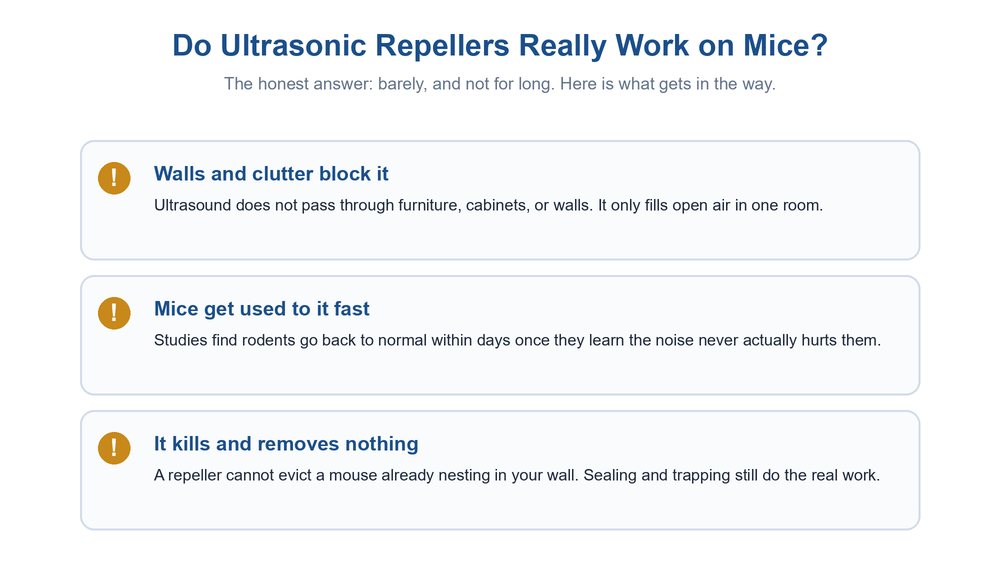
Those plug-in ultrasonic gadgets promise to flood your home with a sound only mice can hear and drive them out without a single trap. It sounds perfect. The honest verdict is that they barely work, and not for long, so do not let one become your whole plan.
Two things get in the way. First, ultrasonic sound does not travel through walls, furniture, or clutter, so a single unit only affects the open air of one room and does nothing for the mouse nesting inside your wall. Second, mice are smart and adaptable. Study after study finds that rodents get used to the noise within days once they figure out it never actually hurts them, and then they carry on as if it were off. Most of all, a repeller kills nothing and evicts nothing. The mouse already in your house still has to be sealed out and trapped. If you enjoy the idea, treat a repeller as a very minor add-on, never a substitute for the real work.
How to Handle Mice in Walls, the Garage, and at Night
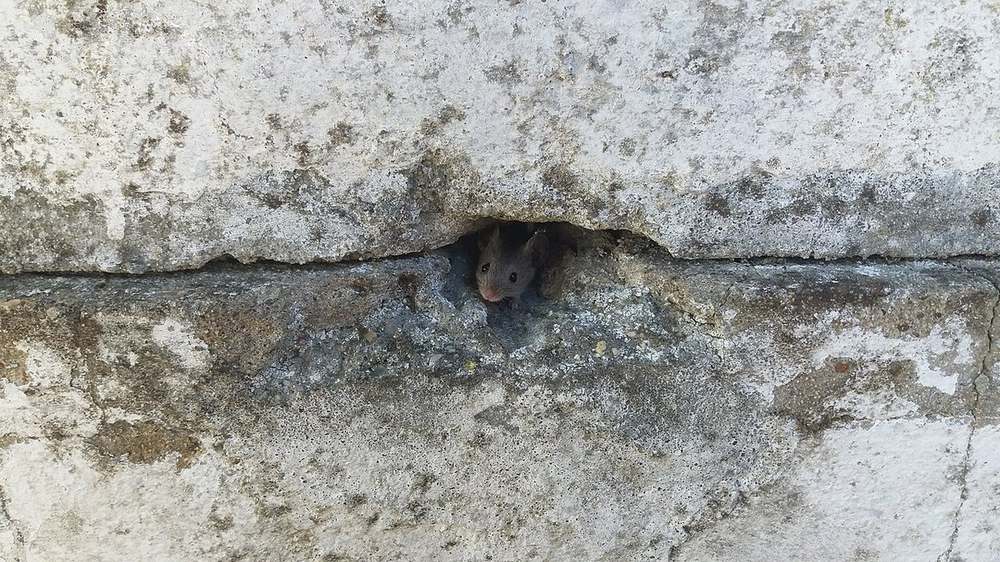
Some mouse problems come with their own quirks. Here is how to handle the three situations people ask about most, because each one needs a slightly different move.
How to Get Rid of Mice in Walls
When mice are living inside a wall, you cannot exactly reach in and grab them. What you can do is control the exits. Mice in a wall still have to come out to eat and drink, so find the little holes where the wall void opens into your rooms, usually low, near pipes, outlets, or the floor. Set snap traps right at those openings so a mouse gets caught the moment it steps out. Once you stop catching anything for a week and the scratching goes quiet, seal those interior openings with steel wool and caulk. Sealing them while mice are still active just traps live animals in the wall, so trap first, then seal.
How to Get Rid of Mice in the Garage
The garage is ground zero for a lot of mouse problems, because the big door never seals perfectly and the space is full of tempting clutter and stored food. Start by clearing the floor edges: get cardboard boxes, paper, and stored seed or pet food up onto shelves and into sealed metal or hard plastic bins. Add a rubber sweep along the bottom of the garage door to kill that daylight gap. Then run traps along the walls and, if pets and kids are kept out, a sealed bait station in a back corner. A tidy garage with a sealed door stops being a hotel and the mice move on.
That Scratching in the Walls at Night
If the only sign you have is a mouse in the house at night, that faint scratching or scurrying overhead after dark, you are hearing them come out to forage while the house is quiet. That noise is actually useful intel. Lie still and pin down where it is loudest, then focus your sealing and trapping on that stretch of wall or ceiling. Nighttime activity is normal for mice; it does not mean the problem is worse, just that you are finally noticing the schedule they have kept all along.
Clean Up So the Mice Never Come Back
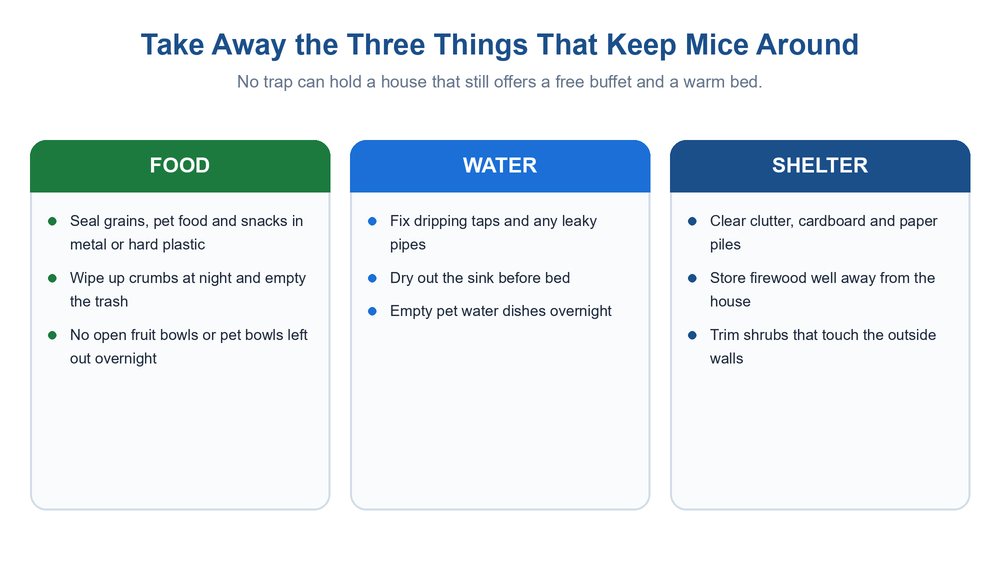
You have sealed the house and cleared the mice. This last step is what keeps them gone. Mice came for food, water, and shelter, so you take all three off the table. Keep grains, cereal, pet food, and snacks in metal or thick plastic containers with tight lids, since mice chew right through cardboard and thin plastic. Wipe up crumbs at night, run a tight lid on the trash, fix dripping taps, and clear the clutter piles that make cozy nests. Outside, move firewood away from the house and trim back shrubs that touch the walls.
Cleaning up droppings needs real care, because mouse droppings and urine can carry germs that become airborne when you sweep or vacuum them dry. The U.S. Centers for Disease Control and Prevention advises never to sweep or vacuum rodent waste. Instead, open windows to air the room for 30 minutes first, put on rubber gloves, spray the droppings and nest thoroughly with a disinfectant or a bleach solution of about one part bleach to ten parts water, let it soak for five minutes, then wipe everything up with paper towels and bag it. Never handle it dry.
Once you have done all this, keep two or three traps set and baited for a couple more weeks as an early-warning system. If nothing trips them, you have won. Staying mouse-free after that is mostly about not letting the gaps reopen and not turning the kitchen back into a buffet.
Frequently Asked Questions
How long does it take to get rid of mice in your house?
For a small infestation, sealing entry points and setting plenty of traps usually clears things out in one to two weeks. A bigger or long-running problem can take a month or more of steady trapping and sealing. The single biggest factor is whether you sealed the entries. If you only trap and never seal, it can feel like it never ends, because new mice keep replacing the ones you catch.
If I saw one mouse, how many are there really?
Usually more than one. Because mice breed so quickly and hide so well, a single sighting often means a small family is already established, especially if you are also finding droppings in more than one spot. Treat one mouse as a signal to act on the whole house, not as an isolated visitor. The good news is that catching your traps go quiet for a solid week is a reliable sign the group is gone.
What smell keeps mice away for good?
Peppermint oil is the famous one, and mice genuinely dislike strong scents. But be realistic: a cotton ball soaked in peppermint oil might make a mouse detour around one spot for a few days, and then it fades and they ignore it. No smell reliably clears an infestation or replaces sealing and trapping. Use scents as a very minor deterrent at most, not as your plan.
Should I use rat poison or rodenticide?
Indoors, usually no. Poisoned mice tend to die inside walls, leaving a smell you cannot remove for a week or two, and rodenticides carry real risks to pets, children, and wildlife, including secondary poisoning when a pet or owl eats a poisoned mouse. Traps give you a clean, controllable result and you always recover the mouse. If you do use bait, keep it in a sealed, tamper-resistant station and follow the label exactly.
Do I need to call an exterminator?
Most household mouse problems are very DIY-friendly with sealing and traps. Consider calling a professional if the infestation is large, if it keeps coming back despite your best sealing, if mice are getting into wall voids or ductwork you cannot access, or if you are not comfortable handling traps and droppings safely. A good pest pro will also seal entry points, not just set bait, so ask.
How do I know when the mice are finally gone?
Watch for the signs to stop. No new droppings appearing, no fresh gnaw marks, no scratching at night, and traps that sit untouched for a week or more. Leave a few baited traps out as sentries even after things go quiet, because they will catch any straggler and confirm the coast is clear. When the sentries stay empty and the house stays silent, you have gotten rid of the mice.
The Real Secret Is Sealing, Not Just Trapping
If you take one idea away from all of this, let it be the order. Almost everyone reaches for traps first and wonders why the mice keep coming. The people who actually win seal the dime-sized gaps first, then trap the stragglers, then clean up the buffet. Do it in that order and you are not just catching mice, you are closing the door they came through.
Start tonight with a flashlight and a look at the floor. Find the gaps, pack them with steel wool and caulk, set a good spread of traps along your walls, and tidy up the food and clutter. It is cheap, it is doable in a weekend, and unlike another lonely trap in the corner, it actually ends the problem. For related pest fights, we have full guides on how to get rid of gnats in the house and why there are so many spiders in your house.
About the Author
Elena Brooks
Elena Brooks is the person her group chat texts when something at home stops working or a health trend starts trending. She’s spent years turning that instinct into a job — digging into the research behind everyday questions, calling the experts, and writing up what holds up and what doesn’t. Her beat is wherever curiosity points: kitchens, cars, pets, sleep, money, and the occasional meteor shower.