





Why can THC make you hungry when you’re already full? Why do your eyes turn red, your mouth go dry, and repeated cannabis use lead to tolerance or dependence?
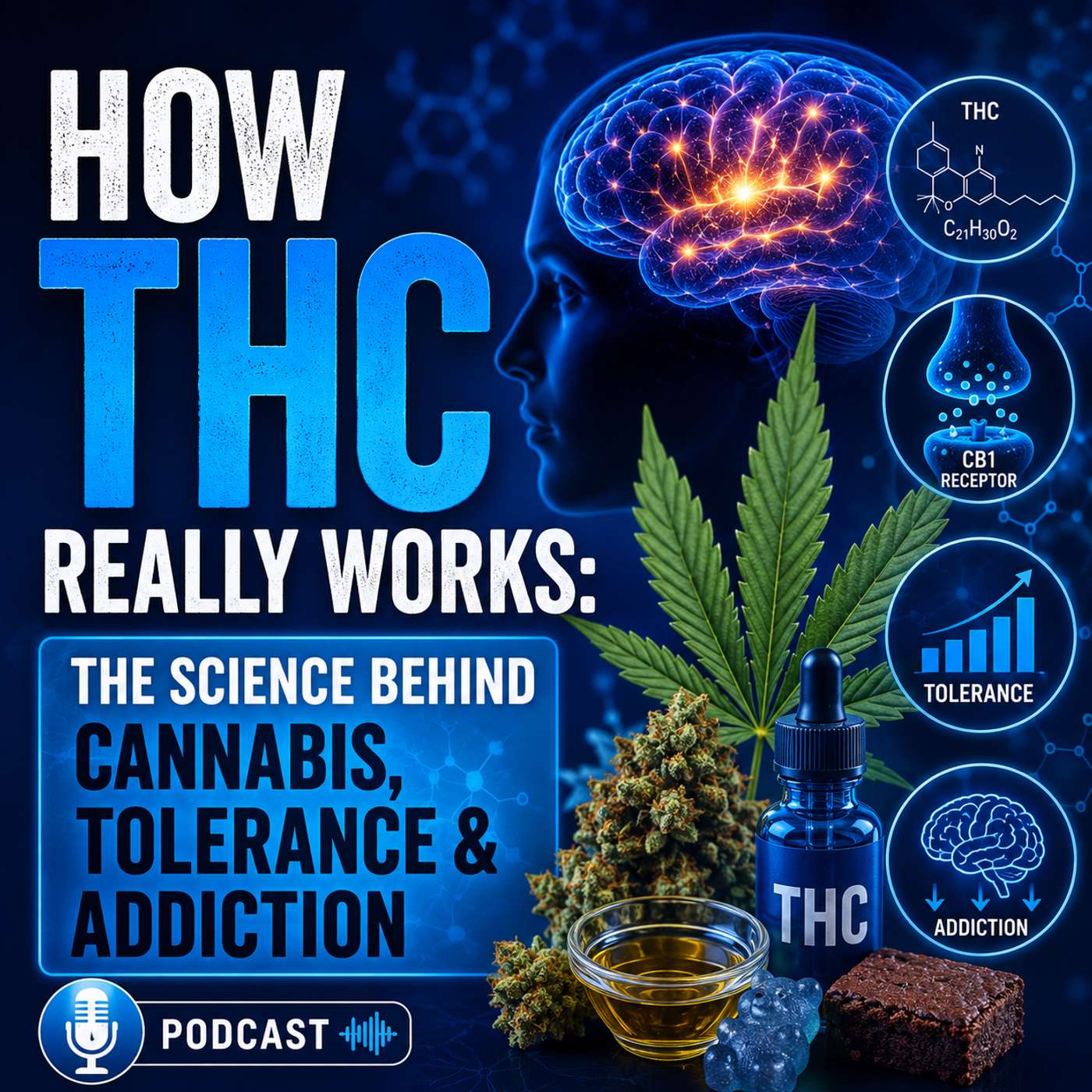
In this episode, Mike and guest expert Susan explore the biology described in the transcript behind some of cannabis’s most recognizable effects. They trace THC’s interaction with the endocannabinoid system, including CB1 and CB2 receptors distributed throughout the brain and body.
You’ll hear about:
- How THC interacts with cannabinoid receptors throughout the body
- Why changes in heart rate, blood pressure, and blood vessels are linked to red eyes
- Why dry mouth isn’t simply caused by hot cannabis smoke
- How THC affects the salivary glands and reduces saliva production
- Why smoked or vaped cannabis has a different onset from edibles
- How the hypothalamus and POMC neurons are connected to hunger and satiety
- What the transcript says happens inside these neurons during the “munchies”
- How repeated THC exposure can lead to receptor downregulation and tolerance
- The important differences between tolerance, physical dependence, withdrawal, and cannabis use disorder
- Why the episode identifies adolescent cannabis use as carrying greater risk than starting in adulthood
- Why “lower risk” compared with substances such as alcohol or opioids doesn’t mean “zero risk”
From the cardiovascular system and salivary glands to hunger signaling and long-term adaptation, this episode takes a cellular-level look at what happens when THC interacts with systems designed to maintain biological balance.
Listen through to the end for a bigger question: if the endocannabinoid system helps regulate hunger, stress, and balance, how might everyday habits such as diet, stress, and exercise influence that same network?
Subscribe, share the episode, and stay curious.