

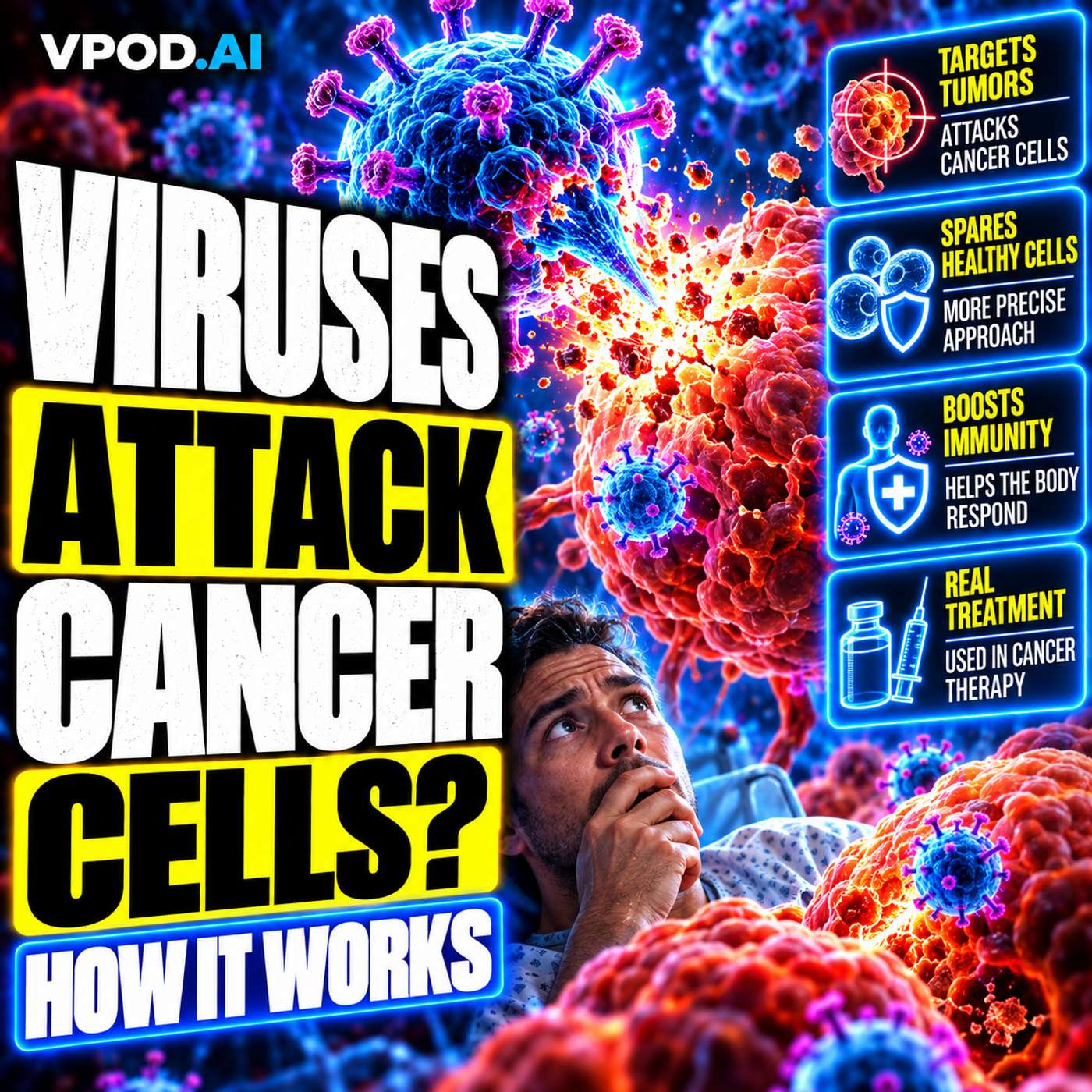





Can a virus become a weapon against cancer?
In this episode, Mike and Susan explore the story of a virologist who turned to experimental virotherapy after facing recurrent stage 3B breast cancer. Instead of relying only on conventional treatment, she used weakened viruses in an attempt to directly attack cancer cells and provoke a powerful immune response.
The discussion breaks down how cancer cells differ from healthy cells, why certain viruses may be able to exploit those weaknesses, and how viral infection can potentially expose tumors to the immune system.
You’ll hear about:
• Why chemotherapy can damage healthy rapidly dividing cells
• How cancer cells lose some of the defenses healthy cells use against viruses
• Why viruses can multiply inside vulnerable tumor cells
• How infected cancer cells can attract immune cells
• The use of an attenuated measles virus in the case discussed
• Why vesicular stomatitis virus, or VSV, was later introduced
• Why the tumor initially became larger and inflamed
• The reported 63% reduction in tumor size during treatment
• What doctors reportedly found when the remaining tumor was removed
• The risks and ethical questions surrounding medical self-experimentation
• Why experimental cancer therapies face strict regulatory barriers
• The challenges of testing virotherapy after extensive chemotherapy
• How viral therapies could fit into future cancer treatment strategies
The episode also tackles a larger question: when standard treatments have failed, how should medicine balance patient safety with access to experimental therapies?
This conversation presents virotherapy as an emerging and highly specialized area of cancer research, not as a universal cure. Different cancers behave differently, and experimental treatments can carry serious risks.
This episode is for informational purposes only and is not medical advice. Experimental viruses and biological therapies should never be used outside appropriate medical and research settings.
Listen now for a deep dive into cancer biology, oncolytic viruses, immune response, experimental treatment, and the debate over how quickly medical innovation should move.