





The SAT has changed dramatically. The old three-hour paper-and-pencil endurance test has been replaced by a shorter, digital, adaptive exam designed to measure academic skills with less unnecessary friction.
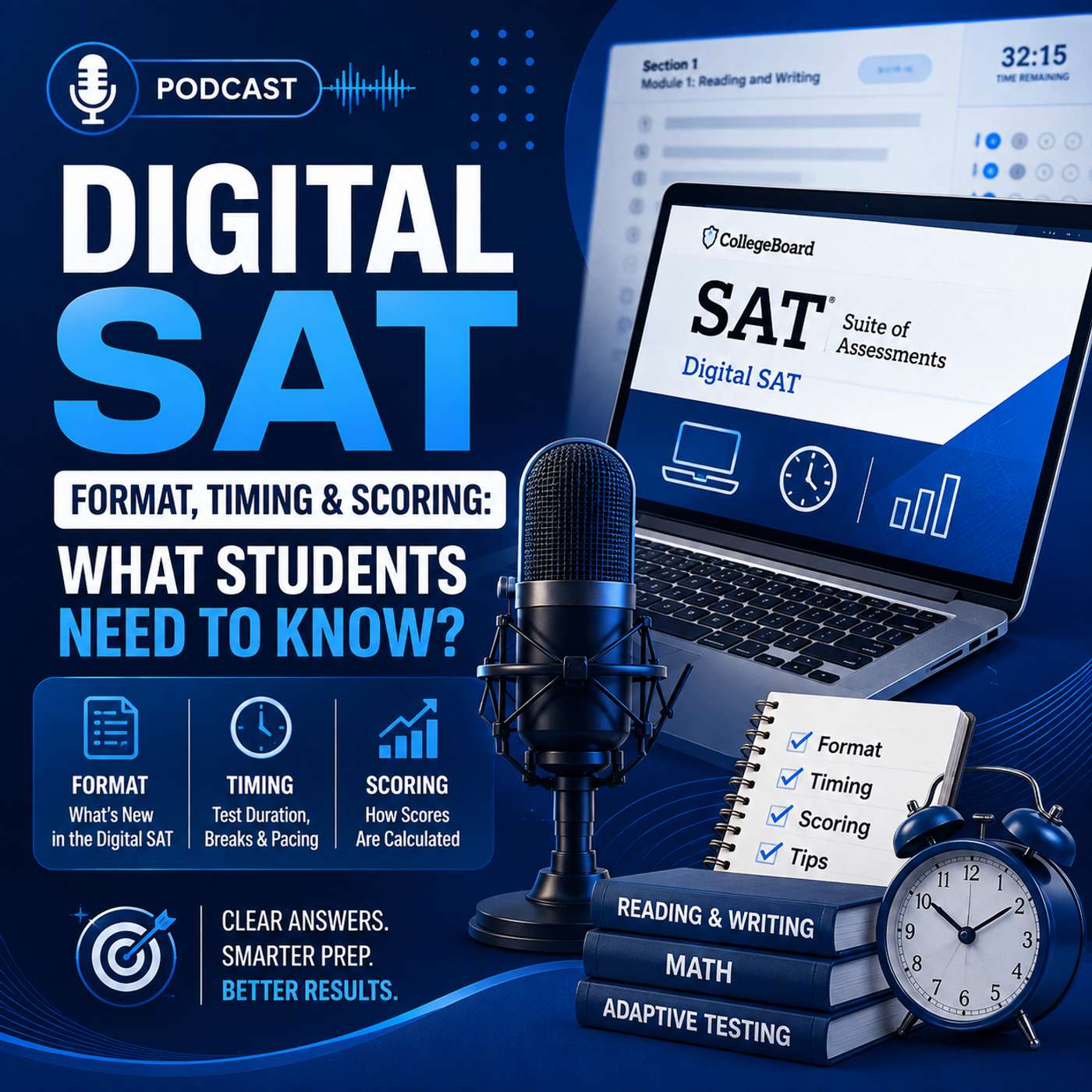
In this episode of VPOD.AI SAT Mastery, Mike and Susan break down exactly how the digital SAT works—from its 2-hour, 14-minute testing time to the adaptive technology that determines which questions you see.
You’ll learn:
- How the digital SAT is structured into Reading and Writing and Math
- Why Reading and Writing gives you 64 minutes for 54 questions
- How Math gives you 70 minutes for 44 questions
- Why calculators are now allowed throughout the Math section
- How shorter passages and math contexts reduce unnecessary cognitive load
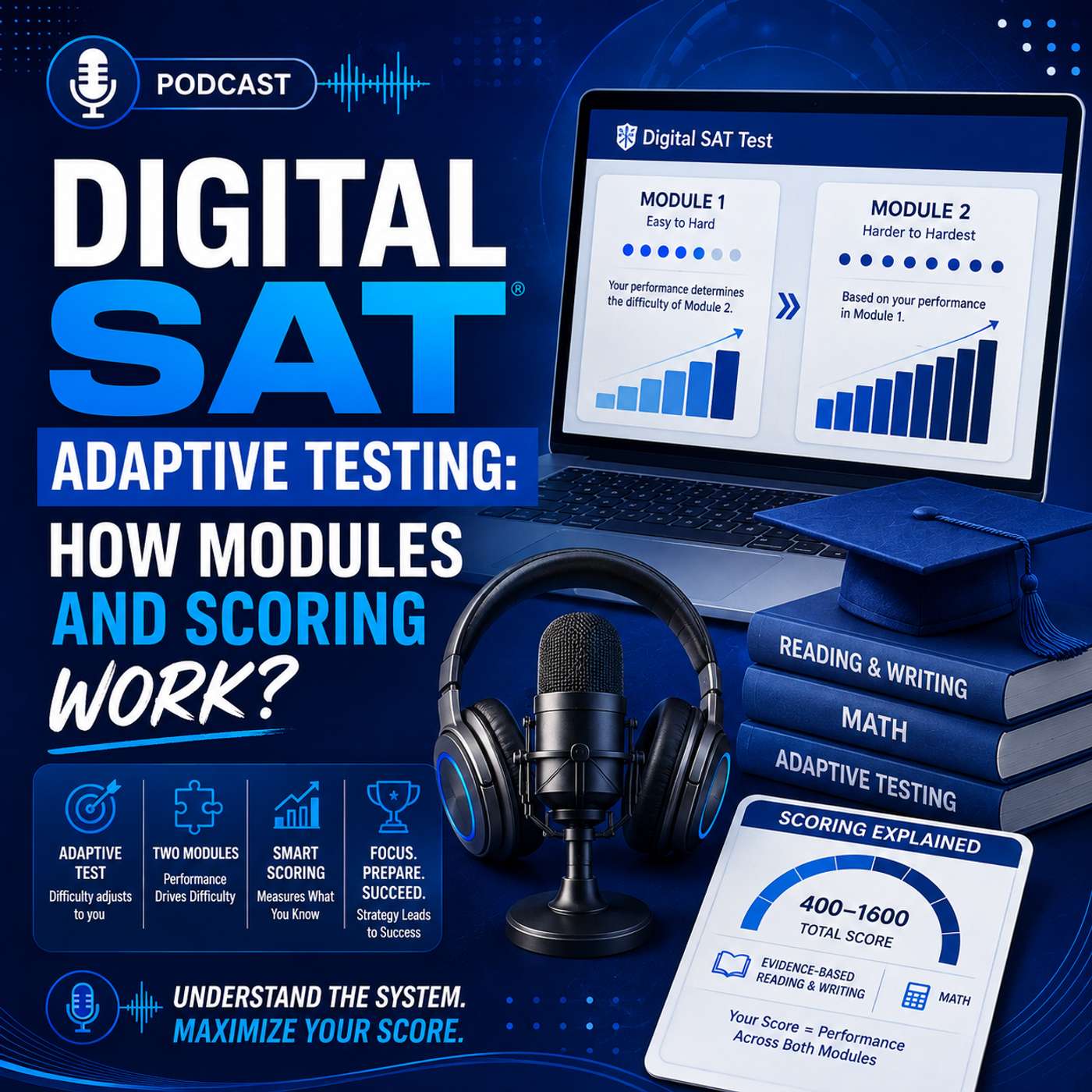
- What multi-stage adaptive testing means for your SAT experience
- How Module 1 performance influences the difficulty of Module 2
- Why getting routed to an easier module is not simply a scoring penalty
- How item response theory helps measure student proficiency
- How SAT scores remain comparable on the familiar 200–800 section scale
- Why two students can receive different questions and still earn comparable scores
- How digital testing improves test security and speeds up score reporting
The biggest change isn’t simply that the SAT is shorter. It’s that the exam now adapts to performance, allowing the testing system to identify a student’s skill level without requiring everyone to answer the same long sequence of questions.
Mike and Susan also explain why this approach can make the SAT more precise while giving students more time to think, easier access to testing tools, and greater control over pacing within each module.
If you’re preparing for the digital SAT, understanding the test itself is part of preparing for it. Subscribe to VPOD.AI SAT Mastery and join us for the next episode, where we take an even closer look at how the adaptive SAT really works.