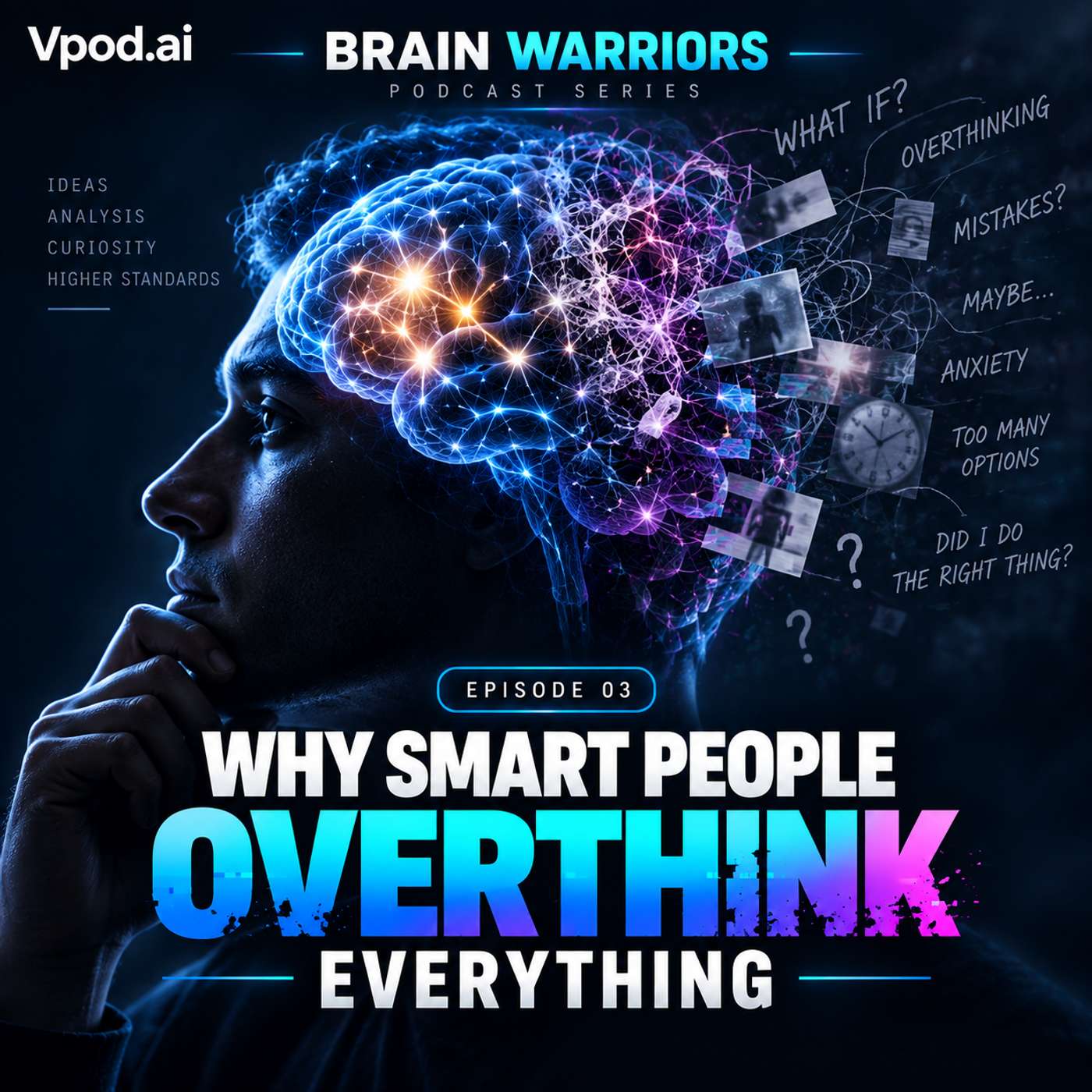







Your brain is physically changing as you listen—but neuroplasticity is not an unlimited superpower.
Every day, attention, rewards, learning, and experience strengthen connections between neurons. But those changes come with a biological cost. Your brain has limited energy, limited physical resources, and a limited ability to keep strengthening synapses before the system becomes saturated.
In this episode of the vpod.ai Brain Warrior series, we explore what actually happens when your brain rewires itself—and why sleep is an essential part of the process.
You’ll discover:
- Why your brain prioritizes information that predicts valuable outcomes
- How learned predictiveness and learned value influence attention
- Why willpower alone may not be enough to make learning stick
- What happens physically when synaptic connections strengthen
- How prolonged learning can increase energy demands and neural noise
- Why brain fog can signal that your learning capacity is becoming saturated
- How slow-wave sleep helps restore balance through synaptic down selection
- Why important neural pathways survive while lower-value connections fade
- How sleep supports memory consolidation and prepares your brain to learn again
- A three-step framework for directing neuroplasticity more effectively
The episode closes with a practical Brain Warrior challenge: choose one high-value skill, give it 20 minutes of focused attention, clearly connect it to a meaningful reward, and then prioritize a full night of quality sleep.
Because learning does not end when you close the book or step away from the keyboard. The waking brain strengthens connections. The sleeping brain helps decide which ones deserve to remain.
Listen now, take on this week’s challenge, and subscribe for the next installment of the Brain Warrior series.