
- Dogs cool themselves mainly by panting, not sweating, so heat and humidity overwhelm them far faster than people, especially flat-faced breeds, seniors, puppies, overweight dogs, and dogs with thick or dark coats.
- Prevention does the heavy lifting: constant shade and fresh cool water, walks only in the cool hours, the 7-second pavement test, conduction from cool surfaces and mats, and never leaving a dog in a parked car, even for one minute.
- Heatstroke is always a true emergency: move your dog to shade, cool the belly, armpits, groin, neck, and paws with cool (never ice-cold) water plus a fan, stop at normal body temperature, and get to the vet immediately, even if your dog seems to recover.
If you want the short version, here it is: keep your dog in the shade with constant access to cool, fresh water, walk them only during the cool early-morning and evening hours, give them cool surfaces and steady airflow to lie against, and never leave them in a parked car. That is the heart of how to keep dogs cool in summer, and the rest of this guide explains why each piece works and how to spot trouble the instant it starts.
Here is the part that surprises a lot of loving dog owners: your dog handles heat very differently than you do, and not in their favor. While you sweat across your whole body to shed warmth, your dog depends almost entirely on breathing to cool down. That is why a sunny afternoon that feels merely warm to you can quietly push your dog toward danger. Once you understand how their body works, every cooling trick here will make sense, and you will start catching risky moments before they become emergencies.
This guide is thorough on purpose, because summer heat is one of the most common and preventable dangers your dog faces. We will cover how dogs really cool themselves, which dogs are most at risk and why, practical outdoor and indoor methods, and the heatstroke warning signs every owner must memorize. Let us keep that tail wagging all season long.
How Your Dog Actually Handles Heat (And Why They Overheat Faster Than You)
To protect your dog from heat, start with one important fact: dogs barely sweat. You have millions of sweat glands, so when you get hot, perspiration coats your body, evaporates, and carries heat away. Your dog has almost none of that capacity. The few sweat glands they do have sit in the paw pads, release very little moisture, and do almost nothing to cool a whole furry body.
Because their tools are so limited, dogs lean on three levers to stay cool: evaporation through panting, conduction by pressing against cool surfaces, and convection from moving air. Almost every method in this guide simply boosts one of those three.
Why Panting Is Your Dog’s Main Cooling Engine
Instead of sweating, dogs cool themselves mostly by panting. As your dog pulls air rapidly over the moist tongue, mouth, and upper airway, a thin film of saliva evaporates with each breath, absorbing heat from the blood just beneath the surface and carrying it out of the body. It is evaporative cooling, the same principle behind your own sweat, concentrated in the mouth and throat instead of spread across the skin.
Panting works well in dry, moving air but has hard limits that hot weather exposes. Each breath only cools if the incoming air is cooler and drier than those wet surfaces. On a sweltering day the inhaled air is already warm, so it removes less heat, and on a humid day, air saturated with moisture cannot absorb much more, so the saliva barely evaporates. This is why muggy heat is so deceptively dangerous: high humidity quietly switches off your dog’s main cooling system right when they need it most. Learn to tell a relaxed, contented pant from the rapid, frantic, noisy panting that signals their engine is overwhelmed.
Why a Fur Coat and Extra Body Heat Make Things Worse
Your dog also wears a fur coat they cannot take off, and it is a double-edged sword. A healthy coat slows heat coming in from the sun and shields the skin from sunburn, which is why shaving most dogs to the skin is a bad idea. But the same coat traps warmth against the body and blocks any cooling breeze from reaching the skin. Pair that with a cooling system that falters in heat and humidity, and dogs cross from comfortable into dangerous far faster than we expect.
Dogs also generate heat through normal activity, and because they cannot dump it efficiently, their core temperature can climb steadily even while they seem to be having fun. A dog cannot tell you they are overheating, and many devoted, high-drive dogs will keep playing or hiking long past the point where they should stop, which is why the responsibility to call the break falls on us, not the dog.
Which Dogs Are Most at Risk in the Heat
Every dog can overheat, but some are far more vulnerable, and the difference can be enormous. If your dog fits one or more of the groups below, be extra cautious, start cooling earlier, and watch more closely on warm days.
Brachycephalic (Flat-Faced) Breeds
Flat-faced, or brachycephalic, breeds such as Bulldogs, French Bulldogs, Pugs, Boxers, Boston Terriers, and Shih Tzus sit at the very top of the risk list, for a mechanical reason. Their muzzles were bred short, but the soft tissue inside the nose and throat was not, so the airway is crowded with narrow nostrils, an elongated soft palate, and a smaller windpipe. Panting needs large volumes of air moving smoothly over moist surfaces, and a crowded airway is exactly what these dogs cannot manage well.
The result is that their main cooling tool underperforms precisely when it matters, often spiraling into a vicious cycle: panting to cool down inflames the airway, which makes breathing harder, which forces more panting. If you live with a flat-faced dog, treat warm weather with non-negotiable respect, keep walks short and in genuinely cool hours, and never let them get overexcited in the heat.
Thick-Coated and Double-Coated Dogs
Cold-climate breeds like Huskies, Malamutes, Samoyeds, Chow Chows, and Bernese Mountain Dogs carry dense double coats with a soft insulating undercoat beneath coarse guard hairs. That coat is brilliant on a snowy mountainside, holding warm air against the skin, but in July it traps body heat and blocks any breeze from reaching the skin. In effect, these dogs wear a winter jacket all summer that they can never unzip.
They need extra shade, generous airflow, and cool resting surfaces, and they benefit hugely from regular brushing to clear the dead undercoat so air can move through the coat. What they should not get is a shave to the skin without a vet’s guidance, because that coat also blocks sunburn and buffers temperature in both directions.
Dark-Coated Dogs
Coat color matters more than many owners realize, for the same reason a black car bakes in a lot while a white one stays bearable. Dark pigment absorbs far more of the sun’s radiant energy and turns it into heat, so a black Labrador in direct sun warms up noticeably faster than a cream-colored dog in the same spot, and the coat surface can grow hot to the touch within minutes.
This does not make dark dogs fragile, but sunshine is a stronger stressor for them, so shade matters even more than airflow on bright, still days. Build their resting spots around real, reliable shade rather than open lawn. A dark-coated dog basking happily in the sun may be loading up on heat faster than you would ever guess.
Puppies and Senior Dogs
The very young and the very old sit at opposite ends of life but share a fragile relationship with heat. Young puppies have not developed reliable internal temperature control, are small relative to their surface area, and often lack the judgment to stop and rest, so they can swing into overheating with little warning, tiring and dehydrating quickly.
Senior dogs face the same vulnerability from the other direction. Age often brings weaker hearts and lungs, less stamina, extra weight, and a slower cooling system, sometimes alongside conditions like laryngeal paralysis that directly impair panting. Both ends of the age range deserve gentler activity, shorter outings, lower temperature limits, and closer monitoring.
Overweight Dogs
Carrying extra weight stacks the deck against a dog in the heat in two ways. First, body fat is insulation, so it traps internally generated heat much like an unwanted undercoat. Second, excess weight forces the heart and lungs to work harder for any activity, and those are the very organs a dog relies on for vigorous, effective panting.
The combined effect is that overweight dogs overheat faster, struggle more, and recover more slowly. Helping your dog reach a healthy weight is a year-round gift to their comfort and longevity, and in the meantime, treat a heavier dog as a higher-risk dog and adjust their summer routine accordingly.
Dogs With Underlying Health Conditions
Dogs living with heart disease, lung or airway problems, laryngeal paralysis, Cushing’s disease, or other chronic illnesses have far less physiological reserve for heat stress. A healthy dog can ramp up heart rate and breathing to handle a hot afternoon and then bounce back; a dog whose system is already compromised may have little spare capacity, so heat tips them over the edge much sooner.
Some medications also affect hydration, circulation, or temperature control. If your dog has any ongoing condition or takes daily medication, do not guess at precautions. Ask your veterinarian what specific heat limits and warning signs apply to your individual dog.
How to Keep Dogs Cool in Summer: Outdoor Methods That Work
Most serious summer dangers happen outside, where the sun, the pavement, and the parked car all live, so planning pays off most here. Each method below maps onto the cooling levers we covered, shade and water for evaporation, cool surfaces for conduction, and airflow for convection.
1 Provide Constant Shade and Fresh, Cool Water
Shade and water are the foundation everything else builds on. Shade keeps your dog out of direct sun, sharply cutting the radiant heat their body and coat absorb and giving that limited cooling system a fighting chance. Make sure outdoor shade is genuine and solid, like a tree canopy, covered porch, or shade sail, and remember that shade moves with the sun, so check that a spot stays shaded through the afternoon.
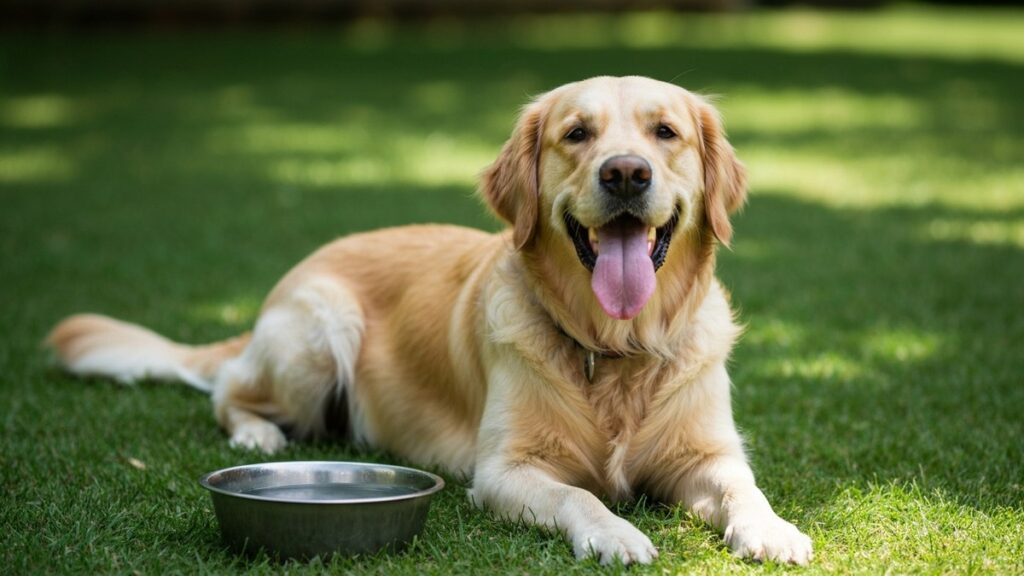
Water matters just as much, because panting constantly evaporates moisture away, and a dehydrated dog cools even less effectively. Keep clean, cool water available at all times and refresh it several times a day so it never turns warm and unappealing. On outings, carry a portable bottle and collapsible bowl, and offer water proactively rather than waiting for your dog to look thirsty.
2 Walk During the Cool Hours of the Day
One of the simplest, most powerful changes is to move exercise to the coolest parts of the day, typically early morning before the sun gains strength and later evening after the worst heat breaks. Air temperature, sun intensity, and ground temperature all peak together through the late-morning-to-mid-afternoon window, so that block is the riskiest possible time for exertion and exactly when your dog should be resting in shade or indoors.
Timing is not only about air temperature, but about everything the sun has heated. Pavement, sand, and bare soil keep absorbing heat all day and stay dangerous for hours after the air cools, so an early-evening walk on still-baking asphalt can burn paws even when the afternoon feels milder. On the hottest days, swapping a walk for indoor games is a smart, loving trade.
3 Avoid Hot Pavement and Use the Seven-Second Test
Hot pavement is a sneaky, serious hazard precisely because it is invisible to us in our shoes. Asphalt and concrete absorb solar heat all day and can climb far above the air temperature; when the air sits around 87 degrees Fahrenheit, asphalt can reach roughly 143 degrees, hot enough to burn the soft pads of a dog’s paws in under a minute, leaving painful, slow-healing injuries.
The fix is the seven-second test, which works because your skin is a fair stand-in for your dog’s pads. Press the back of your hand flat against the pavement and hold it for a full seven seconds; if you cannot keep it there comfortably, it is too hot for your dog’s paws. When the pavement fails, walk on grass, stick to shaded routes, go earlier or later, or play indoors. Remember that heat radiating up off a hot surface also bathes small and short-legged dogs in extra warmth.
4 Offer a Cooling Mat for Conductive Relief
A cooling mat is a simple, effective tool that works through conduction, the same physics that makes a tile floor feel wonderful on a hot day. Most quality mats are pressure-activated and filled with a gel that stays cooler than the surrounding air; when your dog lies down, body heat flows directly out through the contact points into the cooler mat, lowering their temperature with no electricity required.
To get the most from a mat, set it in a shaded, breezy spot, since a mat baking in direct sunlight cannot stay cool. Let your dog choose it rather than forcing them onto it, because it only helps when they actually settle on it. Many dogs quickly learn the mat is the comfortable place to flop, and it pairs beautifully with a nearby fan that adds evaporative cooling on top.
5 Use Wet Towels and a Paddling Pool
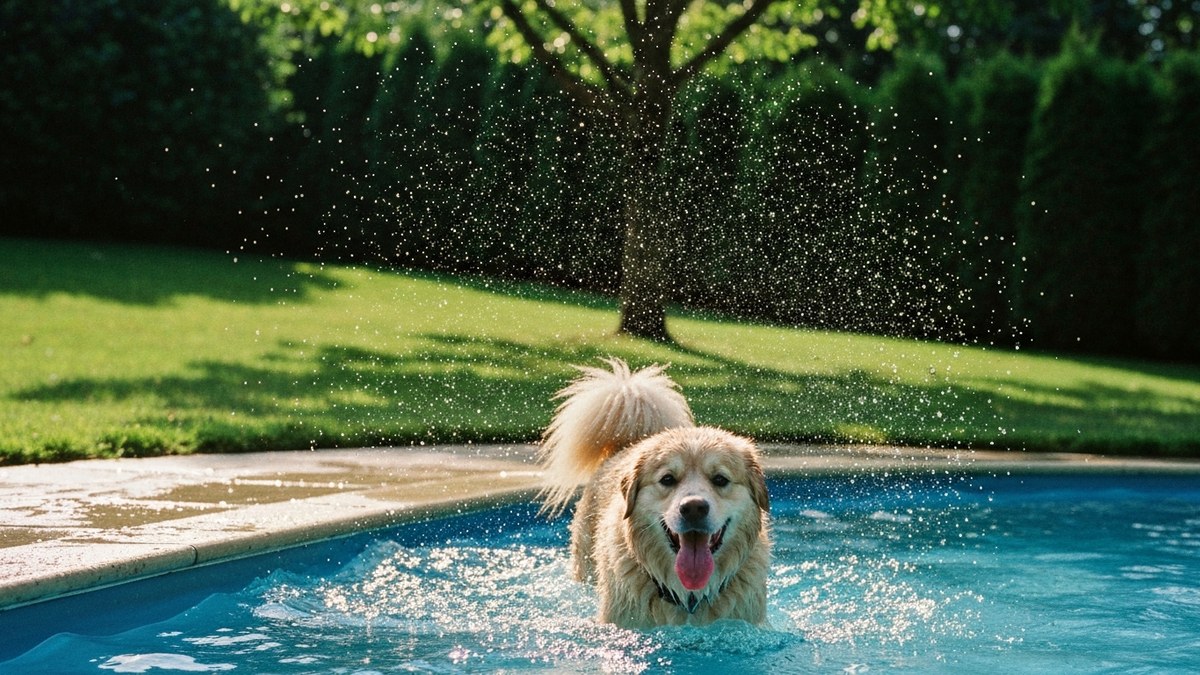
Water is one of your best allies because it cools through both conduction and evaporation at once. A shallow dog paddling pool in a shaded corner lets your dog wade and cool the belly, groin, and paws, where blood vessels run close to the surface and shed heat efficiently, and a gentle hose spray or sprinkler can become a fun cooling game for water-loving dogs.
You can also drape a cool, damp towel over your dog or lay it out to rest on, letting the evaporating water carry heat away much as panting does. The key is targeting: focus damp towels on the belly, inner thighs, armpits, and paws rather than piling them on a thick coat, because a soggy towel sitting on dense fur can trap heat and slow cooling instead.
6 Make Dog-Safe Frozen Treats
Frozen treats add a little internal cooling and a lot of enjoyment, which makes them a great way to keep a dog happily occupied in a cool spot during the hottest hours. Freeze low-sodium broth into cubes, stuff a durable rubber toy with wet food or plain peanut butter and freeze it solid for a long-lasting project, or freeze a handful of dog-safe fruits like blueberries. The licking and chewing also keep your dog calm and stationary, which itself reduces heat generation.
Treats add to shade and water, never replace them, and ingredient safety is non-negotiable. Always confirm anything you freeze is safe, and steer clear of grapes, raisins, onions, chocolate, and the sweetener xylitol, also labeled birch sugar, all of which are toxic to dogs. When in doubt about an ingredient, leave it out.
7 Never Leave Your Dog in a Parked Car
This rule is non-negotiable and earns its own section because parked cars cause so many heartbreaking, preventable deaths every summer. A closed car acts like a greenhouse: sunlight pours in through the glass, the interior absorbs it and radiates heat back, and the temperature spikes with frightening speed. Most of that dangerous rise happens in the first fifteen to thirty minutes, exactly the window people assume is harmless.
The numbers are stark. On a mild 70-degree day, the inside of a car can climb roughly 40 degrees in about an hour, soaring well past 110 degrees, and on an 85-degree day the interior can reach dangerous levels in under ten minutes. Cracking the windows barely slows it, and parking in shade is no safety net because the sun moves and the cabin still bakes. There is no safe amount of time and no safe weather for leaving a dog in a parked car.
How to Keep Dogs Cool Without AC and Indoors
Plenty of homes have no air conditioning, and even those that do can build real heat on extreme days or during a power outage. The good news is you have many low-cost options indoors, most of which boost the same conduction, evaporation, and airflow your dog’s body already uses. Here is how to keep dogs cool indoors and how to keep dogs cool without ac.
Move Air With Fans
Fans help, with one important caveat rooted in biology: because dogs barely sweat, a fan does not cool a dog nearly as efficiently as it cools you, since most of your relief comes from the breeze evaporating sweat off your skin. A dog has little surface moisture for moving air to work on, so a fan alone is a modest help. It still matters, because moving air supports the evaporation during panting and breaks up stuffy, stagnant heat.
The real power of a fan shows when you combine it with moisture. Aim it across a damp towel, a wet mat, or a dog whose belly and paws you have lightly dampened, and the airflow dramatically speeds evaporation, pulling heat away far faster than either method alone. Position it near your dog’s favorite spot and let them move out of the breeze if they want.
Let Your Dog Find Cool Surfaces
Dogs are remarkably good at managing their temperature through conduction if you give them the choice. Tile and stone floors in kitchens, bathrooms, and entryways stay much cooler than carpet or dog beds and draw heat directly out of the body, which is why dogs so often sprawl flat on the bathroom floor on a hot day. A basement, if you have one, is frequently the coolest room in the house.
Your job is mostly to keep these spots accessible and resist herding your dog back to their usual bed. Leave doors open to the coolest rooms, clear a patch of bare tile rather than covering it with rugs, and trust your dog to settle where they feel best, even if that means cool stone over a plush bed.
Offer Frozen Water Bottles
Here is a cheap, reliable trick that needs no special gear: freeze a few plastic water bottles solid, wrap each in a thin towel so the surface is not uncomfortably cold or wet, and set them in your dog’s resting area. Your dog can press against a bottle to shed heat through contact, then move away the moment they have had enough.
This shines on hot nights, when a house that soaked up heat all day holds it past sundown and a sleeping dog cannot seek out a cool room. A couple of towel-wrapped frozen bottles near the bed give your dog something cool to lean into. As the ice melts, swap in fresh bottles for an endlessly reusable cooling aid.
Use Cool Damp Towels Indoors
A towel dampened with cool water makes an excellent indoor cooling spot that works through evaporation, the same principle as panting. Lay it flat for your dog to rest on, and as the water evaporates it steadily draws heat from whatever is touching it. Set it on a tile floor rather than carpet to add conduction to the evaporative effect.
As with outdoor towels, placement and upkeep make it work. Encourage your dog to lie with belly and paws on the damp fabric rather than draping it over a thick coat, where it would trap heat, and re-dampen it whenever it dries out. Pair it with a fan blowing across the towel for a small but surprisingly effective cooling station.
Close Blinds and Block the Sun
A startling amount of indoor heat pours straight in through sunny windows as radiant solar energy, warming floors, furniture, and air all day. Closing blinds, curtains, or shades during the brightest, hottest part of the day blocks much of that gain before it enters the room, especially on south- and west-facing windows.
The most effective approach is a simple daily rhythm. Open windows in the cool early morning to flush warm air out, then close windows and blinds before the day heats up to seal the cooler air inside and lock the sun out. Reverse it in the evening once the outside air drops below the indoor temperature. This costs nothing and can keep a room noticeably cooler all day.
Keep Activity Low During Peak Heat
On hot days, deliberately dial down the indoor zoomies, hallway fetch, and wrestling, because exercise generates exactly the internal heat your dog is already struggling to shed. Vigorous play can push a dog’s temperature up surprisingly fast even in a shaded room, so keep the hottest hours calm and save the high-energy fun for cooler times.
Calm does not have to mean boring, which matters for energetic dogs who get restless without an outlet. Fill the peak heat with low-exertion enrichment: a frozen stuffed toy, a gentle sniffing game, a food puzzle, or quiet training that engages the brain without raising the body temperature. A dog who is mentally tired and physically resting through the worst of the afternoon is a safe one.
Signs of Overheating in Dogs and Dog Heatstroke Symptoms
No matter how careful you are, you must know the warning signs, because catching trouble early can genuinely save your dog’s life. The signs of overheating in dogs follow a predictable progression, from early heat stress that prompt cooling can usually reverse, to full heatstroke, a life-threatening emergency that damages organs and can be fatal within hours. Reading where your dog falls on that spectrum, and acting at the first hint, is the most important skill in this guide.
1 Recognizing Early Heat Stress
Early heat stress is the stage where you have the most power to help, because the dog is overwhelmed but not yet in crisis, and simple cooling usually turns it around. The hallmark is a change in breathing and demeanor: panting that becomes heavy, frantic, and noisy rather than relaxed, paired with heavy drooling and a tongue and gums that look brighter red than usual. The dog may grow restless, pace, and hunt for shade or cool floor.
These signs appear because the body is throwing everything it has at cooling, ramping up panting and circulation to the skin while the rising core temperature makes the dog uncomfortable. The best response is to stop, move the dog into shade or air conditioning, offer cool water, begin gentle cooling, and watch closely. Here is a quick checklist of the earliest signs to act on:
- Heavy, frantic, or excessive panting and rapid breathing that does not settle with rest
- A lot of drooling, sometimes thick or sticky saliva
- Bright red gums and tongue
- Skin or ears that feel hot to the touch
- Restlessness, agitation, or trouble getting comfortable
- Mildly wobbly, unsteady movement or seeming slightly off-balance
2 Recognizing Advancing Heatstroke
When early heat stress is missed or cooling comes too late, it escalates into heatstroke, and the picture changes from an overwhelmed but functioning dog to a body breaking down. As the core temperature climbs past what the organs can tolerate, circulation falters and oxygen delivery suffers, so the bright red gums may turn pale, gray, or bluish, and the once-frantic dog becomes weak and unable to move. Vomiting and diarrhea, sometimes bloody, often appear as the gut lining is damaged.
From there the nervous system becomes involved: confusion, glassy or unfocused eyes, unresponsiveness, muscle tremors, seizures, and finally collapse and loss of consciousness. These signs mean organ damage is already underway and every second counts. Do not wait to see whether your dog will shake it off, because at this stage they cannot. Watch for these advancing signs:
- Pale, gray, or bluish gums instead of healthy pink
- Weakness, extreme lethargy, and unwillingness to stand or move
- Vomiting or diarrhea, sometimes containing blood
- Confusion, glassy eyes, or failure to respond to you
- Muscle tremors or seizures
- Collapse and loss of consciousness
3 What to Do If Your Dog Overheats
If you see signs of heatstroke, you must act immediately, because how you respond in the first few minutes can decide the outcome. The principle veterinarians use is cool first, transport second: begin lowering your dog’s temperature right away while you arrange to get to the clinic.
- Move your dog out of the heat into shade or an air-conditioned space immediately, and stop all activity.
- Cool with cool, not ice-cold, water. Pour or sponge cool or room-temperature water over the belly, armpits, groin, inner thighs, neck, and paws, where blood vessels run close to the surface. Do not use ice-cold water and do not plunge your dog into an ice bath, because sudden extreme cold makes surface blood vessels constrict, trapping heat inside and slowing cooling. Never cool your dog below normal body temperature.
- Add airflow. Point a fan at your wet dog, or use the car’s air conditioning, so evaporation carries heat away faster.
- Offer small sips of cool water if your dog is fully alert and able to drink, but never force water into the mouth of a weak, collapsed, or unconscious dog.
- Get to the vet now. Call ahead and head to your vet or the nearest emergency clinic while you cool your dog, ideally with someone else driving so cooling never stops. A dog must be examined even if they seem to bounce back.
Here is a quick-reference table you can keep in mind, matching what you see to how serious it is and what to do.
| Warning Sign | Severity | What to Do |
|---|---|---|
| Heavy panting, lots of drooling, seeking shade | Early heat stress | Stop activity, move to shade, offer cool water, begin gentle cooling, and watch closely |
| Bright red gums, restlessness, hot skin, wobbliness | Serious, escalating | Start active cooling with cool water and a fan, and call your vet now |
| Pale or bluish gums, vomiting, confusion, weakness | Heatstroke emergency | Cool with cool (not ice-cold) water and go to the vet or ER immediately |
| Collapse, seizures, unconsciousness | Life-threatening | Cool en route and get to emergency care without delay; call ahead |
For a deeper veterinary breakdown of symptoms and first aid, the American Kennel Club guide to heatstroke in dogs is an excellent, trustworthy resource, and the American Veterinary Medical Association warm-weather pet safety page covers prevention in detail. When you are unsure about anything, always call your own veterinarian, since they know your individual dog best.
Putting It All Together for a Safe, Happy Summer
Keeping your dog cool comes down to understanding their limits and planning around them. Your dog cannot sweat their way out of the heat the way you can, they rely on panting that falters in heat and humidity, and they cannot take off their coat. So you become their cooling system, providing the shade, fresh water, cool surfaces, airflow, well-timed walks, and calm hot-afternoon rest, and reading the pavement and the sky on their behalf.
Pay extra attention if you live with a flat-faced, thick-coated, dark-coated, senior, very young, overweight, or unwell dog, because each of those traits means your dog needs help sooner and at lower temperatures. Memorize the early signs of overheating, rehearse the emergency cooling steps until they are second nature, and you will catch problems while they are still easy to reverse. Our dogs give us their whole hearts in goofy, devoted ways, and if you have wondered about that, you might enjoy our take on why does my dog lick me so much. Returning that devotion means looking out for them, and a little summer planning is one of the kindest things you can do. Stay cool out there, and give your good dog a belly rub from us.
Frequently Asked Questions
What temperature is too hot for dogs?
There is no single magic number, but most dogs start facing real risk once it hits around 85 degrees Fahrenheit, and humid days make it worse because panting cools less effectively. Flat-faced breeds, seniors, puppies, and heavy-coated dogs can struggle even in the upper 70s. When in doubt, keep your dog cool, hydrated, and indoors.
How do I keep my dog cool without air conditioning?
Run fans for airflow, open windows in the early morning, then close blinds to block the midday sun. Let your dog rest on cool tile, a basement floor, or a damp towel. Offer frozen water bottles to lean against, refresh the water bowl often, and limit activity to the coolest hours.
Can I put ice or ice-cold water on an overheating dog?
No. Vets warn against ice-cold water or full ice baths because sudden cold makes surface blood vessels tighten, which actually traps heat inside the body. Use cool or room-temperature water on the belly, paws, armpits, and neck instead, add a fan for airflow, and never cool a dog below normal body temperature.
What are the first signs of overheating in dogs?
The earliest signs are heavy, frantic panting, lots of drooling, and bright red gums and tongue. Your dog may seem restless, wobbly, or slow to respond. Catching these early signs and starting to cool your dog right away can stop a manageable situation from spiraling into a deadly emergency, so never wait it out.
How long does it take for a dog to overheat in a car?
Dangerously fast. On an 85-degree day, a parked car’s interior can reach unsafe temperatures in under 10 minutes, even with the windows cracked. On a mild 70-degree day, the inside can climb to around 110 degrees within an hour. Never leave your dog in a parked car, no matter how quick the errand seems.
Do cooling mats and vests actually work for dogs?
Yes, when used right. Pressure-activated gel mats pull heat away from your dog’s body through direct contact, and damp cooling vests work through evaporation as the water dries. They are helpful aids, not magic fixes. Always pair them with shade, plenty of fresh water, and regular breaks out of the heat for real protection.
About the Author
Elena Brooks
Elena Brooks is the person her group chat texts when something at home stops working or a health trend starts trending. She’s spent years turning that instinct into a job — digging into the research behind everyday questions, calling the experts, and writing up what holds up and what doesn’t. Her beat is wherever curiosity points: kitchens, cars, pets, sleep, money, and the occasional meteor shower.