





Why does doing the work you care about sometimes feel almost physically painful to start?
The answer may have less to do with willpower than you think.
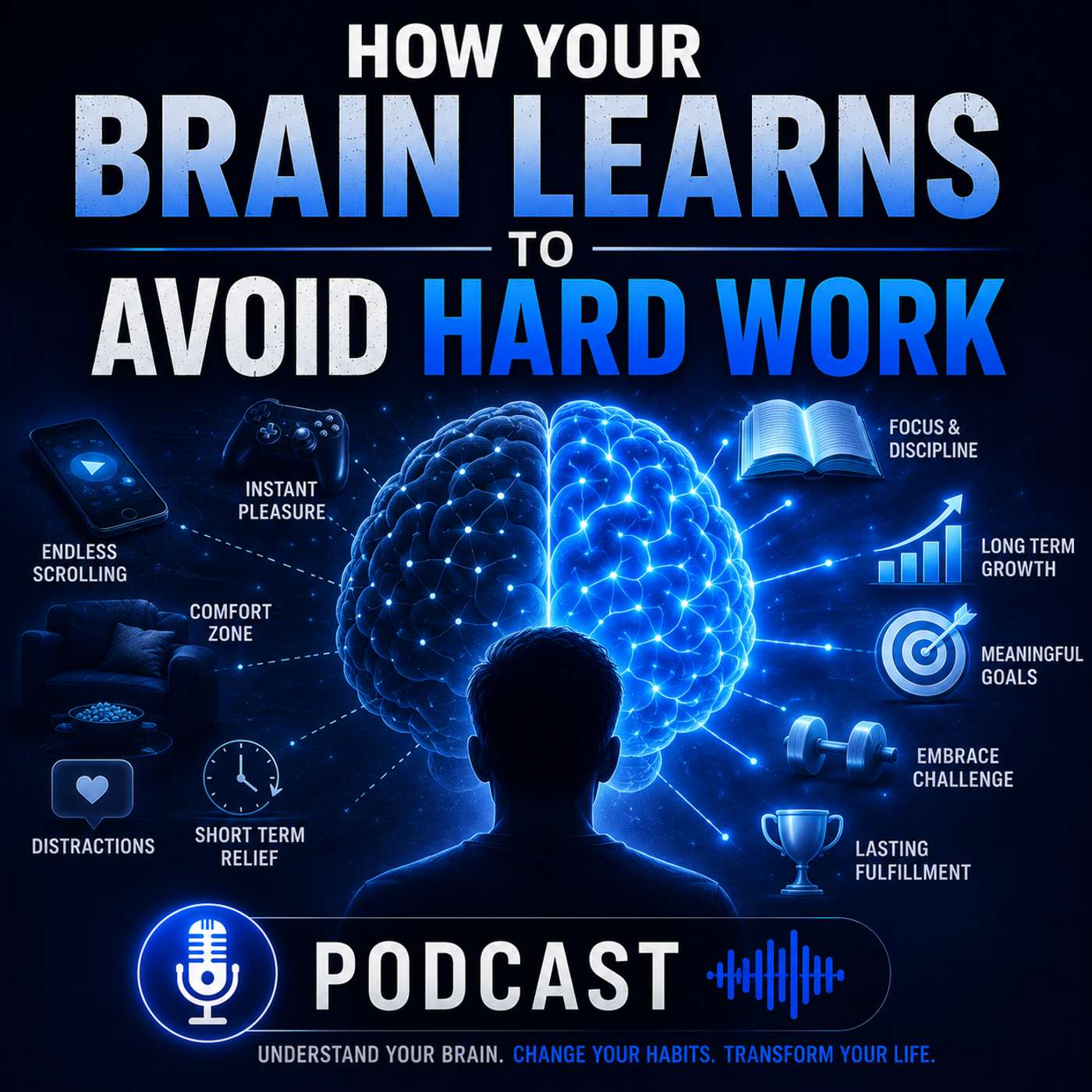
In this episode, Mike and Susan explore why highly disciplined people may not be fighting harder against temptation at all. Instead, their brains may have learned different associations with effort, distraction, and reward.
Drawing on research discussed throughout the episode—from learned industriousness and dopamine prediction to habit formation and the peak-end rule—they explain how repeated experiences can teach your nervous system to either avoid effort or begin expecting something positive from it.
You’ll hear why:
• Highly self-controlled people may experience less temptation and inner conflict rather than constantly resisting more of it.
• Effort can become a learned physical signal associated with reward.
• Dopamine can shift from the reward itself to the cue that predicts the reward.
• Smartphones become powerful procrastination triggers because reaching for them repeatedly predicts immediate relief and distraction.
• Rewarding only outcomes can accidentally teach your brain that effort is merely an unpleasant price you have to pay.
• Brutal, self-critical work sessions can reinforce your resistance to starting again tomorrow.
The episode also breaks down five practical ways to retrain that relationship with effort:
- Pay the effort, not the outcome.
Reward yourself for showing up instead of waiting until the final result is perfect. - Move the reward to the doorway.
Pair the beginning of difficult work with something you genuinely enjoy and reserve specifically for that activity. - Shrink the entry.
Make the first commitment so small that starting feels almost effortless—one sentence, one paragraph, or two minutes. - Design the room, not your resolve.
Remove distractions before you need to resist them. Make the environment do more of the work. - Never end on failure.
Finish deliberately with a small win so the final feeling your brain associates with the session is capability rather than frustration.
The goal isn’t to make difficult work magically easy. It’s to reduce the exhausting internal negotiation that happens before you begin.
If effort is something your nervous system can learn to avoid, it can also learn a new prediction.
Listen to the full episode, try one of the five conditioning strategies for yourself, and subscribe for more conversations that challenge the assumptions shaping how you work, think, and grow.