

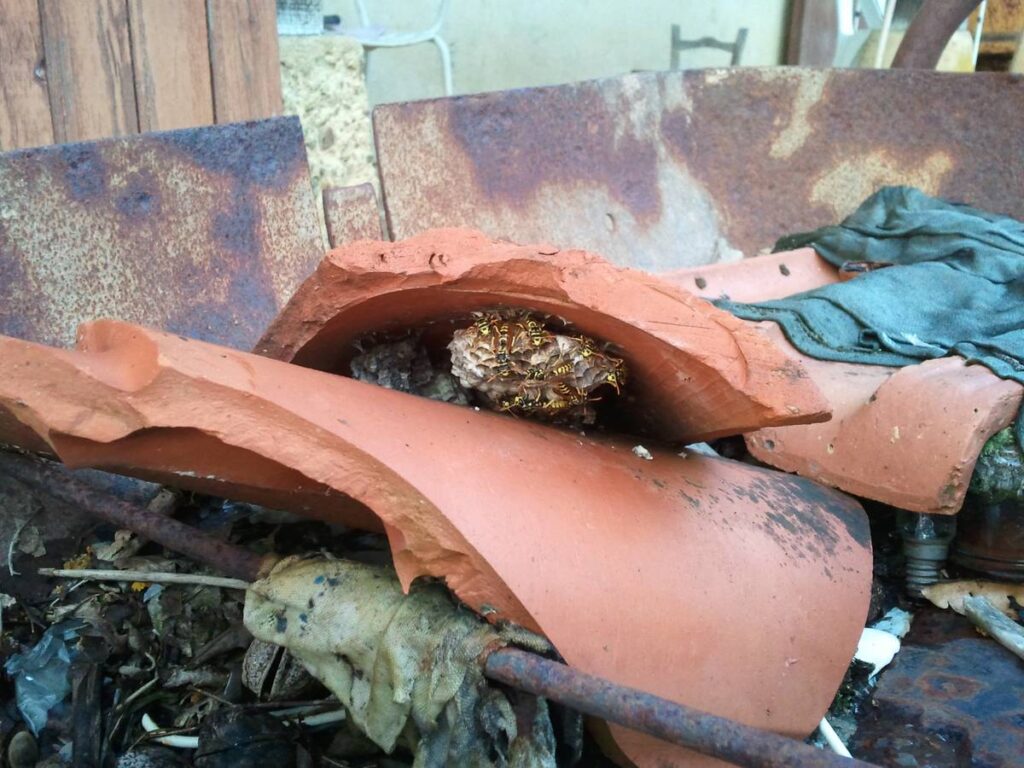
- Identify the nest first. The wasp’s type decides how dangerous it is and whether you should DIY it or call a pro.
- Paper wasps (open umbrella comb) are mild and often DIY-friendly. Ground-nesting yellowjackets are the aggressive, high-risk ones.
- Mud daubers are near-harmless loners that eat spiders. Leave them alone; they don’t defend a colony.
- Treat any nest at night, plan an escape route first, and never stand on a ladder while spraying.
- Never seal an active nest inside a wall. Trapped wasps chew inward and end up inside your home.
- If a sting brings hives, swelling away from the site, or any trouble breathing, it’s a 911 emergency, not a DIY moment.
There’s a wasp nest somewhere on your house, and every guide you’ve opened says the same three things: spray it at dusk, use soapy water, buy a trap. None of them ask the one question that actually keeps you safe. Which wasp is it?
Ants can be just as persistent — here’s how to get rid of ants in the house.
That matters more than any spray. A little paper wasp nest under your porch light is a five-minute job you can handle yourself. A yellowjacket nest hidden in the ground is the one that sends people to the hospital. And a mud dauber, the shy loner building mud tubes on your shed wall, shouldn’t be killed at all. Same word, “wasp,” three completely different problems.
So this guide flips the usual order. Before we touch a can of spray, we’re going to figure out what you’re dealing with. Once you know the nest, how to get rid of wasps becomes simple, calm, and a lot less scary. Let’s walk through it together.
First, Figure Out Which Wasp You Actually Have
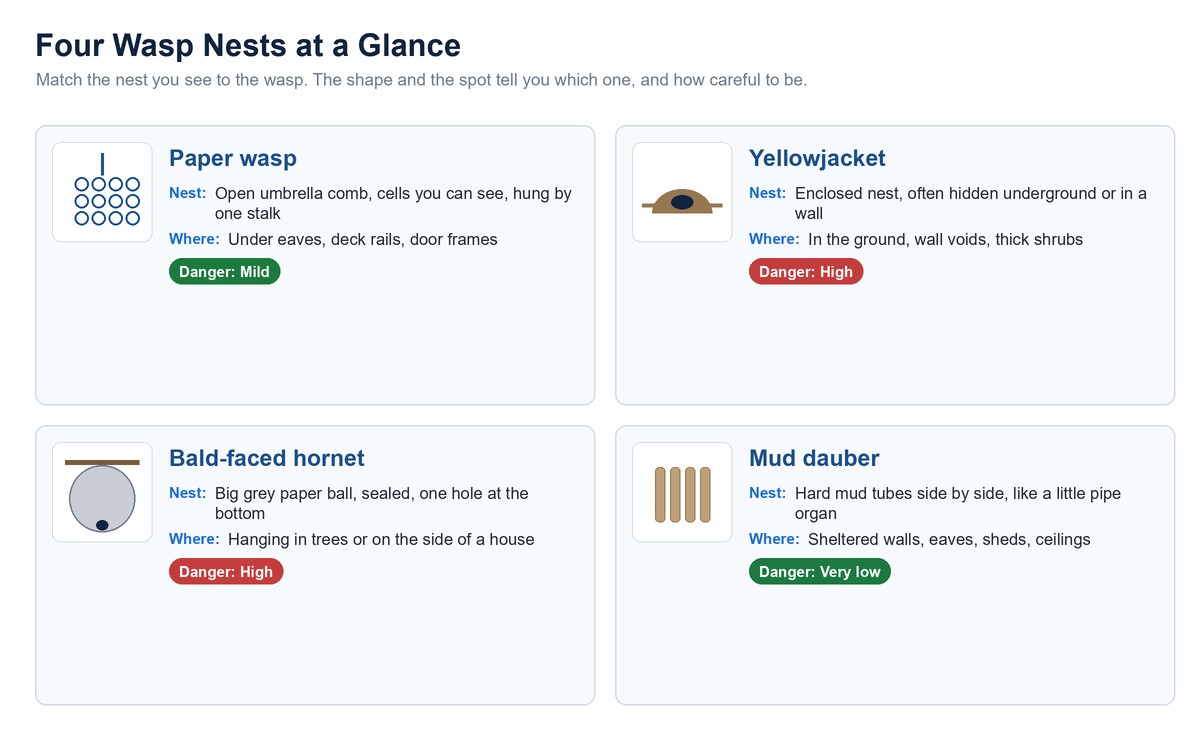
Here’s the thing almost every pest-company blog skips: the word “wasp” covers insects that behave nothing alike. Some barely react when you walk past. Others will chase you across the yard if you step near their door. If you treat all of them the same way, you either waste an afternoon on a harmless bug or you provoke the one that can actually hurt you.
The fastest way to tell them apart isn’t the insect. It’s the nest. You can study a nest from ten feet away, in daylight, without getting close. The shape and the spot tell you the species, and the species tells you the risk. A grey paper honeycomb hanging open under your eave is a different animal from a hole in the lawn with wasps streaming in and out.
So look before you spray. Give it a minute of calm watching from a safe distance. Where is the nest? Is it open or sealed? Is it up high or down in the ground? Those three answers narrow it down to one of the four wasps below, and from there the whole plan writes itself.
Paper Wasps and Their Open Umbrella Combs
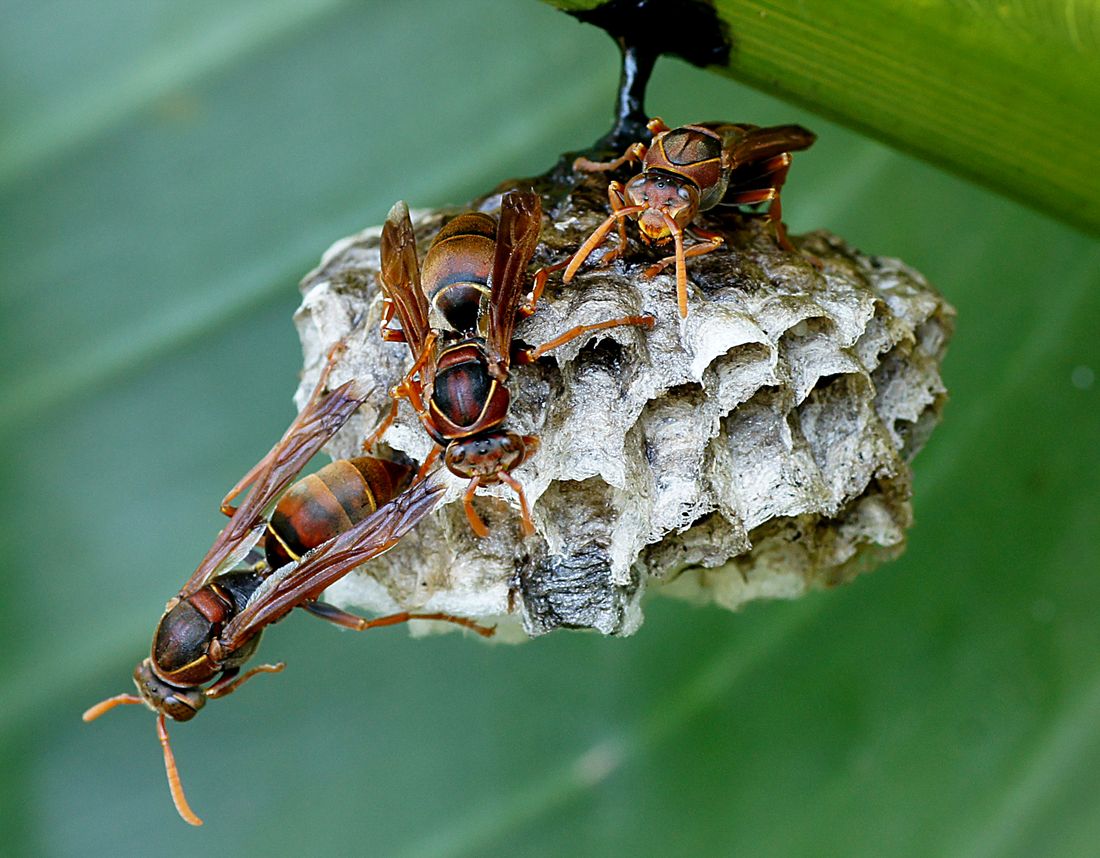
Paper wasps are the ones most people actually have. They’re slender, long-legged, and reddish-brown to dark with yellow markings, and they dangle their legs when they fly. Their nest is the giveaway: a small, open honeycomb that looks like a grey paper umbrella turned upside down, hanging from a single little stalk. You can see right into the cells. According to the Texas A&M AgriLife Extension, that open comb is exactly what separates paper wasps from their enclosed-nest cousins.
You’ll find these under eaves, on deck railings, inside door frames, under grill lids, and in that porch light you forgot to check. Colonies are small, often just a dozen or two wasps early in the season. Paper wasps can sting, and it hurts, but they’re not looking for a fight. They mostly defend the nest only if you bump it or swat near it. That relatively mild temperament is why a reachable paper wasp nest is the classic do-it-yourself job.
Why do they build right on your house? Your eaves and railings give them what a tree branch gives them in the wild: a sheltered overhang out of the rain, close to the bugs and nectar they feed on. That’s also the good news. Because the nest is open and low, one well-aimed evening treatment usually ends the whole colony, and sealing up next spring’s favorite spots keeps them from coming back.
Yellowjackets Are the Ground Nest You Have to Respect
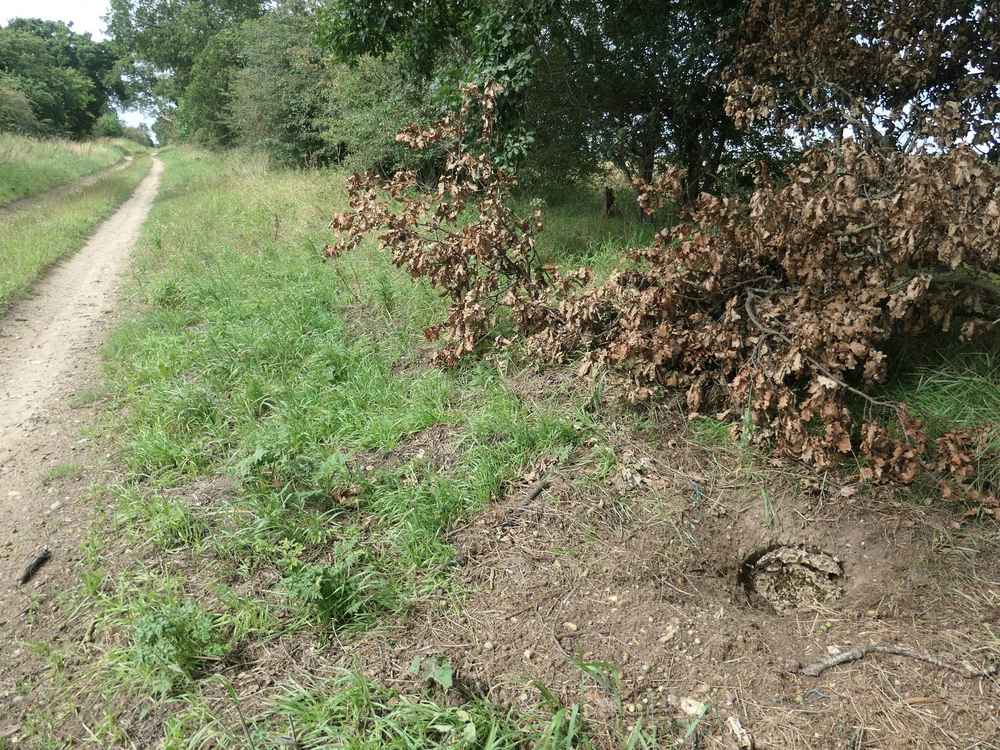
If one wasp on this page deserves your caution, it’s the yellowjacket. These are shorter, thicker-bodied, and a bright, hard yellow-and-black. They tuck their legs in when they fly, so they look like fast little bullets, not the dangly paper wasp. And their nest is usually hidden, which is exactly what makes them dangerous.
Yellowjackets often nest underground, in an old rodent burrow, under a shrub, in a compost pile, or inside a wall void of your house. You frequently can’t see the nest at all, just a steady stream of wasps disappearing into a hole in the lawn or a gap in the siding. A mature colony can hold thousands of workers, and they defend that hidden door aggressively. A lawnmower rolling over the entrance, or footsteps thumping the ground nearby, can trigger a mass attack. This is the nest behind most serious backyard sting stories.
They also get worse as summer goes on. By late summer the colony is at peak size and increasingly hungry for sugar and protein, which is why yellowjackets are the ones crashing your picnic and hovering over the trash and the soda can. That combination, huge hidden numbers plus a short temper plus a taste for your food, is why the honest answer for a big ground or in-wall yellowjacket nest is usually to hire a licensed pro rather than poke it yourself.
Bald-Faced Hornets Wrap a Paper Ball the Size of a Football
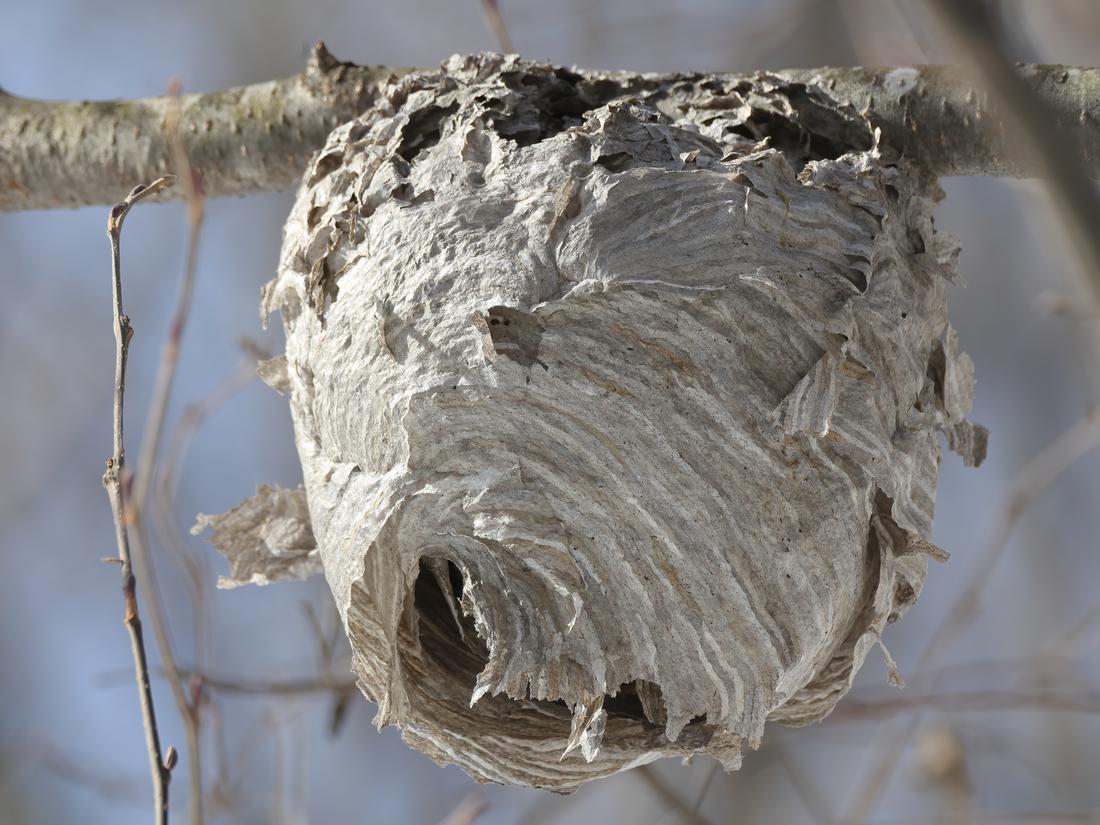
The bald-faced hornet isn’t a true hornet, but it acts like one. It’s the big black-and-white wasp that builds the dramatic nest everyone recognizes: a smooth grey paper ball, sealed all around, with a single opening near the bottom, hanging from a tree branch or the side of a house. By late summer that ball can reach the size of a football or a basketball, holding hundreds of workers.
Because the nest is fully enclosed, you can’t just hit the comb with a spray the way you can with an open paper wasp nest. Everything happens inside that shell, and the hornets pour out of the bottom hole the moment they feel threatened. They’re strong fliers, they can sting repeatedly, and they defend an aerial nest fiercely if you get within a few feet. A hornet ball tucked in a tree at the back of the yard, far from where anyone walks, is often best left to die off on its own in winter.
The tricky ones are the nests built against your house, over a doorway, or beside a walkway you use every day. Those genuinely need to go, and a large enclosed hornet nest close to daily foot traffic is squarely a professional job. The height, the numbers, and the sealed shell all stack the odds against a homeowner with a spray can.
Mud Daubers Build Mud Tubes and Deserve a Pass
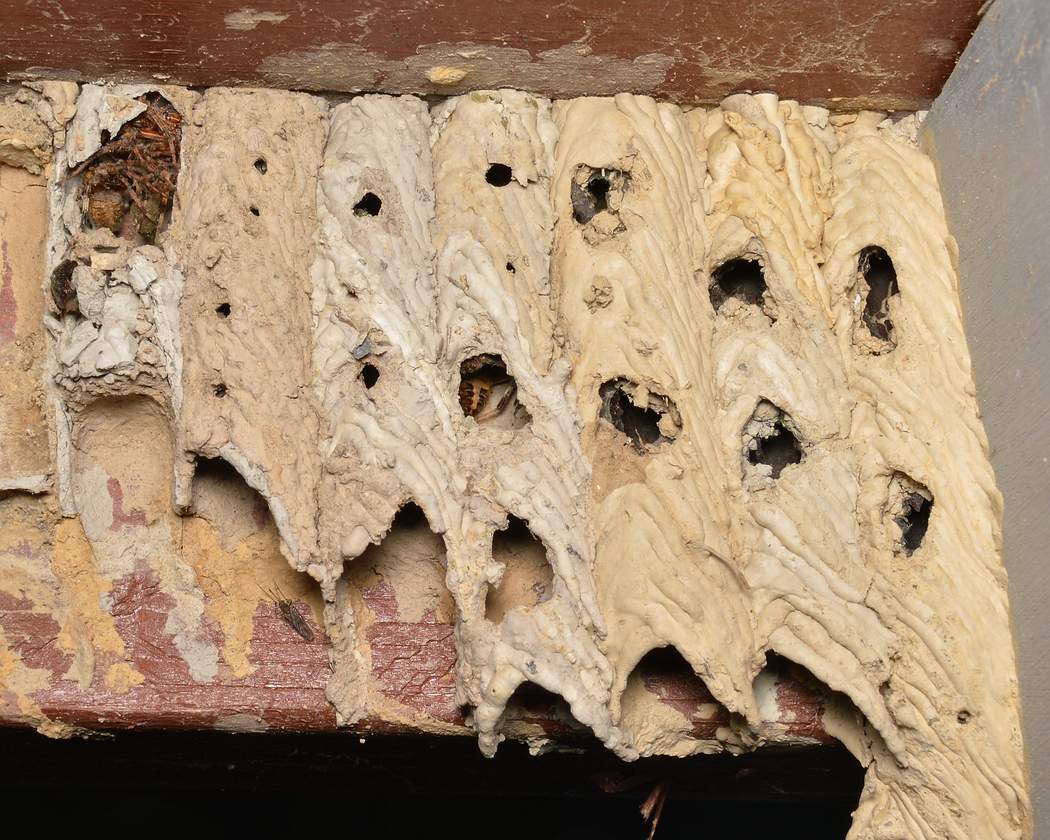
Now the plot twist. If you find neat little tubes of dried mud lined up side by side, like a tiny pipe organ, on a sheltered wall, under an eave, in a shed, or in a garage, you’ve found a mud dauber. And the best thing you can do is walk away and let it be.
Mud daubers are solitary. There’s no colony, no army of workers, no nest to defend, just a single female building cells out of mud one at a time. The Texas A&M Extension describes them as non-aggressive and genuinely beneficial, because each cell she packs with paralyzed spiders to feed her young. A mud dauber is basically free, silent pest control that happens to work for spiders you’d rather not have around anyway. They almost never sting people, because they have no colony to protect.
So mud daubers fail the only test that matters: they’re not a threat. Killing one is effort spent making your yard slightly worse at controlling spiders. If the dried mud nest is somewhere that genuinely bothers you, wait until it’s inactive and scrape it off with a putty knife, then paint or seal the spot. But there’s no spraying, no dusk mission, and no risk. This is the wasp you were never supposed to be fighting.
How to Get Rid of a Wasp Nest Without Getting Hurt
Okay, you’ve identified a nest that genuinely needs to go, and it’s one you can safely handle, a low, reachable paper wasp comb or a small early-season nest. Here’s how to remove a wasps nest the calm way. The whole game is timing, distance, and never cornering yourself.
Do everything at night or in the very early, cool morning. Extension services are unanimous on this: wasps are sluggish and nearly all home inside the nest after dark, so a night treatment hits the whole colony at once instead of a few angry scouts. Skip the flashlight beam pointed straight at the nest, or wear a red light, because a bright white beam can rouse them and give them a target. Wear long sleeves, long pants, closed shoes, and treat from as far back as the product’s spray reaches.
Soapy Water for Small, Reachable Paper Wasp Combs
The simplest natural method is dish soap and water. A few tablespoons of dish soap in a spray bottle of water, or a hose-end sprayer for a bit more reach, coats the wasps and breaks down the waxy coating they breathe through, so they drop fast. It’s cheap, it’s non-toxic to your soil, and it’s a solid answer for anyone asking how to get rid of wasps naturally on a small open nest.
The catch is range and coverage. Soapy water only works if you can actually soak the nest and the wasps on it, which means getting closer than a jet-stream aerosol requires. Use it on small, low, open paper wasp combs, at night, with a clear path to walk away. Don’t use it on an enclosed hornet ball or a ground nest, where you can’t reach the wasps inside.
Commercial Wasp-Freeze Foam Sprays and Dusk Timing
Aerosol “wasp and hornet” foams are built for this. They fire a stream 15 to 20 feet, so you can stand well back, and they knock wasps down on contact. For an open paper wasp nest, aim for the base where the comb meets the surface and soak it thoroughly, then leave. For a wall void or ground entrance, an insecticidal dust puffed into the opening at night works better than a liquid, because workers track it deep into the hidden nest.
Before you press the nozzle, plan your exit. Know exactly where you’ll walk, make sure it’s clear of hoses, toys, and steps, and never treat while standing on a ladder. The single most important move is the one people skip: spray, then immediately and calmly walk away. Don’t stay to admire your work.
Wasp Traps and the Placement Nobody Explains
Traps have a real but narrow job. A baited trap (sweet liquid in spring, a bit of protein in late summer) catches foraging workers, which can thin out the wasps buzzing your patio. What a trap does not do is destroy a nest. It never touches the queen or the brood, so it manages the annoyance, it doesn’t solve the source.
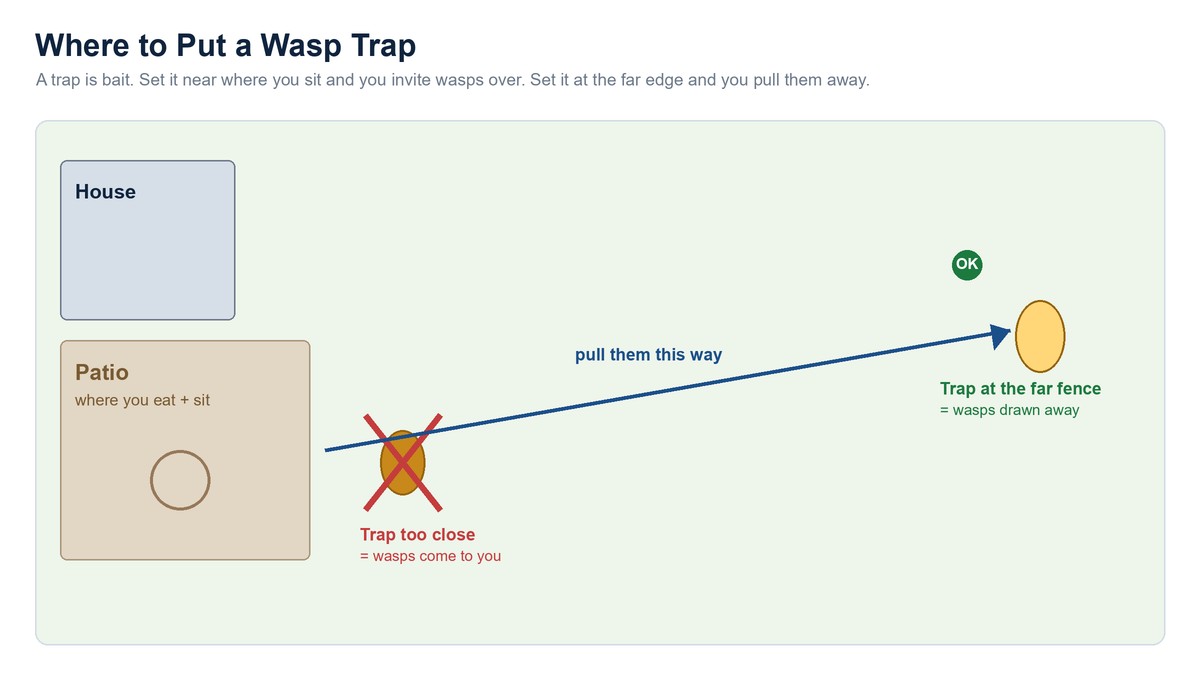
And here’s the detail that ruins most trap setups: placement. A trap is bait, so hanging it right next to your patio table actively lures wasps toward exactly where you sit. Put traps at the far edges of your yard, along the back fence, away from doors and seating, so they pull wasps away from your space, not into it. Set them out early in the season to catch queens before colonies grow.
Vinegar Traps and the Honest Verdict
You’ll see a lot of advice on how to get rid of wasps with vinegar, usually a jar of apple cider vinegar, sugar, and a drop of soap. Does it work? Partly, and only in the same limited way any sweet trap works. The vinegar and sugar smell draws foraging wasps in, the soap breaks the surface tension so they sink and drown. It’s a fine cheap homemade forager trap.
But be honest about what it is. A vinegar trap catches individual wandering wasps; it will never clear a nest, and near food it can attract as many wasps as it drowns. Treat it as mild patio-annoyance control at the edge of the yard, not as a way to get rid of a colony. If wasps keep coming, the nest is still out there and still needs to be found.
How to Keep Wasps From Coming Back Next Summer
Getting rid of one nest is a good day. Keeping wasps from setting up around your house again is what actually buys you a quiet summer. Prevention is mostly about removing the two things wasps want: hidden shelter to nest in, and easy food to eat.
Start early and start with the building itself. In spring, before colonies get going, walk the outside of your house and seal the gaps wasps love to nest in: cracks in siding, gaps around vents and utility lines, torn screens, and holes where pipes enter. A tube of exterior caulk and some fine mesh over vents closes off most of the enclosed spaces yellowjackets and paper wasps would otherwise claim. This is the single highest-value thing you can do for getting rid of wasps around your house long term.
Seal Entry Points, but Never an Active Nest
Sealing gaps is prevention gold, with one hard rule attached: only seal an opening you’re certain has no active nest behind it. Do this in early spring or in winter, when nothing is living in the wall. Caulk the quiet, empty cracks so next year’s queens can’t move in.
Food and Garbage Discipline
Late-summer yellowjackets are hunting sugar and protein, and an open trash can or a sticky recycling bin is a five-star restaurant. Keep outdoor garbage and recycling in bins with tight lids, rinse cans and bottles before they go in, and don’t leave pet food or fallen fruit sitting out. Wipe down the picnic table and cover sweet drinks outdoors, because a wasp crawling into an open soda can is how a lot of mouth and throat stings happen.
None of this kills a wasp, and that’s the point. You’re making your yard boring to them so fewer show up to scout it as next year’s home. Combine tidy food habits with spring sealing and you cut way down on the nests you’ll have to deal with at all.
Decoy Nests and the Honest Verdict
Those fake paper “nests” sold as wasp deterrents lean on a real idea: paper wasps are territorial and avoid building near an existing colony. In tight, tidy conditions, a decoy over a small area sometimes helps at the margins. It is not, however, a force field. Field results are mixed at best, and a determined queen will happily build a few feet from a decoy she doesn’t buy.
So hang one if you like, as a cheap, harmless extra, but don’t count on it. Sealing gaps and cutting off food do the heavy lifting; a decoy nest is a maybe-nice bonus, not a plan.
When You Should Absolutely Not Do This Yourself
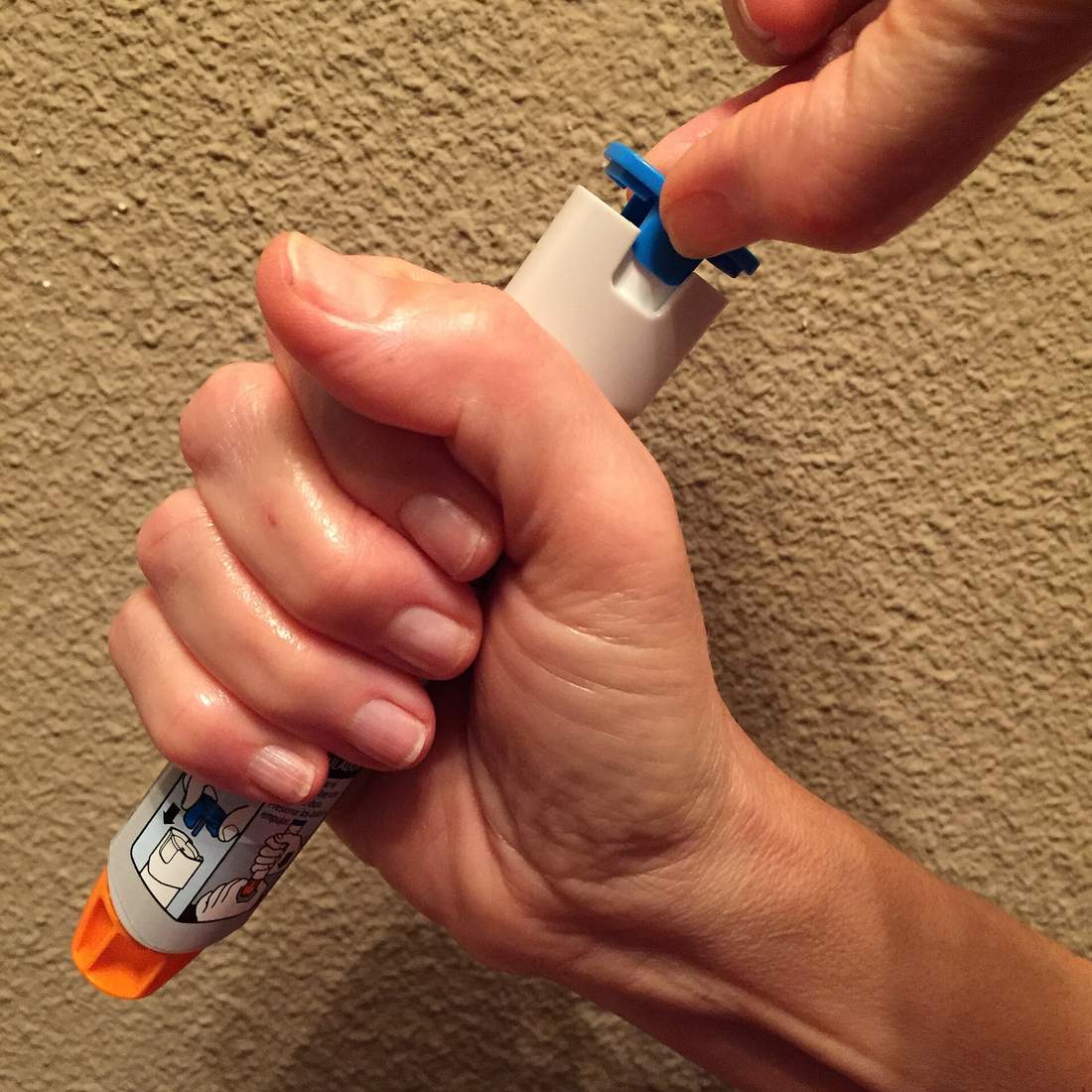
This is the part the spray-can guides rush past, and it’s the most important section on the page. Some wasp situations are not DIY jobs, full stop. Knowing which ones is what keeps a nuisance from turning into an ambulance ride.
Call a licensed pro, and don’t touch it yourself, if any of these are true: the nest is a large enclosed hornet or yellowjacket nest; it’s inside a wall, chimney, attic, or crawlspace; it’s a ground nest with heavy traffic; it’s high enough to need a ladder; or you would be spraying near where children or pets play. Pros have the right dust, the protective suit, the reach, and the experience to treat a hidden colony without wearing it.
And the single biggest reason to step back has nothing to do with the nest. It’s you. If you’re allergic to stings, this is not your job, ever. A first sting can be minor and a second can be life-threatening, and many people who suffer a severe sting reaction had no idea they were allergic beforehand. If you’ve ever had a reaction that spread beyond the sting site, hand this off and go treat it as a medical issue, not a yard chore. It can escalate the same way other severe allergic reactions do, fast and hard.
What to Do If a Wasp Stings You
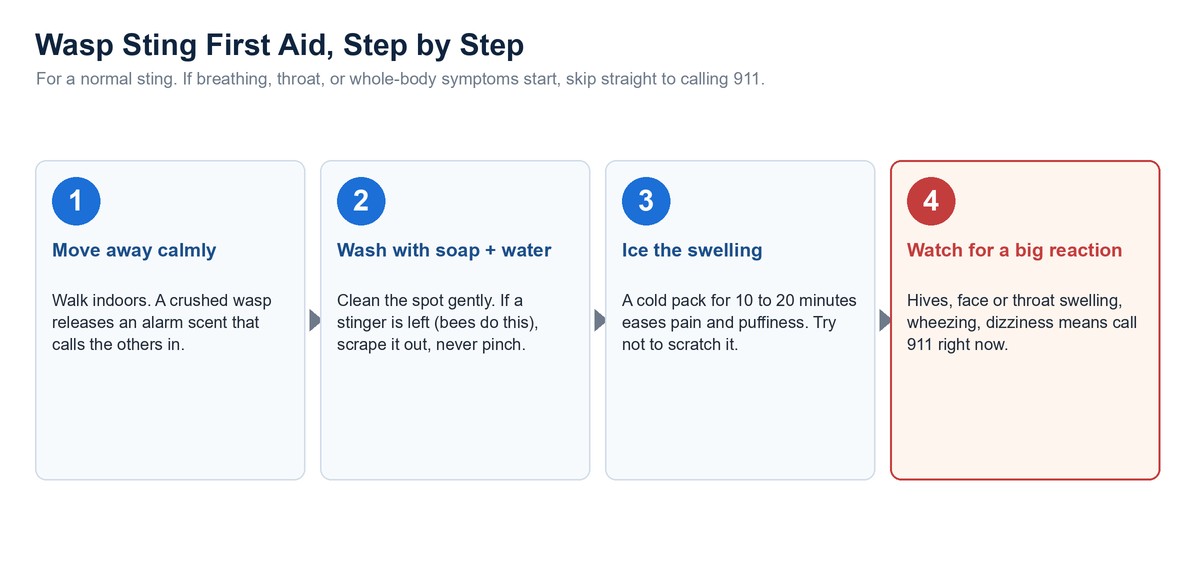
Most stings, thankfully, are just a sharp pain, some redness, and swelling right at the spot. That’s a normal reaction, and it’s not dangerous, even though it hurts. The CDC’s guidance for a routine sting is simple, and worth knowing before you ever need it.
Move away first. Wasps release an alarm chemical when threatened or crushed that signals the colony to attack, so calmly getting distance is step one. Then wash the sting with soap and water. Unlike honeybees, wasps usually don’t leave a stinger behind, but if you’re stung by a bee and a stinger is stuck in the skin, scrape it out sideways with a fingernail or a card edge; never pinch it with tweezers, because squeezing pushes more venom in. Ice the spot for 10 to 20 minutes to bring down pain and swelling, and try hard not to scratch it, which only worsens the itch and invites infection.
Then watch the person for a little while, because the one thing that turns a sting serious is an allergic reaction, and it can come on within minutes. The CDC advises that anyone with a history of severe sting reactions carry an epinephrine auto-injector and wear medical ID. A normal sting you treat with ice and patience. A spreading, whole-body reaction you treat with 911.
Why Some Wasps Are Worth Leaving Alone
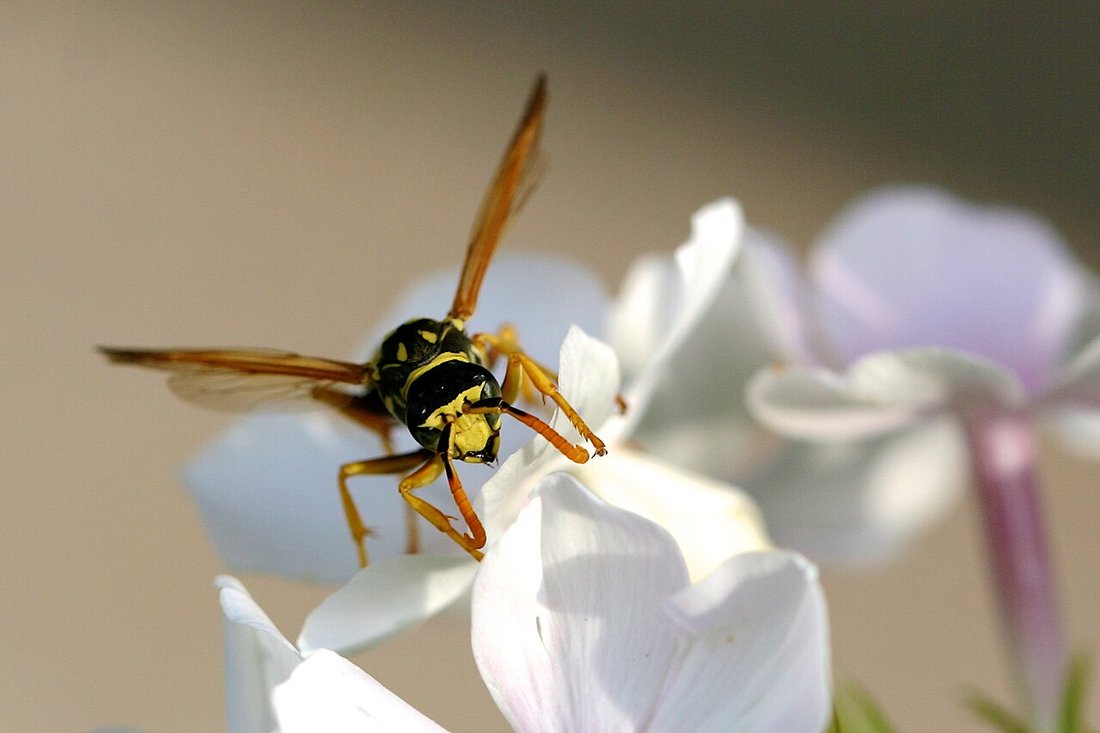
Before you declare war on every wasp in the yard, it’s worth remembering they’re not just here to ruin your barbecue. Wasps are some of the hardest-working pest controllers in your garden. Paper wasps hunt caterpillars, flies, and other soft-bodied insects to feed their young, quietly protecting your vegetables and roses from the bugs that actually eat them. Mud daubers, as we saw, spend their whole lives clearing out spiders.
Many wasps are pollinators too. Visit a garden on a warm afternoon and you’ll see wasps working the flowers for nectar, moving pollen as they go, right alongside the bees. They’re not as efficient as honeybees, but they count. A yard with a few wasps working the far corners is a healthier yard, not a failed one.
So the goal was never to erase wasps from the earth; it’s to keep them away from the specific spots where you live your life. Remove the nest by your front door, absolutely. But that hornet ball at the very back of the property, or the mud dauber on the shed, or the paper wasps working the flowerbed you don’t sit in? Leaving them be is the smarter, safer, and frankly kinder call. Getting rid of wasps well means solving the conflict, not winning a war.
Frequently Asked Questions
How do I get rid of wasps naturally?
For a small, reachable, open paper wasp nest, a spray bottle of dish soap and water at night is the classic natural method; it coats the wasps and drops them without any harsh chemicals or soil damage. Beyond that nest, “natural” is mostly prevention: seal gaps in spring so they can’t move in, keep food and trash covered so they don’t linger, and leave beneficial mud daubers alone. Natural methods work best on small problems caught early; a big enclosed or ground nest still needs stronger, targeted treatment or a pro.
How do I get rid of a wasps nest in my house or wall?
Very carefully, and often not by yourself. A nest inside a wall, attic, or chimney is usually yellowjackets, which can number in the thousands, so a licensed pro with the right dust and protective gear is the safe answer. The one rule you must never break: do not plug the entry hole of an active in-wall nest. Wasps whose exit is blocked chew inward through the drywall and end up inside your home. The nest has to be fully treated and confirmed dead first; only then do you seal the opening.
Do vinegar traps really get rid of wasps?
They catch some, but they won’t clear a nest. A jar of apple cider vinegar, sugar, and a drop of dish soap lures foraging wasps in and drowns them, which can slightly thin the wasps around a patio. That’s the whole effect. A vinegar trap never reaches the queen or the brood, so the colony keeps producing new workers, and placed near food it can draw in as many wasps as it drowns. Use it as mild annoyance control at the edge of the yard, and keep looking for the actual nest.
How do I get rid of wasps around my house without killing them?
Focus on making your house unattractive rather than deadly. Seal the cracks, vents, and gaps where they’d nest, ideally in spring before colonies form, and keep outdoor food, sweet drinks, pet food, and garbage sealed so foragers have no reason to hang around. Baited traps placed at the far edges of the yard pull wasps away from your seating areas. For beneficial, non-aggressive mud daubers, the kindest and easiest move is simply to leave them be until they finish and move on.
When is the best time to spray a wasp nest?
At night or in the cool early morning, when nearly all the wasps are home and sluggish. Treating in daylight only hits the few workers currently on the nest and leaves the rest to come home angry. Wear long sleeves, stand back as far as your spray reaches, plan a clear exit path, and never treat from a ladder. Avoid shining a bright white flashlight directly on the nest, which can rouse the colony; a red light is safer if you need to see.
How do I know if I’m allergic to wasp stings?
You often don’t until it happens, which is exactly why caution matters; a large share of people who suffer a severe sting reaction had no prior warning. A normal sting causes pain, redness, and local swelling that fade in a day or two. An allergic reaction is different: hives or swelling that spread beyond the sting, swelling of the lips, tongue, or throat, wheezing or trouble breathing, dizziness, or a racing heart. Those signs are a 911 emergency. If you’ve ever had a reaction that spread beyond the sting site, ask a doctor about testing and carrying an epinephrine auto-injector.
Are wasps actually good for anything?
Yes, quite a lot. Paper wasps and hornets hunt caterpillars, flies, and other insect pests to feed their larvae, acting as free garden pest control, and mud daubers stock their nests with spiders. Many wasps also visit flowers for nectar and move pollen while they do, so they help with pollination alongside bees. That’s why the smart approach is targeted, not total: remove nests near doors, walkways, and where you sit, and leave the remote or beneficial ones to keep doing their job.
About the Author
Elena Brooks
Elena Brooks is the person her group chat texts when something at home stops working or a health trend starts trending. She’s spent years turning that instinct into a job — digging into the research behind everyday questions, calling the experts, and writing up what holds up and what doesn’t. Her beat is wherever curiosity points: kitchens, cars, pets, sleep, money, and the occasional meteor shower.