
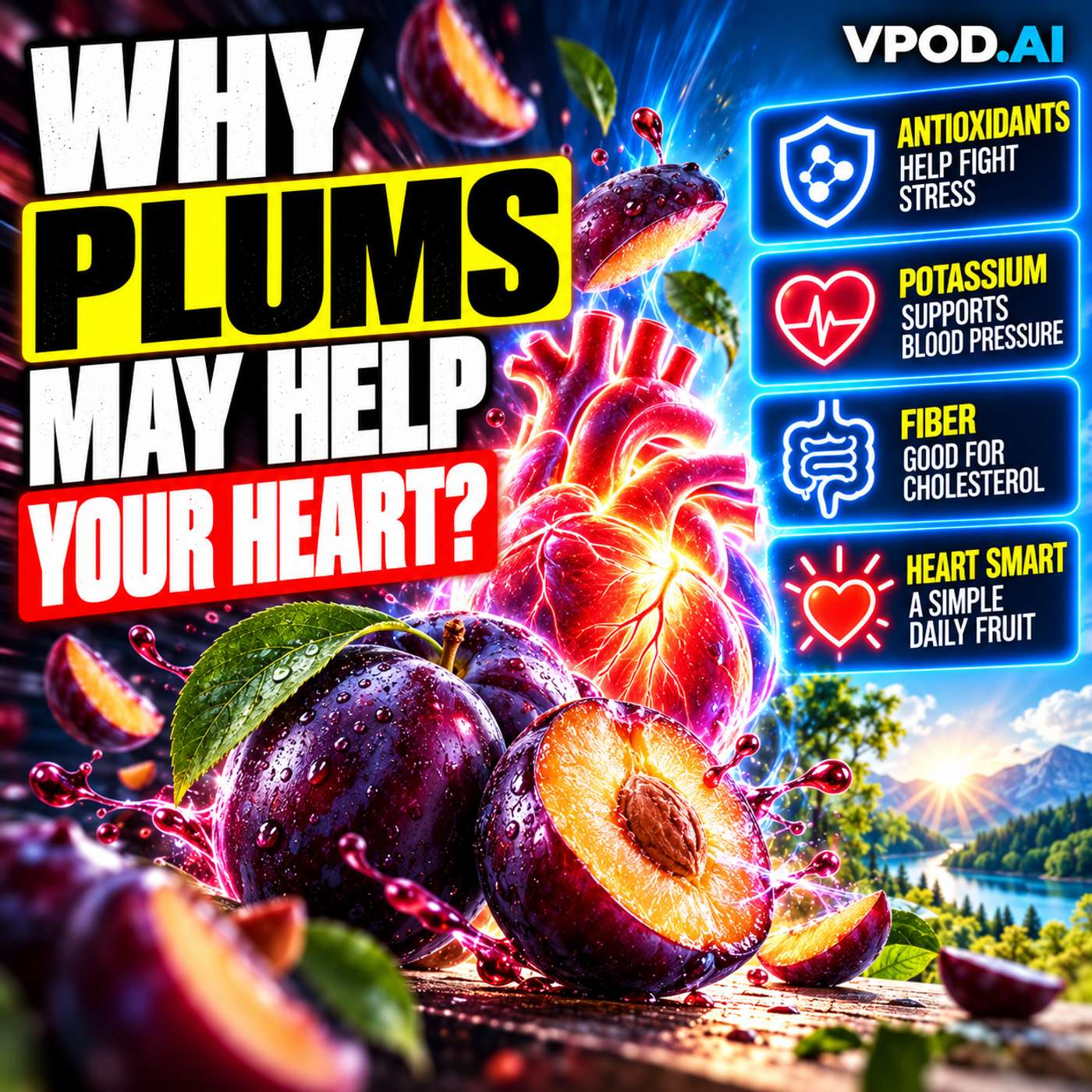





The humble plum may not get the attention of trendy superfoods, but its impact on heart health is surprisingly powerful.
In this episode, Mike and Susan explore how plums may support cardiovascular health through fiber, potassium, antioxidants, and polyphenols—and explain what actually happens inside your body after you eat them.
You’ll hear how:
• Soluble fiber can bind to bile acids and help the body remove cholesterol
• The liver may pull LDL cholesterol from the bloodstream to replace lost bile acids
• Gut bacteria ferment fiber into short-chain fatty acids that influence cholesterol metabolism
• Potassium helps the kidneys remove excess sodium and supports healthier blood pressure
• Anthocyanins act as antioxidants that protect blood vessels from oxidative stress
• Polyphenols such as chlorogenic acids may support healthy endothelial function
• Nitric oxide helps blood vessels relax and improves blood flow
• Dried plums, or prunes, may have particularly notable effects on LDL cholesterol
The conversation also explains why no single food acts as a magic fix. Plums work best as part of a broader diet rich in potassium, fiber, colorful fruits, vegetables, beans, and other plant foods.
From cholesterol management to blood pressure support and blood vessel protection, the plum offers a surprisingly broad cardiovascular toolkit in a simple, accessible fruit.
The episode ends with an intriguing question: are prunes simply concentrated plums, or does the drying process actually change how their fiber and plant compounds interact with the gut microbiome?
Subscribe to vpod.ai for more conversations about nutrition, heart health, healthy eating, and the science behind everyday foods.