
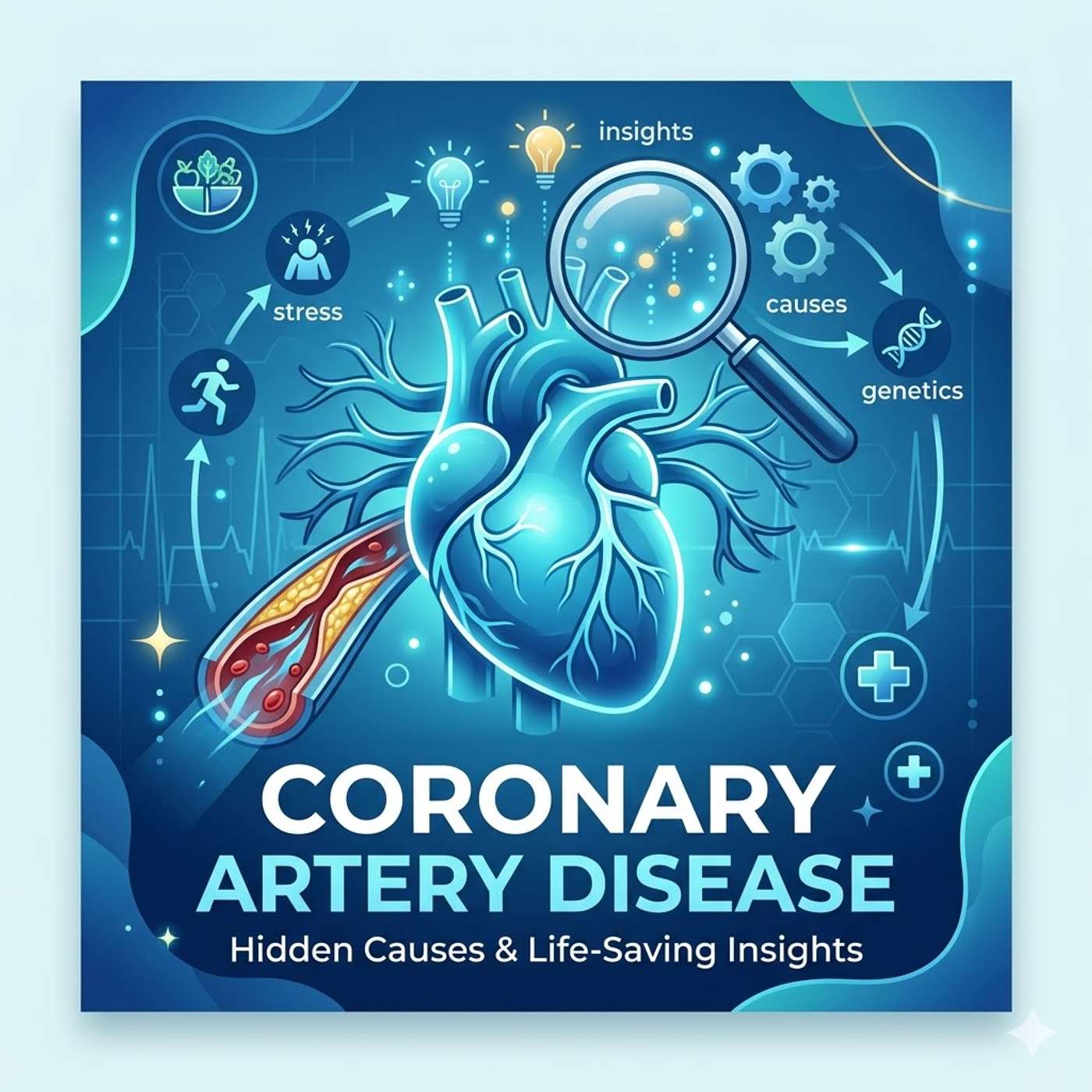





What really happens inside your arteries long before heart disease shows up as chest pain?
In this episode of vpod.ai, Mike and Susan take a deep look at coronary artery disease, or CAD, and explain why it is far more complex than “clogged pipes.” Instead of imagining cholesterol simply sticking to the inside of an artery, this conversation breaks down the real cellular process: damage to the endothelium, cholesterol slipping into the artery wall, inflammation, plaque growth, and the dangerous moment when vulnerable plaque ruptures.
This episode explores how the heart, a self-sustaining pump that depends on its own blood supply, becomes vulnerable when the coronary arteries feeding it begin to narrow from within.
You’ll hear Mike and Susan explain:
- Why plaque forms inside the artery wall, not just on the surface
- How endothelial damage allows LDL cholesterol to enter the vessel wall
- Why inflammation plays a central role in coronary artery disease
- How high blood pressure physically damages arteries over time
- Why family history, menopause, sleep apnea, and preeclampsia matter
- How metabolic syndrome accelerates plaque buildup
- What angina feels like and why symptoms can be atypical
- Why women, older adults, and people with diabetes may miss heart attack warning signs
- How ECGs, echocardiograms, stress tests, CT scans, and angiograms detect CAD
- How medications, stents, angioplasty, and bypass surgery help restore blood flow
The conversation also highlights a critical message: coronary artery disease is not always an inevitable decline. While procedures can address immediate blockages, long-term stabilization depends on changing the body’s metabolic and inflammatory environment.
Mike and Susan discuss how lifestyle changes, lipid management, exercise, stress reduction, and better attention to systemic inflammation can help stabilize plaque, support endothelial health, and reduce future risk.
This episode is for anyone who wants a clearer understanding of heart disease, cardiovascular risk, plaque rupture, heart attack symptoms, and how modern cardiology works to protect the body’s most tireless engine.
Subscribe to vpod.ai for more conversations on heart health, medical science, prevention, longevity, and the hidden systems that shape your health.