

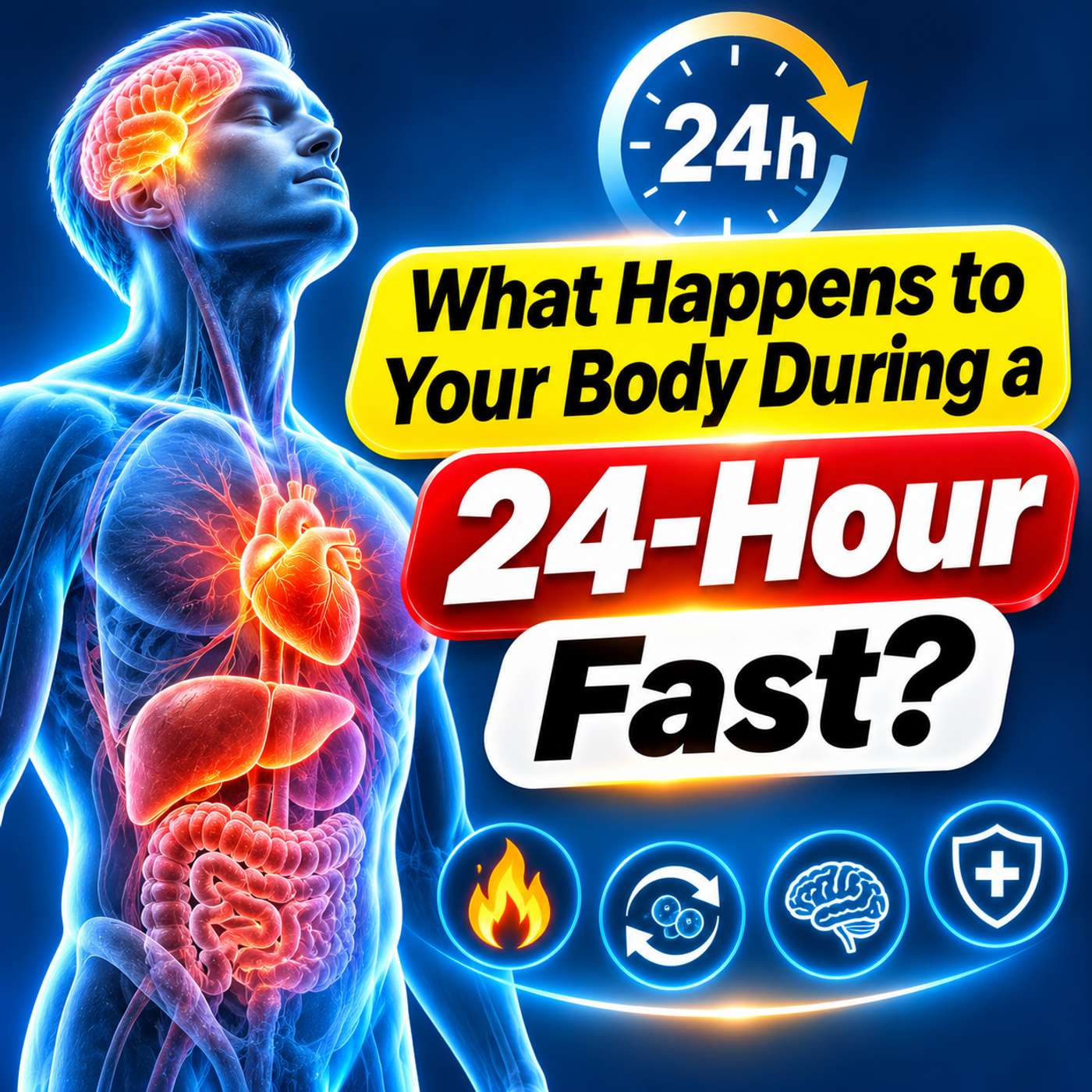





What really happens to your body when you stop eating for 24 hours? From hunger hormones and fat burning to ketosis, cellular recycling, and changes in growth hormone levels, fasting triggers a fascinating series of metabolic adaptations.
In this episode of VPOD.ai, host Mike and guest expert Susan explore the science behind a 24-hour fast, breaking down how the body responds to food deprivation and switches between different energy sources.
Most people are accustomed to eating every few hours. But when food intake stops, the body begins adjusting its hormone levels, drawing on stored energy, and activating pathways involved in maintaining cellular function.
What starts as a simple break from eating becomes a complex interaction between the liver, brain, digestive system, cardiovascular system, and immune system.
In This Episode, You’ll Discover:
- Hours 1–4: How insulin regulates blood sugar after eating and why ghrelin, the hunger hormone, can trigger cravings around your usual mealtimes.
- Hours 4–10: How declining insulin and rising glucagon encourage the liver to release stored glucose through glycogenolysis.
- Hours 10–14: How the body begins increasing fat utilization and ketone production as available carbohydrate reserves decline.
- Hours 12–17: Why some people experience fatigue, irritability, or brain fog during fasting, while others report improved mental focus.
- Around Hour 15: How the migrating motor complex helps move residual material through the digestive tract between meals.
- Hours 17–20: How the liver produces glucose through gluconeogenesis to support cells that cannot use ketones for energy.
- Around Hour 20: How fasting influences sodium and water balance, hydration, blood pressure, and cardiovascular function.
- Hours 22–23: What autophagy is, how cells recycle damaged components, and why researchers are studying its relationship with fasting and cellular health.
- Hour 24: How growth hormone, fat metabolism, and muscle preservation interact during periods without food.
The discussion also explores several important questions about fasting and metabolism.
Why can hunger appear even when the body still has stored energy available? What causes the transition from glucose metabolism to increased fat burning? And why do some people feel mentally sharper during fasting while others struggle with fatigue?
Mike and Susan examine the role of ketone bodies as an alternative energy source, how the liver maintains blood glucose, and why hydration and electrolyte balance matter when food intake is restricted.
The episode also explores autophagy, the cellular recycling process that helps break down and reuse damaged cellular components, alongside research into the relationship between fasting, gut bacteria, and metabolic health.
Another fascinating topic is human growth hormone (HGH). Fasting can influence growth hormone secretion, but what does that mean for muscle maintenance, physical performance, and the body’s response to reduced calorie intake?
While fasting is often associated with weight loss, insulin sensitivity, metabolic flexibility, and cellular repair, the timing and magnitude of these responses vary between individuals. Not every proposed benefit has been established in humans, and processes such as autophagy cannot be reliably assigned to an exact hour of fasting.
A 24-hour fast is not appropriate for everyone, particularly people with certain medical conditions, those taking glucose-lowering medications, or individuals with a history of eating disorders.
Join Mike and Susan as they explore the biological changes that can occur during a full day without food and the remarkable ways the human body adapts to changing energy availability.
Subscribe to VPOD.ai for more conversations about human biology, nutrition, metabolic health, medical research, and the science behind everyday health decisions.
Enjoyed this episode? Share it with someone interested in intermittent fasting, metabolism, or the science of nutrition, and tune in for our next discussion.
Sponsor VPOD.ai:
Promote your business for just $25 and reach listeners across Spotify, Apple Podcasts, Amazon Music, and other major podcast platforms.
Visit https://vpod.ai to get started.
Medical Disclaimer:
This episode is for educational and informational purposes only and does not replace professional medical advice. Consult a qualified healthcare professional before attempting prolonged fasting, especially if you have an underlying health condition or take prescription medication.