
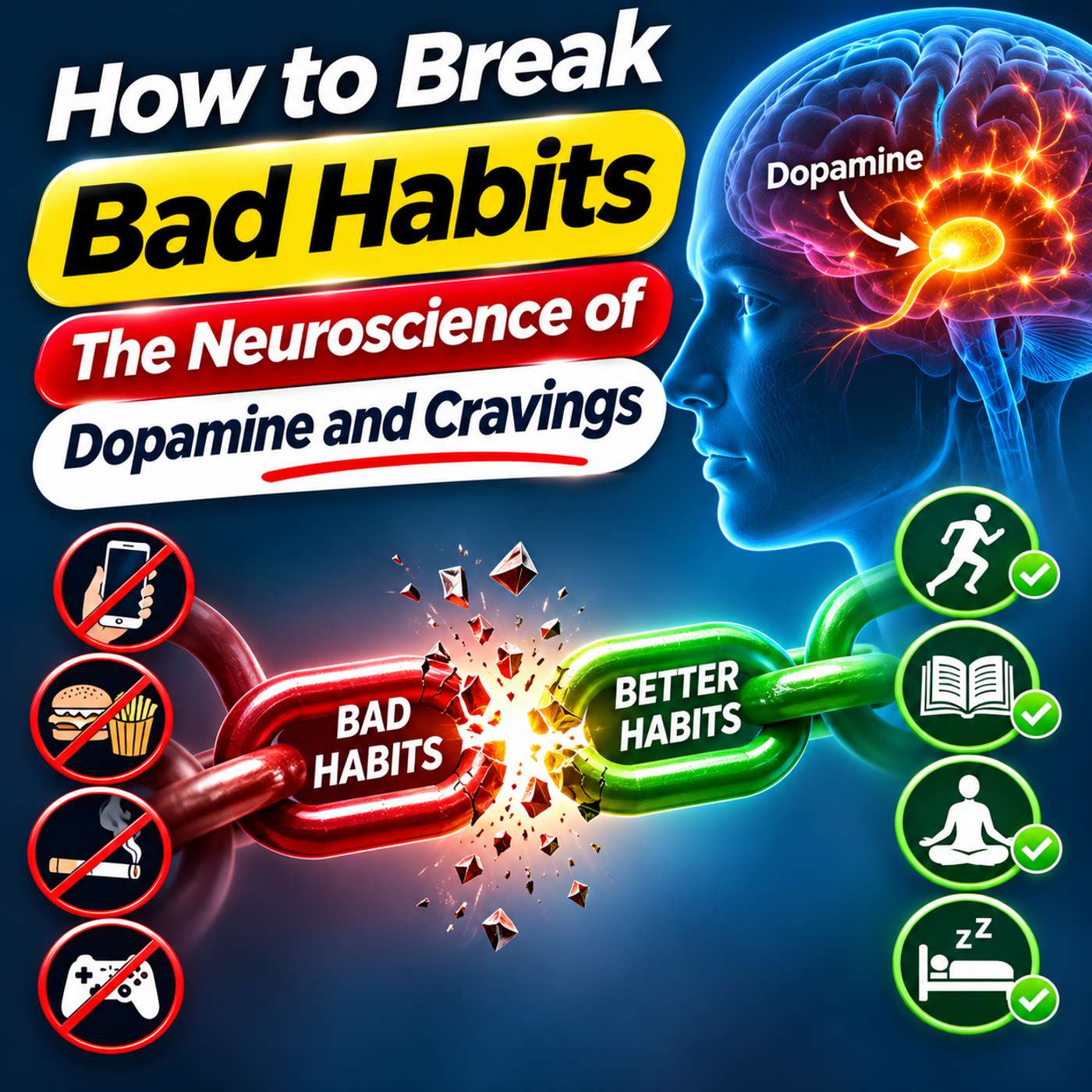





Why do you keep scrolling through your phone when you’re no longer enjoying it? Why do cravings persist even after the pleasure disappears? And why does relying on willpower alone often fail to break bad habits?
In this episode of VPod.ai, Mike and Susan explore the neuroscience of compulsive behavior, dopamine, addiction, and habit formation. They examine how the brain’s wanting and liking systems operate differently, why environmental triggers reinforce cravings, and how everyday behaviors can become deeply ingrained neurological patterns.
Drawing on psychological research, addiction studies, and mindfulness-based techniques, the conversation explores practical ways to interrupt destructive habit loops and regain control over your decisions.
In this episode, we discuss:
- The neuroscience behind bad habits and compulsive behavior.
- Dopamine’s role in motivation, desire, and reward-seeking behavior.
- Incentive sensitization theory and the difference between wanting and liking.
- Why cravings persist even when an activity no longer provides pleasure.
- How environmental cues trigger addictive behaviors.
- What research on Vietnam War veterans reveals about addiction and environmental influences.
- Four common psychological rationalizations that reinforce bad habits.
- How shame, stress, and emotional distress can contribute to relapse.
- Urge surfing and mindfulness techniques for managing cravings.
- How conscious awareness can weaken habitual behaviors.
- Changing your environment to interrupt compulsive habit loops.
- Rediscovering everyday pleasures through healthier, slower rewards.
- How digital environments influence human behavior and reinforce compulsive habits.
Breaking bad habits isn’t necessarily about developing stronger willpower. It involves recognizing triggers, questioning automatic responses, changing your surroundings, and creating space between a craving and your next action.
From excessive social media scrolling to unhealthy eating and other everyday compulsions, this episode offers a science-based perspective on why we struggle to stop certain behaviors and what we can do differently.
As digital platforms increasingly compete for our attention, an important question emerges: How much of our behavior is genuinely our choice, and how much is shaped by the environments designed around us?
Tune in to VPod.ai to explore the psychology of addiction, the neuroscience of habit formation, and practical strategies for managing cravings and developing healthier behaviors.
Subscribe and share this episode with anyone interested in neuroscience, psychology, personal development, and behavioral change.
Medical disclaimer: This episode is for educational purposes and is not a substitute for professional medical advice. Individuals experiencing substance dependence should consult a qualified healthcare professional before attempting withdrawal.
Want to reach an engaged podcast audience? Sponsor this podcast for just $25 and get featured across Apple Podcasts, Spotify, Amazon Music, and more. Visit https://vpod.ai to get started.