

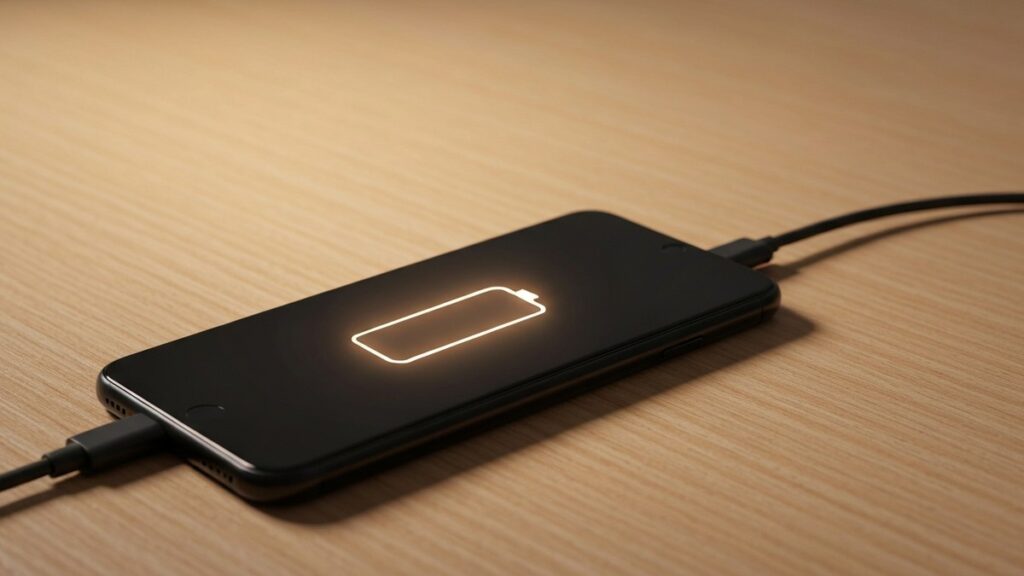
Why does my phone get hot while charging? A little warmth is completely normal — charging isn’t perfectly efficient, so some energy turns into heat, and fast or wireless charging runs warmer still. It usually tips into “too hot” for one of a few reasons: you’re using the phone while it charges, you’re in a hot spot (sun, car, under a pillow), a thick case is trapping heat, the charger or cable is cheap or damaged, or the battery is simply old. Most cases are fixable in seconds — take the case off, stop gaming while it charges, and move it somewhere cool. But a few signs mean stop right now: a swollen battery, any hissing, smell, or smoke, or a phone too hot to hold. Here’s the full breakdown.
Key Takeaways
- Mild warmth while charging is normal; Apple and Samsung both rate phones to operate from 0–35°C (32–95°F), and modern phones slow or pause charging when they get too hot.
- The usual culprits are using the phone while charging, heat from the environment, a heat-trapping case, a cheap or damaged charger/cable, an old battery, or wireless charging.
- Quick fixes: remove the case, stop using it while charging, move it somewhere cool and ventilated, and switch to a certified charger and a good cable.
- Stop immediately and seek help if the battery is swollen, the phone hisses/smells/smokes, it’s too hot to hold, or it keeps shutting off from heat — those are genuine safety risks, not quirks.
Reaching for your phone and finding it noticeably warm — or genuinely hot — while it charges is one of the most common little anxieties of modern life. Is it about to die? Is it dangerous? Usually the answer is “it’s fine, here’s why,” but not always, and knowing the difference is the whole point. This guide walks through what’s normal, the real reasons your phone heats up on the charger, the handful of warning signs that actually matter, and the quick fixes that cool it back down.
First: Is It Even a Problem?
Start by relaxing a little, because some heat is supposed to happen. Charging a battery is not perfectly efficient, so a portion of the energy flowing in is given off as heat — both the phone and the charging brick warm up. Samsung says this plainly: a device and its charger can both generate heat while charging, and that warmth alone does not affect the phone’s lifespan or performance. Phones also feel warmer on a fast charger or a wireless pad, which is expected.
What about an actual temperature limit? Helpfully, Apple and Samsung agree: phones are designed to operate best between 0°C and 35°C (32°F to 95°F). Push beyond that — a hot car, direct sun, a long gaming session on a fast charger — and your phone protects itself. According to Apple’s own guidance, an overheating iPhone will slow or pause charging, dim or black out the display, weaken its signal, disable the camera flash, and may show a “Temperature: iPhone needs to cool down” screen; during navigation it switches to audio-only until it cools. Samsung devices behave similarly, flashing a “Cooling down” message or powering off to protect themselves. In other words, the phone is usually managing the heat for you. The question is whether something is making it work harder than it should.
Why Your Phone Gets Hot While Charging: 10 Reasons
If the warmth has crossed from “mild” into “too hot,” one of these is almost always behind it.
1 Using the Phone While It Charges
Gaming, streaming video, video calls, or running GPS navigation makes the processor work hard at the same time the battery is taking in power — heat from both sources stacks up. This is the single most common reason a charging phone gets hot.
Think of it as running the engine and refueling at once. The chip is generating heat from the work you’re demanding, while the battery is generating its own charging heat, and the two have to escape through the same small slab of glass and metal. Put the phone down for ten minutes and the temperature usually drops fast.
2 Fast Charging Pushes More Power In
More watts means more current pushed in quickly, and moving that much energy fast naturally generates more heat than a slow trickle charge. It’s designed-in and safe, but it does run noticeably warmer.
This is a deliberate trade-off you’re making for speed. Modern phones and certified fast chargers negotiate a rate they can both handle and back off the wattage as the battery fills or warms up, so the heat is managed — but a fast charge will always feel hotter in the hand than an overnight slow one.
3 Heavy Background Activity You Can’t See
Apps refreshing, syncing, backing up photos, downloading updates, or a recent software update re-indexing in the background can keep the processor busy and warm even when the screen is off and the phone looks idle.
This is why a phone sometimes runs hot on the charger overnight for no obvious reason. If the heat started right after a big update, that’s usually the phone re-indexing your photos and files behind the scenes — give it an hour or two and it typically settles down on its own.
4 A Hot Environment Around the Phone
Charging in direct sunlight, in a parked car, near a stove, or in a stuffy, unventilated room traps heat the phone simply can’t shed. Ambient heat is a huge and badly underrated factor.
Your phone cools itself by radiating heat into the air around it, so if that air is already hot, it has nowhere to dump the excess. A car dashboard in summer can hit temperatures far above the 35°C ceiling on its own, before charging adds a single degree.
5 Charging on a Bed, Sofa, or Under a Pillow
Soft surfaces wrap around the phone and block airflow, so the heat it normally radiates has nowhere to go and builds up against the battery. A hard, open surface like a desk lets that same heat escape freely.
This one is also a genuine fire-safety concern, not just a battery-longevity one — never charge a phone under bedding or a pillow. Trapped heat is exactly the condition that turns a minor battery flaw into a dangerous one, so keep charging phones out in the open.
6 A Thick or Insulating Case
A heavy-duty case is great for surviving drops, but it acts like a blanket during charging, holding heat against the phone instead of letting it escape. The thicker and more rugged the case, the more heat it traps.
You don’t need to ditch the case for everyday use. But on a hot day, or during a fast charge, popping it off for the charging session is one of the quickest ways to let your phone run cooler.
7 Wireless Charging Loses Energy as Heat
Inductive charging is less efficient than a cable — more of the energy is lost as heat in the coil-to-coil transfer between the pad and the phone — so wireless pads tend to run warmer than wired charging.
That lost energy doesn’t vanish; it shows up as warmth in both the pad and the back of your phone. If heat is a concern, plugging in a cable is both faster and cooler than resting the phone on a wireless pad.
8 A Cheap, Damaged, or Uncertified Charger or Cable
A frayed cable or a no-name adapter that can’t communicate properly with your phone’s charging system can run hot, and it is easily the riskiest item on this list. Samsung explicitly recommends using an authentic charger and cable.
Legitimate chargers include safeguards that regulate the charging rate and cut off on a fault; many counterfeit ones skip those protections to save money. That’s exactly how a bargain-bin adapter can overheat dangerously, so this is the one cause worth spending money to eliminate.
9 A Dirty or Damaged Charging Port
Lint, dust, or a bent connector creates electrical resistance and a poor connection, which can generate heat right at the port where the cable meets the phone.
Pocket lint is the usual offender — it packs into the bottom of the port over months until the cable can’t seat fully. With the phone powered off, a gentle sweep with a wooden toothpick often clears it and fixes both the heat and any intermittent charging.
10 An Aging Battery Running Warm
As lithium-ion batteries age, their internal resistance rises, so they tend to run warmer and hold less charge than when they were new. If your phone is a few years old and consistently hot, the battery itself may simply be the answer.
A failing app or, in rare cases, malware can also spike the processor and generate heat — but the everyday causes above are far more likely. If the heat comes with noticeably shorter battery life, a fresh battery often fixes both problems at once.
When to Worry: The Danger Signs
Most of the time, heat while charging is harmless and self-correcting. But lithium-ion batteries deserve respect, and a few signs mean you should stop and pay attention rather than shrug it off:
- It’s too hot to hold comfortably. Warm is fine; genuinely hot — uncomfortable against your hand or face — is not.
- It keeps shutting itself off from heat. An occasional cool-down is the phone protecting itself; repeated heat shutdowns point to a real problem.
- The battery is swollen. A bulging back, a screen or back panel lifting away, or the case separating means the battery is expanding — a clear hardware hazard (see the next section).
- Hissing, a chemical smell, or smoke. Treat any of these as an active emergency, not a glitch.
- It’s hot even when idle or not charging. Heat with nothing demanding suggests a stuck process or a hardware fault worth investigating.
If you’re hitting these regularly — especially swelling or any smell/smoke — it’s time for a professional, your manufacturer’s support, or a battery replacement, not another troubleshooting loop.
If the Battery Is Swollen or Puffy, Do This
Safety first — a swollen lithium-ion battery is a real hazard. If you see bulging, a lifting screen, or a separating case: stop using and stop charging the phone immediately. Do not press, bend, puncture, or try to pry the battery out — piercing it can cause a fire or release harmful chemicals. Power the phone down if you can do so safely, keep it away from heat, sunlight, and anything flammable, and take it to a professional or authorized repair center for safe removal. Never toss a swollen battery in your household trash — use an e-waste or hazardous-waste drop-off. If it’s hot, smells, or is smoking, move it outside or into a non-flammable container and keep your distance. This guidance follows battery-safety experts like iFixit.
How to Cool It Down: The Fixes
For ordinary “it’s running warm” situations, work down this list — the first few solve most cases.
- Take the case off while it charges. Especially during fast charging or a hot day, removing a thick case lets the phone shed heat far more easily.
- Stop using it while it charges. Put the gaming, video, and navigation on pause and let it charge undisturbed — this alone fixes a huge share of “hot while charging” complaints.
- Move it somewhere cool and ventilated. Off the bed and sofa, out of the sun and the car, onto a hard, open surface like a desk or table.
- Use a certified charger and a good cable. Switch to the official charger or a reputable, certified one, and retire any frayed or sketchy cable. This is the highest-impact safety fix.
- Close genuinely heavy apps. You don’t need to force-quit everything (more on that myth below), but do close active power-hogs like navigation, video calls, or screen recording while charging.
- Keep your software updated. Updates fix bugs that can cause runaway background activity; the latest version is usually the coolest-running one. If heat started right after an update, give it an hour to finish re-indexing.
- Clean the charging port. With the phone powered off, gently clear lint and dust from the port with a wooden or plastic toothpick or a quick puff of air — never anything metal.
- Don’t let it bake at 100%. Heat plus a long stretch at full charge is what actually wears a battery. Features like Apple’s Optimized Battery Charging hold the phone around 80% and finish near your wake-up time to limit time at full charge in the heat.
- Switch from wireless to wired if it runs hot. A cable is more efficient and cooler than a wireless pad, so plug in when heat is a concern.
- Replace an old battery or a damaged cable. If the phone is a few years old and consistently hot, a fresh battery often fixes both the heat and the short battery life.
A Quick Word on Chargers and Cables
If there’s one place not to cut corners, it’s what you plug into the wall. A genuine or properly certified charger negotiates a safe charging rate with your phone and includes protections a counterfeit one may lack. Safety organizations warn that counterfeit lithium-ion accessories often skip the overcharge and short-circuit safeguards built into legitimate ones, which is exactly how they fail dangerously — in rare cases through “thermal runaway,” a self-feeding overheating that can lead to fire. The fix is simple and cheap insurance: stick to your phone maker’s charger or accessories that carry real certifications — Apple’s MFi program for Lightning gear, USB-IF certification for USB-C, or an established, reputable brand. A $5 mystery adapter is not worth the risk to a flagship phone.
Myths to Stop Believing
- “Charging overnight ruins your battery.” Largely outdated. Modern phones stop drawing power at 100%, and optimized-charging features deliberately slow the last stretch to limit time at full charge. The real wear factor is heat and long hours sitting at 100% — so the fix is a cool spot and optimized charging, not avoiding overnight charging entirely.
- “You must close all your apps to stop the heat.” Mostly a myth. Suspended background apps use little to no power, and force-closing then reopening them can actually use more. Only close apps that are genuinely active — GPS, video, recording.
- “Fast charging always damages your battery.” Misleading. Phones and certified fast chargers negotiate a safe rate and manage the heat; fast charging is engineered in, not inherently destructive. Heat from any source is the thing to manage, not the speed itself.
- “You should fully drain the battery before recharging.” False for modern lithium-ion batteries — that habit belonged to old nickel-based cells. Top up whenever you like.
Normal vs. Worry: A Quick Reference
| Probably normal | Worth worrying about |
|---|---|
| Mildly warm, comfortable to hold | Too hot to hold against your hand or face |
| Warmer during fast or wireless charging | Battery swelling, screen or back panel lifting |
| Warm while gaming or navigating on the charger | Hissing, a chemical smell, or smoke |
| An occasional “cooling down” pause, then normal | Repeated shutdowns from heat |
| Cools quickly once you unplug or set it down | Hot even when idle and not charging |
Frequently Asked Questions
Is it normal for my phone to get hot while charging?
Yes, mild warmth is normal. Charging isn’t perfectly efficient, so some energy becomes heat, and both the phone and charger warm up — more so during fast or wireless charging. Samsung notes that this normal warmth doesn’t harm the phone. It only becomes a concern when the phone gets too hot to hold comfortably, the battery swells, or you notice any smell, hissing, or smoke.
Is it safe to use my phone while it’s charging?
For everyday tasks, yes — it’s safe. The catch is heat: gaming, streaming, video calls, or navigation while charging makes the processor and battery work hard at once, which is a top reason a charging phone gets hot. If yours runs warm, set it down and let it charge undisturbed. The bigger safety issue isn’t using the phone, it’s using a cheap or damaged charger.
At what temperature is my phone too hot?
Apple and Samsung both rate their phones to operate between 0°C and 35°C (32°F to 95°F). Beyond that, the phone starts protecting itself — slowing or pausing charging, dimming the screen, or showing a cool-down warning. There isn’t a single consumer-facing “danger” number to memorize; the practical rule is simpler: warm is fine, but too hot to hold comfortably means cool it down.
Should I take my phone case off while charging?
If your phone runs hot while charging, yes — especially with a thick, insulating case or during fast charging. A heavy case traps heat against the phone like a blanket, so removing it while charging helps the device shed warmth. If your phone only ever gets mildly warm, you don’t need to bother.
Does charging my phone overnight make it overheat or damage the battery?
Not on its own. Modern phones stop drawing power once they hit 100%, and optimized-charging features slow the final stretch to limit time at full charge. What actually wears a battery is heat plus long hours at 100% — so the smart move is to charge in a cool, open spot (never under a pillow) and leave optimized charging on, rather than worrying about overnight charging itself.
When should I actually worry about my phone overheating?
Stop and take action if the battery looks swollen or the screen is lifting, if you notice hissing, a chemical smell, or smoke, if the phone is too hot to hold, or if it keeps shutting off from heat. Those point to a real battery or hardware fault, not a passing glitch. Power it down safely, don’t puncture a swollen battery, and take it to a professional or your manufacturer’s support.
This is general guidance based on manufacturer documentation (Apple, Samsung) and battery-safety experts as of June 2026. It isn’t a substitute for professional repair advice — if you suspect a battery or hardware fault, contact your device manufacturer or an authorized service center.
About the Author
Elena Brooks
Elena Brooks is the person her group chat texts when something at home stops working or a health trend starts trending. She’s spent years turning that instinct into a job — digging into the research behind everyday questions, calling the experts, and writing up what holds up and what doesn’t. Her beat is wherever curiosity points: kitchens, cars, pets, sleep, money, and the occasional meteor shower.