
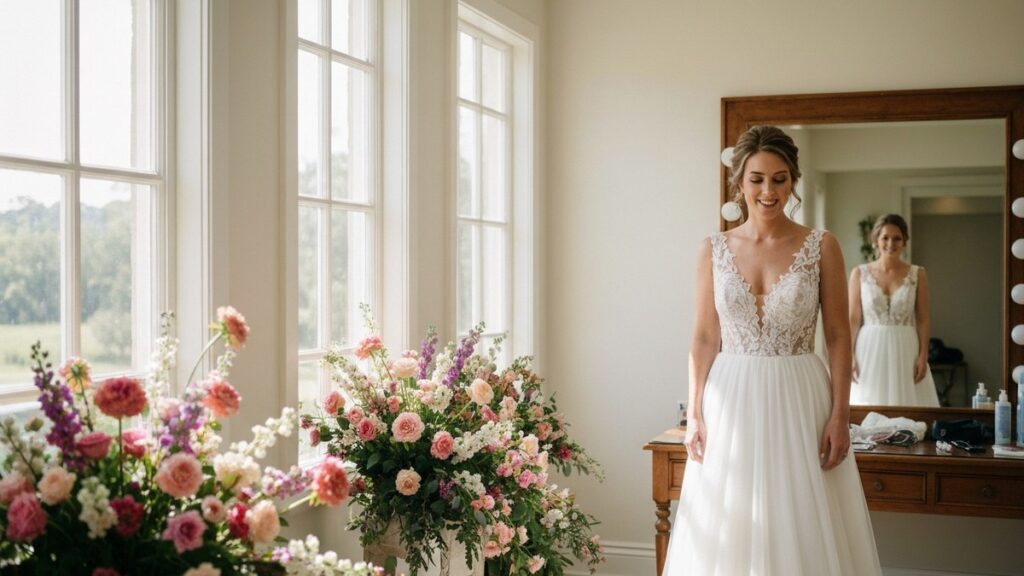
The Mounjaro bride trend describes brides-to-be who use Mounjaro (or similar GLP-1 weight-loss injections) to slim down in the months before their wedding, then share the results on TikTok and other platforms. As of 2026 the phrase has become shorthand for a wider cultural moment in which a fixed wedding date collides with appearance pressure and the promise of fast, medication-driven weight loss. This article is a neutral, fact-based explainer of what the trend actually is, why it is spreading, and what medical experts say about it — not an endorsement or a judgment.
Important — not medical advice. Mounjaro (tirzepatide) is a prescription medication. It should only be used under the supervision of a licensed doctor. Nothing here is an endorsement of off-label or cosmetic use.
Key Takeaways
- Mounjaro (tirzepatide) is FDA-approved for type 2 diabetes; using it for weight loss is off-label (the same drug as Zepbound, which IS approved for weight management).
- The trend is driven by a fixed wedding date, appearance pressure, and social-media amplification.
- Clinicians’ consistent message: not unsupervised, not purely cosmetic, and not on a crash timeline.
What Is the Mounjaro Bride Trend and Why Is It Spreading?
At its simplest, the Mounjaro bride meaning is straightforward: a bride who credits noticeable pre-wedding weight loss to Mounjaro or another GLP-1 drug. The label often appears in social posts, get-ready-with-me videos, and dramatic before-and-after transformation reels.
It’s worth being clear that “Mounjaro bride” is a media-and-social label, not a medical or official term. Nobody self-identifies as one on a prescription; it’s a phrase that emerged online to describe a pattern journalists and users noticed. That distinction matters because trend names can make a scattered set of individual choices feel like a coordinated movement, which in turn shapes how normal or expected the behavior seems to the next bride scrolling her feed.
The trend gained visibility in 2026, with particularly strong coverage of its rise in India, where the wedding industry is large, image-conscious, and tied to firm event dates. Reporting found that clinics began offering pre-wedding Mounjaro packages in the three to four months before the big day, and that a meaningful share of new weight-loss-injection inquiries came from people who openly mentioned an upcoming wedding.
A few overlapping drivers explain why this trend is spreading. None of them is really about the medicine itself; they’re about the pressures that push people toward it.
1 A Hard, Fixed Deadline
Unlike open-ended weight-loss goals, a wedding has a fixed, non-negotiable date on the calendar. In a culture that prizes fast results, slow-and-steady methods can feel like they simply won’t deliver in the time available.
That deadline pressure is what makes a medication-assisted approach so appealing here specifically. When “eventually” becomes “by June 14th,” the calculus shifts, and a fast option starts to feel less like a shortcut and more like the only path that fits the timeline.
2 Social Media Amplification
The short, visual, emotionally charged transformation clip is one of the most shareable formats on the internet. A before-and-after reel travels far beyond the people who were actively searching for it, landing in the feeds of anyone with a wedding on the horizon.
This is how a niche behavior becomes a named “trend.” Each viral clip both normalizes the choice and advertises it, creating a loop where visibility drives more brides to try it, which produces more clips.
3 Intense Appearance Pressure
Many brides describe feeling they need to look a certain way in photos that will be seen, framed, and re-shared for years, even decades. Unlike an everyday photo, wedding images carry a permanence that raises the stakes on how someone feels about their appearance.
That long shadow is a big part of the emotional engine here. The pressure isn’t only about one day; it’s about how that one day will be remembered and displayed, which is a heavy weight to attach to a number on a scale.
4 Normalization of GLP-1 Drugs
As these medications moved from a strictly diabetes context into broad public conversation — discussed by celebrities, coworkers, and influencers alike — using one for a milestone started to feel, to some, like a normal lifestyle option rather than a clinical decision.
That shift in perception matters. When a prescription drug is talked about casually, the serious medical framing around it can quietly fade, making an off-label, event-driven use feel more routine than it actually is.
5 Direct Clinic Marketing
Some wellness clinics actively promote Mounjaro for weddings as a packaged, timeline-based service, sometimes explicitly built around the three-to-four-month countdown to the day. Presenting it as a bookable package can make it look more like a spa treatment than a medical intervention.
That packaging is powerful precisely because it lowers the perceived seriousness. A “pre-wedding program” sounds routine and safe, which can blur the reality that it involves a prescription medication with real risks that deserve genuine medical screening.
It is worth being precise about what brides in this trend are actually doing: most are seeking a prescription (sometimes off-label) for a GLP-1 medication and pairing it with diet changes over a compressed timeline, specifically to change how they look on one day. That last clause is the crux of the clinical worry — the motivation is an event and an image rather than a health goal, and the timeline is set by an invitation rather than by a doctor. It’s the same drug either way, but the framing around it is what separates a supervised medical decision from a cosmetic countdown.
What Mounjaro (Tirzepatide) Actually Is
Mounjaro is the brand name for tirzepatide, an injectable medication made by Eli Lilly. According to the Cleveland Clinic, tirzepatide is FDA-approved for type 2 diabetes, used alongside diet and exercise. It works on two gut hormones, GLP-1 and GIP: it signals the brain that you are full, reduces hunger, slows digestion, and helps the body manage blood sugar and insulin. It is taken as a once-weekly injection and can remain in the body for roughly four weeks after the last dose. In practice, that appetite-lowering effect is what drives the weight loss people see: when the brain registers fullness sooner and hunger fades, most users simply eat less without the constant white-knuckle effort that willpower-only dieting demands. That mechanism is genuinely powerful, which is exactly why the medication is effective and why it deserves to be treated as the serious drug it is rather than a casual quick fix.
A key distinction often blurred in the trend: Mounjaro itself is approved for type 2 diabetes, not weight loss. The same active ingredient (tirzepatide) is sold under the brand name Zepbound, which the FDA has approved for chronic weight management in eligible adults. When Mounjaro specifically is prescribed for weight loss, that is considered off-label use.
Why does that distinction matter beyond semantics? “Off-label” doesn’t automatically mean unsafe — doctors prescribe medications off-label all the time — but it does mean the specific use hasn’t been formally reviewed and approved for that purpose, and it shifts more responsibility onto the prescriber’s judgment and the patient’s screening. The eligibility criteria for the weight-management approval (things like a qualifying body mass index or weight-related health conditions) exist precisely to match the drug to people it was studied to help.
Either way, both products are prescription-only and require a doctor’s genuine involvement. The four-week half-life is worth understanding too: because tirzepatide lingers in the body for roughly a month after the last dose, side effects don’t stop the moment someone quits, and the drug can’t simply be switched off if a reaction appears close to a wedding date.
The Broader GLP-1 Cultural Moment
The Mounjaro bride trend does not exist in a vacuum. It is one branch of a much larger GLP-1 cultural moment that includes drugs like semaglutide (Ozempic, Wegovy) and tirzepatide. Over the past few years these medications shifted from a primarily clinical topic to a mainstream one, discussed by celebrities, influencers, and ordinary users alike.
That mainstreaming is the real backdrop to every event-driven variation of the trend, and the wedding is just the most emotionally charged version. The same underlying pattern shows up around class reunions, beach holidays, and milestone birthdays — a fixed occasion becomes the trigger for a fast, medication-assisted transformation. Weddings simply concentrate the pressure most intensely because of the photos, the audience, and the once-in-a-lifetime framing.
If you want the science of how these drugs work in the body, see our explainer on the biology behind GLP-1 weight-loss drugs. The bride framing simply attaches that broad, ongoing conversation to a specific, emotionally resonant life event — which is exactly what makes it such potent, shareable content.
What Experts and Doctors Say
This is where a neutral explainer has to slow down and present both sides factually. People pursue these medications for real reasons, and clinicians have raised real concerns. Holding both at once — without cheerleading or shaming — is the only honest way to cover it.
What People Are Seeking (the Appeal)
- Effective appetite control. GLP-1/GIP medications like tirzepatide genuinely reduce hunger and increase fullness, which can make eating less feel less like a constant battle.
- A predictable timeline. For someone with a fixed wedding date, a medication-assisted approach can feel more controllable than willpower-based dieting.
- Medically supervised options exist. For eligible patients, tirzepatide (as Zepbound) is an FDA-approved weight-management tool prescribed appropriately for the right candidates.
What Clinicians Flag as Concerns
- Off-label and cosmetic use. Using Mounjaro purely to look slimmer for an event, rather than to treat a diagnosed condition, is off-label and carries added risk.
- Documented side effects. Most common are gastrointestinal (nausea, vomiting, diarrhea, constipation, stomach pain); rare but serious risks include pancreatitis, gallbladder problems, kidney issues, and thyroid concerns.
- Weight rebound. People who stop taking these medications frequently regain weight and may lose some of the health improvements they gained.
- Compressed timelines. Rushing significant weight loss to hit a wedding date, sometimes without proper screening, runs counter to the gradual, monitored approach these drugs were studied under.
- Supply and access. High demand has at times strained supply, raising concern that cosmetic use can affect availability for patients who need these drugs medically.
The consistent thread in expert commentary is not “never” — it is “not like this”: not unsupervised, not purely cosmetic, and not on a crash timeline. That’s an important nuance the trend tends to flatten into a simple pro-or-con debate.
The thyroid warning deserves a specific mention because it’s the most serious item on the label. Tirzepatide carries a boxed warning — the FDA’s strongest — about a risk of thyroid C-cell tumors seen in animal studies, and it’s contraindicated for people with a personal or family history of certain thyroid cancers. That’s exactly the kind of history a proper medical screening catches and a “book a wedding package” workflow can miss.
The supply concern is worth sitting with too. When demand for these drugs surges around cosmetic and event-driven use, shortages can follow, and the people most affected are patients with diabetes or obesity who rely on the medication for their health. That ripple effect is part of why clinicians are uneasy about framing a serious drug as a beauty-timeline accessory.
A More Responsible Way to Think About It
If the underlying goal is feeling good on a wedding day, clinicians and the trend’s critics tend to point toward the same calmer principles. These aren’t about willpower slogans or shaming anyone’s choices; they’re about swapping a rushed, cosmetic, event-driven framing for a medical and sustainable one that still stands up long after the wedding photos are printed.
Start With a Doctor, Not a Date
The healthiest version of this reverses the usual order. Instead of reverse-engineering a drug plan from a wedding invitation, a licensed clinician assesses whether a GLP-1 medication is appropriate for you at all and screens for the risks the trend tends to skip.
That screening exists for a reason. These drugs carry real contraindications and side-effect profiles, and a doctor deciding “is this right for this person?” is a fundamentally different, safer process than a clinic asking “when is your wedding?”
Set Realistic Timelines
Sustainable change typically happens gradually, and the monitored trials these drugs were studied under used steady, dose-escalated timelines rather than crash countdowns. Pinning a major body transformation to a single fixed date adds both pressure and risk.
A compressed schedule can also push people to escalate doses too fast, which tends to worsen the gastrointestinal side effects. Slower is not just safer; it’s often more comfortable and more likely to actually stick.
Plan for What Happens After
Because weight rebound is common when these medications stop, any responsible plan considers the day after the wedding, not just the day of it. Losing weight for an event and then regaining it, sometimes with lost health improvements, is a well-documented pattern.
The honest question to ask up front is “what’s my plan for month six, and year two?” If the answer is only “look good in the photos,” that’s a sign the framing is cosmetic rather than about lasting health.
Separate the Photo From the Person
Much of the trend is driven by how wedding images circulate and get re-shared, not by health at all. Naming that pressure out loud is, for some brides, exactly how they choose to opt out of it.
It can help to remember that the people at the wedding came for the person, not a dress size. Reframing the day around presence and joy rather than a transformation reel takes real courage in a feed full of before-and-afters, but it’s a genuine option.
The Bottom Line
The Mounjaro bride trend is best understood as the collision of three forces: powerful new weight-loss medications, intense wedding-day appearance pressure, and social media’s appetite for transformation stories. None of those forces is going away, which is why the trend has staying power beyond any single viral moment.
Explaining the trend is not the same as endorsing it. The goal of an explainer like this is to give you the accurate picture — what the drug is, why the trend spreads, what clinicians actually warn about — so any decision is an informed one rather than a feed-driven one. The single most consistent message from doctors is simple: slow down, and involve a qualified professional before, not after, a wedding date drives the plan.
If you or someone close to you is weighing this, the healthiest reframing is to separate two questions that the trend deliberately fuses: “Is a GLP-1 medication right for my health?” and “How do I want to feel on my wedding day?” The first is a medical question for a doctor; the second is a personal one that a prescription can’t really answer. Kept apart, both get better, calmer answers than the countdown-clock version the trend sells.
Frequently Asked Questions
What does “Mounjaro bride” mean?
Mounjaro bride refers to a bride-to-be who uses Mounjaro, or another GLP-1 weight-loss injection, to lose weight before her wedding, often sharing the transformation on social media. As of 2026 it has become a catch-all label for the broader trend. It is a cultural and social term, not a medical one.
Is Mounjaro approved for weight loss?
Not directly. According to the Cleveland Clinic, Mounjaro (tirzepatide) is FDA-approved for type 2 diabetes alongside diet and exercise. The same active ingredient is sold as Zepbound, which is FDA-approved for chronic weight management in eligible adults. Prescribing Mounjaro specifically for weight loss is considered off-label, and either product requires a prescription.
Why are brides using Mounjaro before weddings?
The main drivers are a fixed wedding date, appearance pressure, the desire for fast and predictable results, and heavy social-media amplification of transformation content. In some regions, clinics market pre-wedding Mounjaro packages directly to brides.
What are the risks of using Mounjaro to lose weight fast?
Common side effects are gastrointestinal (nausea, vomiting, diarrhea, constipation, and stomach pain), and rare but serious risks include pancreatitis, gallbladder and kidney problems, and thyroid concerns (the prescribing label carries a boxed warning about a risk of thyroid C-cell tumors). Experts also flag weight rebound after stopping, the added risk of off-label or unsupervised use, and the dangers of crash timelines.
Is the Mounjaro bride trend safe?
There is no single answer, because safety depends entirely on the individual and on proper medical oversight. For some eligible patients working with a doctor, a GLP-1 medication may be appropriate; using one off-label, unsupervised, or on a rushed cosmetic timeline is what clinicians caution against. This article cannot assess your situation; only a qualified doctor can.
Is “Mounjaro bride” only an Indian trend?
It drew especially strong attention in India in 2026, where the wedding industry and the trend overlapped visibly, but the underlying behavior of using GLP-1 drugs around weddings and sharing results online reflects a global GLP-1 cultural moment rather than one country.
Reminder: This article is for general information only and is not medical advice. Mounjaro (tirzepatide) is a prescription medication, and using any GLP-1 drug for weight loss is a medical decision that should be made with, and supervised by, a licensed healthcare provider. For drug facts, see the Cleveland Clinic’s tirzepatide overview and the FDA’s announcement on tirzepatide for weight management.
About the Author
Elena Brooks
Elena Brooks is the person her group chat texts when something at home stops working or a health trend starts trending. She’s spent years turning that instinct into a job — digging into the research behind everyday questions, calling the experts, and writing up what holds up and what doesn’t. Her beat is wherever curiosity points: kitchens, cars, pets, sleep, money, and the occasional meteor shower.