
- A real Labubu has exactly nine pointed teeth — more or fewer is an instant fail, and it’s still the fastest first check.
- The feet carry two tells: an engraved POP MART stamp on the sole, and on newer series a hidden stamp that only shows under UV light.
- Real packaging is matte with crisp pastel printing; the holographic sticker on recent boxes shines in a clean vertical line, not a patchy shimmer.
- The box QR code should lead to Pop Mart’s own site, where a scratch-off code confirms the product — but a passing code alone isn’t proof, because real codes get cloned onto fake boxes.
- Big Into Energy and Have a Seat each have extra series-specific tells, from hologram behavior to ID card color and seam quality.
- No checklist beats the counterfeiters forever. The only 100% guarantee is buying from Pop Mart directly — everything else is risk management.
You finally got one. The fuzzy ears, the mischievous grin, the little hang tag. But now a nagging question won’t leave you alone. Is it real, or did you just pay collector money for a “lafufu” — the internet’s nickname for a fake Labubu?
Here’s the honest truth about labubu real vs fake checks: there is no single magic tell anymore. Counterfeiters have learned to copy the teeth. They’ve learned to print QR codes. Some have even learned to fake the foot stamp. What they still can’t do cheaply is copy everything at once. Getting the teeth, the ears, the fur, the stamps, the box texture, the hologram, and the verification code all right would cost almost as much as making the real thing. That’s why the fakes that fool people always pass two or three checks — and fail the fourth.
So this guide works like a stack. You’ll run the doll checks, the feet checks, the box checks, and the code check, in that order. We’ll also cover the series-specific tells for Big Into Energy and Have a Seat, because those two collections are the most faked right now — and their boxes have extra security features most guides never mention. By the end, you’ll know exactly how to tell if a Labubu is fake in about five minutes, and you’ll understand why each check works, so a clever new fake won’t fool you either.
Why Fake Labubus Took Over the Market
To understand why lafufus are suddenly everywhere, follow the money. Pop Mart sells Labubu blind boxes for roughly $28 in the US. That’s cheap enough for an impulse buy, but the dolls sell out almost instantly, and resale prices on hard-to-find figures can multiply several times over. High demand plus low supply plus a product that’s mostly fabric and vinyl — that’s the perfect recipe for counterfeiting. A knockoff plush costs a few dollars to make. Every part of the economics screams opportunity to a counterfeiter.
And the scale is not small. In August 2025, Trading Standards officers in Hull, England seized hundreds of counterfeit Labubus from local shops in a single sweep — and warned that plenty more were still circulating. That’s one mid-sized city. Multiply that across every street market, seaside souvenir shop, and online marketplace on the planet, and you get the current reality: in many places, a random “Labubu” you stumble across is more likely to be fake than real.
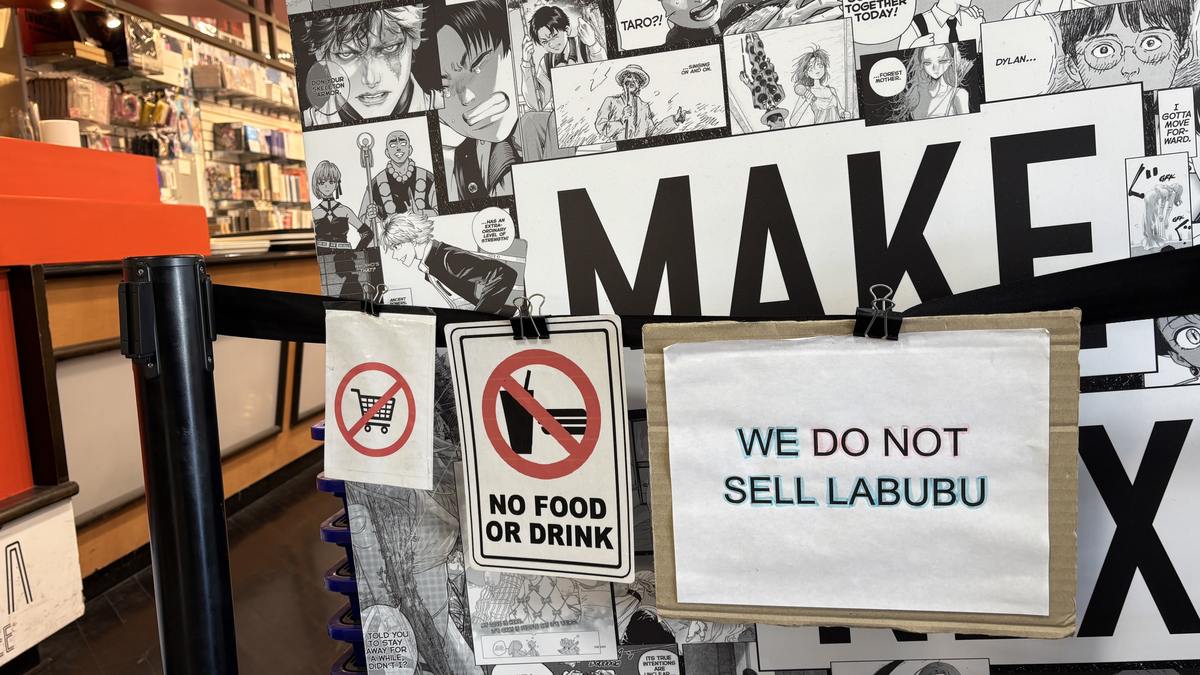
There’s a second reason the fakes exploded, and it’s more human. Real ones are genuinely hard to buy. Stores sell out, online drops vanish in minutes, and some shops literally hang up signs telling customers to stop asking. When something is that scarce, our brains get impatient and start lowering the bar. That marked-up “in stock now!” listing suddenly looks reasonable. If you want to understand what scarcity does to your judgment, our piece on why your brain runs on autopilot explains the mechanics. Counterfeiters aren’t just copying a toy. They’re exploiting a shortage.
Know the Real Labubu Before You Judge a Fake
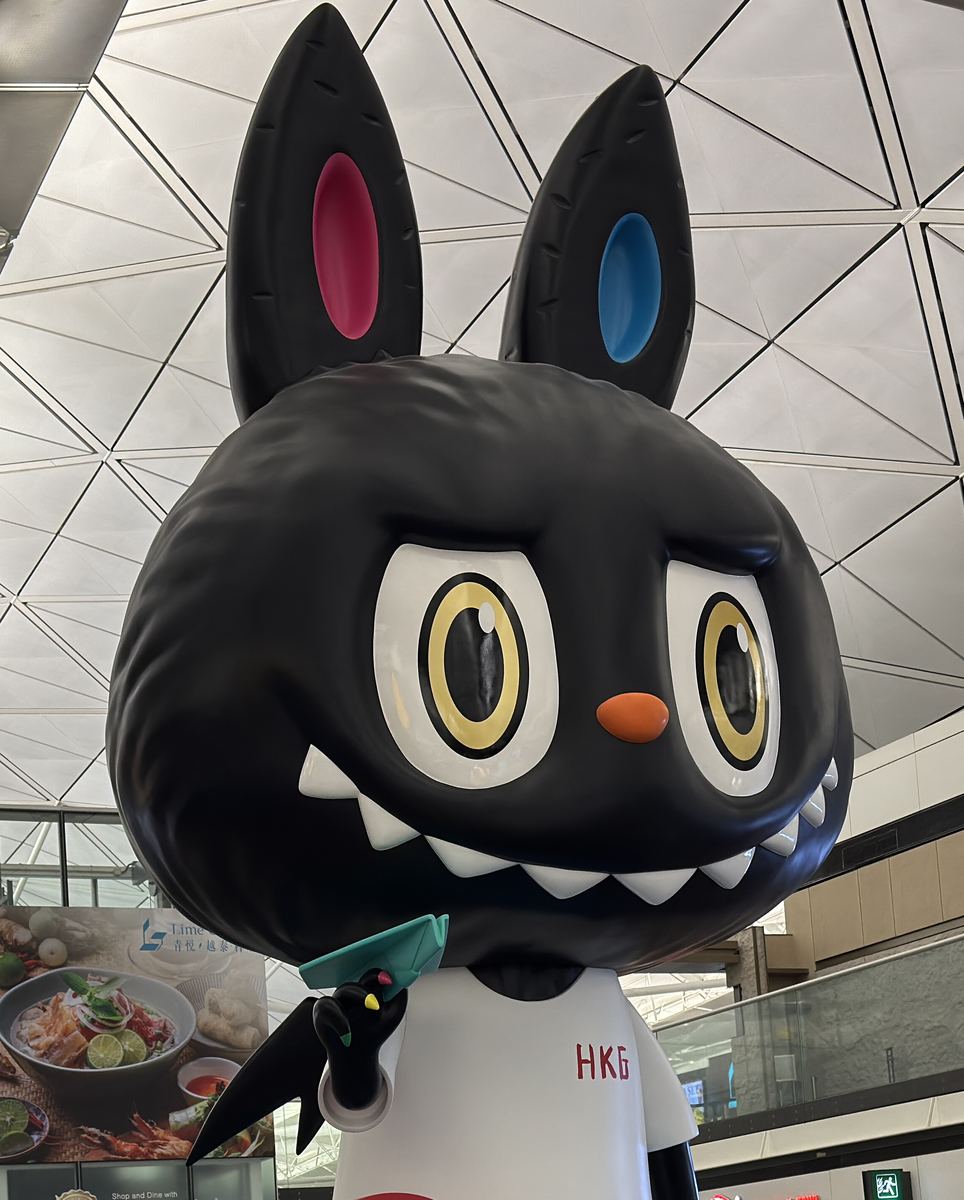
Quick backstory, because it genuinely helps you authenticate. Labubu isn’t a random cute character. She’s a little monster elf created by Hong Kong-born artist Kasing Lung for his picture-book universe called The Monsters, and Pop Mart turned her into the blind-box phenomenon you see everywhere. That artist connection matters for one practical reason: Labubu’s look is specific. The tall bunny-like ears sit close together. The grin is wide and slightly wicked. The face is a soft peachy tone with airbrushed blush. And the mouth always — always — has the same dental work.
Counterfeiters work from photos, not from Kasing Lung’s original sculpts. So their versions drift. Ears end up shorter, rounder, or spread apart like a cat’s. Faces come out too yellow, too pink, or weirdly shiny. Eyes get glued on slightly crooked instead of sitting embedded and glossy. Once you’ve really looked at an authentic Labubu — even just in official photos on Pop Mart’s site — most fakes start to look off in a way you can feel before you can name it.
That gut feeling is useful, but don’t rely on it alone. The good fakes are now close enough to fool people who’ve handled real ones. That’s exactly why the rest of this guide is a checklist instead of a vibe. Feelings fail. Tooth counts don’t.
Four Face Signs That Expose a Fake Labubu
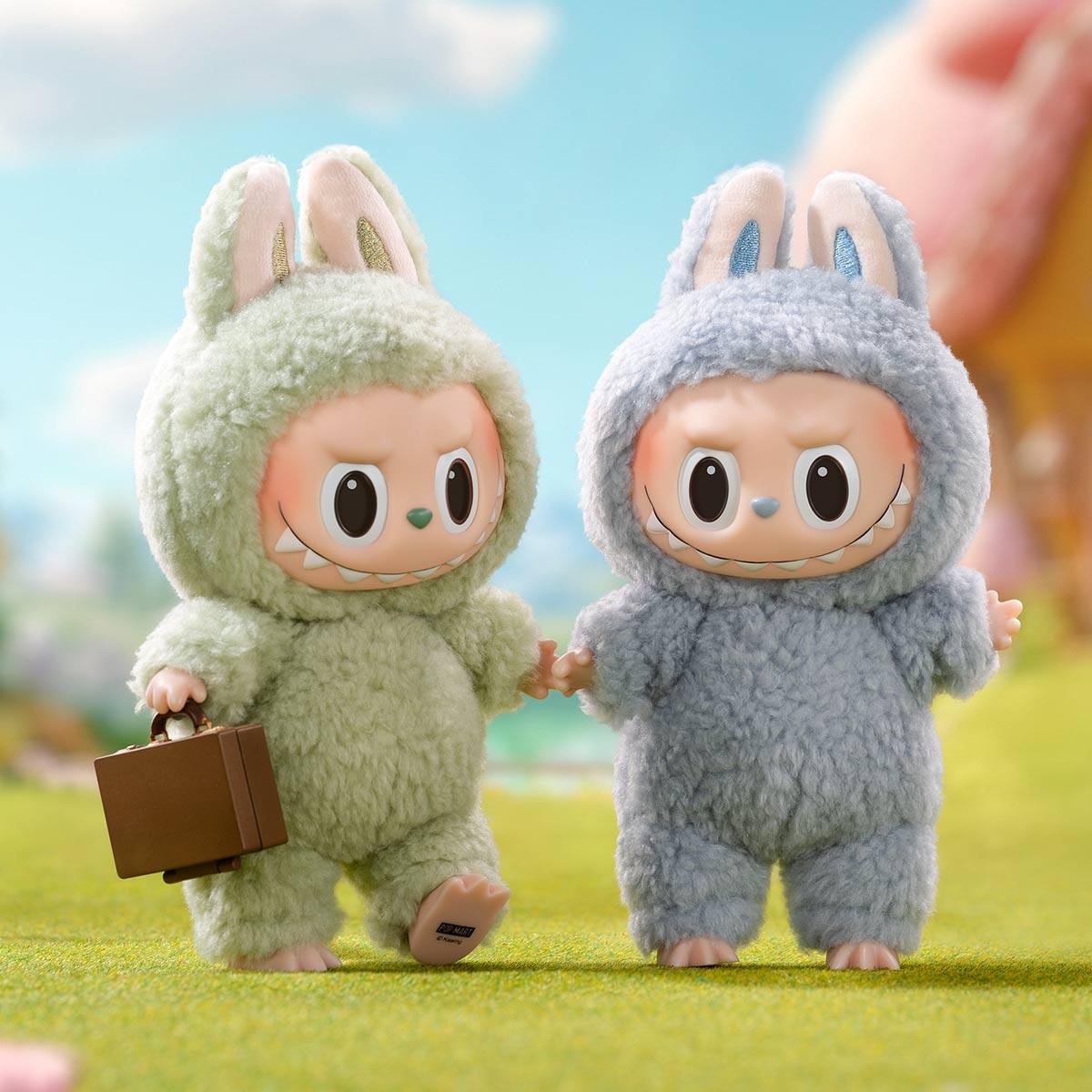
Flip the doll over, look it dead in the face, and run these four checks. They’re free, they take a minute, and together they still catch the majority of lafufus — because the face is the hardest part to sculpt correctly and the first place cheap manufacturing shows.
1 Count Exactly Nine Pointed Teeth
The famous rule is real, and it’s still the single best quick check. An authentic Labubu has exactly nine sharp little teeth — a detail confirmed by GamesRadar’s authentication guide, by professional authenticators, and by Trading Standards officers who handle seized fakes. Count them. Eight is fake. Ten is fake. Nine is the only right answer.
Don’t just count, though — look at how they’re made. On a genuine figure the teeth are neatly sculpted, individually defined, and cleanly painted, sitting naturally along the mouth line. Fakes often have teeth that are fused together, unevenly spaced, blobby with excess paint, or tinted yellow. Authentication service LegitApp notes that on real V1 vinyl-face figures the teeth are neatly sculpted with smooth paint and soft, even blush — sloppy dental work is one of the most consistent counterfeit giveaways.
2 Look at the Ear Shape and Spacing
Real Labubu ears are long, upright, and bunny-like, and they sit close together on top of the head. This is one of those details counterfeiters get wrong constantly, because a few millimeters of drift in a cheap mold completely changes the silhouette. If the ears look short, wide-set, floppy in the wrong way, or more like a cat’s or bear’s ears, you’re almost certainly holding a lafufu.
Ears are worth checking early because they’re visible even in listing photos. Before you ever bid on a resale listing, zoom into the ears and compare them against official product photos from Pop Mart’s site. If the silhouette is off in the seller’s own pictures, you don’t need the doll in hand to walk away.
3 Check the Face Color, Blush, and Eyes
An authentic face is a matte, peachy tone with soft airbrushed blush on the cheeks — subtle, even, and never streaky. Counterfeit faces tend to fail in one of two directions: too pale and plasticky, or oversaturated with harsh pink circles that look stamped on. LegitApp’s V3 guide describes the real standard as a matte peach face with neatly shaded blush and crisp outlines, and that description holds across series.
Then look at the eyes. Real eyes are glossy and sit embedded into the face, like they were built in, not stuck on. Fake eyes are often flat stickers or shallow glue-ons, sometimes slightly misaligned. Crooked eyes on a brand-new doll is not a quality-control slip. It’s a fake.
4 Feel the Fur and Inspect the Seams
Genuine Labubu plush fur is dense, soft, and evenly trimmed, and the figure feels solid and weighty for its size. Fakes cut costs on fabric first, so lafufu fur tends to be thin, coarse, patchy, or oddly shiny, and the doll often feels light and hollow. If you’ve ever touched a real one, the difference is immediate — which is why counterfeit sellers avoid in-person inspection.
Seams tell the same story. On a real figure the stitching is uniform, the joins blend smoothly, and nothing puckers or gaps. Authenticators flag uneven seam gaps, loose threads, and chemical smells as counterfeit markers. That last one matters more than people realize: a strong plasticky or chemical odor isn’t just unpleasant, it’s a hint the toy was made with materials that were never safety-tested.
The Feet Tell the Truth About Labubu Real vs Fake
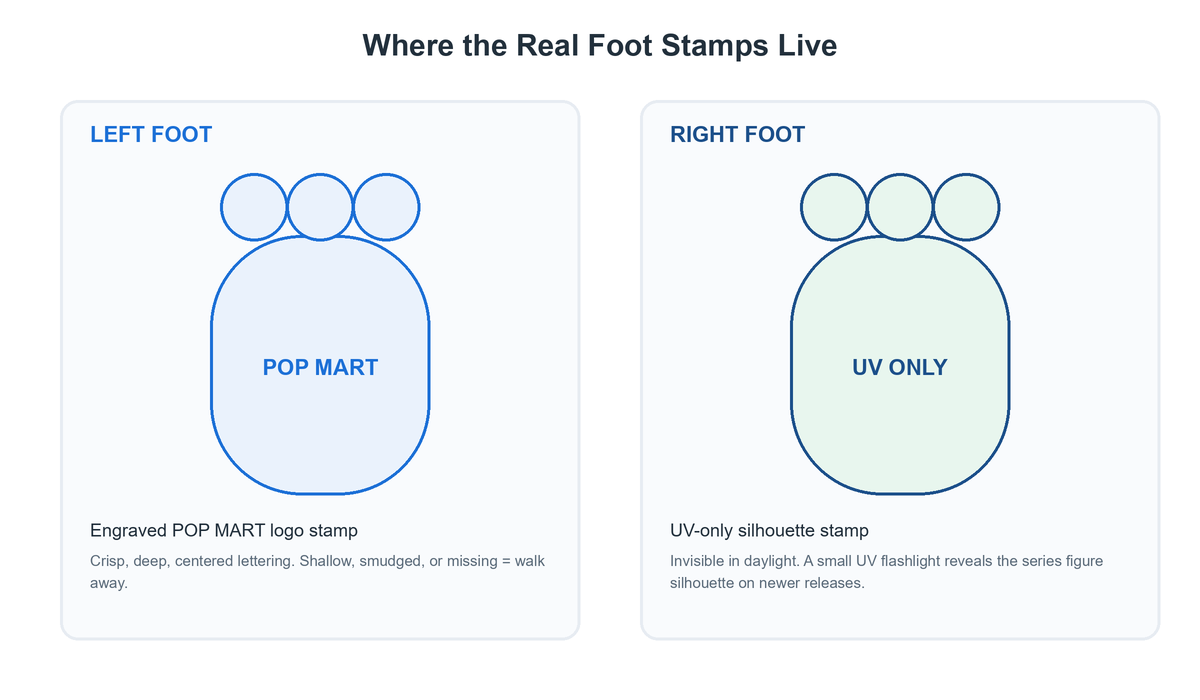
If the face check is the quick filter, the feet are the closer. Pop Mart deliberately put its hardest-to-copy marks on the soles, and it’s where the cheap fakes give up. Take the shoes off if the figure has them, flip it over, and look at both feet.
The first mark is the engraved POP MART stamp on the sole — crisp, deep, evenly inked lettering. You can actually see it in Pop Mart’s own product photography: the raised foot on official figures shows the POP MART and Kasing Lung copyright marks. On fakes, this stamp is where corner-cutting shows. Authenticators consistently describe counterfeit stamps as shallow, blurry at the edges, unevenly inked, or smudged under light finger pressure. Some fakes skip the stamp entirely.
The second mark is sneakier, and it’s the one worth buying a tool for. Newer Labubu releases carry a hidden stamp on the right foot that’s invisible in normal light and only appears under UV light — a silhouette matching the figure, as noted by both GamesRadar and UK Trading Standards. This is Pop Mart’s answer to improving counterfeits: a security feature that costs them little but forces fakers to source UV-reactive inks and match a design they can’t see on the product they’re copying. Most don’t bother.
One honest caveat: the UV stamp only exists on newer releases. An older authentic figure from an early series can fail the UV check simply because the feature didn’t exist yet. That’s why no single check — not even this one — should be your whole verdict. Date the series, then judge the feet accordingly.
Labubu Real vs Fake Box and Packaging Signs to Check
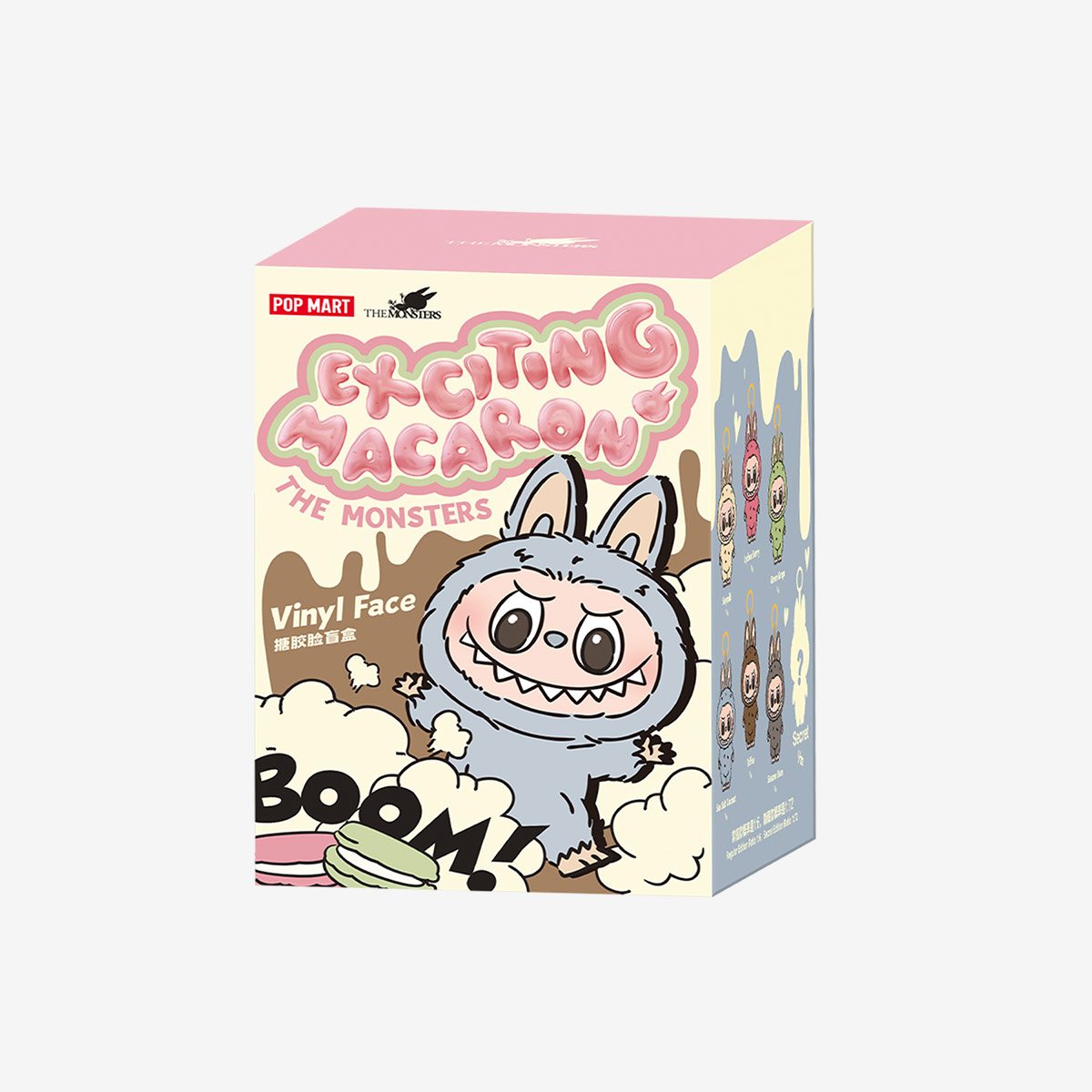
Here’s a counterintuitive rule that professional authenticators swear by: check the box before you get excited about the doll. Faking a convincing box is genuinely expensive — special finishes, embossing, holographics, precise pastel printing — so counterfeiters cut corners there first. A perfect doll in a bad box is still a fake. Run these checks in order.
1 The Finish Should Be Matte, Never Glossy
Authentic Labubu blind boxes have a premium matte finish with a subtle tactile grain — run your fingers across the surface and you can feel fine raised texture, sometimes with embossed patterns on certain panels. Counterfeit boxes are usually printed on cheaper stock that comes out flat and glossy, with a uniform machine-made sheen. UK Trading Standards specifically flagged “glossy, overly bright” packaging as a counterfeit marker after examining hundreds of seized fakes.
Color accuracy matters too. Pop Mart’s palette is soft and pastel, printed crisp and high-resolution. Fake box art drifts — muted where it should pop, oversaturated where it should be soft, with blurry or pixelated patches where a photo of a real box was rescanned and reprinted.
2 The Holographic Sticker Should Shine in a Clean Vertical Line
Recent series carry a holographic security element on the box, and it behaves in a very specific way: tilt the box under light and the holographic text and grid effect shines vertically, without visible grid lines or distortion, according to LegitApp’s teardown of authentic stock. Counterfeit holograms look flat and patchy, shimmer in random directions, or sit misaligned — and on some fakes the sticker edges visibly peel.
This is a great check precisely because holography is hard to photograph. A counterfeiter copying box art from pictures can’t see how the real hologram moves. You can. Ten seconds of tilting the box under a store light tells you what a listing photo never could.
3 The ID Card Should Feel Like Quality Cardstock
Every blind box includes a collector ID card, and it’s a quiet little authenticity test. Real cards are printed on sturdy cardstock with razor-sharp artwork in consistent pastel hues. Fake cards come out on thinner stock with coarser texture, and the printing skews darker and muddier than Pop Mart’s palette, often with pixelation, faded lettering, or ink bleeding at the edges.
Resellers know serious collectors check this, which is why “no card included” listings deserve suspicion. The card isn’t sacred on its own — cards can be lost — but a missing card plus a sketchy box plus a bargain price is a pattern, not a coincidence.
4 The Inner Film and Labels Have Their Own Tells
Details inside the box matter too. On authentic Have a Seat stock, the interior packaging film is matte with no shine or glare, while fakes use glossy film that glints and looks plasticky under light. It’s a tiny detail, and that’s the point — details that cost pennies per unit at Pop Mart’s scale are exactly the details a counterfeit operation skips.
Check the sewn-in labels and tags as well. Current production uses white wash labels with sharp, aligned printing and a QR code, and the tag attached at the head ring should read “The Monsters” — spelled correctly. Blurry label text, off-center printing, misspellings, or a tan label on a brand-new series release are all red flags. Misprints are the counterfeiter’s signature: real Pop Mart quality control would never ship them at volume.
Run the QR Code and Scratch Code Verification
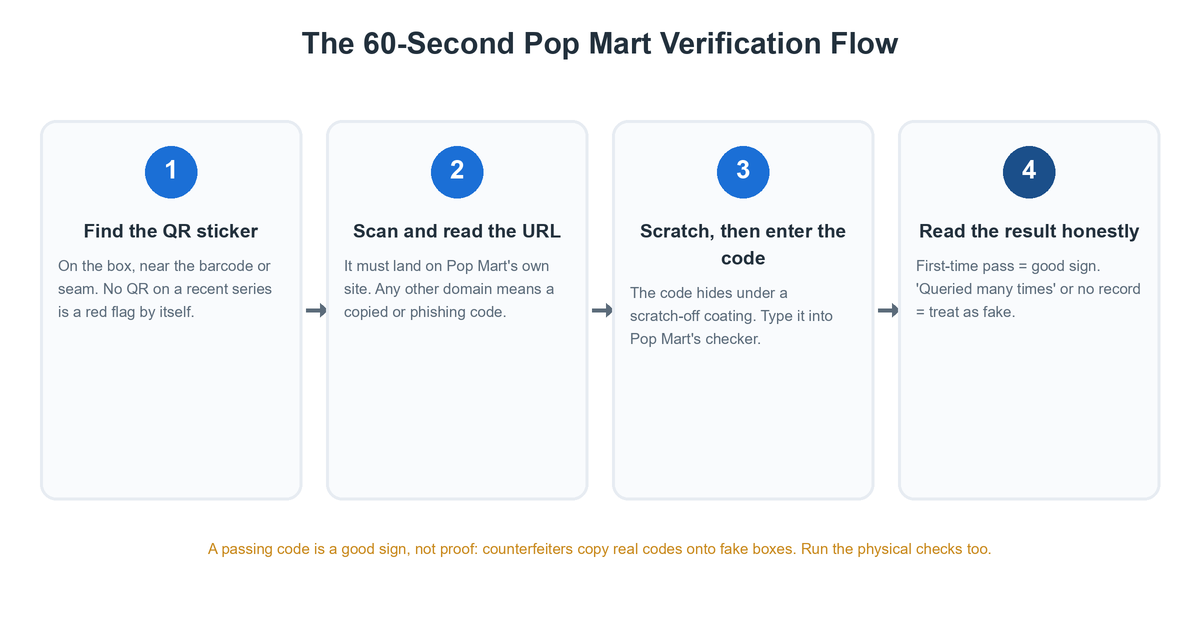
Modern Labubu boxes come with a built-in lie detector, and most buyers never use it properly. Nearly every recent box carries a QR code that links into Pop Mart’s verification flow. Here’s how to run it right, and — just as important — how to read the result honestly.
Scan the code with your phone and look at the URL before you tap anything. A genuine code lands on Pop Mart’s own site — Pop Mart operates an official verification portal at q.popmart.com — where you’ll be prompted to enter a code hidden under a scratch-off coating on the packaging. Scratch it, type it in, and the system tells you whether that code matches a genuine product. GamesRadar’s guide walks through the same flow: the QR takes you to the Pop Mart store, the scratch code confirms the doll.
The scam version looks almost identical, which is why the URL check matters. Scammers have started printing their own QR codes that lead to convincing lookalike pages — some of which “confirm” the fake is real, and the nastiest of which are phishing pages fishing for your details. The rule is simple: if the domain isn’t Pop Mart’s, the verdict doesn’t count, and you shouldn’t type anything into the page.
Big Into Energy Tells Worth a Second Look
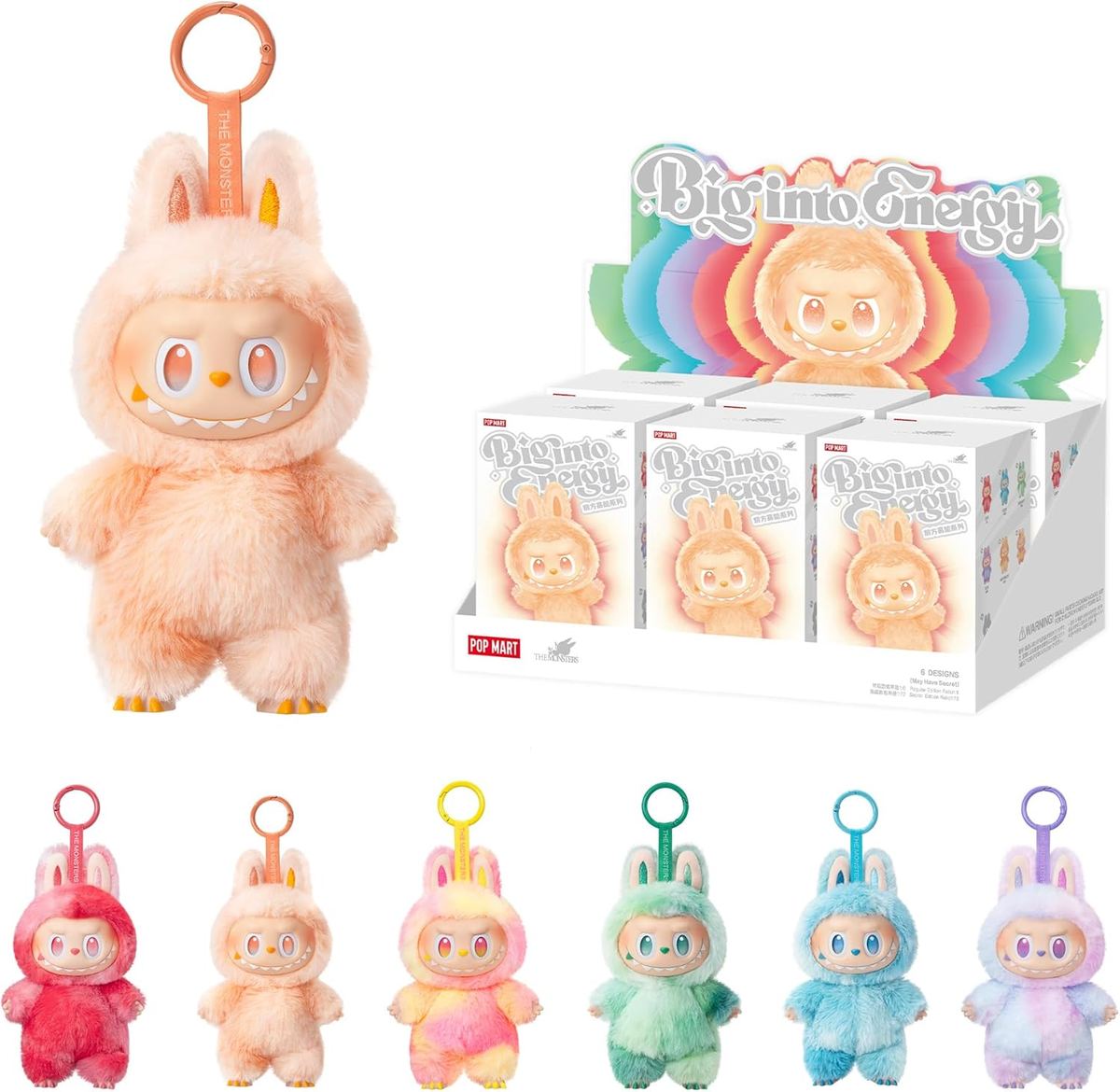
Big Into Energy — the V3 vinyl plush pendant series with the tie-dye colorways — is arguably the most counterfeited Labubu line in existence, simply because it’s the one everybody wants. The good news: V3 shipped with Pop Mart’s most aggressive security features yet, so a careful buyer has more tells to work with, not fewer.
Start with the hologram, because V3’s is distinctive. LegitApp’s five-step teardown of this exact series confirms the authentic box hologram shines vertically in a clean line, while fakes shimmer patchily or peel at the edges. Then check the box art: real Big Into Energy printing is crisp, high-resolution, and pastel-consistent; counterfeits drift muted, oversaturated, or blurry. The ID card follows the same rule — light pastel tones on quality stock, versus darker, coarser fakes.
On the figure itself, V3 gets the full modern treatment: exactly nine distinct teeth in a matte peach face, a deeply engraved POP MART logo stamp on the foot, and UV-reactive silhouette stamps on newer production. The figure should measure about 17 cm tall excluding the hanging loop, per Pop Mart’s official product listing — noticeably off-sized figures are a classic knockoff giveaway, since fake molds rarely match official dimensions precisely.
Have a Seat Tells for the Sitting Series
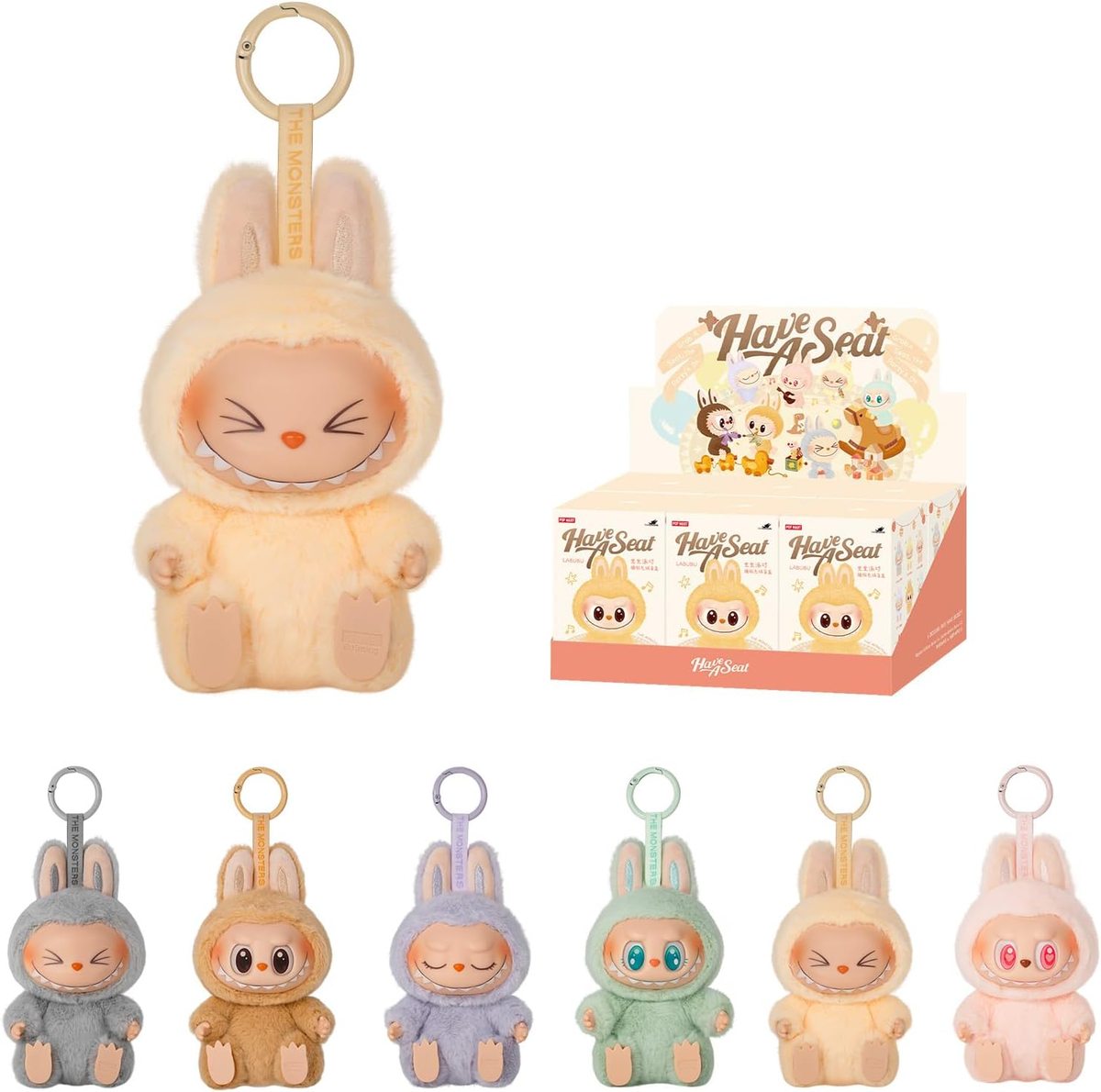
Have a Seat — the V2 series where every Labubu sits down — has its own authentication personality, and it’s one of the most-asked-about series when buyers worry about fakes. LegitApp’s dedicated V2 Have a Seat guide centers on five checks, and they’re worth internalizing because several are unique to this line.
The box test is touch, not sight: authentic Have a Seat boxes are printed on premium board with a subtle tactile grain — tiny raised patterns you can feel — while fakes are flat or glossy with uniform machine texture. Inside, the interior film should be matte; glossy, glinting film is a counterfeit marker. The ID card should be sturdy cardstock with razor-sharp pastel artwork. And because these figures sit, their facial construction is extra visible: real seams are uniform with perfectly aligned stitches and smoothly blended join lines, while fakes show seam gaps, puckering, and loose threads around the face.
The feet still matter here too. The V2 foot stamp should be deeply engraved with crisp lines, consistent ink, and clean symmetry — shallow impressions or ink that smudges under light pressure point to a fake. And the series’ quirks are worth knowing: the whole-set box contains six designs plus a possible secret figure, DuoDuo, at printed odds of 1 in 72. A seller with a suspiciously available DuoDuo deserves the same math skepticism as a Big Into Energy secret.
Sizing gives you one more data point: official Have a Seat figures list at roughly 15 cm tall in seated pose. A sitting Labubu that towers over or shrinks well under that is telling you something its seller didn’t.
Three Marketplace Warning Signs Before You Pay
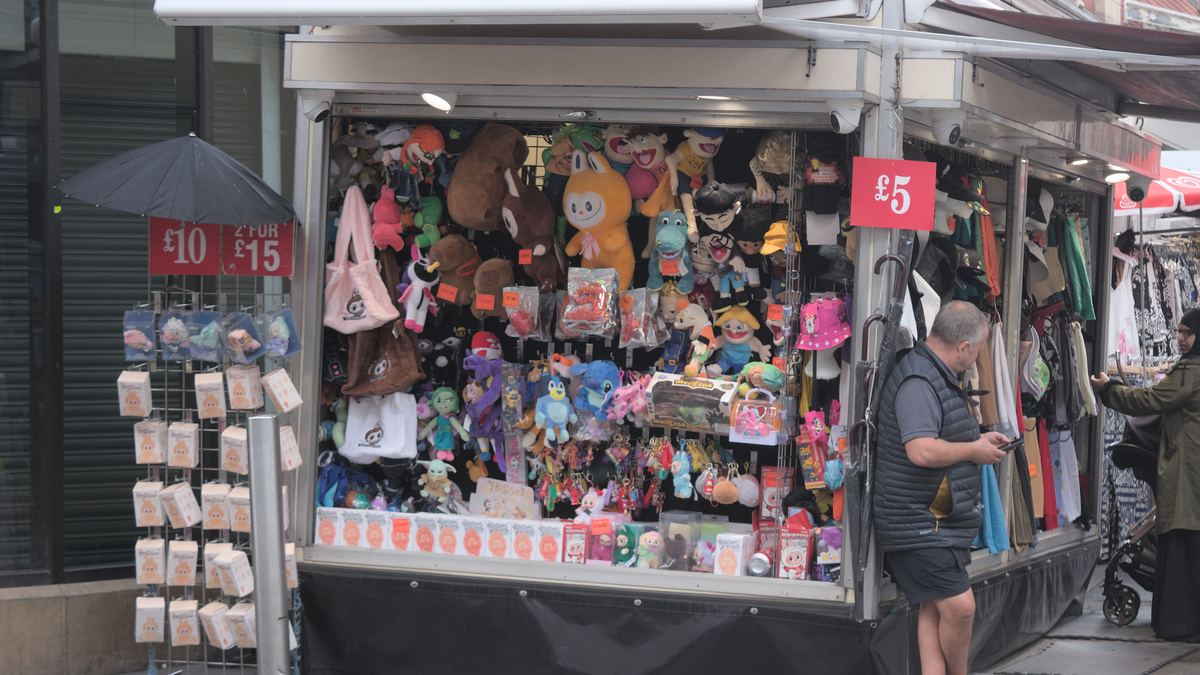
Every physical check in this guide happens after you have the doll. The smarter move is filtering where and at what price you buy, because most lafufu purchases were lost before the box ever shipped. Three filters do most of the work.
1 If the Price Looks Too Good, It Is
A new blind-box Labubu costs roughly $28 from Pop Mart in the US. That number is your anchor. Genuine dolls sell out constantly and popular figures trade above retail on the secondary market — so a brand-new “Labubu” for $10 at a market stall or $15 shipped online isn’t a bargain, it’s a confession. Nobody sells scarce, in-demand goods below cost. The discount is the disclosure.
Train yourself to react to suspiciously good prices the way you’d react to a misspelled brand name. The scarcity that makes Labubu desirable is exactly what makes steep discounts impossible for genuine stock. When supply is tight, real prices go up, not down. Any listing that violates that basic economics is answering your authentication question for you.
2 Know Your Marketplace Risk Tiers
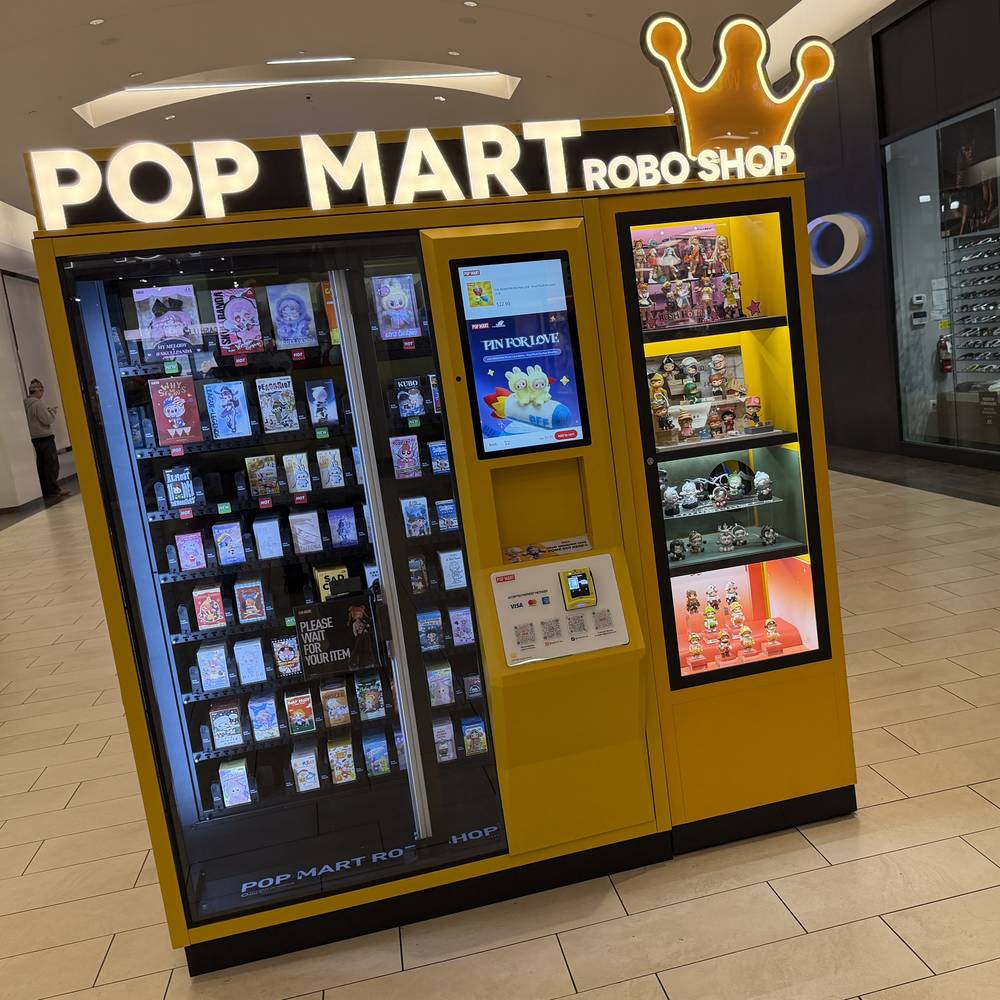
Think of buying channels as a ladder of risk. At the top, essentially zero risk: Pop Mart’s own site and app, official Pop Mart retail stores, and the bright yellow Robo Shop vending machines in malls. One step down, still safe: Pop Mart’s official brand store on Amazon — the one actually operated by Pop Mart, not a third-party seller with “POP MART” in its listing title. GamesRadar’s guidance is blunt: buy from these official sources and the fake question disappears.
Below that, risk climbs fast. General marketplace listings on eBay, AliExpress, TikTok Shop, and third-party Amazon sellers are where most lafufus change hands, because anyone can list anything and photos prove nothing — sellers routinely photograph real dolls and ship fakes. At the bottom sit street markets, souvenir shops, and tourist stalls, where seized-goods sweeps like Hull’s found counterfeits by the hundreds. Here’s the whole ladder at a glance:
| Buying Channel | Fake Risk | What to Check |
|---|---|---|
| Pop Mart site, app, stores, Robo Shop machines | Essentially zero | Nothing — authenticity is guaranteed by the source |
| Official Pop Mart brand store on Amazon | Very low | Confirm the seller name is Pop Mart’s official storefront, not a third party |
| Marketplace resellers (eBay, AliExpress, TikTok Shop, third-party Amazon) | High | Full checklist: sole and stamp photos, UV shots, hologram video, QR verification you watch happen |
| Street markets, souvenir shops, tourist stalls | Very high | Assume fake unless every physical check passes in your own hands |
If you must buy from the lower tiers, treat the checklist as non-negotiable, not optional — the seller’s patience with your questions is itself a signal.
3 Read the Listing Like a Detective
Counterfeit listings leak evidence if you slow down and look. Stock photos instead of photos of the actual item. The word “authentic” doing a lot of heavy lifting with nothing behind it. No shot of the foot stamps. No shot of the ID card. Vague series names, or a “rare secret edition” available in quantity. Each one alone is survivable; two or more is a pattern. The skill is the same one we teach for grocery shelves in our guide to decoding food labels and marketing tricks — packaging is an argument, and your job is to cross-examine it.
Ask the seller for one specific photo: the bottom of both feet, in good light. It’s a low-effort request for someone holding a genuine figure and a nightmare for someone drop-shipping fakes from a warehouse. A refusal, an excuse, or a recycled stock image is your answer. Honest sellers of real dolls expect exactly this question in 2026.
The Only Real Guarantee Is Buying From Pop Mart Direct

Time for the honest part most authentication guides skip: every tell in this article has an expiration date. Counterfeiters read these guides too. The nine-teeth rule was once nearly foolproof; good fakes now count correctly. Foot stamps used to be missing entirely; now they’re merely shallow. Each generation of fakes absorbs the last generation’s tells, which is why Pop Mart keeps adding new layers — UV stamps, holographic grids, scratch-code verification — and why this checklist works as a stack instead of a single test. A fake that beats four checks usually still fails the fifth.
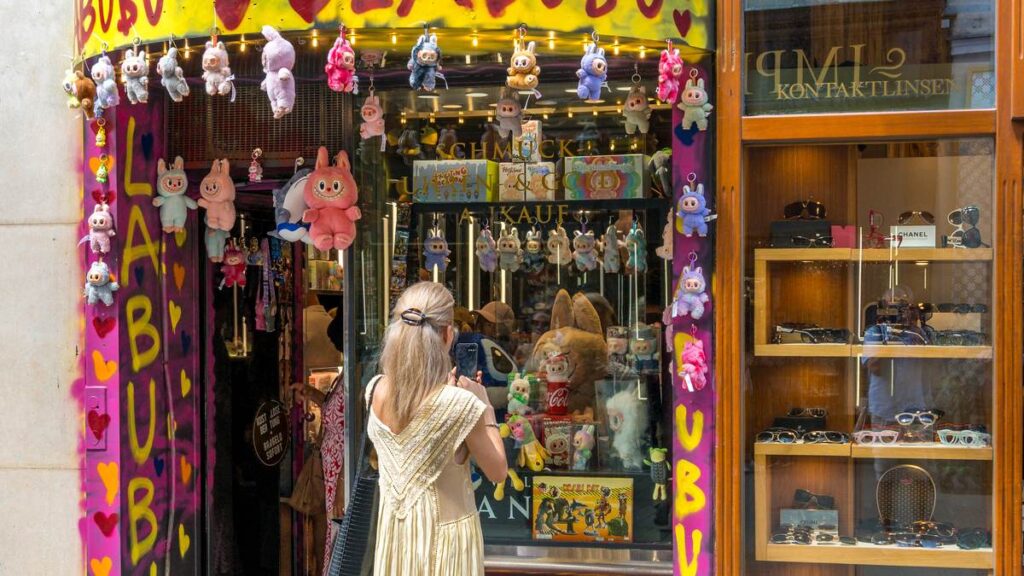
So calibrate your confidence to your channel. Bought from Pop Mart’s site, store, app, or Robo Shop machine? You don’t need this checklist at all — authenticity is guaranteed by the source. Bought from an official brand store at a major retailer? You’re nearly as safe. Everything else — resale, marketplaces, that adorable shop window full of hanging Labubus — is probability management, where the checklist takes you from coin-flip odds to strong confidence, but never to certainty. Truly perfect counterfeits of everything at once remain rare because they’re uneconomical, not impossible.
And keep the stakes in perspective. A lafufu isn’t just a mild disappointment on a shelf. Counterfeits skip the safety testing real toys go through — the UK seizure warned about detaching parts and choking hazards — and every fake purchase quietly funds the operation making the next, better fake. Buying real isn’t only about your collection. It’s a vote for the version of this hobby where the little monster in the box is actually what it claims to be.
Frequently Asked Questions
How can I tell if a Labubu is fake without opening the box?
Start with the packaging, because it’s a surprisingly reliable proxy. Check that the box finish is matte with a tactile grain rather than glossy, that the printing is crisp and pastel-accurate, and that the holographic element shines in a clean vertical line when tilted. Then scan the QR code and confirm it lands on Pop Mart’s own site before entering the scratch-off code. A box that passes finish, hologram, print, and code checks is very likely to contain a genuine figure — counterfeiters cut packaging corners first because good boxes are expensive.
Do all real Labubus have exactly nine teeth?
Yes — nine pointed teeth is the standard across genuine Labubu figures, and any other count is an immediate fail. Just remember the check works in one direction. A wrong count proves a fake, but a correct count doesn’t prove authenticity, because better counterfeits now get the number right. Judge the quality too: real teeth are individually sculpted and cleanly painted, while fake teeth tend to be fused, uneven, or sloppily finished.
What does the QR code on a Labubu box actually do?
It routes you into Pop Mart’s verification system. You scan the code, land on Pop Mart’s official verification site, scratch off a coating on the packaging to reveal a unique code, and enter it to confirm the product is genuine. Two cautions: check the URL, since fake boxes sometimes carry QR codes leading to lookalike or phishing pages, and treat a code that’s already been queried many times as suspicious — cloned codes from real boxes do end up on fakes.
Are fake Labubus dangerous or just lower quality?
They can be genuinely unsafe, especially around small children. Counterfeits skip the toy-safety testing real products undergo, and UK Trading Standards warned after seizing hundreds of fakes that poorly attached parts — eyes, hands, small accessories — can detach and become choking hazards. Strong chemical smells from cheap materials are another common complaint. Treat a lafufu as an unsafe product, not just an inferior collectible.
How do I spot a fake Big Into Energy Labubu?
Run the series-specific stack: the box hologram should shine vertically without distortion, the box art and ID card should be crisp and pastel-consistent, the figure should have exactly nine teeth in a matte peach face, the foot should carry a deeply engraved POP MART stamp, and newer production adds a UV-reactive silhouette stamp. Size is a bonus check — about 17 cm tall excluding the loop. Fakes usually fail two or three of these at once.
Is it safe to buy Labubu from Amazon or Walmart?
It’s safe when you’re buying from the official Pop Mart brand store on that platform, and risky when you’re buying from a third-party seller who merely lists Pop Mart products. The distinction is the seller name on the listing, not the website’s logo. Before checkout, confirm the seller is Pop Mart’s official storefront. If it’s a reseller, apply the full checklist and price logic you’d use on eBay — marketplace hosting doesn’t launder a counterfeit.
What should I do if I already bought a fake Labubu?
Document everything first: photos of the teeth count, foot stamps, box finish, and the failed QR verification. Then open a counterfeit dispute with the marketplace or your card provider — these claims usually favor the buyer when evidence is attached. Report the listing to the platform, and if you bought in person, report the shop to your local consumer-protection authority. Keep the fake away from young children in the meantime, and don’t resell it — passing a known fake along, even cheaply and honestly, keeps the counterfeit loop spinning.
About the Author
Elena Brooks
Elena Brooks is the person her group chat texts when something at home stops working or a health trend starts trending. She’s spent years turning that instinct into a job — digging into the research behind everyday questions, calling the experts, and writing up what holds up and what doesn’t. Her beat is wherever curiosity points: kitchens, cars, pets, sleep, money, and the occasional meteor shower.