
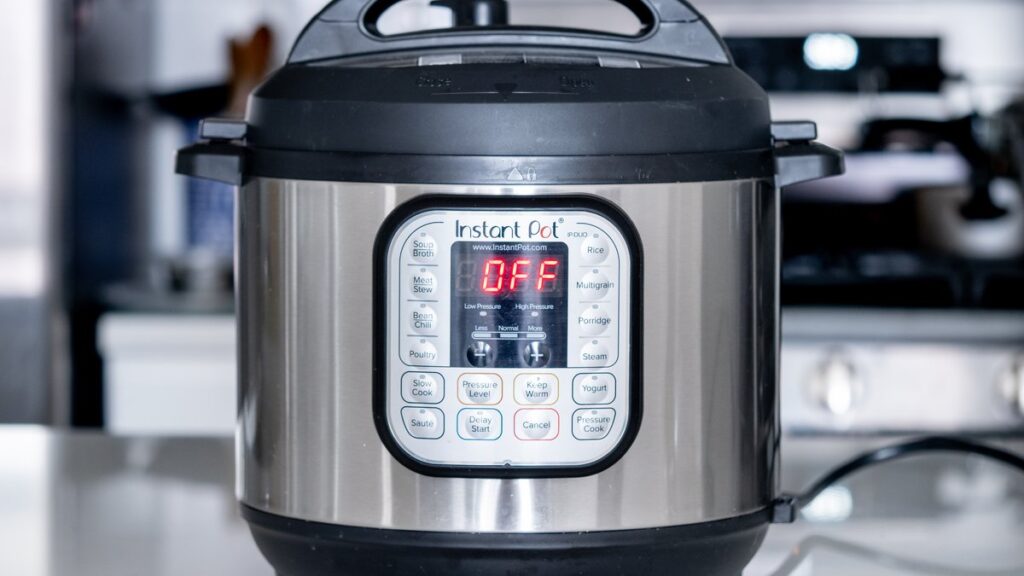
Is an Instant Pot worth it for one person? Short answer: yes — if you actually cook a few times a week and like soups, beans, grains, stews, or batch-cooking portions to freeze. For a solo cook the right size is the 3-quart Duo Mini (the cheapest of the range, and cheaper still on sale), which suits one to two servings and tucks into a small kitchen. Skip it if you mostly eat out, only ever reheat single portions, want crispy fried food (buy an air fryer instead), or have no counter space to spare. Below is the honest breakdown: the real pros, the cons no one mentions, what size to get, what you will pay, and who should walk away.
Key Takeaways
- For one person, the 3-quart Duo Mini is the default pick; step up to a 6-quart only if you batch-cook and freeze, since most recipes and accessories assume the 6-quart size.
- It is genuinely worth it for soups, dried beans, grains, stews, and tough cuts — its strongest, cheapest-to-run use cases — and for hands-off set-and-forget cooking.
- It is not literally “instant”: every cook adds 10–25 minutes to come up to pressure (plus release time), so a “7-minute” recipe is really 25–40 minutes door to door.
- Skip it if you want crispy food (get an air fryer), only cook tiny single portions, have no storage, or rarely cook at all — a multicooker only pays off if you use it.
The Instant Pot built its fame on big-batch family dinners, which is exactly why solo cooks hesitate: do you really need a 6-quart pressure cooker to feed one mouth? It is a fair question, and the honest answer is “it depends on how you cook,” not a blanket yes. This guide is written specifically for the person shopping for one — small kitchen, single appetite, and no interest in a gadget that lives in a cupboard. We will be straight about where it shines, where it disappoints, and the cheaper or simpler tools that might serve you better.
The Short Verdict: Is It Worth It for One Person?
For most people cooking for one, a small Instant Pot is worth it — with one big condition: you have to actually use it. It earns its counter space if you make soups, chilis, dried beans, lentils, rice and grains, oatmeal, shredded chicken, or stews, and especially if you like to cook once and eat several times. Those are the dishes where a multicooker is faster, cheaper to run, and more hands-off than the stove or oven.
Where it stops being worth it is the kitchen where it never gets used. If you eat out or order in most nights, if you only ever heat up a single portion of something pre-made, or if you crave crispy, browned, fried textures, a pressure cooker is the wrong tool — and it will quietly take up space until you donate it. The verdict, then, is less about the appliance and more about your habits.
What Size Instant Pot Should One Person Buy?
This is the decision that trips people up, because “smaller person, smaller pot” is only half right. Here is how the three common sizes shake out for a single cook.
| Size | Best for | Solo verdict |
|---|---|---|
| 3-quart (Duo Mini) | 1–2 servings; small kitchens and apartments | The default for one person |
| 6-quart (Duo) | 3–5 servings; most recipes and accessories assume this size | Worth it if you batch-cook and freeze |
| 8-quart | 6–8+ servings; big-batch cooking | Overkill for one |
The 3-quart Duo Mini is the natural one-person size: it makes one to two servings, takes up little counter and cupboard space, and comes up to pressure a bit faster than its bigger siblings. The catch is that it is genuinely small — you will not meal-prep a full week of dinners in it, and a whole chicken or a large roast will not fit.
That is why plenty of solo cooks deliberately buy the 6-quart instead. If your whole reason for owning one is to batch-cook a big pot of chili or soup and freeze single portions, the 6-quart is the smarter buy — and you avoid the constant mental math of halving recipes, since the vast majority of Instant Pot recipes and accessories are written for the 6-quart. A simple rule: buy the 3-quart if you cook small and fresh; buy the 6-quart if you cook big and freeze. One note for shoppers — only the Duo Mini line comes in 3 quarts; the newer “Rio” styling starts at 4 quarts, and the air-fryer-lid combos start at 6, so there is no tiny air-fryer Instant Pot.
What an Instant Pot Actually Does
A standard Instant Pot Duo is a “7-in-1” multicooker, which sounds like marketing but really just means it replaces a handful of separate gadgets. The base model can pressure cook, slow cook, sauté, steam, cook rice, make yogurt, and keep food warm. For a solo cook, four of those do the heavy lifting:
- Pressure cook — the headline feature: dried beans in under an hour with no soaking, a pot of soup or stew in a fraction of the stovetop time, grains and tough cuts made tender fast.
- Sauté — brown onions or meat right in the pot before pressure cooking, so a whole meal happens in one insert and you wash one bowl, not three.
- Rice and grains — hands-off, hard to scorch, and it doubles as a rice cooker so that is one fewer appliance to own.
- Keep warm — useful when you are cooking around a single schedule and want dinner ready whenever you are.
Worth knowing before you assume a feature is included: “sterilize” is only on the Duo Plus and Crisp models, not the base Duo, and air frying requires a Duo Crisp combo (which starts at 6 quarts). For one person, the plain 7-in-1 Duo Mini covers the essentials without paying for functions you will rarely touch.
The Real Pros for a Solo Cook
These are the upsides that genuinely matter when you are cooking for one, not the box-copy list. Here are the six that carry the most weight in a single-person kitchen.
1 One Pot Means Minimal Cleanup
Because you sauté and cook in the same insert, a full meal leaves you with one pot to wash — a real quality-of-life win when there is no one else around to split the dishes. For a solo cook, dish load is a genuine reason meals don’t get cooked, and this quietly removes it.
2 Batch-Cook and Freeze a Week of Dinners
Make a big pot of chili, curry, or hearty soup once, portion it into containers, and freeze a week of dinners. This is the single best argument for a solo cook owning one, and the best reason to size up to 6 quarts.
Cooking once and eating five times is where the appliance earns its keep for one person. It turns a single evening of effort into a stack of grab-and-go meals that beat takeout on both cost and nutrition.
3 Cheap Beans, Grains, and Soup, Fast
Dried beans go from bag to bowl in well under an hour with no overnight soak, turning the cheapest pantry staples into easy meals — the Instant Pot’s strongest, most economical use case. A bag of dried beans costs a fraction of the canned equivalent and makes several portions.
4 Hands-Off and Hard to Mess Up
Add your ingredients, set it, and walk away — no babysitting a simmering pot, which is ideal on a busy weeknight. The sealed, pressure-regulated environment is forgiving, so it is genuinely difficult to scorch a stew the way you can on a distracted stovetop.
5 More Energy-Efficient Than the Oven
Heating a big oven to cook one portion is wasteful; a countertop pressure cooker uses far less energy for the same single serving. Instant Pot’s own commissioned testing puts the savings dramatically high, and while that headline figure is vendor-sponsored, independent sources do agree that pressure and slow cookers beat ovens on efficiency.
6 It Replaces Several Kitchen Gadgets
Independent lab testing has found it can stand in for a rice cooker, steamer, and yogurt maker — meaningful when counter space is at a premium in a small kitchen. If it genuinely retires two or three single-use gadgets, it can be a net space-saver rather than just another box.
The Honest Cons No One Mentions
Most “worth it” articles gloss over the downsides. For a single-person kitchen, these are the six that actually bite.
1 It Is Not Actually Instant
The cooking timer only starts after the pot comes up to pressure, which takes roughly 10 to 25 minutes, and many dishes then need a 10 to 30 minute natural pressure release. A recipe that says “7 minutes” is realistically 25 to 40 minutes from start to plate.
That is still faster than the oven for some things, but it is no microwave. Go in expecting a name that oversells the speed, and you won’t be disappointed on a hungry weeknight.
2 Pressure Overhead Hits Small Portions Hardest
That fixed come-to-pressure overhead does not shrink just because you are cooking one serving. So for very small batches the time-per-meal can feel disproportionate — you wait the same 15 minutes to pressurize whether you’re cooking for one or six.
3 The Burn Warning and Minimum-Liquid Rule
Pressure cooking needs enough thin liquid or the bottom scorches and the pot flashes a “Burn” message — most awkward exactly when you are scaling a recipe down to a single portion. Thick sauces and small volumes are where beginners hit this wall most often.
4 Storage Is Tight in a Small Kitchen
Even a 3-quart takes counter or cupboard room, and a 6-quart is genuinely bulky and heavy. It is only a net space-saver if it actually retires your rice cooker and slow cooker rather than joining them.
The often-repeated “the lid is impossible to store” gripe is overblown, though — there is a built-in lid holder on the handles. The real question is simply whether you have a cupboard or a stretch of counter to give it a permanent home.
5 There Is a Real Learning Curve
The buttons and pressure-release steps feel confusing at first, and the first few meals usually involve a manual and some second-guessing. Most people get comfortable within a week of regular use, but the initial friction is real and puts some owners off before they get the hang of it.
6 Weak at Searing and Slow Cooking
Its sauté browning is gentler than a hot skillet, and independent testers have found its slow-cook mode less reliable than a dedicated slow cooker. If a deep sear or a genuine low-and-slow braise are your main jobs, it is not the best tool for either.
Pros & Cons at a Glance
Worth It Because
- One-pot cooking with minimal cleanup for a solo kitchen.
- Batch-cook and freeze a week of single portions.
- Cheap, fast beans, grains, soups, and stews with no soaking.
- Hands-off, set-and-forget, hard to scorch.
- Uses less energy than the oven and replaces a few gadgets.
Think Twice Because
- Not actually “instant” — 10–25 min just to come to pressure.
- That time overhead stings most on tiny single portions.
- Minimum-liquid rule and “Burn” warnings when scaling down.
- Takes real storage space in a small kitchen.
- Weak sear and a so-so slow cooker; learning curve up front.
Who Should Buy One — and Who Should Skip It
Buy it if you are…
Someone who cooks for one regularly and likes soups, beans, grains, stews, or tough cuts; a meal-prepper who wants to batch-cook and freeze (size up to 6 quarts); a busy person who values set-and-forget, one-pot dinners; or someone who already owns an air fryer and wants a complementary tool for the wet, slow, brothy dishes the air fryer cannot do.
Skip it if you are…
Someone who mainly wants crispy or fried food (buy an air fryer instead); a cook who only needs one function, like rice or a slow braise (a dedicated rice cooker or slow cooker does it better and cheaper); short on counter and storage space; a hands-on cook who likes to taste and adjust on the stove; or simply someone who rarely cooks — a multicooker only pays off if it earns its keep.
Better Alternatives for One Person
The Instant Pot is not always the right answer. Depending on how you actually eat, one of these may serve you better — or pair well alongside it.
| Alternative | Better when you… |
|---|---|
| Air fryer | Want crispy, browned, or “fried” food and quick single portions with no pressure wait. The most popular companion to (or replacement for) a multicooker. |
| Rice cooker | Mostly just cook rice and want something cheaper and smaller — though a multicooker matches or beats a basic model on texture. |
| Microwave | Mainly reheat leftovers and single portions; fastest and cheapest, but not a true cooking replacement. |
| Dutch oven / stovetop | Like to sear, brown, and adjust by hand, and do not mind tending the pot. |
| Mini slow cooker (2–3 qt) | Want genuine set-and-forget braises; dedicated slow cookers tend to be more reliable for low-and-slow than a multicooker’s slow-cook mode. |
If you are the type who leans on shortcuts to get dinner on the table, it is also worth pairing any appliance with a few smart shortcut ingredients for quick meals — the gadget matters less than the habit of actually cooking.
What You’ll Actually Pay (2026)
Prices move with sales, but here is the lay of the land. Official list prices are fixed; street and sale prices fluctuate, so treat the ranges as guidance and confirm the live price before buying.
| Model | Official list (MSRP) | Typical street / sale |
|---|---|---|
| 3-qt Duo Mini | Lowest list | Usually below list |
| 3-qt Duo Plus Mini | Step-up list | Usually below list |
| 6-qt Duo | Same list as the Duo Plus Mini | Widest street range |
The takeaway: a perfectly good 3-quart for one person regularly sells below list, and goes lower still during major sale events. At that price, it does not take many home-cooked meals instead of takeout for it to pay for itself — provided you use it.
Wait — Didn’t Instant Pot Go Bankrupt?
You may have seen the headlines, so here is the accurate version. The parent company, Instant Brands, filed for Chapter 11 bankruptcy in 2023. The Instant Pot business was then acquired by affiliates of Centre Lane Partners and continues to operate as a standalone company, with products still widely sold at major retailers and a one-year limited warranty offered on the official site. In other words, the brand is very much still around and supported — bankruptcy reorganized the company, it did not end the product. (As with any appliance, keep your receipt and register the warranty.)
Frequently Asked Questions
What size Instant Pot is best for one person?
The 3-quart Duo Mini is the standard one-person size — it makes one to two servings and fits a small kitchen. However, if your goal is to batch-cook and freeze portions for the week, a 6-quart is the smarter choice, because most recipes and accessories are built for it and you avoid constantly halving recipes. Buy the 3-quart if you cook small and fresh; buy the 6-quart if you cook big and freeze.
Is an Instant Pot worth it if you live alone?
Yes, if you cook a few times a week and like soups, beans, grains, stews, or batch-cooking to freeze — those are where it saves the most time and effort for a solo cook. It is not worth it if you mostly eat out, only reheat single portions, want crispy fried food, or have no storage space. The appliance is only as valuable as how often you actually use it.
Is the Instant Pot actually “instant”?
No. The cooking timer only begins once the pot reaches pressure, which takes about 10 to 25 minutes, and many dishes then need a natural pressure release of another 10 to 30 minutes. So a recipe labeled “7 minutes” really takes around 25 to 40 minutes from start to finish. It is genuinely faster than the oven or stovetop for things like dried beans and tough cuts, but it is not as quick as the name suggests.
Instant Pot or air fryer for one person?
They do different jobs, so the answer depends on what you eat. An air fryer is better for crispy, browned, and “fried” foods and quick single portions with no pressure wait. An Instant Pot is better for soups, stews, beans, grains, and batch-cooking to freeze. Many solo cooks end up owning both because they complement each other; if you can only buy one, choose by the food you crave most.
How much does a small Instant Pot cost?
A 3-quart Duo Mini is the cheapest in the range and commonly sells below its official list price depending on the model and current sales, dropping lower during major sale events. The step-up 3-quart Duo Plus Mini lists higher. Prices change often, so confirm the live price at checkout rather than treating any single figure as fixed.
Is Instant Pot still in business after the bankruptcy?
Yes. Parent company Instant Brands filed for Chapter 11 in 2023, after which the Instant Pot business was acquired by affiliates of Centre Lane Partners and now operates as a standalone company. Products are still sold widely at major retailers, and the official site offers a one-year limited warranty. The reorganization changed the company’s ownership, not the availability of the product.
Model names, prices, and availability reflect what we verified as of June 2026 and can change; confirm the current model and price on the retailer’s page before buying. Energy-efficiency figures cited by the manufacturer are vendor-sponsored and provided for direction, not as independent measurement.
About the Author
Elena Brooks
Elena Brooks is the person her group chat texts when something at home stops working or a health trend starts trending. She’s spent years turning that instinct into a job — digging into the research behind everyday questions, calling the experts, and writing up what holds up and what doesn’t. Her beat is wherever curiosity points: kitchens, cars, pets, sleep, money, and the occasional meteor shower.