
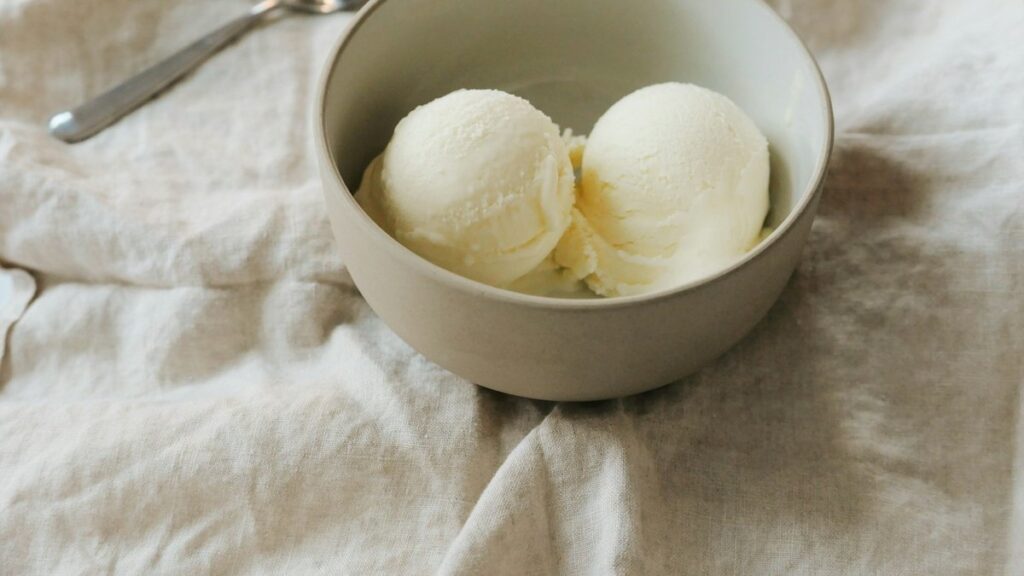
- Blending cottage cheese smooths out the curds and lets its protein and fat trap tiny air bubbles, similar to how real ice cream gets its creamy texture.
- Frozen plain, with nothing else added, it turns into a hard block. Plain cottage cheese doesn’t have the sugar-and-fat ratio that keeps ice crystals small.
- A ripe banana, or a little honey plus a pinch of gelatin or xanthan gum, fixes the texture the same way sugar and stabilizers work in store-bought ice cream.
- A serving of homemade cottage cheese ice cream carries roughly 12 to 13 grams of protein, compared to about 4 grams in a serving of traditional full-fat vanilla ice cream.
- It’s genuinely lower in sugar and calories than regular ice cream, but cottage cheese itself carries real sodium (around 700 milligrams per cup), which matters if you watch your salt.
- Made at home, it usually costs roughly half to a third as much per serving as store-bought protein ice cream brands like Halo Top or Enlightened.
You blend a tub of cottage cheese until it’s smooth. You pour it into a container. You freeze it overnight, excited for a high-protein treat. Then you dig your spoon in and hit something closer to a hockey puck than dessert.
Sound familiar? Cottage cheese ice cream blew up online as the easy, high-protein dessert hack, and millions of people tried it. A lot of them hit that same rock-hard freezer brick and quietly gave up, convinced the whole trend was a lie. Here’s the thing: the trend isn’t wrong. Your ratio was. There’s real food science behind why blended cottage cheese can taste like actual ice cream, and there’s an equally real reason it turns into an ice block when you skip one small step. This guide walks you through both, plus a base recipe with ratios that actually work, three variations worth trying, and an honest verdict on whether this is genuinely healthy or just clever marketing.
The Food Science Behind Cottage Cheese Ice Cream
Before you touch a recipe, it helps to know why this even works. This is the part most articles skip, and it’s the part that actually explains both the magic and the failure.
Casein Protein and Milk Fat Build the Creamy Structure
Cottage cheese is mostly made of a milk protein called casein. Casein is the protein that clumps together into the little curds you see floating in the tub. On their own, those curds feel grainy and lumpy, nothing like ice cream. But when you blend them hard, you break the curds apart and spread the protein and fat evenly through the whole mixture. Food scientists call this emulsifying, which just means forcing fat and liquid to mix into one smooth, stable blend instead of separating.
That smooth, evenly-mixed protein-and-fat network is doing almost the same job that fat does in traditional ice cream. Real ice cream gets its creamy mouthfeel from tiny fat globules and air bubbles trapped inside a network of proteins and sugars. Blended cottage cheese builds a similar, smaller-scale version of that same structure: casein protein plus milk fat, whipped smooth, trapping a bit of air as you blend. That’s why a fully blended cup of cottage cheese can taste shockingly close to soft-serve straight out of the blender, even before it’s frozen. It isn’t a trick or an illusion. It’s the same basic food chemistry, just built from cheese instead of cream.
This is also why under-blending is such a common complaint. If you stop blending too early, some curds survive the process intact. Frozen, those surviving curds turn into hard little grit specks throughout an otherwise creamy dessert. The fix isn’t a different ingredient. It’s more time in the blender, which we’ll get into in the recipe section.
Why Frozen Plain Cottage Cheese Turns Into a Hard Ice Block
Here’s where most people’s first attempt goes wrong. Cottage cheese is mostly water. Even after blending it smooth, you haven’t changed that. Water freezes hard and forms large ice crystals unless something in the mixture gets in the way and slows that process down.
Real ice cream avoids this with a trick called freezing-point depression. That’s a fancy way of saying: when you dissolve sugar (or other small molecules) into water, the water needs to get colder before it can freeze solid, and the ice crystals that do form stay smaller and softer. Sugar molecules physically get in between the water molecules and disrupt the neat, rigid pattern ice normally forms in. Less neat pattern means smaller crystals means a softer, scoopable texture instead of a solid block. Real ice cream also leans on fat and stabilizers like guar gum or locust bean gum to do the same job from a different angle: thickening the water so it can’t easily clump into big crystals.
Plain blended cottage cheese has none of that. It has protein, a little milk fat, and mostly water, but almost no free sugar and no stabilizer. Freeze it as-is and the water inside behaves like plain water: it freezes hard, and the ice crystals that form are large and rigid. That’s the brick. It’s not spoiled, and it’s not a bad batch. It is, structurally, frozen water with some protein mixed in, and frozen water is exactly what a brick is made of.
The Real Fix Is the Ratio, Not the Concept
This is the thesis worth remembering through the rest of this guide: most people who try blending cottage cheese and freezing it plain get a hard ice block, decide the whole idea is fake, and never try again. But the actual problem was never the concept. Blended cottage cheese genuinely can behave like ice cream. The problem is a missing ingredient category: something sugary or something that acts as a stabilizer, the exact same two things real ice cream relies on.
Once you see it that way, the whole “trend” stops being a mystery and starts being a small chemistry problem with a known, cheap solution. A ripe banana works because it brings natural sugar (which lowers the freezing point) and a bit of pectin and fiber (which adds body and slows crystal growth), essentially doing two jobs of real ice cream’s ingredient list in one fruit. Gelatin and xanthan gum work because they’re doing the stabilizer job on their own, just like the same ingredients do in the ice cream you’d buy at the store. None of this is a workaround. It’s the same underlying science, applied at home with cheaper, simpler ingredients.
How Cottage Cheese Ice Cream Compares to Real Ice Cream and Protein Brands
Numbers help more than vibes here, so let’s actually run them. The table below compares a homemade batch (made with either 2% or 4% milkfat cottage cheese, blended with one ripe banana) against a mainstream full-fat ice cream and two popular protein ice cream brands you’ve probably seen in the freezer aisle.
| Type (per serving) | Serving Size | Calories | Protein | Total Fat | Total Sugar | Sodium |
|---|---|---|---|---|---|---|
| Homemade, 2% cottage cheese + banana | ~1 cup | 144 | 12g | 3g | 12g | 349mg |
| Homemade, 4% cottage cheese + banana | ~1 cup | 163 | 13g | 5g | 10g | 355mg |
| Häagen-Dazs Vanilla (traditional full-fat) | ½ cup | 250 | 4g | 17g | 20g | 65mg |
| Halo Top Vanilla Bean | ⅔ cup | 90 | 6g | 2g | 8g | 105mg |
| Enlightened Vanilla Bean Light | ⅔ cup | 100 | 7g | 2.5g | 5g | 75mg |
Show Your Math: How We Calculated the Homemade Numbers
Nobody should just trust a number in a table, so here’s exactly where these come from. Per USDA FoodData Central, one cup (226 grams) of lowfat cottage cheese at 2% milkfat contains about 183 calories, 23 grams of protein, 5 grams of fat, 11 grams of carbohydrate, 9 grams of sugar, and 696 milligrams of sodium. One cup (225 grams) of creamed cottage cheese at 4% milkfat contains about 221 calories, 25 grams of protein, 10 grams of fat, 8 grams of carbohydrate, 6 grams of sugar, and 709 milligrams of sodium. One medium ripe banana (118 grams) adds about 105 calories, 1 gram of protein, 0.4 grams of fat, 27 grams of carbohydrate (14 grams of it sugar), and roughly 1 milligram of sodium.
Add the cottage cheese and the banana together, and a full batch (1 cup cottage cheese blended with 1 banana) yields about 288 calories total with the 2% version, or 326 calories with the 4% version. That batch reasonably splits into two servings of about a cup each once you account for the air blended in, which is where the per-serving numbers in the table come from. If you want to check the math yourself or look up any other food, USDA FoodData Central is free and searchable by anyone. For Halo Top and Enlightened, the numbers above come straight off each brand’s own published nutrition-facts panel (Halo Top’s official product page for Vanilla Bean, and Enlightened’s Vanilla Bean Light Ice Cream label), not an estimate.
What the Numbers Actually Say
A few things jump out once you actually look at this side by side. Homemade cottage cheese ice cream carries roughly two to three times the protein of Häagen-Dazs vanilla in a similar-sized serving, at a little over half the calories and about half the sugar. That’s a real, meaningful macro difference, not a marketing spin.
Against Halo Top and Enlightened, the comparison is more nuanced, and it’s worth being straight about that. Homemade has more calories per serving than either brand, and it actually carries more sodium than both Halo Top and Enlightened, not less — that’s the cottage cheese talking, and it’s a genuine tradeoff worth knowing, which we’ll dig into further down. Where homemade pulls ahead is protein density relative to cost and ingredient simplicity: you’re getting comparable or better protein from one real, recognizable ingredient plus a banana, rather than a longer label with sugar alcohols and added fiber. If you like nerding out on the bigger picture of protein, carbs, and fat before you nerd out on flavor, VPod’s own explainer on tracking protein, carbs, and fat is a good next stop.
The Base Cottage Cheese Ice Cream Recipe That Actually Works
Here’s the ratio that solves the ice-block problem: roughly 1 cup of cottage cheese to 1 ripe banana, plus a splash of milk if your blender needs help, and a splash of vanilla extract for flavor. If you don’t love banana flavor, swap it for 1 to 2 tablespoons of honey or maple syrup plus a pinch of gelatin or xanthan gum instead. Follow these steps in order, because each one is solving a specific problem, not just following tradition.
Step 1: Pick 2% or 4% Cottage Cheese and Measure a Full Cup
Either works, and the “Show Your Math” numbers above cover both. The 2% version gives you a slightly lighter, lower-calorie base with a touch more protein density per calorie. The 4% version gives you more milk fat, which (as you now know from the food science section) actually helps fight ice crystals a little on its own, on top of tasting a bit richer and creamier. Neither is “wrong.” Pick based on what you actually want: leaner or creamier.
Measure a full, level cup rather than eyeballing it. Cottage cheese is dense and deceptively heavy for its volume, so guessing tends to throw off both the texture and the macros in the table above more than you’d expect.
Step 2: Blend Everything Fully Smooth for 60 to 90 Seconds
This step is where most “it’s grainy” complaints get solved or created. Add the cottage cheese, your ripe banana (or honey plus stabilizer), a splash of milk, and vanilla extract to a blender or food processor. Blend on high for a full 60 to 90 seconds, stopping once around the 30-second mark to scrape down the sides with a spatula. You’re looking for a completely smooth, pourable, almost pancake-batter consistency with zero visible curd flecks.
Step 3: Add Your Stabilizer — Banana, Honey, or a Pinch of Gelatin
If you’re using the banana, it should already be in the blender from Step 2, doing double duty as both sweetener and stabilizer. If you’re going the banana-free route, whisk ½ teaspoon of unflavored gelatin into 1 tablespoon of warm water until it fully dissolves, let it sit for a minute to bloom (that just means letting the gelatin granules absorb the water and swell before use), then blend it in along with 1 to 2 tablespoons of honey or maple syrup. Alternatively, a scant ⅛ teaspoon of xanthan gum blended in does a similar job without any banana flavor at all, though xanthan gum is powerful in tiny amounts and easy to over-add, so measure carefully.
Either path gives the mixture what plain cottage cheese doesn’t have: something that lowers its freezing point or physically slows ice crystal growth. Skip this step entirely, and you’re back to the brick from the food science section, no matter how well you blended.
Step 4: Freeze in a Shallow Container, Not a Deep One
Pour your smooth mixture into a shallow container, a bread loaf pan works well, and spread it out so it’s no deeper than about 1.5 inches. This matters more than it sounds like it should. A shallow layer freezes faster and more evenly all the way through, and faster freezing tends to produce smaller ice crystals throughout the whole batch, not just at the edges. A deep, narrow container freezes slowly from the outside in, giving ice crystals in the center far more time to grow large before they’re locked solid, which is a big part of why some homemade batches turn out icier in the middle than at the edges.
Cover the container tightly with plastic wrap pressed directly onto the surface of the mixture (not just over the top of the container) to block air and slow ice-crystal growth from the top down. Freeze for at least 6 hours, though overnight is more reliable.
Step 5: Temper for About 10 Minutes Before You Scoop
Pull the container out of the freezer and let it sit at room temperature for about 10 minutes before you try to scoop. Real, fat-heavy ice cream usually only needs 5 minutes for this same softening step, called tempering. Cottage cheese ice cream needs roughly double that, because it simply has less fat than dairy-cream ice cream, and fat is what stays soft and pliable even at freezer temperatures. With less fat holding things together, the whole block freezes a bit harder, so it needs a few extra minutes at room temperature before a spoon can get through it cleanly.
Optional Step: Swap the Banana for Honey and Gelatin If You Skip Banana Flavor
If banana flavor isn’t your thing, this swap gets you the same texture fix without it. Replace the banana entirely with 1 to 2 tablespoons of honey or maple syrup (adjust to taste) plus either ½ teaspoon of bloomed gelatin or ⅛ teaspoon of xanthan gum, blended in during Step 2 and 3 exactly as described above. The texture outcome is nearly identical to the banana version; what changes is flavor and the exact calorie/sugar numbers, since you’re swapping a whole banana’s worth of natural sugar and fiber for a smaller, more concentrated amount of added sweetener.
Three Cottage Cheese Ice Cream Variations Worth Trying
Once you’ve nailed the base recipe, these three variations are the most requested, and each one changes the underlying science slightly, not just the flavor.
1 1. Chocolate Cottage Cheese Ice Cream Needs a Little Extra Sweetener
Cocoa powder is naturally bitter and slightly acidic on its own, with none of the sugar that chocolate bars or chocolate ice cream normally carry. Blend in 2 to 3 tablespoons of unsweetened cocoa powder per batch, and you’ll likely need 1 extra tablespoon of honey, maple syrup, or a very ripe (spotty, almost-black) banana to balance out that bitterness. A banana that’s more ripe than usual actually helps twice here: it’s sweeter, and its natural pectin adds a touch more body to help offset the slightly drying effect cocoa powder can have on the final texture.
2 2. Peanut Butter Cottage Cheese Ice Cream Where the Add-In Actually Helps the Science
This is the one variation where the “extra flavor” ingredient is also doing real texture work, not just taste. Peanut butter’s fat content adds to the overall fat in the mixture, and as you now know from the food science section, more fat generally means fewer, smaller ice crystals and a softer scoop. Blend in 2 tablespoons of natural, no-sugar-added peanut butter per cup of cottage cheese, along with your banana or honey-and-stabilizer combo as usual.
Because peanut butter is calorie-dense, this variation runs noticeably higher in calories and fat than the base recipe, roughly 40 to 60 extra calories and 7 to 8 extra grams of fat per 2 tablespoons added, so it’s worth knowing that going in if you’re tracking either number closely.
3 3. Mixed Berry Cottage Cheese Ice Cream Needs a Water Fix
Berries taste great in this, but they bring a problem the other two variations don’t: extra water. Fresh strawberries, blueberries, and raspberries are all more than 85% water by weight, and blending a cup of fresh berries into your base adds a meaningful amount of extra water without adding much extra fat or stabilizer to counteract it. That extra water is exactly the kind of thing that grows large ice crystals, the same mechanism explained earlier, just from fruit juice instead of plain cottage cheese moisture.
Is Cottage Cheese Ice Cream Actually Healthy? An Honest Verdict
Short answer: yes, meaningfully, but not for free, and not without real tradeoffs worth knowing about before you decide this is your new nightly dessert.
The Protein and Sugar Math Genuinely Favors It
Going back to the table above, a homemade serving carries two to three times the protein of a similar-sized serving of traditional full-fat ice cream, at roughly half the calories and about half the sugar. That’s a legitimate, defensible nutritional upgrade if your goal is more protein and less added sugar in your dessert, not a stretch or a marketing angle.
It’s also usually cheaper than the store-bought protein ice cream brands it gets compared to online. A 24-ounce tub of cottage cheese (about 3 cups) typically runs somewhere around $3 to $4 at most grocery stores, and a banana costs about a quarter. That puts a full batch, cottage cheese plus banana, at roughly $1.40 to $1.70 total, or about 70 to 85 cents per serving. A pint of Halo Top or Enlightened typically runs $4.50 to $6 and yields three servings at the labeled ⅔-cup size, working out to roughly $1.50 to $2 per serving. Depending on the store and the exact brand, homemade generally lands somewhere around half to a third of the price per serving. Prices vary by region and store, so treat this as a directional comparison rather than an exact one, but the gap is real and consistent across most grocery pricing.
The Sodium, Texture, and Cost Tradeoffs Nobody Mentions
Here’s the part the viral videos tend to skip. Cottage cheese is a genuinely salty food. One full cup of 2% cottage cheese alone carries about 696 milligrams of sodium, and the 4% version runs even higher at roughly 709 milligrams per cup, straight from the USDA numbers used earlier in this guide.
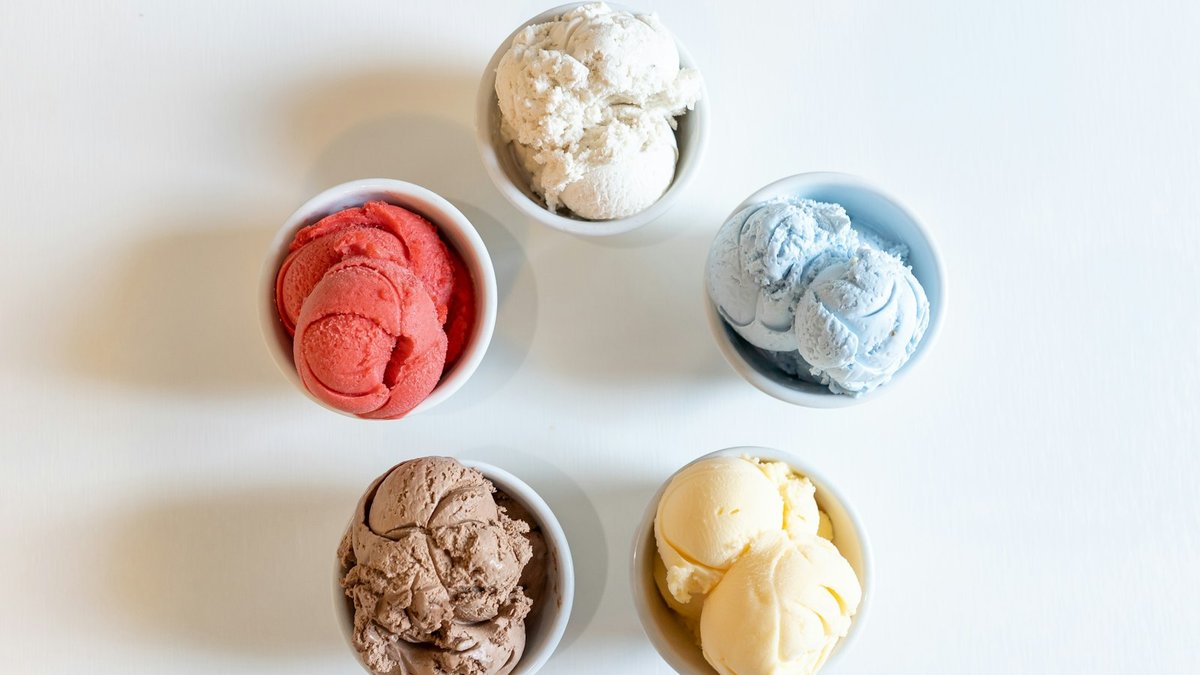
Texture is the other honest tradeoff. Even with a good banana or stabilizer and a proper temper, homemade cottage cheese ice cream tends to land icier and tangier than a pint of real dairy ice cream, and noticeably icier than a commercial protein ice cream brand that’s been engineered by food scientists with access to professional stabilizer blends you can’t easily buy at a regular grocery store. It’s a genuinely good dessert on its own terms. It is not, texture-wise, an identical stand-in for a scoop of Häagen-Dazs, and it’s worth going in with that expectation instead of a promise the recipe can’t actually keep. And to be clear on the calorie point too: this is still real food with real calories. “High protein” doesn’t mean “eat as much as you want,” even here.
Frequently Asked Questions
Does cottage cheese ice cream actually taste like real ice cream?
It’s close, but it’s its own thing rather than an exact copy. Blended smooth, sweetened, and properly tempered, it has a genuinely creamy, scoopable texture that reads as “ice cream” to most people on the first bite. It does carry a slight tang from the cottage cheese itself and tends to be a bit icier than true dairy ice cream, even when made correctly, simply because it has far less fat working in its favor.
Why did my blended cottage cheese freeze into a hard block?
Almost always because it was frozen plain, with no added sugar or stabilizer. As covered in the food science section above, plain blended cottage cheese is mostly water and protein with very little that lowers its freezing point or blocks large ice crystals from forming. Adding a ripe banana, or honey plus a pinch of gelatin or xanthan gum, before freezing solves this in almost every case.
Can I use full-fat (4%) cottage cheese instead of low-fat?
Yes, and it’s arguably the better choice for texture. The extra milk fat in 4% cottage cheese genuinely helps fight ice crystal formation on top of the banana or stabilizer you’re already adding, giving you a slightly creamier, less icy result than the 2% version. It comes with a small tradeoff of a few more calories and grams of fat per serving, shown in the comparison table earlier in this guide.
Do I have to use a banana, or can I leave it out?
You don’t have to use a banana specifically, but you do need something in its place doing the same two jobs: adding sugar (to lower the freezing point) and adding body or stabilizer (to block large ice crystals). Skipping both entirely and freezing the cottage cheese plain is what produces the hard ice block described earlier. Honey or maple syrup plus a pinch of gelatin or xanthan gum is the most common banana-free substitute, and it works just as well.
How long does homemade cottage cheese ice cream last in the freezer?
For best texture, plan to eat it within about 1 to 2 weeks. Unlike commercial ice cream, this recipe has no professional stabilizer blend keeping ice crystals small over time, so the texture will slowly get icier the longer it sits frozen, especially if the container isn’t sealed tightly against air. It’s still generally safe to eat well beyond that window from a food-safety standpoint; it just won’t scoop or taste as good as it did in the first week or two.
Is cottage cheese ice cream good for weight loss?
It can fit reasonably well into a weight-loss-focused diet, mostly because of its protein content. Protein tends to be more filling per calorie than sugar or fat, and a serving here carries meaningfully more protein than a similar-sized serving of traditional ice cream at roughly half the calories, based on the numbers in the comparison table above. That said, it’s still a real dessert with real calories and real sodium, not a “free” food, so portion size and frequency still matter the same way they would with any other treat.
Can I make it without a high-powered blender?
You can, though a food processor or a decent countertop blender makes the difference between smooth and grainy far more reliably. If you’re working with a weaker blender, add the banana (or honey) first as suggested in Step 2, blend in shorter bursts rather than one long continuous run, and plan on stopping to scrape the sides two or three times instead of once. It will take longer than the 60 to 90 seconds suggested for a stronger blender, but the same fully-smooth, no-visible-curd standard still applies before you move on to freezing.
About the Author
Elena Brooks
Elena Brooks is the person her group chat texts when something at home stops working or a health trend starts trending. She’s spent years turning that instinct into a job — digging into the research behind everyday questions, calling the experts, and writing up what holds up and what doesn’t. Her beat is wherever curiosity points: kitchens, cars, pets, sleep, money, and the occasional meteor shower.