





What if the biggest promise of artificial intelligence is hiding its biggest financial risk?
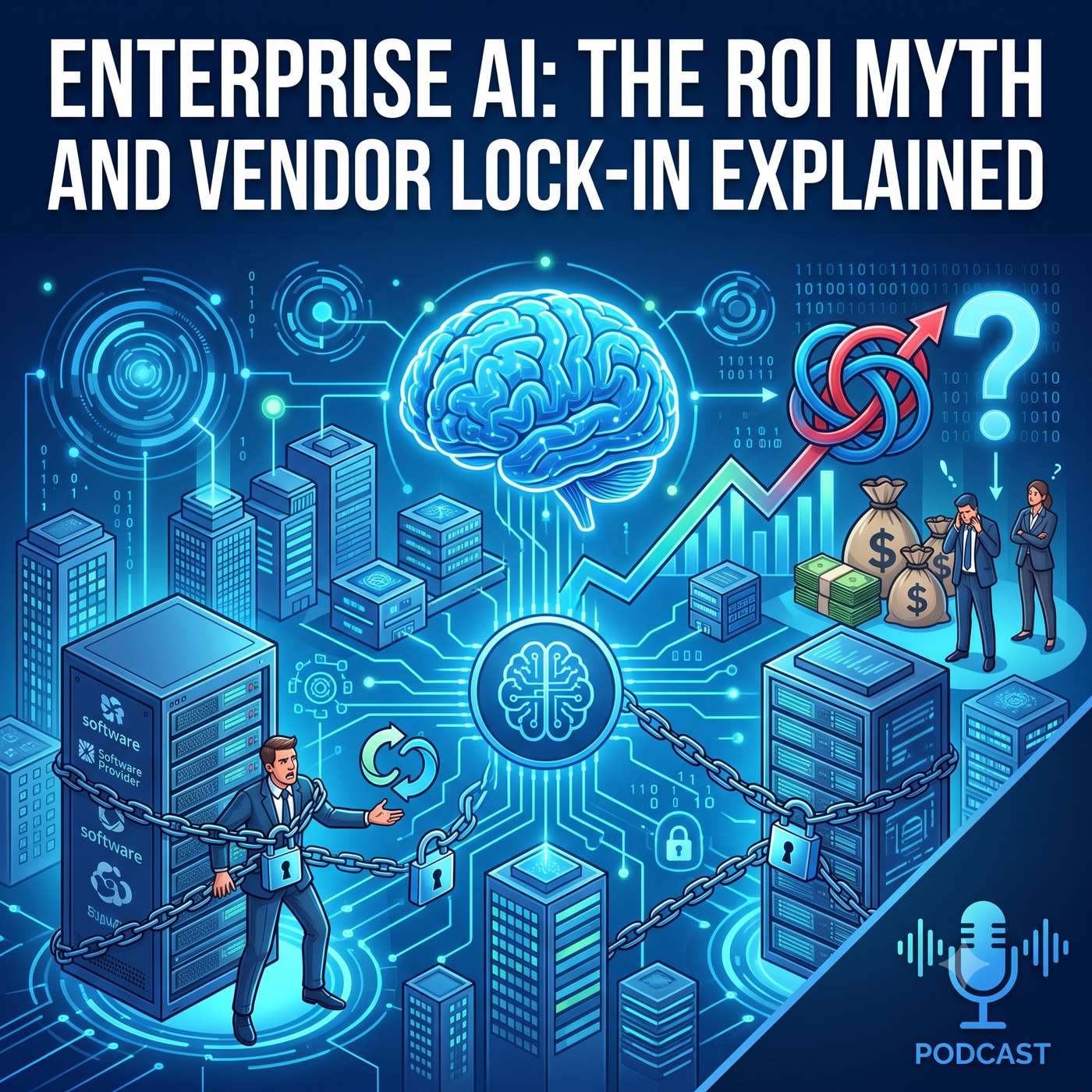
In this episode, we examine the growing assumption that AI will always be cheaper than human labor—and why that belief may be leading organizations into costly long-term dependencies. Drawing from enterprise research, market data, and real-world case studies, we explore how AI adoption can create hidden expenses, weaken institutional knowledge, and shift businesses toward vendor lock-in.
You’ll hear insights on:
- Why low-cost AI tools can become expensive operational dependencies
- The economics of platform lock-in and value capture
- What enterprise research reveals about AI ROI
- How companies can mistake usage metrics for business value
- The risks of AI hallucinations in customer service and business operations
- Why expert human judgment is becoming more valuable—not less
- The difference between “push AI” and “pull AI” adoption
- Practical strategies for measuring AI success beyond software licensing costs
- Why narrow, task-specific AI often delivers greater returns than general-purpose assistants
The discussion also examines examples involving Uber, Adobe, Microsoft, Starbucks, and Air Canada to illustrate both the opportunities and the risks of enterprise AI adoption.
If you’re an executive, technology leader, business strategist, or simply curious about the economics of AI, this episode offers a thoughtful look at what happens when short-term automation collides with long-term organizational resilience.
If you enjoyed this episode, subscribe, share it with your network, and join us for more conversations exploring the technologies shaping the future of business.