
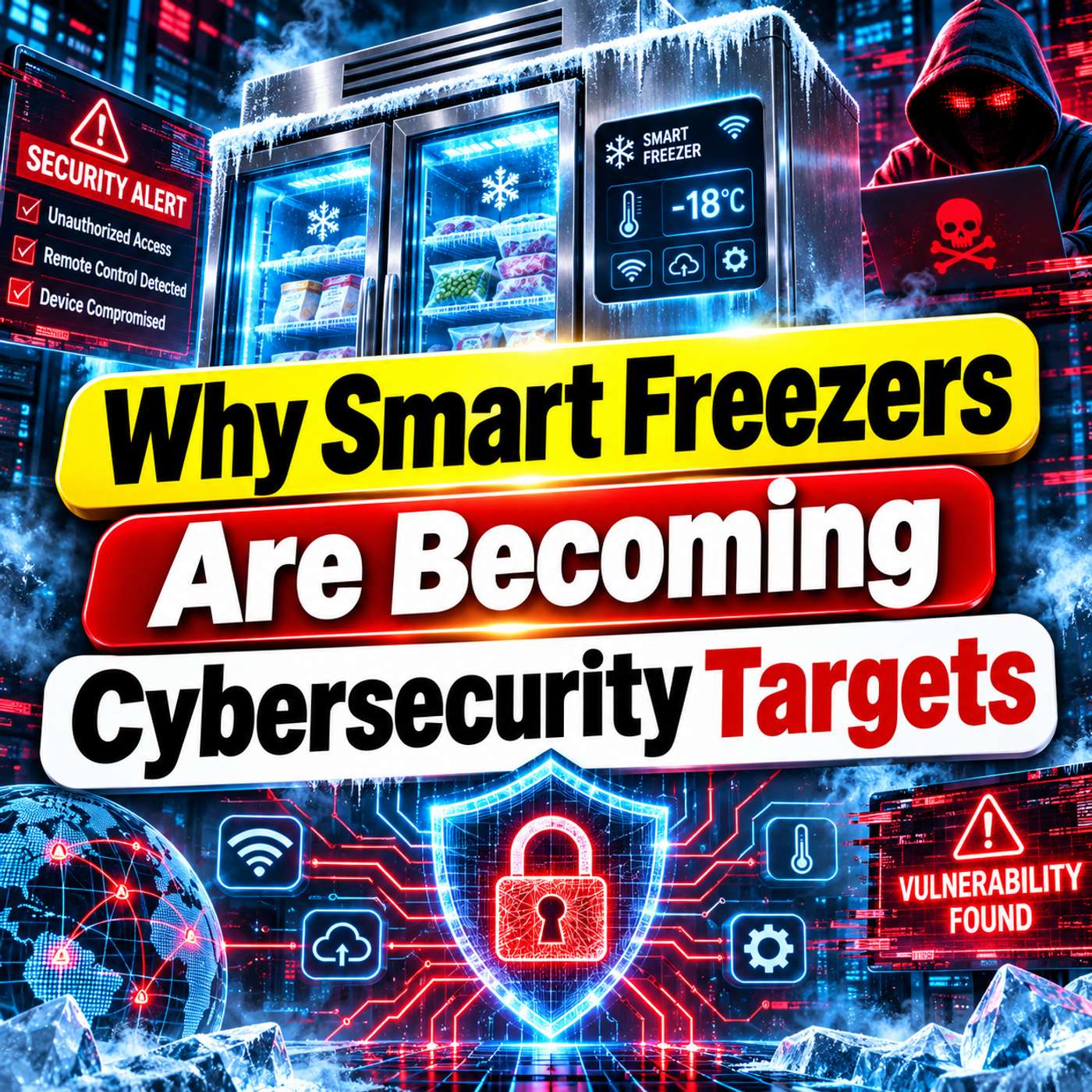





What happens when hackers take control of supermarket refrigeration systems and turn freezers into 122°F ovens? The consequences go far beyond stolen data, potentially destroying food supplies, damaging expensive equipment, and disrupting essential retail operations.
In this episode of vpod.ai, host Mike and expert Susan explore reports of coordinated cyberattacks targeting supermarket refrigeration systems across Europe and the growing cybersecurity risks facing connected physical infrastructure.
The discussion examines reported incidents affecting grocery stores in Sweden, Belgium, Estonia, Ireland, Finland, Luxembourg, and the Netherlands. According to the accounts discussed in the episode, attackers exploited vulnerable refrigeration control systems to manipulate temperatures, causing food spoilage, equipment damage, and significant financial losses.
These incidents highlight a critical shift in cybersecurity: hackers are no longer limited to stealing information or disrupting computer networks. By targeting operational technology (OT), attackers can potentially manipulate machinery and create immediate physical consequences.
In this episode, you’ll discover:
- How hackers reportedly compromised supermarket refrigeration systems across Europe.
- Why commercial freezers were allegedly forced to reach temperatures of 50°C (122°F).
- How cyberattacks against operational technology differ from traditional IT breaches.
- Why grocery stores and food supply chains are increasingly important cybersecurity targets.
- How outdated industrial controllers and unpatched vulnerabilities expose businesses to cyber threats.
- Why internet-connected refrigeration systems are essential for modern retail operations.
- How remote monitoring and predictive maintenance help supermarkets reduce operational costs.
- Why weak access controls and outdated passwords can create serious security risks.
- How the EU Cyber Resilience Act aims to improve connected-device security.
- Why manufacturers and retailers must prioritize secure-by-design technology and long-term security updates.
Mike and Susan also explore an important question: Why would hackers target supermarket freezers instead of customer payment information?
The answer lies in the potential disruption of critical infrastructure. When refrigeration systems fail, businesses can lose entire inventories of perishable food within hours, potentially affecting local food availability, supply chains, and consumer confidence.
The conversation highlights the challenges of securing industrial systems that may operate for 15 to 20 years while relying on software that requires regular security updates.
As more commercial equipment becomes connected to the internet, maintaining reliable cybersecurity protections is becoming essential for retailers, manufacturers, and infrastructure operators.
Could the same vulnerabilities affecting supermarket freezers also threaten building climate controls, elevators, traffic management systems, or municipal water infrastructure?
Join vpod.ai for a discussion about industrial cybersecurity, operational technology vulnerabilities, connected infrastructure, and the real-world consequences of cyberattacks.
Subscribe to vpod.ai on Spotify, Apple Podcasts, Amazon Music, and your favorite podcast platform for more conversations about cybersecurity, emerging technology, digital infrastructure, and the future of connected systems.
Visit https://vpod.ai to explore more episodes.
Want to promote your business? Sponsor vpod.ai for just $25 and get your message featured across major podcast platforms.