
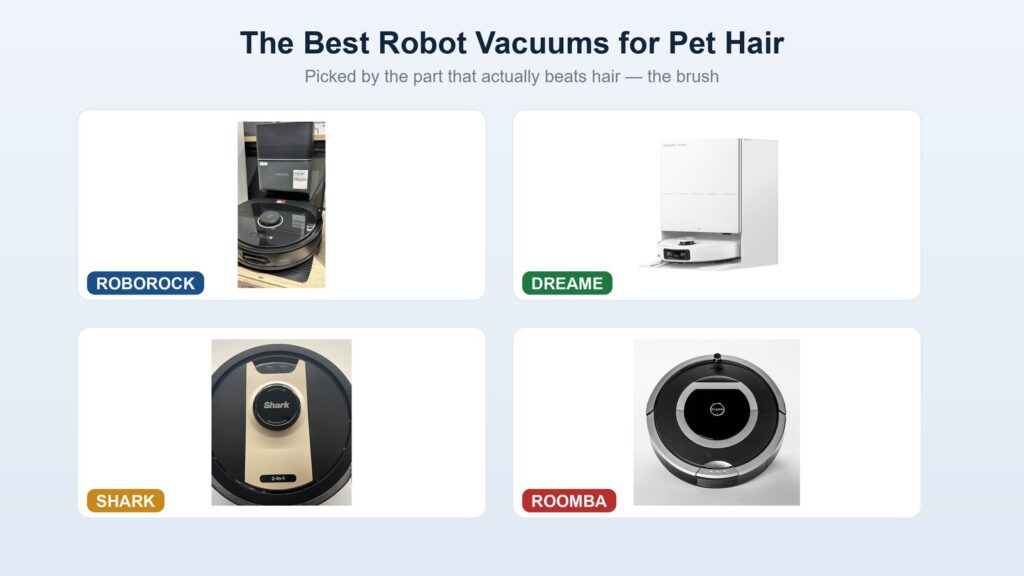
- The best robot vacuum for pet hair is decided by the brush, not the suction. Hair wrapping around the brushroll is the number one reason robots fail in pet homes.
- Look for an anti-tangle roller made of rubber fins or a “self-cleaning” brushroll, not old-style nylon bristles. Rubber lets hair slide off toward the suction instead of knotting around it.
- Suction in Pascals (Pa) matters most for pulling embedded fur out of carpet. On bare floors, almost any modern robot has plenty; on thick rugs, you want a higher number.
- A self-emptying base is close to essential with pets. It dumps the robot’s small bin into a big bag so you’re not cleaning fur out of the machine every single day.
- A mop is a nice bonus for hard floors, but it does nothing for embedded pet hair, so never let mopping outrank the brush and the suction.
- Match the pick to your home: hardwood needs gentle rollers and good edge pickup, thick carpet needs raw suction, and a heavy shedder needs a big bin and an anti-tangle brush above all else.
If you live with a shedding dog or cat, you already know the problem. You run a normal vacuum, the floor looks great for a day, and then the tumbleweeds are back under the couch by dinner. So you start dreaming about a little robot that just handles it while you’re at work. Smart idea. But here’s the trap: most people shopping for the best robot vacuum for pet hair stare at one number, the suction, pick the biggest one, and get burned.
Prefer to do the vacuuming yourself? Here’s our best cordless vacuum for pet hair rundown.
Because pet hair doesn’t beat a robot vacuum by being too heavy to lift. It beats it by wrapping. Long strands and fluff twist around the spinning brush like thread around a spool, until the brush stops turning, the robot drags a felted rope of fur across your floor, and you’re on your knees with scissors every week. That single failure, hair wrap, is the number one thing that makes people give up on their robot. Suction barely enters into it.
So this guide is built around the part almost nobody photographs on the box: the brush. Get the brush right and the rest, suction, the self-empty base, the mop, is just picking your budget. Get the brush wrong and even a $1,200 machine becomes a very expensive hair tangle you have to babysit.
Which robot fits your home?
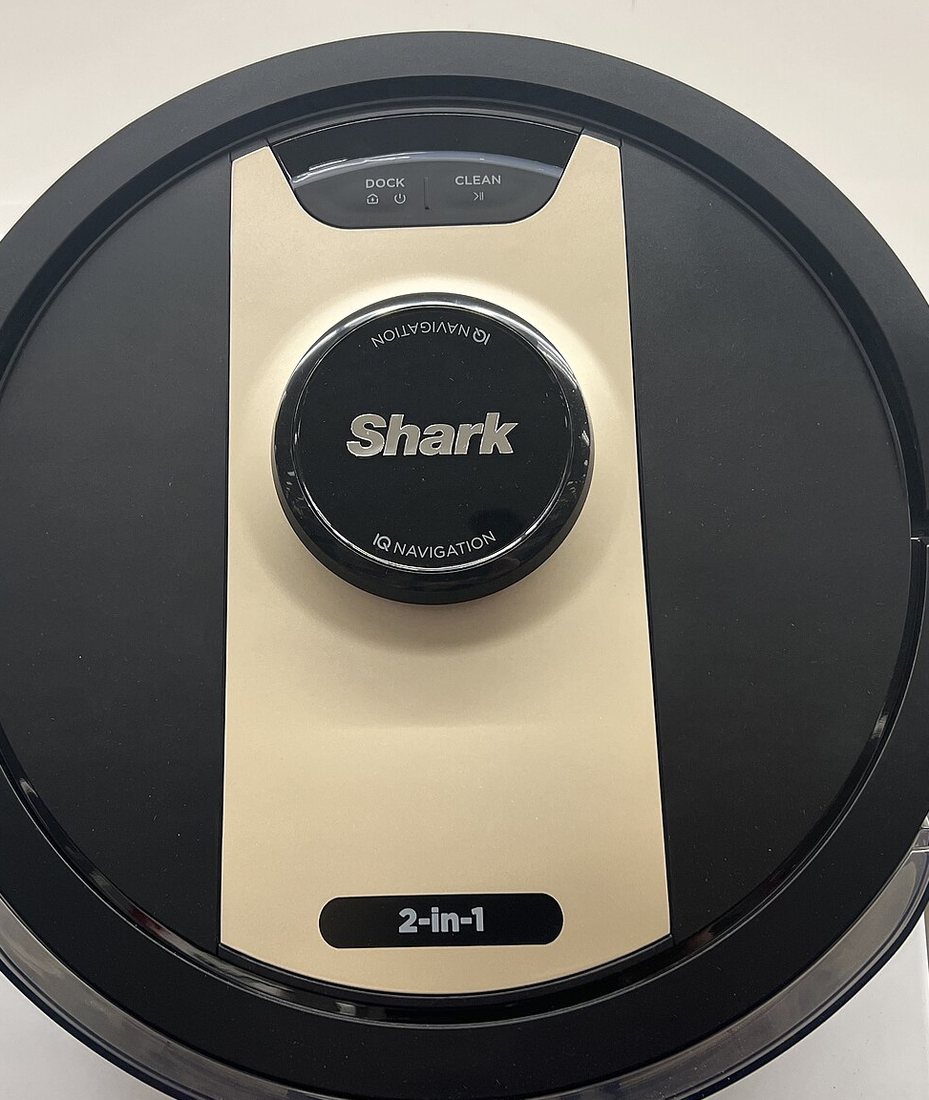
★ Your pick: Shark
Strong pet-hair pickup and a self-cleaning brushroll for far less than the flagships.
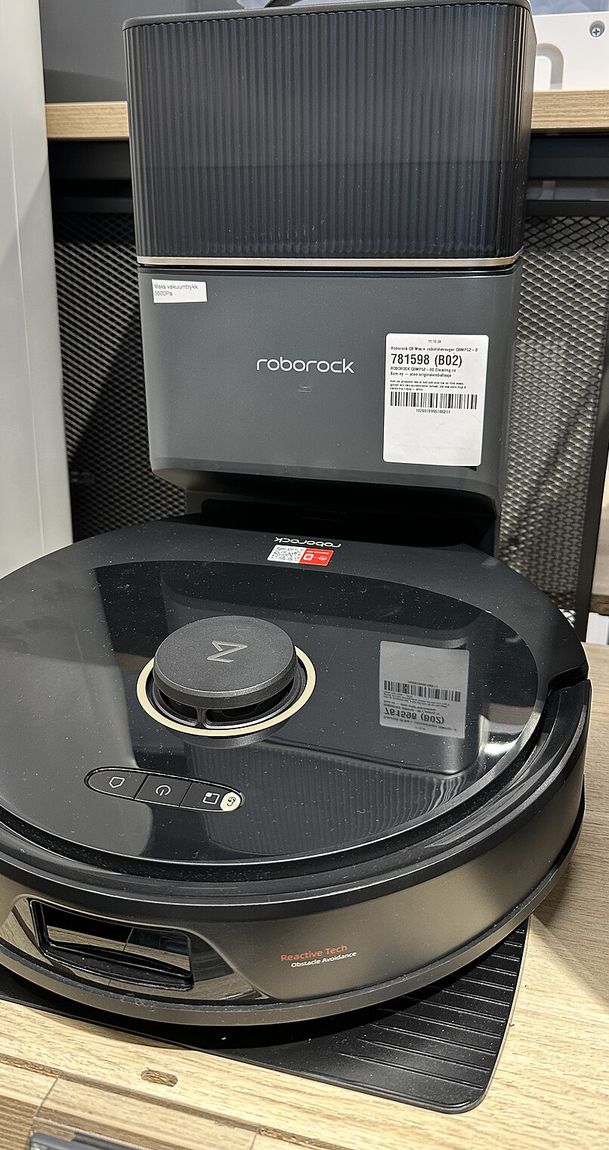
★ Your pick: Roborock
Pairs some of the strongest suction on the market with a genuinely good anti-tangle roller and a self-washing all-in-one dock.
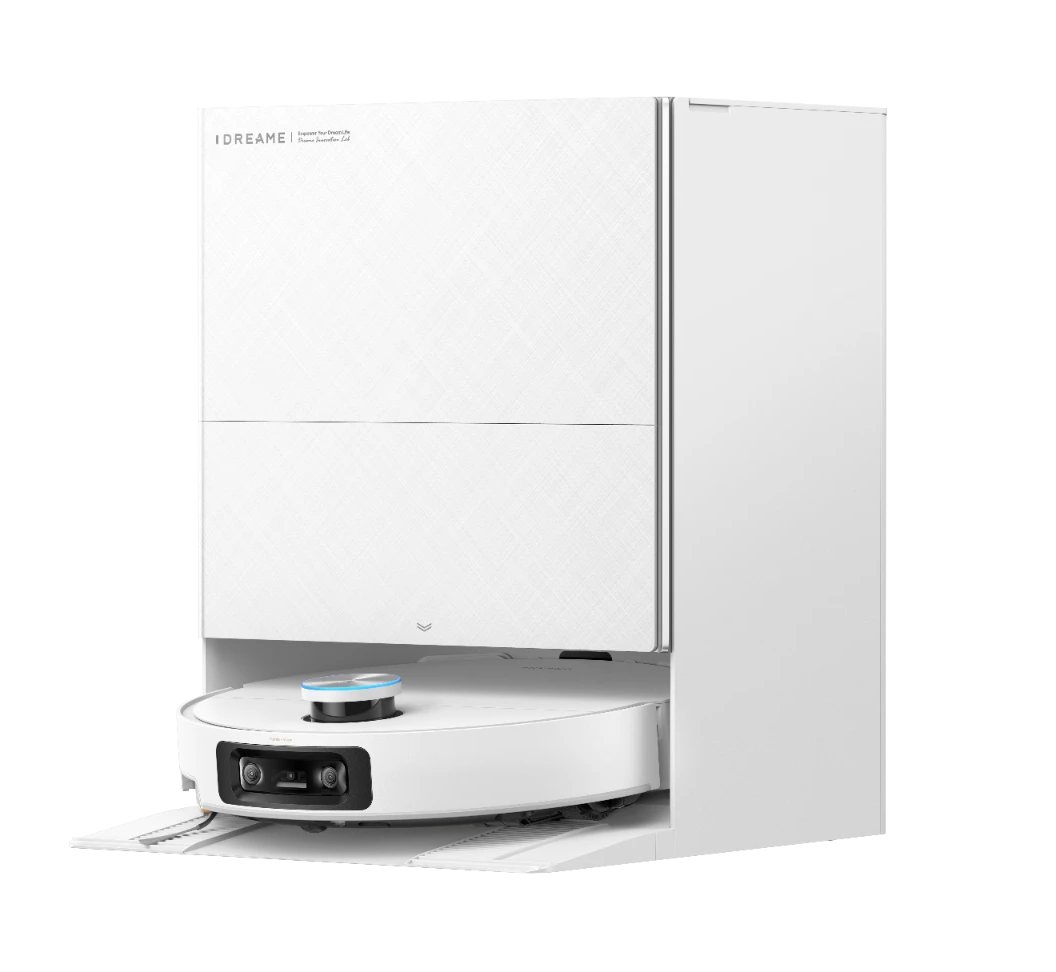
★ Your pick: Dreame
Crams the same huge suction, anti-tangle roller, and self-emptying dock into a machine that usually undercuts Roborock on price.
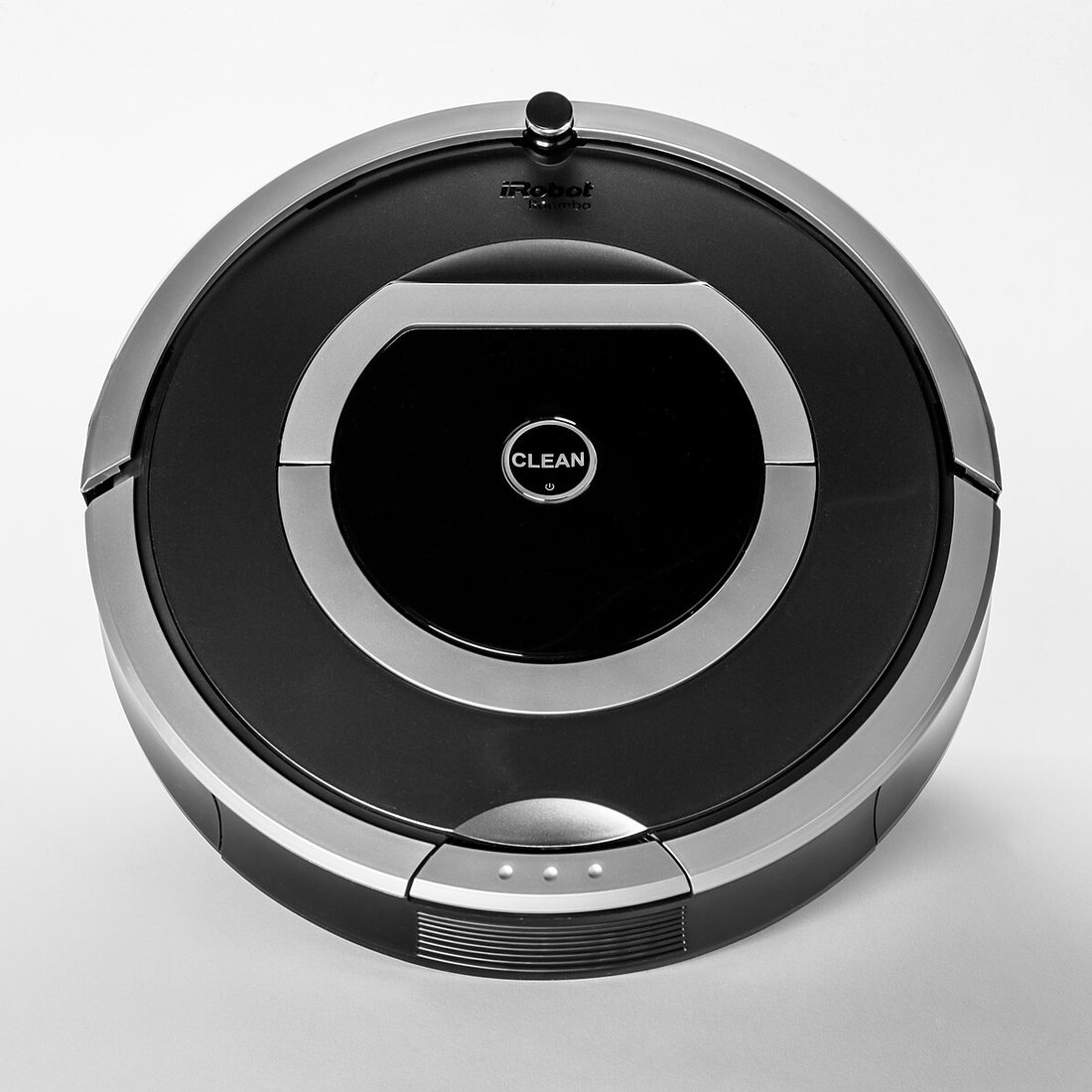
★ Your pick: iRobot Roomba
The original twin-rubber-brush design pet owners trust, with the widest lineup and easiest parts and service.
👑 Our Top Pick — Best Overall Value
Shark
Strong pet-hair pickup and a self-cleaning brushroll for far less than the flagships.
Opens on our Top Pick. Tap an option to see the best match for you.
Why Pet Hair Wraps a Robot Vacuum’s Brush and Kills It
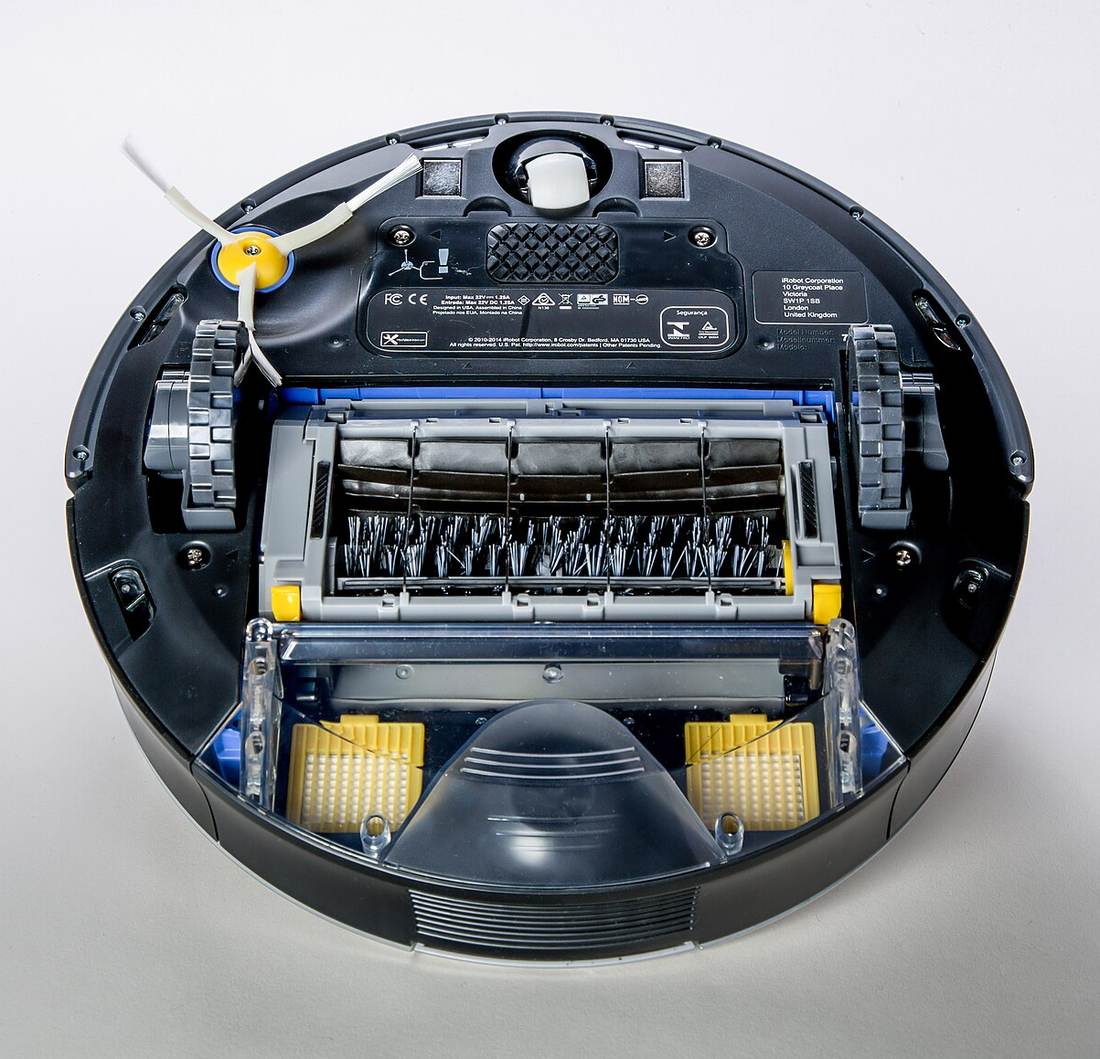
Before you spend a dollar, it helps to see exactly what goes wrong, because once you understand it, the whole shopping list rearranges itself.
Flip a lot of older robot vacuums over and you’ll find a brushroll covered in stiff nylon bristles, plus a spinning side brush on a little arm. Those bristles were designed decades ago to dig crumbs and dust out of carpet, and for that they’re fine. The problem is what happens when a long hair meets a spinning bristle brush. The hair catches on a bristle, the brush keeps turning, and the strand winds around and around the roller. Add a hundred more strands a day from a shedding pet, and within a week you’ve got a tight, felted collar of fur choking the brush.
Once that collar forms, everything gets worse at once. The brush can’t spin freely, so it stops flicking debris up into the suction. The motor works harder and the battery drains faster. And the robot starts smearing that fur rope around instead of picking anything up. That’s the exact moment people decide their robot is “junk” and shove it in a closet, when really it was just the wrong brush for the job.
So the real question when you compare any two robots isn’t “which sucks harder.” It’s “when my dog’s fur hits that brush, does it slide off toward the bin, or does it strangle the roller?” Everything below flows from that one idea.
What Actually Matters When You Buy for a Shedding Pet
Forget the marketing checklist for a second. In a real home with a real animal, only a handful of things decide whether a robot vacuum earns its keep. Here they are in the order that actually matters, with the honest trade-offs on each.
The Anti-Tangle Rubber Roller Beats a Bristle Brush
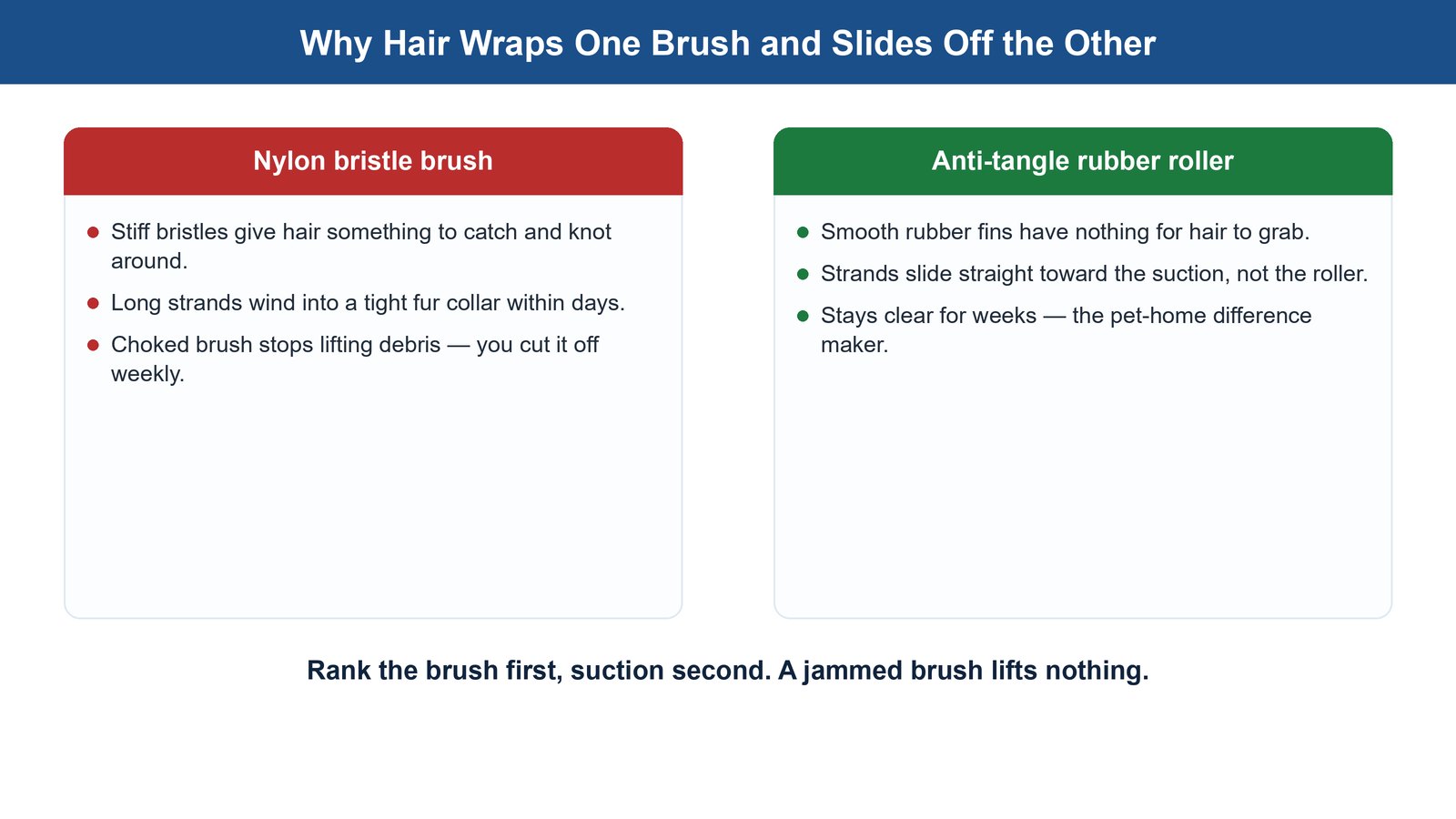
This is the whole ballgame, so it goes first. Instead of nylon bristles, the best pet robots use a roller made of soft rubber fins or ridges, or a brushroll the machine cleans itself. Rubber doesn’t give hair anything to knot around. Strands hit the smooth fins and get swept straight toward the suction channel rather than winding into a rope. iRobot has built its Roomba brushes this way for years, calling them dual multi-surface rubber brushes, and the anti-tangle idea has since spread across Roborock, Dreame, and Shark’s pet-focused models.
You don’t need to memorize brand names to check for this. Read the product page and look for the words “anti-tangle,” “tangle-free,” “rubber,” or “self-cleaning brushroll.” If a robot is proudly showing you a photo of stiff bristles, or says nothing about tangling at all, treat that as a warning sign for a pet home. This one feature separates a robot you’ll still love in six months from one you’ll be cutting hair off of every Sunday.
Suction in Pascals and What the Number Really Buys You
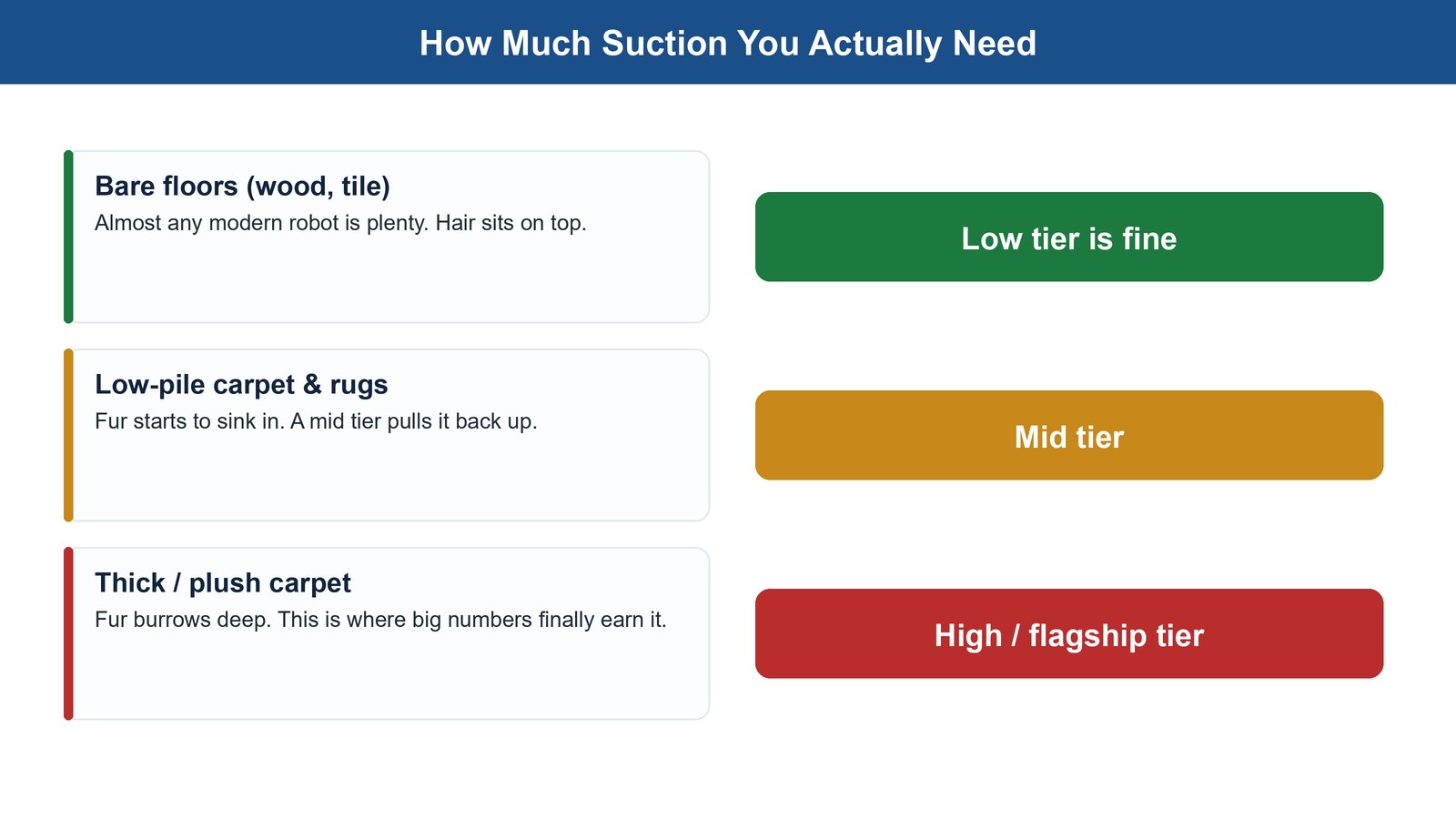
Suction is measured in Pascals, written as Pa, and it’s the number brands shout loudest. It matters, but not the way the ads imply. On bare floors, hair and dust sit right on top, so almost any modern robot, even an entry-level one, has more than enough pull. Where suction earns its money is carpet and rugs, where fur works its way down between the fibers and has to be dragged back out.
Here’s a durable way to think about the tiers instead of chasing one giant number. Entry robots tend to advertise a few thousand Pa, mid-range models land in the mid-thousands, and flagships now claim ten thousand Pa and up, with a few marketed above twenty thousand. More is genuinely better on thick carpet. But be a little skeptical of the biggest headline figures, because there’s no single standard test, so brands measure in whatever way flatters them most.
A Self-Emptying Base Is Worth It in a Pet Home
A robot vacuum’s onboard bin is tiny, often around a third of a liter, because the whole machine has to be short enough to fit under your couch. In a house without pets, you might empty it twice a week. With a heavy shedder, that little bin can fill in a single run, and a full bin means the robot stops picking up.
A self-emptying base fixes this. When the robot returns to dock, the base sucks the bin’s contents up into a large sealed bag, often advertised to hold somewhere around 60 days of debris for a normal home. With pets it’s less, but you’re still going weeks between touching it instead of days. For allergy sufferers, sealing the fur into a bag also means you’re not shaking a cloud of dander into the air every time you empty it by hand.
Dustbin Size, Filters, and Allergen Capture
If you skip the self-empty base, the size of the onboard bin becomes the thing you’ll notice daily. A slightly larger bin means fewer mid-clean stops and fewer trips to the trash. It’s an unglamorous spec that quietly decides how hands-off your robot really feels.
Filters matter more with pets than most people realize, because it isn’t just hair you’re capturing, it’s dander, the flaky skin that actually triggers allergies. A robot with a well-sealed, high-grade filter traps that fine stuff instead of blowing it back out the exhaust and around the room. If anyone in the house is allergic, a good filter is not optional, it’s half the reason you’re buying the thing. Keeping a pet home fresh goes beyond the floor, of course, and if litter box smell is your other battle, our guide to the best cat litter for odor control tackles that side of it.
Mopping Is a Bonus, Not the Main Event
Almost every new robot now offers to mop, and it’s easy to get seduced by the idea of one machine that does everything. A mop is genuinely nice for a quick daily freshen-up on sealed hard floors, wiping away paw prints and the light film that pets track in. But be clear-eyed about what a mop cannot do: it does absolutely nothing for embedded pet hair, and a lightly damp pad won’t scrub a real dried-on mess.
So treat mopping as a tiebreaker, never a headline. If two robots are close and one mops well, sure, take the mop. But never pick a worse brush or weaker suction just to get a mopping feature, because the vacuuming is the job you actually bought a pet robot to do.
Navigation and How It Handles Pet Messes
How a robot finds its way around decides whether it cleans your whole floor or bumps around missing spots. The better models use a laser system called lidar to build a real map of your home, so they drive in tidy rows, remember your rooms, and let you send them to just the kitchen from an app. Cheaper robots that bounce around semi-randomly still work, they just take longer and miss more.
For pet owners there’s one more navigation feature worth its weight in gold: obstacle avoidance that dodges solid objects, especially pet waste. A robot that plows through a puddle an un-housetrained puppy left behind will paint it across every floor in the house, and that is a genuinely awful night. The better robots use a camera to spot and steer around such messes. It isn’t perfect, but on this one hazard it’s very much worth having.
The Best Robot Vacuums for Pet Hair Right Now
With the priorities straight, here are the picks. These four brands cover the real range of budgets and needs, and every one of them makes at least one model built around the anti-tangle idea. We’ve named the brand and the tier it fits rather than swearing by a single model number, because the exact model in stock and on sale changes constantly, while the brand’s approach to pet hair stays put.
1 Roborock Is the Premium Pick That Handles Hair Best
If you want the closest thing to “set it and forget it,” Roborock is the brand to beat. Its higher-end models pair some of the strongest suction on the market with genuinely good anti-tangle rollers, sharp lidar mapping, and big multi-function docks that empty the bin, refill the mop, and wash the mop pad for you. For a busy home with a heavy shedder and some carpet, this is the tier that most often just works without drama.
The catch is price. Roborock’s flagship docks are among the most expensive robots you can buy, and the tall all-in-one base needs real floor space. If your budget is tight, the good news is the brand’s cheaper lines still bring the anti-tangle thinking down to a friendlier price, you simply give up the fancier self-washing mop station. For the person who wants the best and will pay for it, Roborock is the safe answer.
2 Dreame Gives You Flagship Features for Less Money
Dreame has made its name by cramming flagship features, huge advertised suction, anti-tangle rollers, self-emptying and self-washing docks, into robots that usually undercut Roborock on price. If you read the premium spec sheet and love it but wince at the sticker, Dreame is where you look next. Feature for feature, it’s often the most machine you can get for the money.
The honest trade-off is polish. Dreame’s app and software have historically been a touch less refined than the very top brands, and the sheer number of similar-sounding models can make choosing a headache. But the hardware punches well above its price, and its pet-focused rollers tangle far less than the old bristle designs. For a value-hunter who still wants the do-everything experience, Dreame is the smart middle path.
3 Shark Is the Trusted Value Pick With a Self-Cleaning Brushroll
Shark is the familiar American name, and it leans hard into pet owners with a brushroll it markets as self-cleaning, designed specifically to shed wrapped hair on its own. Shark’s robots tend to sit at a friendly mid-range price, come with easy-to-reach US customer support, and offer self-emptying bases on many models. For someone who wants a known brand and a fair price without going down a spec rabbit hole, Shark is an easy, low-stress choice.
Where Shark is less flashy is at the very top end. Its navigation and mopping generally aren’t quite as advanced as the premium Chinese brands, and raw suction on some models trails the flagships. But for the core job, sucking up dog and cat hair off floors and low carpet without tangling, a Shark pet model does the work and doesn’t overcomplicate your life.
4 iRobot Roomba Is the Household Name With True Rubber Brushes
Roomba is the original, the name so famous people call every robot vacuum a “Roomba.” Its lasting advantage for pet owners is those twin rubber brushes, which iRobot has refined for years and which genuinely resist tangling. The lineup runs from budget models you empty by hand up to premium versions with a self-emptying base and a mop, so there’s a Roomba at most price points.
Roomba’s honest weak spot lately is value. You often pay a premium for the brand, and on paper a similarly priced Dreame or Roborock may list higher suction or a fancier dock. What you’re buying with Roomba is a long track record, wide availability of parts, and those proven rubber brushes. If brand trust and easy servicing matter more to you than winning the spec sheet, Roomba still earns its place on this list.
How the Top Pet-Hair Robot Vacuums Compare
Here’s the quick side-by-side. Read it as a map of strengths, not a scoreboard, because each brand makes several models and the right one for you depends on your budget and floors.
| Brand | Best for | Anti-tangle brush | Suction tier | Self-empty base | Mop |
|---|---|---|---|---|---|
| Roborock | Premium do-everything homes | Yes, strong | High to flagship | On higher models | Yes, self-washing on top models |
| Dreame | Flagship features on a budget | Yes | High to flagship | On many models | Yes, self-washing on top models |
| Shark | Trusted mid-range value | Yes, self-cleaning brushroll | Mid | On many models | On some models |
| Roomba | Brand trust and proven rubber brushes | Yes, dual rubber brushes | Mid | On higher models | On combo models |
The pattern is clear once you step back. If money is no object and you want the smoothest all-in-one experience, Roborock and Dreame lead, with Dreame doing it for less and Roborock feeling a bit more polished. If you want a trusted, simpler machine at a fair price, Shark and Roomba are the comfortable picks, with Shark usually the better value and Roomba the safer bet for long-term parts and support. There is no single winner, only the winner for your house.
How to Pick by Your Floors and Your Pet
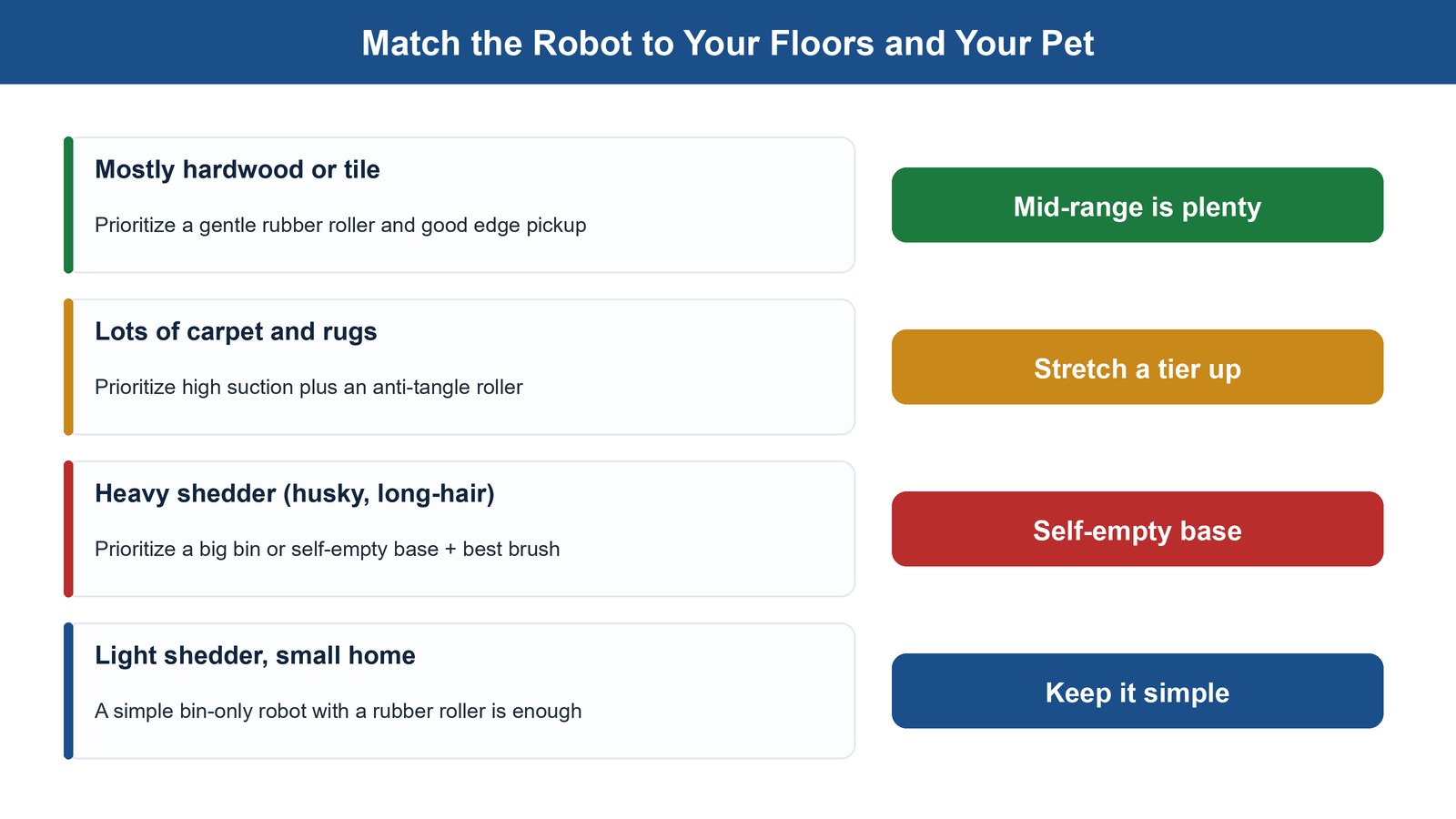
The mistake is asking “what’s the best robot overall.” The better question is “what’s the best robot for my floors and my animal.” Sort yourself by what you’ve actually got underfoot and you’ll skip past most of the noise.
Best Robot Vacuum for Pet Hair on Hardwood Floors
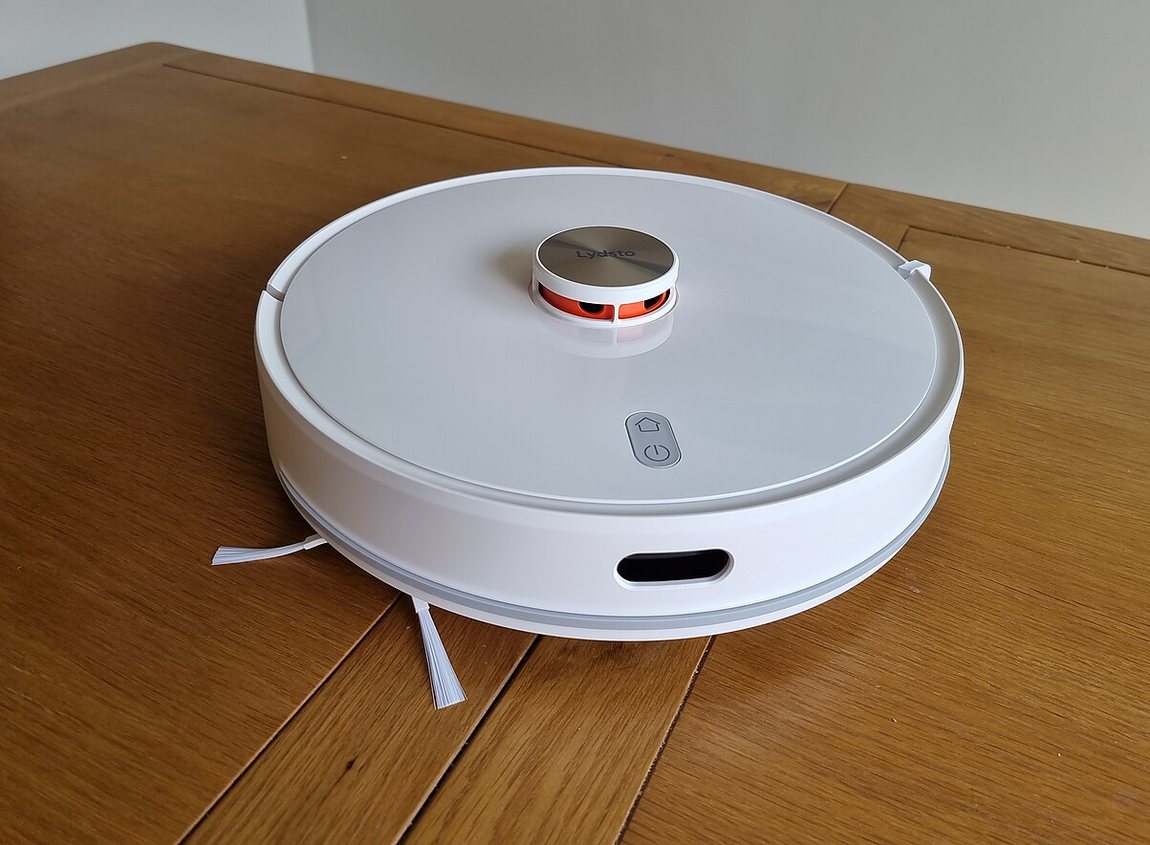
If your home is mostly hardwood, tile, or laminate, good news: this is the easy case. Hair sits right on top of a hard floor, so you don’t need record-breaking suction, and almost any modern robot with an anti-tangle roller will pick it up beautifully. What you should prioritize instead is gentle handling and good edge and corner pickup, because on bare floors the fur gathers along baseboards and in corners.
For this home, the best robot vacuum for pet hair is often a mid-range model rather than the priciest flagship. A rubber roller that won’t scratch, a decent side brush to sweep edges, and a light mop for the daily film of paw prints is a genuinely great combo on hard floors. Save the money you’d spend chasing twenty-thousand-Pascal suction, because a bare floor never needed it.
The Best Pick for Carpet and Rugs
Carpet flips the priorities. Now fur burrows down between the fibers and clings there, so raw suction becomes the star, and this is exactly where those big Pascal numbers finally earn their keep. On medium and thick carpet, you want a higher suction tier and a robot that automatically boosts power when it senses it’s rolled onto a rug.
Watch the roller design here too, because deep carpet is where hair-wrap gets worst, the brush is digging hardest right where the most fur lives. An anti-tangle rubber roller plus strong suction is the winning pair for a carpeted pet home, and it’s worth stretching your budget a tier for it. A weak robot on thick carpet will look like it’s cleaning while leaving most of the embedded fur behind.
Heavy Shedders Versus the Occasional Tumbleweed
Finally, be honest about your specific animal, because a Great Pyrenees and a short-haired cat are completely different jobs. If you have a heavy shedder, a husky, a golden, a long-haired cat, two things jump to the top of your list: a large bin or, better, a self-emptying base so you’re not emptying after every run, and the most tangle-resistant roller you can afford. Volume of hair is your enemy, and those two features fight it directly.
If your pet sheds only lightly, you have far more freedom. A simpler bin-only robot with a good rubber roller will keep a light-shedding home tidy without the cost and floor space of a big dock. Don’t pay for a heavy-duty self-empty tower you don’t need, spend that money on better navigation or a mop instead.
Self-Emptying Bases and the Mopping Trade-Off, Explained
Two features cause more buyer’s remorse and confusion than anything else, so they deserve a closer look before you check out. Both are genuinely useful, and both are oversold.
Why a Self-Emptying Base Changes Pet-Home Life
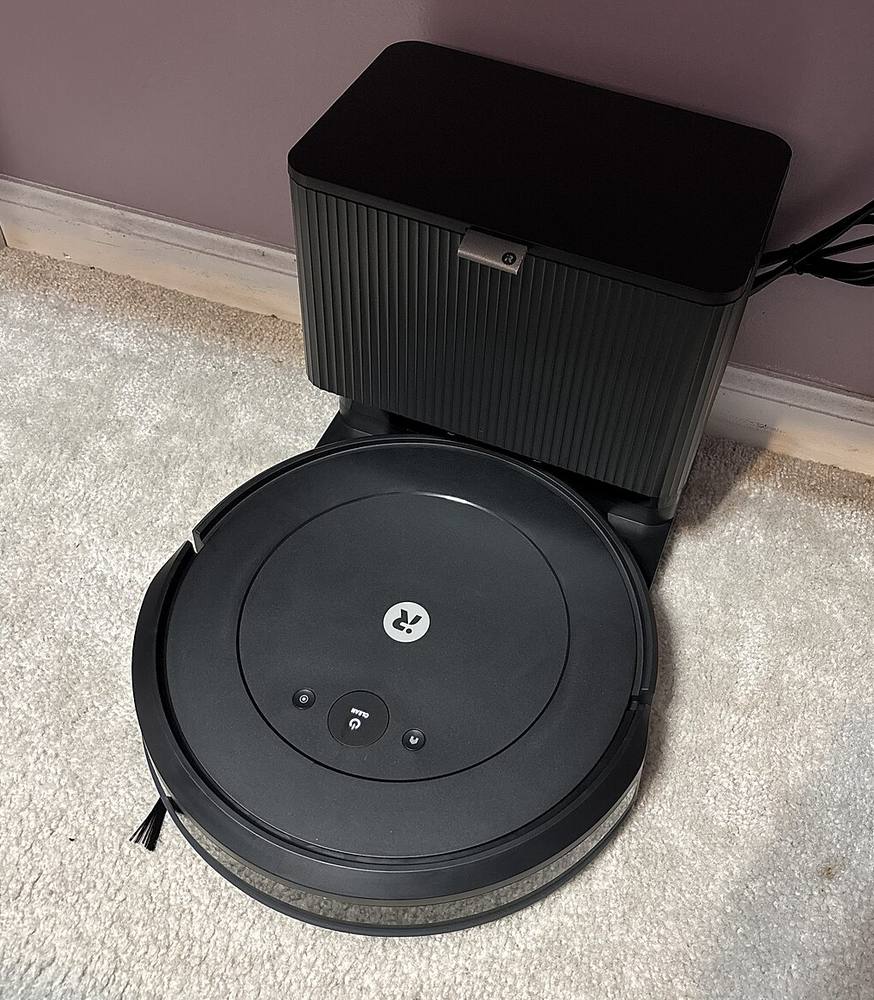
We touched on it above, but it’s worth spelling out why the self-emptying base is close to a must-have specifically for pet owners rather than a luxury. The core issue is the mismatch between a robot’s tiny bin and a pet’s endless hair. Without a base, a heavy shedder can fill that little bin in one pass, and once it’s full the robot is just driving around, not cleaning. You end up babysitting the machine, which defeats the entire point.
With a base, the robot empties itself and simply keeps going, so a big house gets fully cleaned in one session and you deal with the fur maybe every few weeks. That’s the difference between a robot that quietly disappears into your routine and one that constantly demands attention. If your budget can stretch to a self-emptying model and you’ve got real shedding, this is the upgrade to prioritize over almost any other.
When a Mop Helps and When to Skip It
The mop is the feature most likely to make you overspend on the wrong machine, so let’s be blunt about it. On sealed hard floors, a robot mop is a lovely daily touch-up. It lifts the light haze that pets track in, keeps paw prints down, and makes a kitchen feel freshly wiped with zero effort from you. For that gentle maintenance role, it’s a real pleasure.
But a mop is useless against the two things pet owners care about most: embedded hair and stuck-on messes. A thin, lightly damp pad glides right over a dried spill and can’t touch fur woven into carpet. Worse, if you have lots of carpet, a mopping robot needs somewhere to park or lift its wet pad so it doesn’t drag moisture across your rugs. So if your home is mostly carpet, a mop is close to pointless, spend that money on suction and a better brush instead. If you’ve got wide hard floors, enjoy the mop, just know it’s the encore, not the main act.
Frequently Asked Questions
What is the single most important feature in the best robot vacuum for pet hair?
The brush. Specifically, an anti-tangle roller made of rubber fins or a self-cleaning brushroll, rather than old-style nylon bristles. Hair wrapping around the brush is the number one reason robot vacuums fail in pet homes, so a brush that sheds hair toward the suction instead of knotting around itself matters more than any other spec, suction included. Check the product page for the words “anti-tangle,” “tangle-free,” or “self-cleaning brushroll” before you buy.
How much suction, in Pascals, do I actually need for pet hair?
It depends entirely on your floors. On bare floors like hardwood or tile, hair sits on top and almost any modern robot has plenty of suction. On carpet and rugs, fur burrows down and you want more, so a higher suction tier genuinely helps. As a rough guide, mid-thousands of Pascals is fine for light carpet, while thick carpet benefits from the ten-thousand-plus flagship tier. Be a little skeptical of the very biggest advertised numbers, since there’s no shared test standard.
Do I really need a self-emptying base if I have pets?
For a heavy shedder, it’s close to essential. A robot’s onboard bin is tiny and a shedding pet can fill it in a single run, and a full bin means the robot stops actually picking anything up. A self-emptying base dumps that bin into a large sealed bag so you go weeks between emptying instead of days, and it keeps dander sealed away from allergy sufferers. If your pet sheds only lightly, you can skip it and empty the bin by hand.
Is a robot vacuum with a mop worth it for a pet owner?
As a bonus, yes, but never as your main reason to buy. A mop is great for a light daily wipe of paw prints and film on sealed hard floors. It does nothing for embedded pet hair and won’t scrub a dried-on mess, so it should be a tiebreaker between two otherwise similar robots, not the headline feature. If your home is mostly carpet, a mop is close to pointless, put that money toward stronger suction and a better anti-tangle brush.
Will a robot vacuum replace my regular vacuum completely?
For most pet homes, not entirely, and it’s healthier to think of it as daily maintenance rather than a full replacement. A good robot keeps the everyday hair under control so it never builds up, which is a huge quality-of-life win. But for deep cleaning thick carpet, stairs, upholstery, and the car, you’ll still want a strong handheld or upright now and then. The robot’s job is to make those big cleans rare, not to erase them.
How do I stop pet hair from tangling in my robot vacuum?
Start with the right hardware, an anti-tangle rubber roller, since that solves most of it at the source. Then keep a simple routine: pop the roller out and wipe the end caps monthly, snip any hair off the side brush every few weeks, and empty the bin often if you don’t have a self-emptying base. Running smaller zones more frequently, rather than the whole house at once, also means less hair hits the brush in a single pass, which keeps tangling down.
Which brand makes the best robot vacuum for pet hair on a budget?
Dreame and Shark are the value leaders. Dreame packs flagship-style features, high suction, anti-tangle rollers, and self-emptying docks, into robots that usually cost less than the top-tier Roborock and Roomba models. Shark offers a trusted American name with a self-cleaning brushroll and friendly support at a fair mid-range price. Both give you the pet-critical anti-tangle brush without the flagship price, so a value shopper should start there. Just confirm the specific model on sale still lists an anti-tangle roller.
Are robot vacuums safe around pets and their accidents?
Physically, yes, they’re low and slow and most pets ignore them within a few days, though a nervous animal may need a gentle introduction and a quieter model. The real hazard is pet waste. A robot that drives through a mess an un-housetrained pet leaves behind will smear it across every floor, so if that’s a risk in your home, prioritize a model with camera-based obstacle avoidance that steers around solid objects. It isn’t flawless, but on this one problem it’s very much worth having.
About the Author
Elena Brooks
Elena Brooks is the person her group chat texts when something at home stops working or a health trend starts trending. She’s spent years turning that instinct into a job — digging into the research behind everyday questions, calling the experts, and writing up what holds up and what doesn’t. Her beat is wherever curiosity points: kitchens, cars, pets, sleep, money, and the occasional meteor shower.