
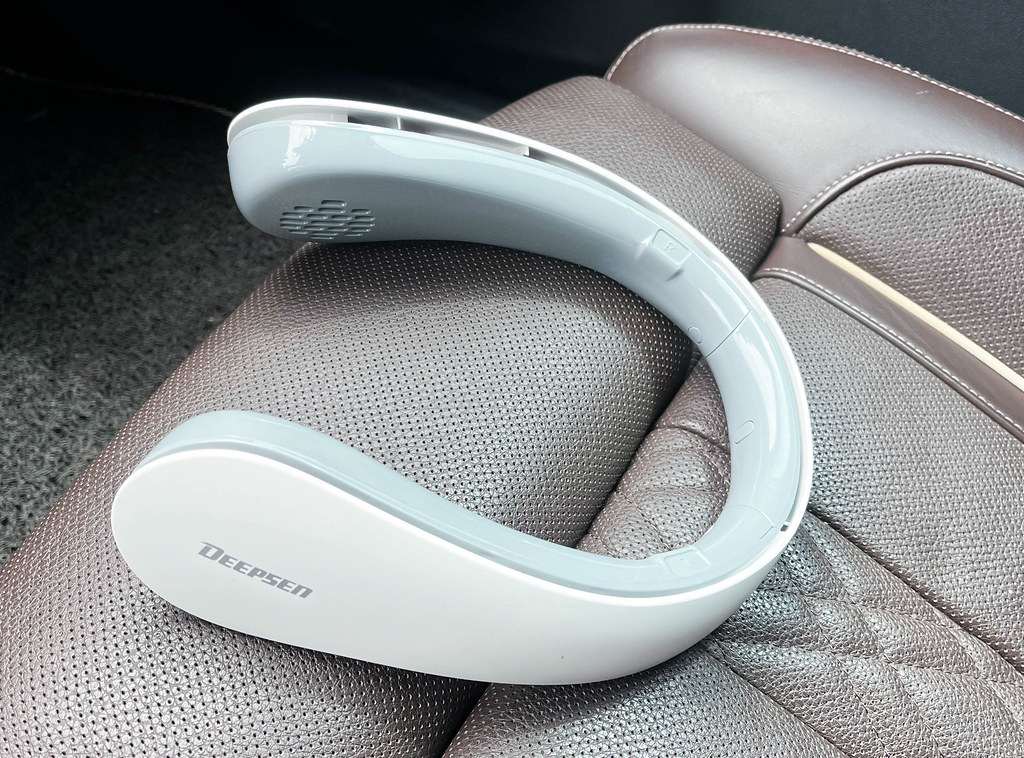
- Neck fans work by speeding up sweat evaporation and moving warm air off your skin, so they only cool you when your sweat can actually evaporate.
- In dry heat below body temperature, they genuinely help. Peer-reviewed testing found face and neck cooling let people stay comfortable at a room temperature of 32C (about 90F).
- In high humidity, the benefit drops sharply because the muggy air can’t absorb your sweat, so you mostly feel airflow, not real cooling.
- Above about 95F/35C, the air is hotter than your skin, so a fan blows heat onto you and speeds dehydration. U.S. safety agencies warn against relying on fans in the mid-90s and above.
- Neck fans with a cooling plate use a thermoelectric (Peltier) chip that gets genuinely cold, but it only touches a small patch of skin and can cut battery life to a few hours.
- The honest verdict: great for a dry, hot commute or a warm office; marginal in humidity; skip it as your main cooling tool in a dangerous heat wave.
It’s the middle of a heat wave, your phone is full of ads for little fans that hang around your neck, and you’re wondering the same thing everyone else is: do neck fans work, or are they just a $30 gadget that looks cooler than it feels? Here’s the straight answer before you scroll another inch. Yes, neck fans work, but only under certain conditions, and the same physics that makes them feel amazing on a dry afternoon makes them nearly useless on a muggy one and genuinely counterproductive in extreme heat. That’s not a dodge. It’s the actual science of how your body cools itself, and once you understand it, you’ll know exactly when to reach for a neck fan and when to leave it in the bag. Most “best neck fan” listicles skip this part entirely and just tell you which one to buy. This guide gives you the honest verdict first, explains why it’s true, and then helps you get the most out of one if you decide it’s worth it.
The Short Answer Before You Buy One
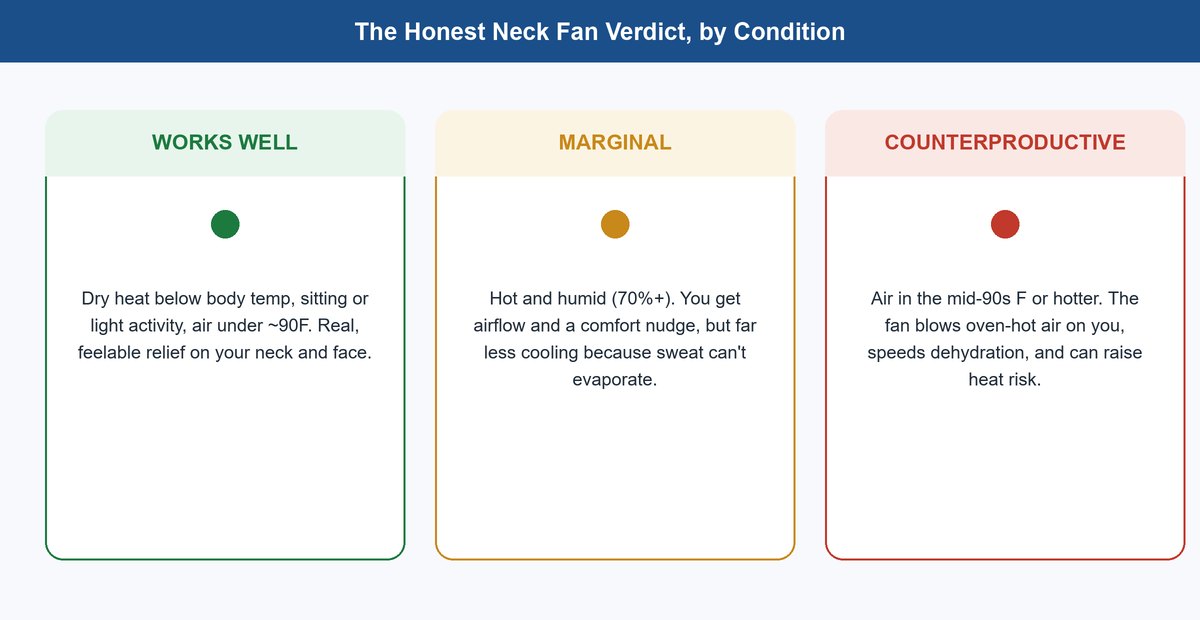
Let’s not bury the verdict. A neck fan is a real comfort tool, not a scam, but it’s a tool with a narrow sweet spot. Think of it like an umbrella: fantastic for the exact conditions it’s built for, useless in others, and occasionally the wrong thing to grab entirely.
The sweet spot is dry-to-moderate heat while you’re sitting still or moving lightly. A warm office, a hot commute, a garden chair in the late afternoon, a theme park on a dry day, walking the dog when it’s 85F and not too sticky. In those moments, a neck fan hangs a steady breeze right under your chin and around your neck, and it feels genuinely good.
Where it falls apart is at the two extremes: soupy humidity and dangerous heat. The reason is the same in both cases, and it comes down to how a fan actually cools a human body, which is not the way most people assume. It doesn’t chill the air. It helps your own sweat do its job, and that job has limits. Keep that one idea in your head and the rest of this article will click into place.
How a Neck Fan Actually Cools You Down
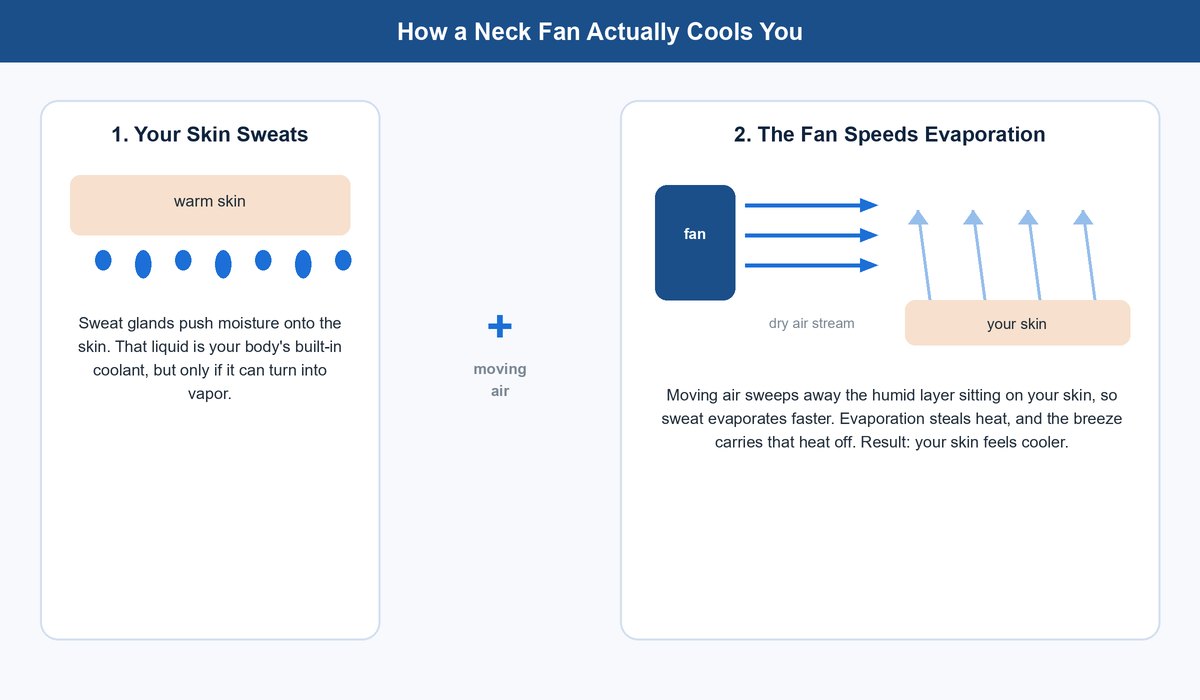
Here’s the thing almost nobody tells you: a fan doesn’t make air colder. Not a ceiling fan, not a box fan, not the one hanging on your neck. If you left a fan running in an empty room, the room would actually get very slightly warmer from the motor. So how does moving air cool you down? Two ways, and both depend on your skin.
The first way is evaporation. When you get hot, you sweat, and that thin layer of moisture on your skin is your body’s built-in coolant. As sweat evaporates, it carries a surprising amount of heat away with it. That’s why stepping out of a pool into a breeze feels freezing even on a warm day. A fan supercharges this process. Moving air sweeps away the humid, saturated layer sitting right against your skin and replaces it with drier air that can soak up more sweat, so evaporation speeds up and pulls heat off you faster. The National Weather Service explains the flip side plainly: when the air’s moisture is high, “the rate of evaporation from the body decreases,” which is exactly why humidity ruins the effect.
The second way is plain old convection. Your skin warms the thin layer of air touching it. A fan blows that warmed air away and brings in cooler air, hauling heat off your body like a tiny wind. This only works while the surrounding air is cooler than your skin, which sits at roughly 92 to 95F. That detail becomes very important once we get to extreme heat.
So a neck fan is really an evaporation-and-convection booster aimed at the most sensation-rich part of your body. When your sweat can evaporate and the air is cooler than your skin, it works beautifully. When either of those two conditions breaks, so does the cooling. Now you can predict its behavior in any weather, which is exactly what we’ll do next.
Do Neck Fans Work in Hot Weather? Usually, Yes

For ordinary hot weather, the kind that makes you uncomfortable but isn’t dangerous, a neck fan earns its keep. When it’s 80 to low-90s F and the humidity isn’t brutal, your sweat evaporates readily and the air is still cooler than your skin. Both cooling mechanisms are firing, so the fan feels like a personal breeze that follows you around.
This isn’t just vibes. Researchers have measured it. A 2022 study on wearable face and neck cooling fans found they let people stay comfortable in warm rooms at temperatures up to 32C, about 90F, that would otherwise feel too hot. The practical takeaway is real money, too: if a neck fan keeps you comfortable, you can nudge the office or bedroom thermostat up a couple of degrees and cut your air-conditioning bill.
And here’s a small bonus for people who sweat easily: heavy sweat is extra fuel for a neck fan, since there’s more moisture for the airflow to evaporate. If your sweating feels excessive even in mild conditions, though, that can point to something worth checking, as we explain in our guide to excessive sweating and hyperhidrosis.
The reason the neck is such a smart target is that a lot of blood flows close to the surface there. Cool the skin over those vessels and you get a quick, pleasant hit of relief that spreads. It’s the same instinct behind pressing a cold drink against your neck on a hot day, except the fan keeps doing it hands-free.
One honest caveat for hot weather: a neck fan cools you, locally, not the room and not your whole body. Your legs, back, and core don’t get much from it. So it’s a comfort device that takes the edge off, not a substitute for shade, water, and rest when you’re genuinely overheating. Used that way, though, on a normal hot day, it’s one of the more satisfying small gadgets you can own.
Do Neck Fans Work in High Humidity? This Is Where They Struggle
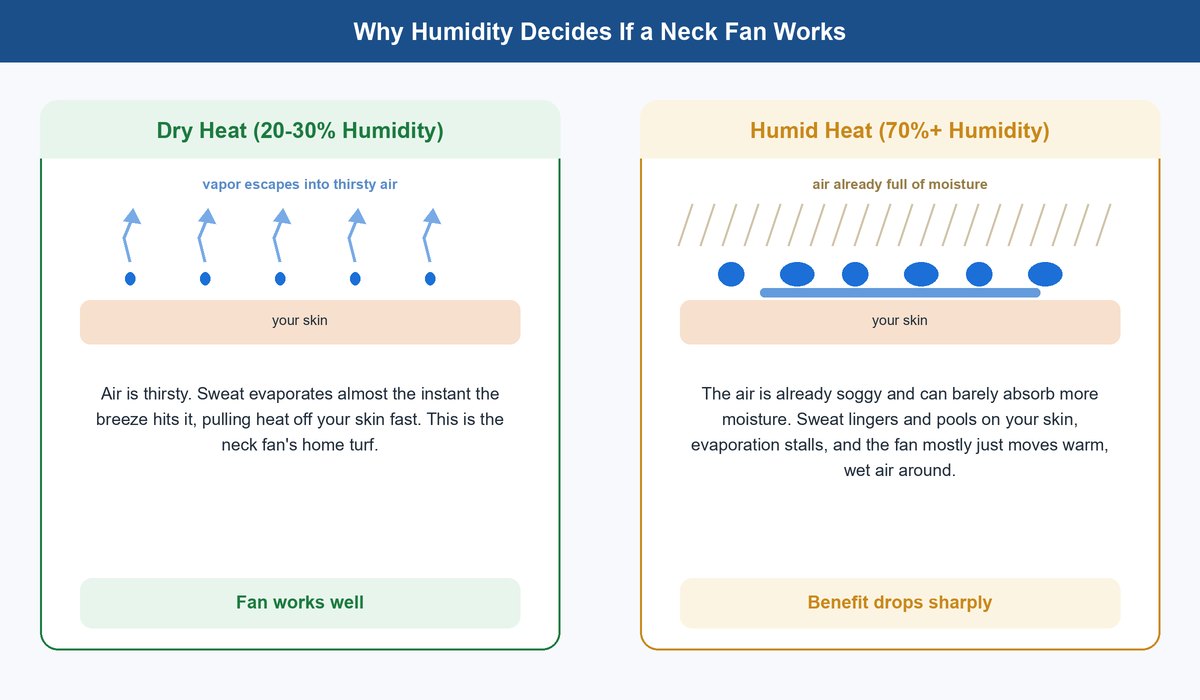
Now we hit the biggest limitation, and it’s the one buyers get burned by most. Do neck fans work in high humidity? Barely. This is the honest weak spot, and it’s baked into the physics.
Remember that the fan’s main trick is speeding evaporation. Evaporation only happens when the surrounding air has room to absorb more moisture. On a dry day, the air is thirsty and drinks your sweat right up. On a humid day, at 70, 80, 90% relative humidity, the air is already nearly saturated. It has almost no capacity left to take on your sweat. So the sweat just sits on your skin, and blowing more soggy air across a soggy surface does very little.
You still feel something, and that’s what fools people. The airflow gives a faint sense of relief and dries a little surface moisture, so a neck fan isn’t completely dead in humidity. But the deep, satisfying cooling you get on a dry day mostly vanishes. This is the gap between “moves air” and “actually cools,” and in a humid climate, a neck fan spends most of its time on the wrong side of it.
If you’re set on personal cooling in a humid climate, this is exactly where a cooling-plate model earns a second look, because a cold plate doesn’t rely on evaporation at all. We’ll get to how well that actually works in a moment. But for a plain bladeless neck fan, humidity is kryptonite, and any product page that promises miracles in muggy heat is selling you past the science.
Do Neck Fans Work in 100-Degree Weather?

Here’s where the answer flips from “not much help” to “put it away and get serious.” Do neck fans work in 100-degree weather? No, and worse, they can make things more dangerous.
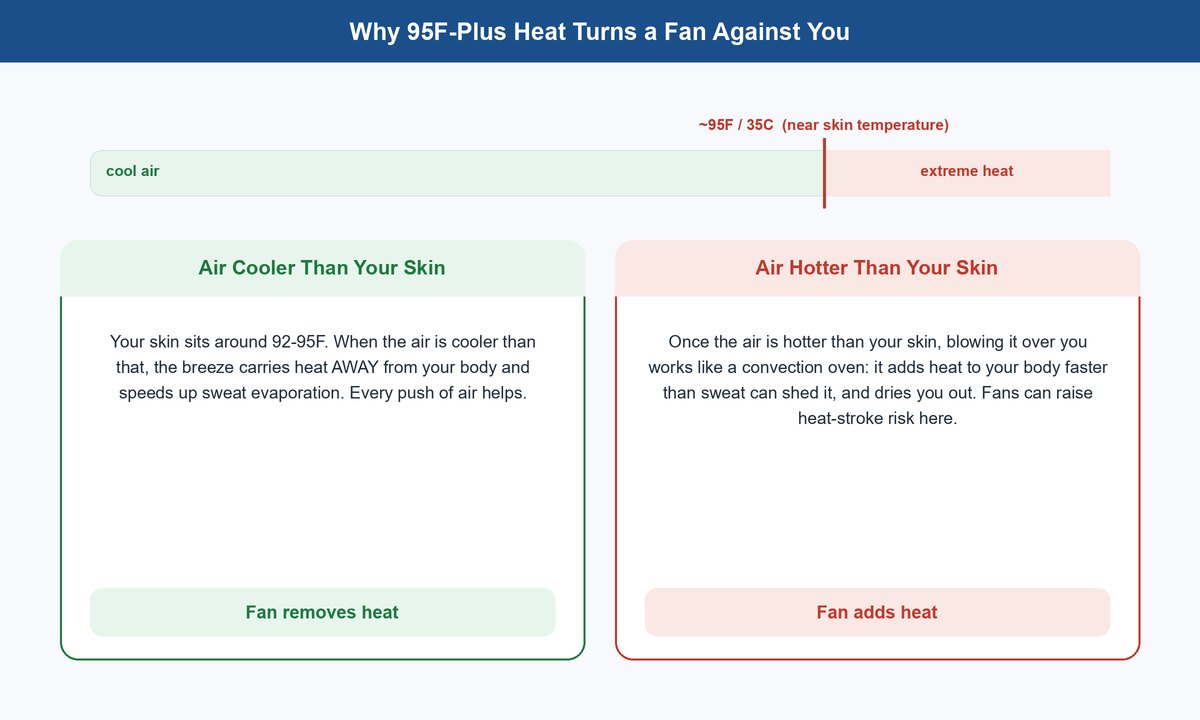
The reason is that skin-temperature line we mentioned. Your skin sits around 92 to 95F. Below that, moving air carries heat away from you. But once the air is hotter than your skin, roughly 95F/35C and up, the physics reverses. Now the fan is blowing air that’s hotter than you onto your body, which adds heat, the same way a convection oven cooks faster by circulating hot air. On top of that, the strong airflow speeds up sweating and dehydration, so you can lose fluids faster while feeling like you’re doing something helpful.
This isn’t a fringe opinion. U.S. safety agencies are explicit about it. The EPA advises: “Do not use electric fans for cooling when the room temperature is in the mid-90s or higher. When it is that hot, electric fans will not prevent heat-related illness.” The National Weather Service goes further for fans aimed at your body: “Do not direct the flow of portable electric fans toward yourself when room temperature is hotter than 90F. The dry blowing air will dehydrate you faster.” And Ready.gov warns not to lean on a fan at all in a real heat emergency, because fans “create air flow and a false sense of comfort, but do not reduce body temperature or prevent heat-related illnesses.”
So the 100-degree answer is a hard one. On a truly hot day, a bladeless neck fan is at best useless and at worst a small liability. The people who love their neck fan are almost always using it in the 80s and low 90s, not at 104F in a parking lot. Match your expectations to the thermometer.
Do Neck Fans With a Cooling Plate Work Better?
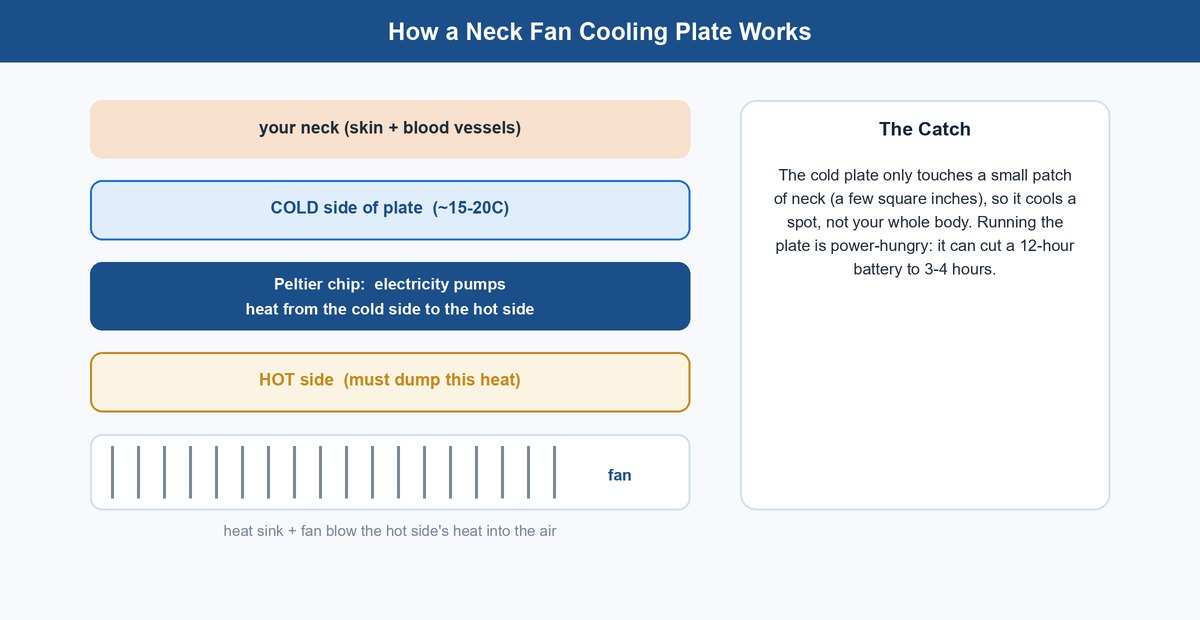
This is the upgrade everyone asks about, and it’s a genuinely different machine. A neck fan with a cooling plate adds a thermoelectric chip, called a Peltier module, that gets truly cold to the touch instead of just blowing air. The premium example people cite is Sony’s Reon Pocket line, but plenty of cheaper Torras, Coolify, and no-name models now include a plate too.
Here’s how the plate works. Run electricity through a Peltier chip and it pumps heat from one side to the other, so one face turns cold while the other gets hot. The cold face presses against your neck, right over those surface blood vessels, and the little fan and heat sink blow the hot side’s heat away. Because it doesn’t depend on evaporation, a cooling plate keeps working in humidity where a plain fan gives up. That’s its real advantage.
But the plate has two honest limits that product pages rush past. First, contact area. The cold plate is small, a few square inches, so it cools a spot on your neck, not your whole body. It’s a concentrated patch of cold, which feels wonderful for a while but doesn’t lower your core temperature the way shade or AC does. Second, battery. A Peltier chip is power-hungry. Reviewers who push these devices in real heat find the cold effect fades as conditions get more extreme, and running the plate hard can drop a device rated for many hours of fan-only use down to just a few hours with cooling active.
So do cooling-plate neck fans work better? In humidity, yes, meaningfully, because they sidestep the evaporation problem. As all-day cooling in extreme heat, they still can’t beat physics, since a small cold patch can’t offset a 100-degree environment, and the battery won’t last a full brutal afternoon. They’re the best version of the gadget, and they cost the most, but they’re still a comfort tool, not a personal air conditioner.
What Reddit Really Thinks About Neck Fans
If you’ve searched do neck fans work on Reddit, you’ve seen the split, and it’s worth decoding because both camps are right about different things. One group swears by their neck fan for commutes, conventions, and hot kitchens. The other calls it a gimmick that “just blows hot air on you.” The reason they disagree is that they’re describing different conditions and expecting different outcomes.
The happy reviewers are almost always using the fan in moderate, drier heat for comfort while sitting or walking slowly. That’s the sweet spot, and their experience is legitimate. The disappointed reviewers usually fall into one of two buckets: they tried it in high humidity, where evaporation stalls, or they expected it to cool them down like AC during hard activity or extreme heat, where no personal fan can deliver. Their disappointment is also legitimate. Nobody’s lying. They’re just running the same device through very different physics.
The Reddit skepticism you should actually keep is this: a neck fan will not “cool you down” the way an air conditioner does. It won’t drop your body temperature during a workout, it won’t save you at 100F, and in a wet climate it’s a modest breeze at best. The praise you should keep is equally real: for hands-free comfort on a normal hot day, especially indoors or on a dry commute, a lot of people genuinely love theirs and use it constantly. Both things are true at once, which is why the threads never resolve.
How to Get the Most Cooling From Your Neck Fan
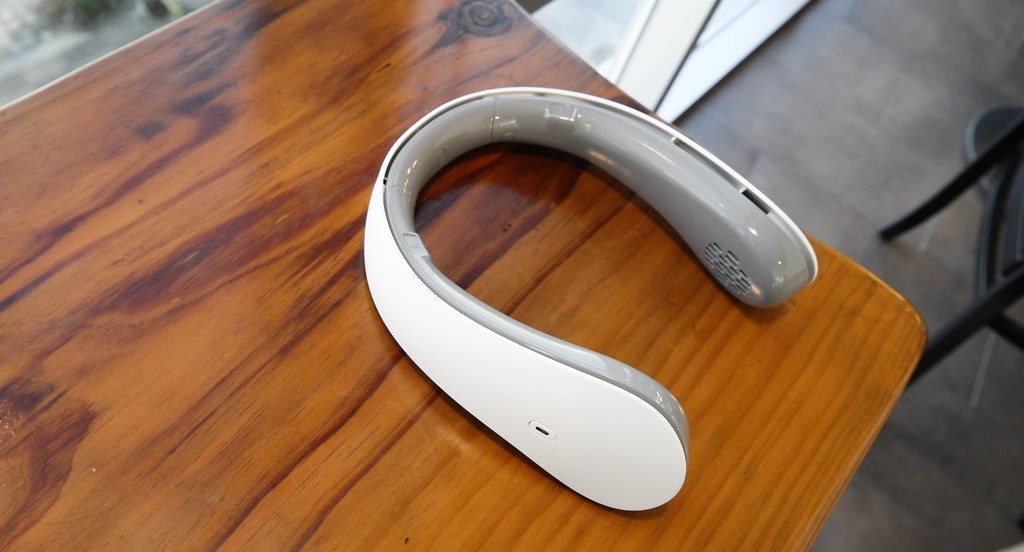
If you’ve decided a neck fan fits your climate and use, a few habits separate “meh” from “actually great.” These are the small levers that matter.
Aim the Airflow at Bare, Slightly Damp Skin
The fan cools by evaporating sweat, so give it sweat to evaporate. Point the vents at exposed skin on your neck and jaw rather than a shirt collar or scarf. If you’re lightly damp from the heat, that’s perfect, don’t towel off completely first. On dry skin the effect is weaker, because there’s less moisture for the airflow to work with.
Use It Before You Overheat, Not After
A neck fan is far better at keeping you comfortable than at rescuing you once you’re drenched and miserable. Switch it on when you first step into the heat so it steadily carries away sweat as it forms. Waiting until you’re already overheated means asking a small breeze to undo a big heat load, which it can’t do.
Pick Fan-Only for Endurance, Plate for Humid Spot Relief
If your model has a cooling plate, be strategic. Fan-only mode can run all day and is all you need in dry heat. Save the battery-hungry plate for humid conditions or short bursts when you really want a hit of cold, since it can cut your runtime to a few hours. Matching the mode to the moment gets you both comfort and battery life.
Keep It Clean and Charged
A quick weekly wipe of the vents and any cooling plate keeps airflow strong and cold transfer efficient. Charge it fully the night before a hot outing. A neck fan that’s clogged with lint or sitting at 20% battery will underperform and then quit right when you want it most.
Layer It With Real Cooling, Don’t Rely on It Alone
Treat the fan as one part of a kit: shade, water, breathable clothing, and the fan together. On a genuinely hot day, the fan handles your neck and face while hydration and shade handle the rest. It shines as a supporting player, not the star. The same “combine your tools” logic makes outdoor time in heat safer, which we get into in our guide on the best time to walk to beat the heat.
A Few Safety Notes About Neck, Hair, and Ears
Neck fans are low-risk, but a couple of small gotchas are worth knowing before you wear one all day.
Long Hair and Bladeless vs. Bladed Designs
Older neck fans had exposed spinning blades, and long hair could get caught in them, which is exactly why bladeless designs took over. If you have long hair, choose a bladeless model, where the air is pulled through hidden channels with no exposed blades to snag. It’s safer and quieter, and it’s now the standard for a reason.
Cold Plates and Sensitive Skin
A thermoelectric plate can get quite cold against your neck. For most people that’s just pleasant, but if you have sensitive skin or a circulation condition, don’t leave a cold plate pressed on one spot for a very long stretch. Give your skin breaks, and if it ever feels numb or uncomfortable, move it or switch to fan-only.
Noise, Ears, and All-Day Wear
The fan sits close to your ears, so cheaper models can be surprisingly buzzy over a long day. If you’re noise-sensitive or plan to wear it in a quiet office, check reviews for how loud it runs at full speed. It’s not a safety issue, just a comfort one that people underestimate until hour three.
Frequently Asked Questions
Do neck fans work as well as a regular fan?
For your neck and face specifically, a good neck fan can feel just as satisfying as a bigger fan, because it’s aimed right at the most sensation-rich skin. What it can’t match is coverage: a box or tower fan cools more of your body and can move enough air to help a whole room, while a neck fan only tends to you. For hands-free personal comfort, though, the neck fan wins on convenience.
Do neck fans actually lower your body temperature?
Not meaningfully. Like any fan, a neck fan helps your sweat evaporate and moves warm air off your skin, which makes you feel cooler, but it doesn’t lower your core body temperature the way rest, shade, cool water, or air conditioning do. That’s an important distinction in real heat: feeling cooler and being safely cooled are not the same thing.
Are cooling-plate neck fans worth the extra money?
If you live somewhere humid, they can be, because the cold plate keeps working when a plain fan stalls. If you live somewhere dry, a regular bladeless fan gives you most of the comfort for less money and much better battery life. Decide based on your climate, not the marketing, and remember the plate cools a small patch, not your whole body.
Why does my neck fan feel like it’s blowing hot air?
Two likely reasons. Either the air around you is hotter than your skin, roughly mid-90s F and up, so the fan really is blowing warm air onto you, or the humidity is so high that your sweat can’t evaporate, so you feel airflow without cooling. In both cases it’s the conditions, not a broken fan. Above the mid-90s, safety agencies actually advise against pointing a fan at yourself.
Can a neck fan help in a heat wave?
Not as your main protection. In dangerous heat, especially in the mid-90s and above, U.S. agencies warn that fans give a false sense of comfort without preventing heat illness, and can speed dehydration. Use air conditioning, shade, hydration, and cool water on your skin instead, and treat the neck fan as a nice-day comfort item only.
How long does a neck fan battery last?
It depends heavily on the mode. On fan-only, many models run 8 to 12 hours or more on a lower speed. Turn on a cooling plate and that can drop to just a few hours, since the thermoelectric chip draws a lot of power. If all-day runtime matters, stick to fan mode and save the plate for short bursts.
Do neck fans work for hot flashes or working in a hot kitchen?
Yes, these are two of their best use cases. Both involve sudden, localized heat while you’re indoors and relatively still, exactly where a hands-free breeze on your neck and face shines. Many people managing hot flashes or working over a stove find a neck fan genuinely helpful, since the humidity is usually manageable and the air is cooler than skin.
About the Author
Elena Brooks
Elena Brooks is the person her group chat texts when something at home stops working or a health trend starts trending. She’s spent years turning that instinct into a job — digging into the research behind everyday questions, calling the experts, and writing up what holds up and what doesn’t. Her beat is wherever curiosity points: kitchens, cars, pets, sleep, money, and the occasional meteor shower.