

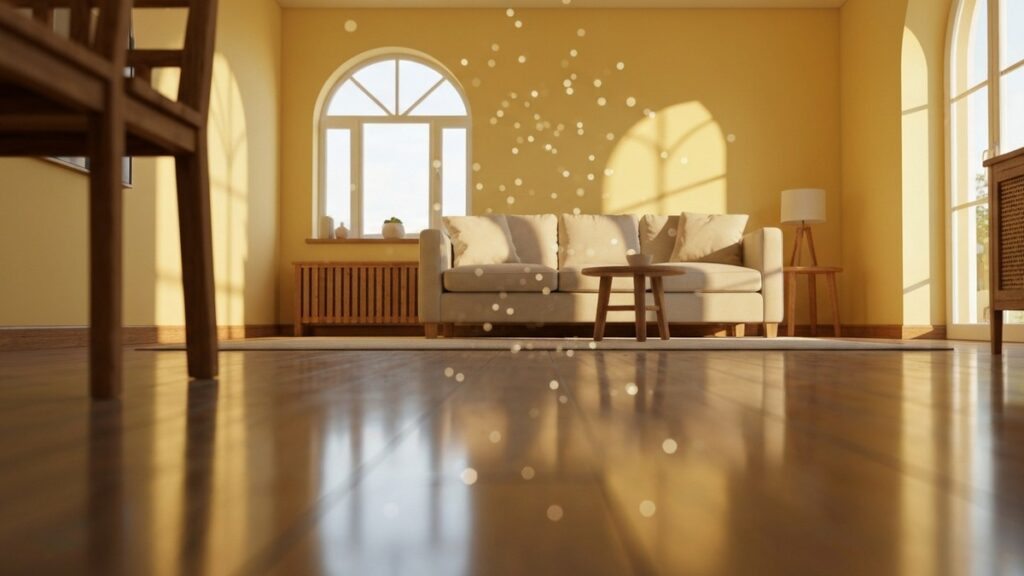
If you keep asking why does my room get so dusty even though you clean it constantly, the answer is part chemistry, part airflow. Household dust is a mix of clothing and carpet fibers, skin flakes and pet dander, dust mites and their waste — and, surprisingly, a large share of soil and particles tracked or blown in from outdoors. A single room gets dustier than the rest when it has lots of textiles, poor airflow, open windows near traffic, dry air, or a clogged HVAC filter recirculating the dust. The good news: a handful of changes — damp dusting, a HEPA vacuum, washing bedding hot, and a better furnace filter — cut it down dramatically.
Key Takeaways
- Dust is a mixture — fibers, skin and dander, dust mites, and (per research) more than half of it originating outdoors as tracked-in soil and infiltrating air particles.
- The “dust is mostly dead skin” claim is a myth; skin is only a minor component, and outdoor material is the bigger share.
- Dust resettles fast because fine particles are light, settle slowly, and get re-suspended by dry dusting and HVAC airflow — so how you clean matters as much as how often.
- One room is dustier because of textiles (bedding, rugs, curtains), carpet, poor ventilation, open windows near a road, dry air, or a clogged/low-grade HVAC filter.
- Best fixes: damp-dust (don’t dry-dust), HEPA-vacuum weekly, wash bedding hot, upgrade to a MERV 13+ filter, keep humidity 30–50%, and reduce clutter and tracked-in dirt.
Few household mysteries are as quietly maddening as the room that’s coated in a fresh gray film two days after you wiped every surface. It can feel like the dust is being manufactured in there. In a sense, some of it is — and a lot of it is sneaking in from outside. Once you understand where dust actually comes from, how it physically moves through a room, and why ordinary cleaning often just relocates it, the fixes that work (and the ones that don’t) make a lot more sense. The rest of this guide walks through the science behind each one.
What Household Dust Is Actually Made Of
Dust isn’t one substance — it’s a constantly replenished blend of whatever’s shedding and drifting through your home. The usual ingredients:
- Fibers from clothing, bedding, towels, carpets, and upholstered furniture, which shed tiny threads every time they’re worn, sat on, or walked across. Soft furnishings are essentially slow-motion lint machines.
- Outdoor soil and particles tracked in on shoes and feet or blown in through windows, doors, and the countless small gaps in a building’s envelope — pollen, mineral dust, road grime, and fine outdoor air pollution.
- Skin flakes and hair from people and pets (dander), a real but modest contributor — not the dominant one most people assume.
- Dust mites and their waste — microscopic arthropods that live deep in bedding, carpet, and upholstery and feed on shed skin, leaving behind allergenic droppings and body fragments.
- Soot and combustion particles from cooking, candles, fireplaces, and outdoor air that infiltrates indoors and mixes into the settled layer.
Here’s the part that surprises people. A frequently cited study by Layton and Beamer, modeling how contaminants accumulate in house dust, estimated that more than 60% of household dust originates outdoors — soil tracked in underfoot on shoes and pet paws, plus airborne particles that infiltrate through windows, doors, and ventilation from outside air. In other words, your room isn’t only manufacturing dust internally; it’s importing the majority of it. That single fact reframes everything about how to fight dust: if most of it comes from outside, then stopping it at the door (mats, a shoes-off habit) and filtering incoming air do more than any amount of furious wiping.
The “Dust Is Mostly Dead Skin” Myth
You’ve probably heard that household dust is mostly — even 80% — dead human skin. It’s one of those facts that sounds gross enough to be true, and it isn’t. Dead skin is only one minor component of dust, not the bulk of it. The Layton and Beamer research above points the other direction entirely: the larger share of household dust is fabric fibers plus outdoor-origin material like tracked-in soil and infiltrating outdoor particles. The “80% dead skin” figure has circulated for decades without solid sourcing behind it, and it doesn’t survive contact with the actual composition data.
Skin still matters — just not in the way the myth implies. The flakes we shed are what dust mites eat, so they’re the fuel for one of the more allergenic ingredients in dust rather than the main mass of it. The honest takeaway is that “your bedroom is basically a pile of your own skin” is folklore. Most of what you wipe off a shelf is fabric fiber and the outside world working its way in.
The Physics of Why Dust Keeps Coming Back
It feels personal — you clean, and within days the gray film is back — but it’s just physics, and understanding it tells you exactly which cleaning methods actually work.
Start with particle size. The dust that recoats your surfaces is dominated by very fine particles, often just a few microns across (a micron is a thousandth of a millimeter). Because air resistance scales with surface area while weight scales with volume, these tiny particles are extremely light relative to the drag the air exerts on them. The result is that they settle slowly and stay airborne for a long time — a fine particle stirred into the air can drift for many minutes to hours before it finally lands. So at any given moment, a portion of your room’s dust isn’t on surfaces at all; it’s suspended in the air, waiting to settle the instant the air goes still. Wipe the shelf, and the cloud that was floating overhead simply lands on your freshly cleaned surface.
Now add re-suspension. Settled dust doesn’t stay settled. Every disturbance — footsteps, a closing door, plumping a pillow, and especially the forced air from an HVAC system or fan — kicks fine particles back into the air, where they ride the currents and resettle somewhere else. This is exactly why a dry cloth or feather duster is counterproductive: instead of removing dust, it launches a settled layer back into the air to recoat the room. It’s also why dust seems to bloom when the furnace or air conditioning kicks on — moving air re-suspends what had settled near vents and in ducts.
Finally, there’s static. Many household surfaces — screens, plastics, painted shelves — carry a small electrostatic charge, and fine dust particles are easily polarized. That charge attracts airborne particles and makes them cling, so a surface can pull dust out of the air and hold it, then re-coat almost as soon as you’ve wiped it. Put the three together — slow-settling fine particles, constant re-suspension by airflow, and static attraction — and you get a room that re-dusts itself quickly no matter how diligent you are. The lesson isn’t to clean more often; it’s to clean in ways that capture dust (damp cloths, HEPA filtration) rather than scatter it, and to cut off the airflow and sources that keep resupplying it.
Why One Room Gets Dustier Than the Rest
If one room always seems worse, it usually has a few of these working against it. Here are the six factors that turn an ordinary room into a dust magnet, roughly in order of how much they matter.
1 Lots of Textiles Shedding and Storing Fibers
Bedrooms in particular are loaded with bedding, rugs, curtains, throw pillows, and upholstered furniture. Every one of those soft surfaces sheds tiny fibers as it’s worn, sat on, or brushed past, so the room is quietly manufacturing dust all day.
Worse, those same fabrics act as reservoirs. They soak up settled dust deep in their weave and then puff a little of it back into the air every time you sit down, shake a blanket, or plump a pillow. The more soft furnishings a room has, the more it both makes and re-releases dust.
2 Carpet Instead of Hard Floors
Carpet is a deep reservoir that holds far more dust and allergens than a hard surface. Particles sift down between the fibers where a cloth can’t reach, and each footstep squeezes a fresh puff of them back up into the air you breathe.
Hard floors hold only a fraction as much, and they let you actually remove dust by wiping or damp-mopping instead of grinding it deeper. A carpeted room will almost always read dustier than an identical room with wood or tile.
3 Poor Airflow and Ventilation
Still, unfiltered air lets fine particles linger and settle in place. A room that never circulates its air through a filter has no mechanism to actually remove airborne dust, so whatever is shed or drifts in simply accumulates.
This is why a spare room or a closed-off study can feel dustier than a busy, well-ventilated space, even though nobody’s in it stirring things up. Without moving air through a filter, dust has nowhere to go but down onto your surfaces.
4 Open Windows Near a Busy Road
Because most household dust comes from outside, a window facing traffic, bare ground, or a construction site pulls in a steady supply of soil, road grime, and fine particulates. The dustier the view, the dustier the room.
The effect spikes on windy or high-pollen days, when outdoor air carries far more suspended material. A single open window on the wrong side of the house can out-dust every cleaning habit you have.
5 Dry Air That Keeps Dust Airborne
Low humidity keeps fine particles aloft longer and makes static cling worse. In bone-dry air, dust drifts, resettles, and recoats surfaces far more readily than it does in moderately humid air.
That’s why dust often feels worse in winter, when heating systems dry the indoor air right out. Nudging humidity up toward a comfortable middle band helps particles settle where you can capture them instead of endlessly circulating.
6 A Clogged or Low-Grade HVAC Filter
Heating and cooling systems are supposed to trap dust as air passes through them. But a dirty or low-efficiency filter lets fine particles slip straight past and blows them back into the room.
At that point the system flips from a dust-removing machine into a dust-circulating one, spreading particles to every vent it serves. A clogged filter is one of the most common reasons a whole room, or a whole home, suddenly seems dustier than it used to.
Room-by-Room: Where Dust Hides
Dust doesn’t distribute evenly. It concentrates wherever fibers shed, where air slows down, and where surfaces are rarely touched. Knowing the hotspots tells you where the payoff of cleaning is highest.
- The bedroom is usually the worst room in the house, and the reason is fabric density: a bed is essentially a giant dust reservoir of sheets, pillows, and a mattress, all shedding fiber and harboring skin flakes and mites. Add rugs, curtains, and an upholstered headboard and you have the most textile-heavy room you sleep in for eight hours a night.
- Living rooms collect dust in the sofa, throw blankets, and especially under and behind furniture, where air stagnates and settled particles are rarely disturbed or removed — until you move the couch and find a gray drift behind it.
- Around HVAC vents and returns, dust streaks the ceiling and walls because that’s where the most air moves — carrying and depositing particles — and where re-suspension is strongest.
- High and low still-air zones — the tops of cabinets, ceiling fan blades, baseboards, and window tracks — accumulate heavily because nothing disturbs or wipes them, so the slow rain of settling particles just piles up over months.
- Electronics and screens draw dust out of the air with static charge and the warm airflow of their cooling fans, which is why a TV or monitor furs over faster than the wall beside it.
MERV vs. HEPA, Explained
Two filter ratings come up constantly in dust advice — MERV and HEPA — and they aren’t the same thing. Understanding how each one actually traps particles tells you what to buy and what to expect.
MERV (Minimum Efficiency Reporting Value) is the standard rating for the filters that go into home HVAC systems, scored on a scale of 1 to 16 based on how effectively the filter captures particles roughly 0.3 to 10 microns in size. The higher the number, the finer the particles it catches: a low MERV (1–4) stops only large lint and hair, while a higher MERV traps progressively finer dust, smoke, and fine particulate. For fine household dust, the EPA notes that MERV 13 or higher is generally recommended. But there’s a real trade-off: a denser, higher-MERV filter restricts airflow more, and if you install one too restrictive for your particular blower, the system has to work harder, moves less air, and can actually run less efficiently. The practical rule is to use the highest MERV your system is rated to handle — often MERV 13 in modern systems — and to change it on schedule, because a clogged filter chokes airflow and stops capturing well no matter how high its rating.
HEPA (High-Efficiency Particulate Air) is a much stricter standard used in good vacuums and portable air purifiers: a true HEPA filter captures about 99.97% of particles at 0.3 microns. Counterintuitively, 0.3 microns is the hardest size to catch — the filter does even better on particles both larger and smaller. That’s because a HEPA filter is not a fine sieve with holes smaller than the dust; it works through three physical mechanisms at once:
- Impaction — larger, heavier particles have too much momentum to follow the air as it weaves around the filter fibers, so they slam straight into a fiber and stick.
- Interception — mid-size particles riding the airstream pass close enough to a fiber that they brush against it and are caught, even though they were never going to hit it head-on.
- Diffusion — the smallest particles get knocked around randomly by collisions with air molecules (Brownian motion), zig-zagging so erratically that they wander into a fiber and stick.
Because impaction and interception handle big particles well and diffusion handles tiny ones well, the toughest particles to catch are the in-between size around 0.3 microns — which is precisely why the HEPA standard is defined there. The takeaway for dust: a HEPA vacuum captures the fine particles it picks up instead of blasting them back out the exhaust, and a HEPA air purifier pulls fine particles out of the air before they settle. Neither is a substitute for source control, but both are far more capable on fine dust than a basic filter.
How to Actually Reduce Dust
You can’t eliminate dust, but these expert-backed habits cut it substantially — and each one works because of the mechanisms above, not magic. The first few give the biggest return, so start at the top.
Damp-Dust Instead of Dry-Dusting
A dry cloth or feather duster just re-suspends the settled layer, launching fine particles into the air to land somewhere else minutes later. You feel productive, but you’ve mostly relocated the dust to a surface you’ll wipe next week.
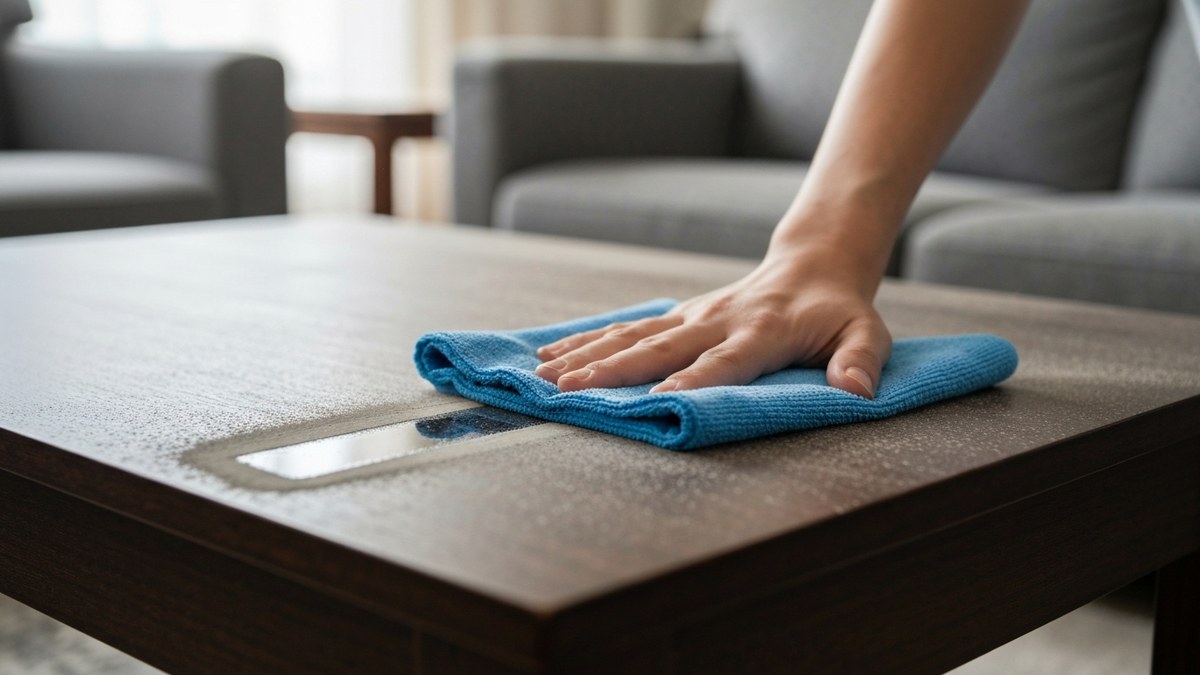
A slightly damp microfiber cloth physically traps and holds dust in its fibers: the moisture defeats static cling and gives particles something to bind to, so the dust leaves with the cloth instead of returning to the room. The EPA recommends damp cloths for exactly this reason.
Vacuum Weekly With a HEPA-Filter Vacuum
Carpet and upholstery are dust reservoirs, and a standard vacuum can stir as much fine dust into the air as it removes, because the finest particles pass straight through the bag and out the exhaust. That’s the gray haze you sometimes see in a sunbeam right after vacuuming.
A HEPA vacuum captures those fine particles instead of recirculating them, which is the whole point on the surfaces that hold the most dust. Weekly is the sweet spot for the rooms you use most, since it clears the reservoir before it builds back to a problem.
Wash Bedding Weekly in Hot Water
Hot water around 130°F does two jobs at once: it washes away accumulated skin flakes and dust, and the heat is hot enough to kill dust mites, which survive ordinary cold-water washing. A cold wash simply gives the mites a bath and sends them home.
Bedding is one of the single largest dust-and-allergen reservoirs in the home, so resetting it weekly removes the source rather than chasing the symptom. If anyone in the house has allergies, this one habit often makes the biggest felt difference.
Upgrade and Replace Your HVAC Filter
Filters are rated by MERV from 1 to 16, and a higher rating captures finer particles. The EPA suggests choosing a filter rated at least MERV 13, or as high as your system is designed to handle, and changing it on schedule.
The mechanism matters: a clean, adequately rated filter pulls fine dust out of the air on every pass, while a clogged or low-grade one simply recirculates it. Don’t over-restrict the blower, though; an excessively dense filter for your system strains airflow and can do more harm than good.
Run a HEPA Air Purifier in Problem Rooms
A portable true-HEPA air cleaner captures airborne fine particles via impaction, interception, and diffusion before they settle on surfaces. It’s especially useful in a room with poor ventilation or an open window facing a dusty view.
Treat it as a helpful supplement to, not a replacement for, cleaning and ventilation. It can only clean the air that cycles through it, so it can’t capture dust that’s already settled or keep up with dust being shed faster than the air turns over.
Control Indoor Humidity to 30 to 50 Percent
This range threads a needle. It’s dry enough to discourage dust mites and mold, which need higher humidity to survive, yet humid enough to reduce static cling and help fine particles settle predictably so you can actually capture them.
Let the air get too dry and dust drifts endlessly; let it get too damp and you invite mites and mildew. A cheap hygrometer takes the guesswork out and tells you whether you need a humidifier or a dehumidifier for the season.
Cut Clutter and Stop Dirt at the Door
Fewer knick-knacks and soft furnishings means fewer surfaces shedding fiber and collecting dust. Every open shelf of trinkets is a set of little dust shelves you have to keep wiping.
And because most household dust comes from outdoors, doormats and a shoes-off habit intercept a large share of tracked-in soil before it ever enters the room — the single highest-leverage move given where dust actually originates. Grooming pets and keeping them off the bed cuts dander at its source too.
The Biology of Dust Mites — and Why the Fixes Work
Dust mites deserve their own section, because they’re the ingredient most responsible for the health side of dust, and their biology explains exactly why the recommended habits work. Dust mites are microscopic relatives of spiders that live in the same fabric reservoirs as dust — mattresses, pillows, bedding, carpet, and upholstery. They don’t bite or burrow into skin; they simply eat the flakes of shed human and pet skin that collect in those fabrics, which is the connection back to skin in dust.
Crucially, mites have narrow environmental requirements. They thrive in warmth — around 70°F and above — and they depend on humidity above roughly 50%, because they absorb moisture from the air rather than drinking, and dry conditions cause them to desiccate and die back. That biology is the entire reason the AAFA and others recommend keeping indoor humidity between 30% and 50%: it’s not arbitrary, it’s the band where mite populations struggle to sustain themselves.
The allergic reaction, meanwhile, isn’t to the mites themselves but to proteins in their droppings and in the fragments of dead mites — allergens that accumulate in fabric and become airborne when the fabric is disturbed. Understanding that makes the rest of the advice click into place: washing bedding in hot water around 130°F works because that temperature both kills live mites and rinses away the accumulated allergenic droppings; allergen-barrier covers on mattresses and pillows work by sealing the reservoir so the proteins can’t escape into the air you breathe; and HEPA vacuuming works because it removes the fine allergen-laden particles from carpet without blowing them back into the room. Every one of those steps targets a specific link in the mite’s life cycle rather than just moving dust around.
A Quick Note on Dust and Allergies
Dust mites — and the proteins in their waste and body fragments — are a leading indoor trigger for allergy and asthma symptoms like sneezing, a runny or stuffy nose, and itchy eyes. The dust-reducing steps above (hot-water bedding washes, HEPA vacuuming, controlling humidity, allergen-barrier mattress and pillow covers) also lower mite and allergen levels. This is general home-care information, not medical advice — if dust seems to trigger persistent symptoms, talk to a healthcare professional.
If indoor air quality is on your mind, it’s worth knowing it affects more than your sinuses — our piece on whether cleaner air can sharpen your thinking digs into that, and our guide to hidden asthma triggers covers the dust-and-allergen angle in more depth. The American Lung Association is another solid, non-commercial reference on reducing indoor allergens.
Frequently Asked Questions
Why does my room get so dusty so quickly?
Because dust is produced and imported nonstop, and physics keeps it moving. Your fabrics, skin, and pets shed particles indoors while soil and fine particles drift or get tracked in from outdoors — research by Layton and Beamer suggests more than 60% of household dust originates outside. On top of that, fine dust particles are light, settle slowly, and stay airborne for a long time, so a cloud of them is always waiting to land on whatever you just cleaned. Dry dusting and a forced-air HVAC system re-suspend settled dust, and static charge makes it cling to surfaces and recoat them. Rooms with lots of textiles, carpet, poor airflow, dry air, or a clogged filter accumulate it fastest of all.
Is household dust really mostly dead skin?
No, that’s a myth. Dead skin is only a minor component of household dust, not the bulk of it. Most dust is a blend of fabric fibers and outdoor-origin material — tracked-in soil and infiltrating outdoor particles — which research has estimated makes up more than 60% of it. Skin flakes still matter because they’re what dust mites feed on, which ties skin to the allergenic side of dust. But the popular “80% dead skin” figure has no solid sourcing behind it, and the actual composition data points the other way: your room is not “mostly your own skin.”
What’s the difference between MERV and HEPA filters?
MERV (Minimum Efficiency Reporting Value) rates the furnace and HVAC filters in your home on a 1–16 scale by how well they capture particles roughly 0.3 to 10 microns; higher numbers catch finer dust, and MERV 13 or above is generally recommended for fine particles — though a filter too restrictive for your system strains the blower and reduces airflow. HEPA is a stricter standard for vacuums and air purifiers, capturing about 99.97% of 0.3-micron particles. A HEPA filter isn’t a fine sieve; it traps particles through impaction (big particles slam into fibers), interception (mid-size particles brush against fibers), and diffusion (the tiniest particles zig-zag into fibers). Use a high-but-system-appropriate MERV in your HVAC and rely on HEPA for vacuuming and standalone air cleaning.
What’s the fastest way to reduce dust in a room?
Damp-dust instead of dry-dusting, so you trap dust in the cloth rather than re-suspending it into the air to resettle. Then vacuum with a HEPA-filter vacuum so the fine particles are captured instead of blown back out the exhaust, and wash your bedding weekly in hot water around 130°F to clear out skin flakes and kill dust mites at one of the biggest reservoirs. Finally, upgrade your HVAC filter to MERV 13 or as high as your system allows and change it regularly. Those four habits target the biggest sources — surfaces, carpet, fabric, and recirculated air — and make the most visible difference.
Do air purifiers actually help with dust?
Yes, as a supplement. A portable air purifier with a true HEPA filter captures airborne dust through impaction, interception, and diffusion, pulling fine particles out of the air before they settle on surfaces — which can noticeably reduce buildup, especially in a room with poor ventilation. But it works best alongside source control: regular damp dusting, HEPA vacuuming, washing fabrics, and a good HVAC filter. A purifier can only clean the air that cycles through it, so on its own it won’t keep up with dust that’s constantly being shed and tracked in.
Why is my bedroom dustier than other rooms?
Bedrooms are textile-heavy — bedding, the mattress, rugs, curtains, pillows, and upholstered furniture all shed fibers and act as reservoirs that release trapped dust back into the air as you move around. The bed in particular collects shed skin flakes that feed dust mites, adding their droppings and fragments to the mix. Layer on carpet, an open window, dry air, or a dusty vent and the room becomes a dust magnet. Reducing soft furnishings, washing bedding hot each week, HEPA vacuuming, using allergen-barrier covers, and keeping humidity around 30–50% all help bring a dusty bedroom under control.
Does opening windows make my room dustier?
It can. Because a large share of household dust comes from outdoors, an open window — especially one facing a busy road, bare soil, a construction site, or open during high-pollen periods — lets in a steady supply of dirt and fine particles that settle indoors. Ventilation is still genuinely good for indoor air quality, so the fix isn’t to seal up forever; it’s to ventilate sensibly, use doormats and a shoes-off habit to stop tracked-in soil, and rely on a good HVAC or HEPA filter to capture the particles that do come in. On very windy or high-pollen days, simply keeping that particular window closed and letting the filter do the work makes a noticeable difference.
Guidance summarized from the EPA, AAFA, the American Lung Association, and indoor-dust research as of June 2026. This is general home-care information, not medical advice.
About the Author
Elena Brooks
Elena Brooks is the person her group chat texts when something at home stops working or a health trend starts trending. She’s spent years turning that instinct into a job — digging into the research behind everyday questions, calling the experts, and writing up what holds up and what doesn’t. Her beat is wherever curiosity points: kitchens, cars, pets, sleep, money, and the occasional meteor shower.