





Does the way you cook an egg change what happens inside your body?
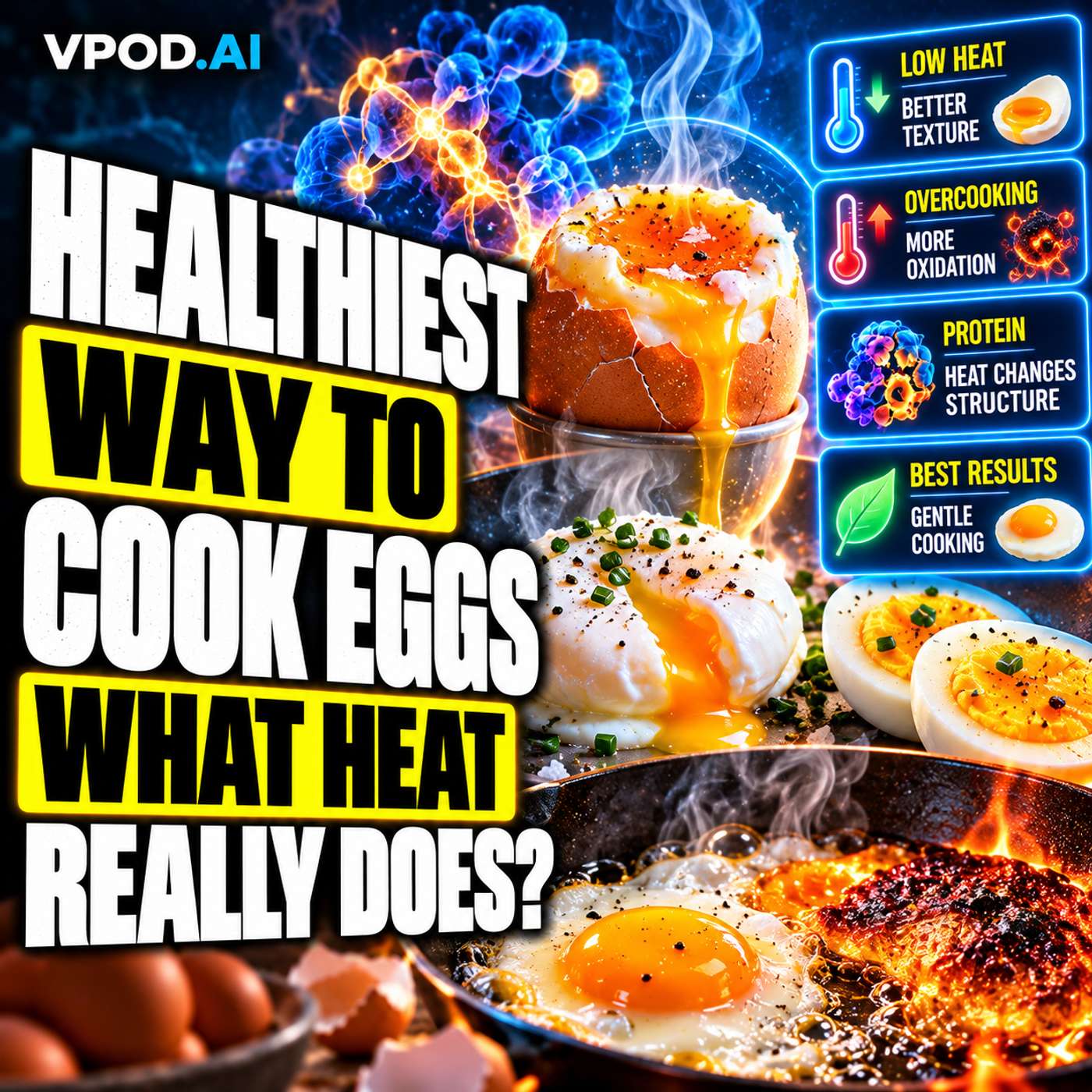
In this episode of vpod.ai, Mike and Susan explore the hidden chemistry behind raw, boiled, poached, and fried eggs—and why cooking temperature, oxygen exposure, yolk integrity, and cooking fat can dramatically change your breakfast at a molecular level.
The conversation starts with protein. Why can cooking actually make egg protein easier to digest? The episode breaks down protein denaturation and explains how heat unfolds tightly structured proteins, making their amino acids more accessible to digestive enzymes.
Then comes cholesterol. The discussion explores the difference between ordinary dietary cholesterol and cholesterol oxidation products, along with why high heat and oxygen exposure are presented as important factors when cooking eggs.
You’ll discover:
• Why the episode recommends cooking eggs instead of eating them raw
• How heat changes the structure and digestibility of egg protein
• What protein denaturation actually means
• The difference between boiling and high-heat frying
• How cholesterol oxidation products are formed
• Why keeping the yolk intact is discussed as important
• What happens when eggs are scrambled or cooked aggressively
• How cooking oils can react to heat and oxygen
• Why the episode favors moderate temperatures when frying
• How gentle cooking may help preserve nutrients found in egg yolks
• The roles of choline, lutein, zeaxanthin, and vitamin D discussed in the episode
The takeaway is simple: cooking isn’t merely about making food hot. Temperature, oxygen, cooking time, and technique can change food at the molecular level.
Subscribe to vpod.ai for more conversations exploring nutrition, food science, metabolism, and the chemistry behind everyday health.