




When a strange symptom appears, where do you turn first?
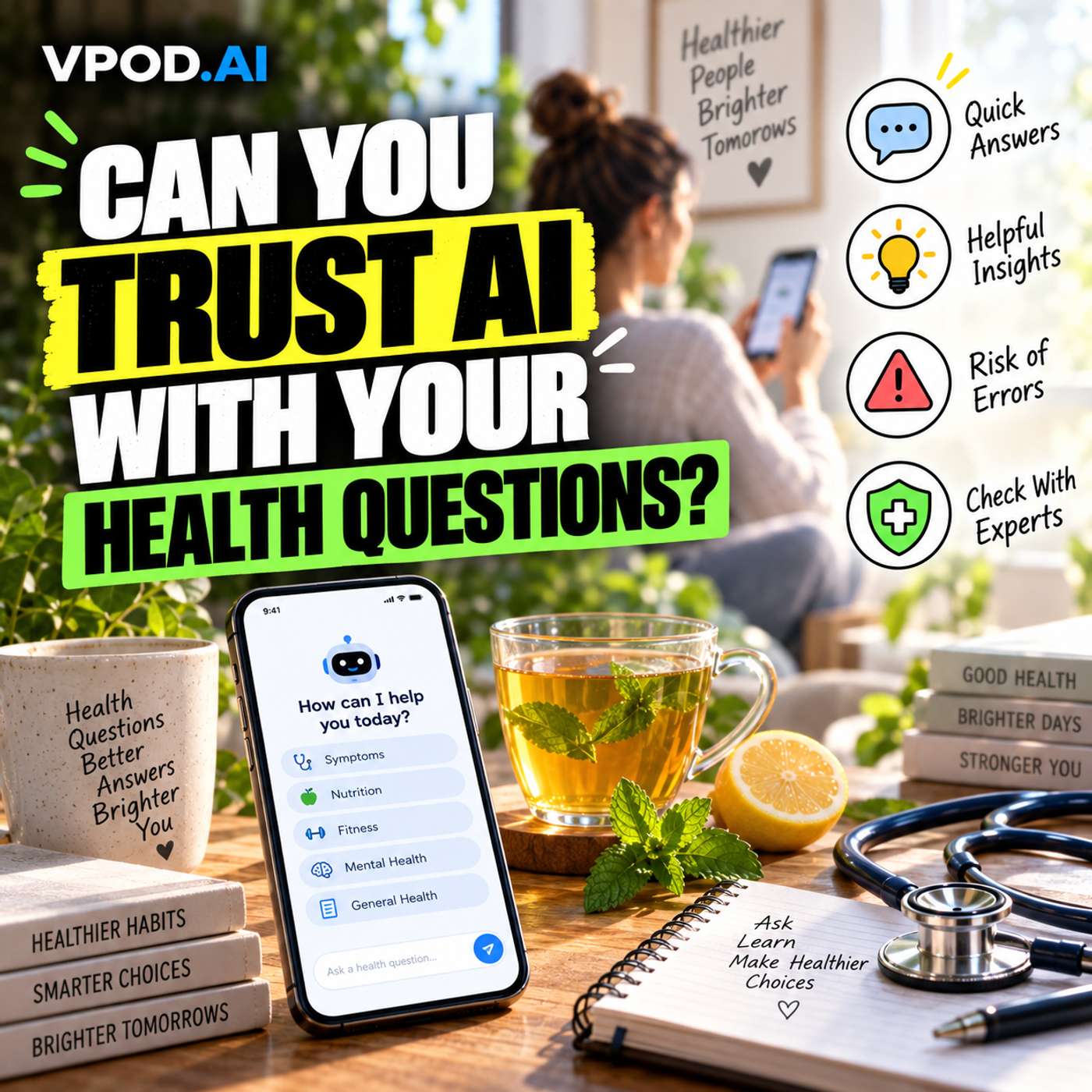
A doctor? Google? Someone who has experienced the same condition? Social media? Or an AI chatbot available instantly at 2 a.m.?
In this episode of vpod.ai, Mike and Susan explore how Americans are navigating an increasingly crowded world of health information—and why having more answers at our fingertips may actually be making medical decisions harder.
Healthcare providers remain the strongest source of trust, with 85% of people turning to doctors or clinicians for health information. But the landscape is rapidly changing. People are also seeking advice from peers, social media platforms, health websites, and AI chatbots, often using several sources at once.
The episode examines:
• Why 66% of people seek health information from others facing similar conditions
• How lived experience and personal stories can influence us differently than clinical statistics
• Why 36% use social media for health information even though many question its accuracy
• How convenience is driving people toward AI chatbots and short-form health content
• Why younger adults are especially likely to use AI and social media for medical questions
• How insurance, income, race, education, and access to healthcare affect where people search for answers
• Why frequent exposure to digital health content can increase perceived credibility
• How influencers, likability, and physical appearance can become shortcuts for medical authority
• The growing political divide surrounding trust in healthcare providers, government agencies, health websites, and news organizations
• Why 76% of people encounter conflicting health information
• How information overload can create anxiety, confusion, and analysis paralysis
One of the episode’s most surprising findings is that digital fluency does not necessarily equal health-information literacy. Adults under 30 report greater difficulty judging health information accuracy than adults over 65.
As AI becomes more conversational, another question emerges: What happens when an AI system can reproduce not only medical information, but also the warmth, empathy, and storytelling that make advice from another person feel trustworthy?
The future of digital health may not simply depend on which source knows the most. It may depend on which source feels easiest, most familiar, and most human.
Listen to the full episode and consider your own habits: When health information conflicts, what—or who—becomes your anchor?
Subscribe to vpod.ai for more conversations exploring technology, human behavior, and the forces reshaping everyday decisions.