



Do you actually know what your blood pressure numbers mean—or whether you’re measuring them correctly?
In this episode of vpod.ai, Mike and Susan break down blood pressure, hypertension, home monitoring, and the everyday factors that can influence your readings.
From understanding systolic and diastolic pressure to choosing the correct cuff size, this conversation explores what those numbers represent and why accurate measurement matters.
You’ll learn:
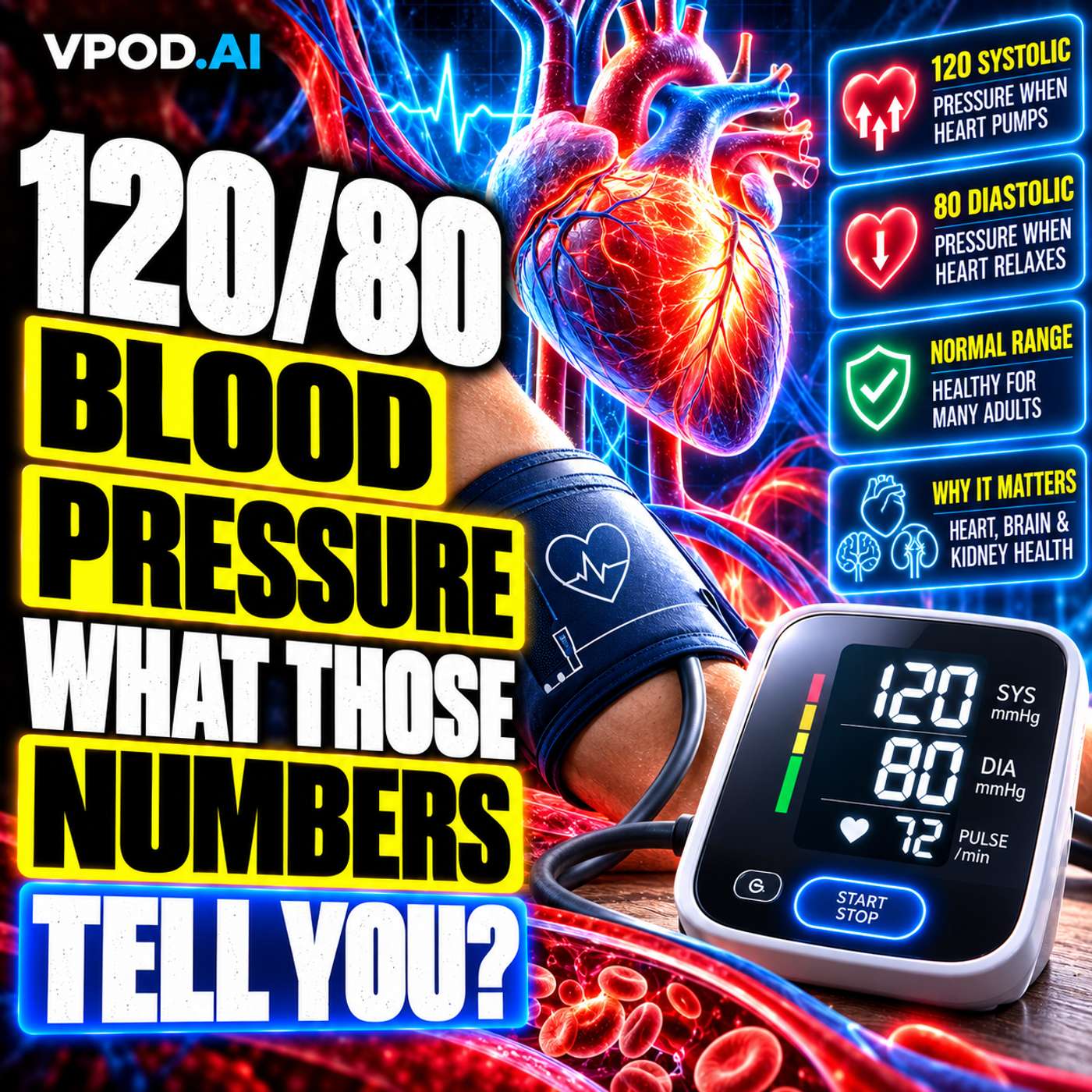
• What systolic and diastolic blood pressure represent
• What the 120/80 benchmark means in the episode
• How elevated blood pressure and hypertension are categorized
• Why blood pressure patterns can differ in children and adults
• How sodium, potassium, exercise, tobacco, alcohol, and hydration relate to blood pressure
• Why dehydration may influence blood pressure
• How to prepare before checking your blood pressure
• Why caffeine, exercise, smoking, posture, and talking can affect a reading
• Why the correct blood pressure cuff size matters
• Why an upper-arm monitor is discussed for home measurements
• What the episode says about stage 1 and stage 2 hypertension
• When extremely high blood pressure may require urgent medical attention
The episode also discusses a hypertensive crisis threshold of 180/120 mmHg or higher and describes symptoms such as chest or back pain, shortness of breath, difficulty speaking, vision changes, weakness, or numbness as reasons to seek immediate emergency care.
Blood pressure can be easy to overlook because checking it takes only a few moments. But knowing your numbers—and measuring them correctly—can provide important information about your cardiovascular health.
This episode is for educational purposes and does not replace medical advice, diagnosis, or treatment. If you have concerns about your blood pressure or cardiovascular health, speak with a qualified healthcare professional.
Subscribe to vpod.ai for more conversations about cardiovascular health, nutrition, metabolism, and the science behind your body.