
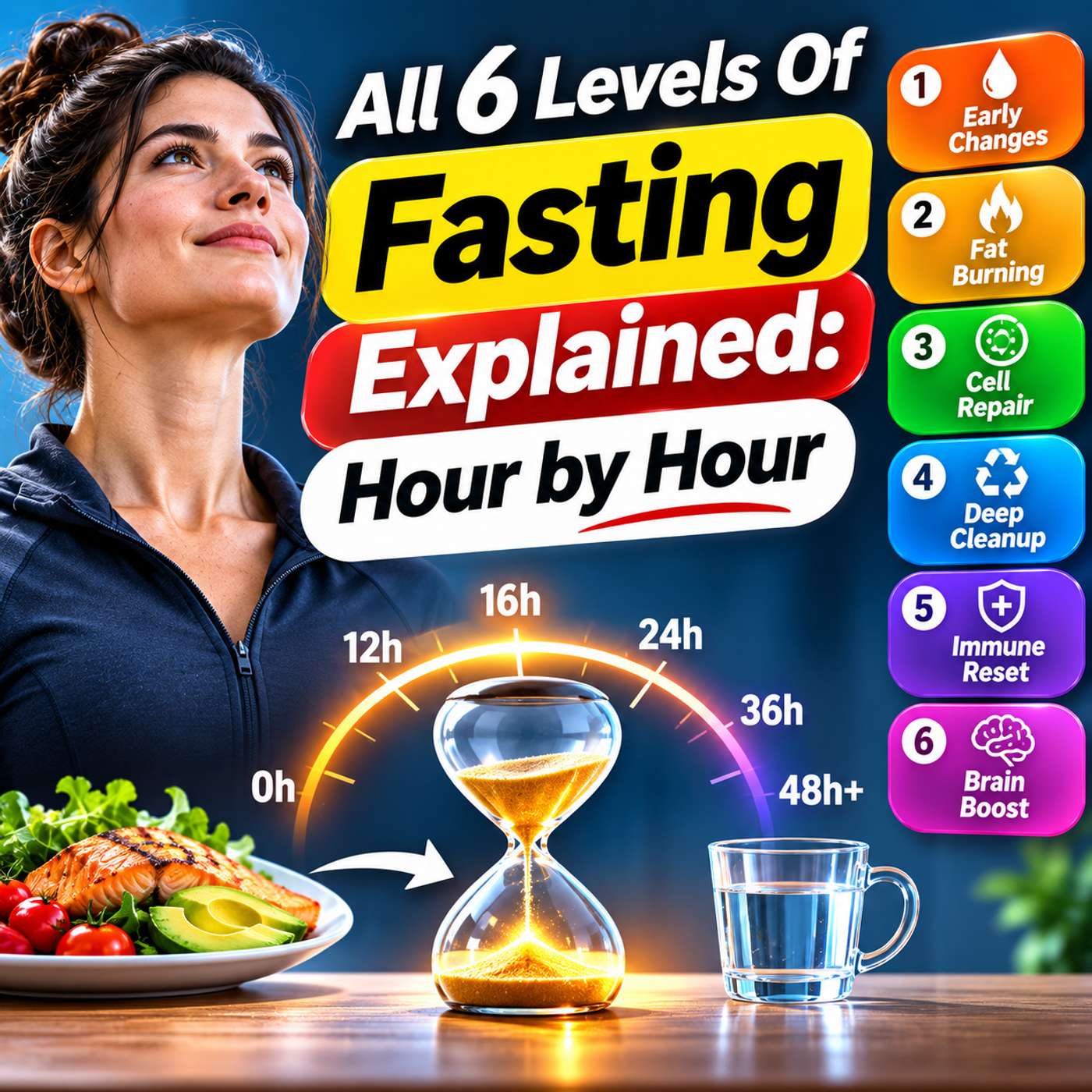





What really happens inside your body when you stop eating for 12, 16, 24, 48, or even 72 hours? Could taking a break from food influence your metabolism, cellular repair, brain function, and immune health?
In this episode of vpod.ai, host Mike and resident expert Susan explore the fascinating science of fasting, revealing how the human body adapts to periods without food. From declining insulin levels and fat burning to autophagy, ketosis, and changes in growth hormone production, they break down the biological processes that may occur during different fasting windows.
The conversation begins with a surprising question: When does your body actually enter a fasted state? Mike and Susan discuss how meal timing, digestion, and insulin influence the transition from using recently consumed food to drawing on stored energy.
As the fasting window extends, they explore the roles of autophagy, cellular recycling, ketone production, hunger hormones, and metabolic flexibility. They also examine research into prolonged fasting and immune cell regeneration, while emphasizing the importance of medical supervision for extended fasts.
In this episode, you’ll discover:
- What happens during the first 12 hours of fasting and how insulin affects energy storage.
- How intermittent fasting may influence autophagy and cellular recycling.
- Why the 16-hour fasting window attracts attention for metabolic health.
- How the body increases fat burning and ketone production during longer fasts.
- Why hunger often arrives in waves and how the hormone ghrelin influences appetite.
- The relationship between fasting, ketones, and reported improvements in mental clarity.
- What researchers are investigating about gut health and inflammation during prolonged fasting.
- How human growth hormone changes during fasting and what that means for muscle preservation.
- Why breaking a 48-hour or 72-hour fast requires careful consideration.
- What early research suggests about prolonged fasting, stem cells, and immune system regeneration.
- How consistent meal timing may support metabolic flexibility and circadian rhythms.
Beyond the hour-by-hour biology, Mike and Susan address an important question: Is fasting about pushing your body to its limits, or is the greater benefit found in developing consistent eating habits that support metabolic health?
From overnight fasting to extended periods without food, this episode explores the science, potential benefits, and limitations of giving your body a break from constant food intake.
Join Mike and Susan for an engaging conversation about intermittent fasting, metabolism, cellular health, and the biological systems that help your body adapt when food is temporarily unavailable.
Listen now to explore what fasting may reveal about your body’s natural ability to manage energy, respond to hunger, and maintain cellular function.
Enjoyed this episode? Subscribe to vpod.ai, share it with someone interested in fasting and metabolic health, and tune in for more fascinating conversations about science, health, and the human body.
Interested in sponsoring vpod.ai? Visit https://vpod.ai to feature your message across major podcast platforms for just $25.
Medical note: Extended fasting is not appropriate for everyone. The research discussed does not establish that specific fasting durations reliably trigger all the claimed benefits in humans. Consult a qualified healthcare professional before attempting prolonged fasting, particularly if you take medication or have an underlying medical condition.