

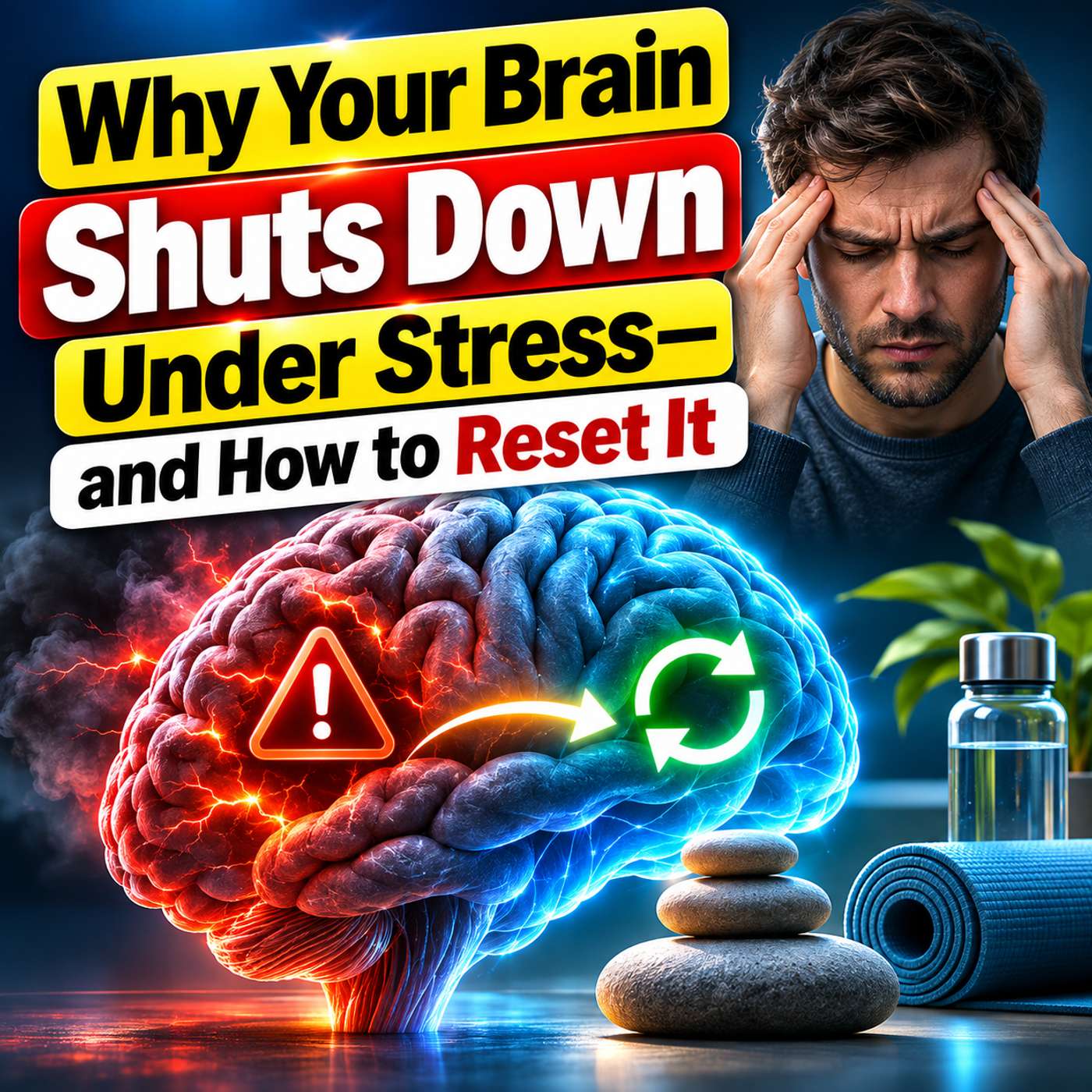





What happens when life knocks you down and you can’t seem to get back up? Why do some people recover from devastating setbacks while others remain stuck for months or even years? The answer may lie in how your brain responds to stress, detects control, and learns resilience.
In this episode of vpod.ai, host Mike and expert Susan explore the neuroscience of mental resilience, revealing why emotional shutdown isn’t simply a lack of willpower and how small, deliberate actions can help rebuild your capacity to recover from adversity.
Drawing on decades of psychological research, including Martin Seligman’s work on learned helplessness, Salvatore Maddi’s studies of psychological hardiness, and George Bonanno’s research on resilience after trauma, this conversation challenges conventional ideas about mental toughness.
Discover why resilience isn’t about suppressing emotions, avoiding discomfort, or pretending everything is fine. It’s about developing the flexibility, sense of control, and practical habits that help you move forward when life becomes overwhelming.
In this episode, you’ll discover:
- The neuroscience of resilience: How the brain responds to uncontrollable stress and why emotional shutdown can occur.
- Learned helplessness vs. learned control: How psychological research changed our perspective on why people give up.
- Three hidden resilience traps: How avoidance disguised as self-care, waiting for fairness, and tying failure to identity can keep you stuck.
- The power of small actions: Why completing one manageable task can help restore a sense of control after a setback.
- Building mental toughness through discomfort: How voluntarily facing manageable challenges can strengthen your ability to handle adversity.
- Emotional flexibility: Why resilient people adapt their emotional responses rather than suppressing difficult feelings.
- Building a stronger identity: How relationships, meaningful commitments, hobbies, and personal goals create stability when one part of life falls apart.
- The hidden social cost of resilience: Why becoming emotionally stronger can sometimes leave you feeling isolated or overlooked.
Mike and Susan also examine the long-term Kauai resilience study and Viktor Frankl’s perspective on choosing your response to difficult circumstances, highlighting the role of supportive relationships, meaningful effort, and personal agency.
Whether you’re recovering from failure, navigating a major life transition, experiencing prolonged stress, or simply looking to develop greater emotional strength, this episode offers a practical perspective on building resilience.
The goal isn’t to become someone who never struggles. It’s to become someone who knows how to recover.
Your next step doesn’t have to be dramatic. Sometimes rebuilding resilience begins with one small action that reminds you that you still have influence over what happens next.
Listen now to explore the science of resilience, discover the habits that support emotional recovery, and learn how to train your brain to face life’s challenges with greater flexibility and confidence.
Subscribe to vpod.ai for more conversations exploring psychology, neuroscience, human behavior, and personal growth. Share this episode with someone who could use a fresh perspective on navigating life’s setbacks.