

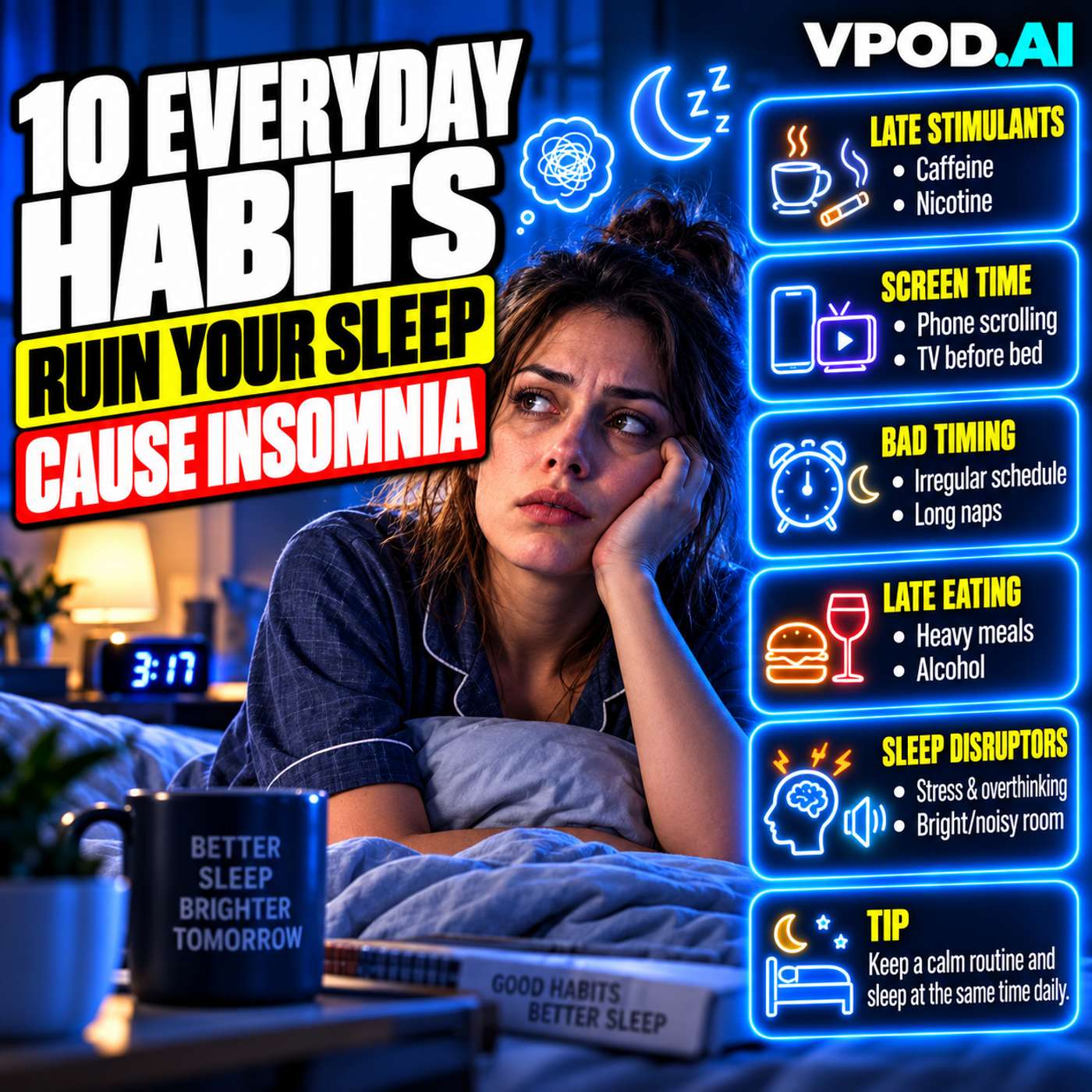





Why do you keep waking up at 2 or 3 AM, even when you’re doing everything you can to sleep better? The answer might be hiding in your everyday routine. From late-night workouts and evening meals to that seemingly relaxing glass of wine, common habits could be disrupting your sleep without you realizing it.
In this episode of vpod.ai, host Mike and sleep expert Susan explore 10 everyday habits that sabotage sleep quality, contribute to insomnia, and leave you feeling exhausted the next morning.
Going beyond familiar sleep hygiene advice, they examine the biology behind restless nights, including how caffeine affects adenosine, why alcohol disrupts REM sleep, how body temperature influences deep sleep, and what happens when your brain begins associating bedtime with stress instead of relaxation.
You’ll discover:
- How heavy meals before bedtime can trigger acid reflux, nighttime bathroom trips, and interrupted sleep.
- Why alcohol may help you fall asleep faster but contribute to waking up at 3 AM.
- How caffeine and nicotine interfere with your natural sleep pressure and sleep cycles.
- Why intense evening exercise can delay sleep by raising your heart rate and core body temperature.
- How scrolling through your phone before bed affects melatonin production and nighttime alertness.
- Why a cool, dark, quiet bedroom supports deeper, more restorative sleep.
- How inconsistent bedtimes and wake-up times disrupt your circadian rhythm.
- Why sacrificing sleep for extra screen time can damage next-day focus and productivity.
- How long daytime naps can make falling asleep at night more difficult.
- Why staying in bed while struggling to sleep can reinforce insomnia and how stimulus control techniques can help.
Mike and Susan also discuss cognitive behavioral therapy for insomnia (CBT-I), the role of sleep apnea in nighttime disruptions, and practical changes that may help you establish healthier sleep habits.
Whether you’re struggling to fall asleep, waking up repeatedly throughout the night, or feeling tired despite spending hours in bed, this episode offers a closer look at the behaviors and biological processes influencing your rest.
Better sleep isn’t just about getting more hours in bed. It’s about creating the conditions your body needs to rest.
Listen now to discover which daily habits could be keeping you awake and what you can change to improve your sleep quality.
Subscribe to vpod.ai for more conversations exploring health, science, and the everyday habits that influence your well-being. If this episode helps you rethink your nighttime routine, share it with someone who could use a better night’s sleep.