
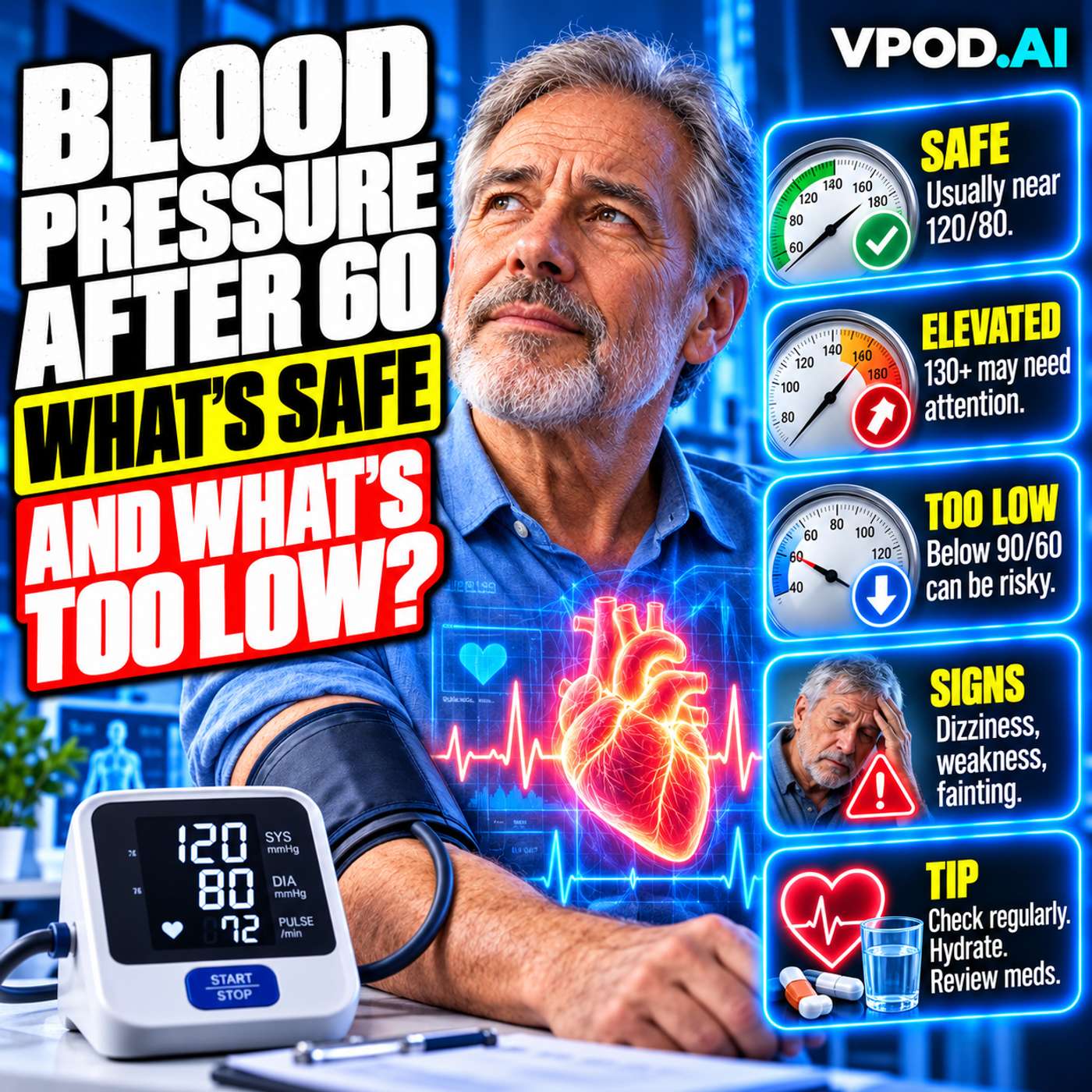





Is higher blood pressure normal after age 60, or could it be silently damaging your heart, brain, and kidneys? And can lowering blood pressure too much actually become dangerous for older adults?
In this episode of vpod.ai, host Mike and resident expert Susan explore the science of blood pressure after 60, including healthy blood pressure targets, isolated systolic hypertension, medication risks, and why managing hypertension becomes more complicated as we age.
As arteries naturally lose elasticity over time, systolic blood pressure often increases while diastolic pressure may remain stable or decline. But just because high blood pressure becomes more common with age doesn’t mean it’s harmless.
Mike and Susan explain why a blood pressure target below 130/80 mmHg is often recommended for adults with hypertension, while emphasizing that treatment must be personalized according to overall health, frailty, symptoms, and medication tolerance.
The conversation also examines the landmark SPRINT trial, which investigated intensive blood pressure control and revealed both cardiovascular benefits and important treatment-related risks.
In this episode, you’ll discover:
- Why blood pressure often increases after age 60 and how aging affects arterial flexibility.
- What systolic and diastolic blood pressure numbers reveal about cardiovascular health.
- Why isolated systolic hypertension, such as 150/70, is common among older adults.
- How uncontrolled high blood pressure can increase the risk of heart disease, stroke, and kidney damage.
- What the SPRINT trial revealed about intensive blood pressure treatment.
- Why excessively low blood pressure can contribute to dizziness, fainting, and falls.
- How orthostatic hypotension affects older adults when standing or changing positions.
- Why frailty, multiple medications, and low diastolic pressure can change treatment decisions.
- How to measure blood pressure accurately at home and avoid misleading readings.
- Why white coat hypertension and masked hypertension can complicate diagnosis.
- How sodium reduction, the DASH diet, regular exercise, and sleep apnea treatment may support healthier blood pressure.
- How ACE inhibitors, ARBs, calcium channel blockers, and thiazide-type diuretics help control hypertension.
- When extremely high blood pressure requires urgent medical attention.
One of the most important questions discussed is whether lower blood pressure is always better.
While intensive blood pressure control can reduce cardiovascular risks for selected patients, overly aggressive treatment may create serious complications, particularly for frail older adults or those experiencing recurrent dizziness and falls.
The episode also explains why a low diastolic pressure deserves special attention. Lowering the top number too aggressively can sometimes reduce the pressure needed to supply blood to the heart muscle.
Mike and Susan also explore practical blood pressure management strategies, including proper home monitoring techniques, lifestyle changes, and the different ways common hypertension medications work.
They discuss the importance of recognizing severe blood pressure elevations, including readings around 180/120 mmHg or higher, and identifying warning symptoms such as chest pain, difficulty breathing, sudden weakness, or vision changes that require emergency care.
The central message is clear: managing hypertension after 60 isn’t simply about achieving the lowest possible reading. It’s about reducing long-term cardiovascular risk while preserving safety, independence, and quality of life.
Whether you’re over 60, caring for an aging family member, or interested in preventing cardiovascular disease, this episode offers a detailed conversation about blood pressure targets, hypertension treatment, and the factors that influence heart health as we age.
Join Mike and Susan as they explore why personalized blood pressure management matters and how everyday habits can influence cardiovascular health over time.
Subscribe to vpod.ai for more conversations about health, medical research, aging, preventive care, and the science behind everyday wellness. Share this episode with anyone interested in managing high blood pressure or supporting healthier aging.
Medical Disclaimer: This episode is intended for general educational purposes and should not replace personalized medical advice, diagnosis, or treatment. Always consult a qualified healthcare professional before changing blood pressure medication or treatment goals.
Want to promote your business? Sponsor vpod.ai for just $25 and get your message featured across major podcast platforms, including Apple Podcasts, Spotify, and Amazon Music. Visit https://vpod.ai to learn more.