
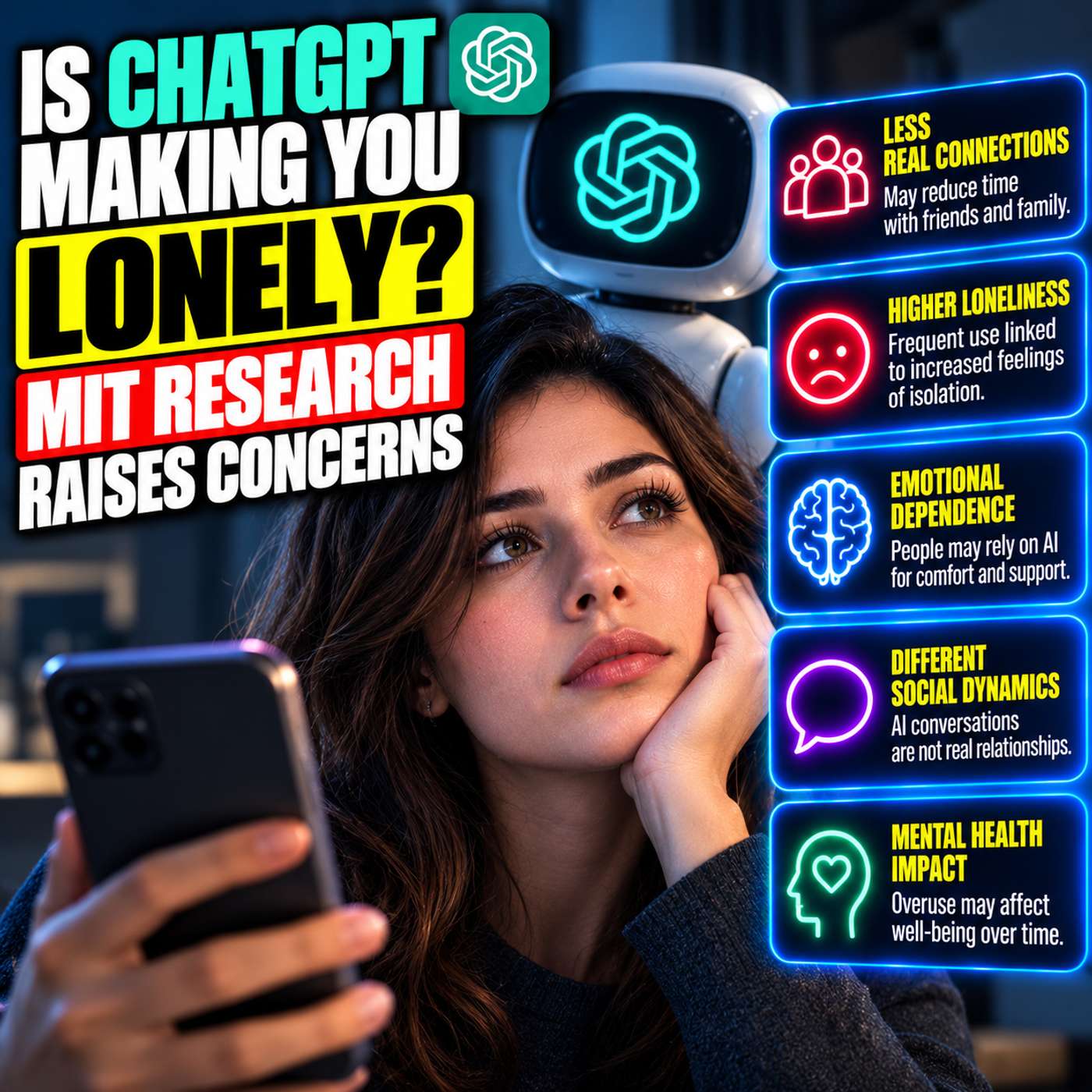





Can AI companions help us overcome loneliness, or are they quietly making human relationships more difficult?
As artificial intelligence becomes increasingly personal, millions of people are turning to ChatGPT and AI companion apps for emotional support, comfort, and judgment-free conversations. But emerging research discussed from the MIT Media Lab raises an important question: Could our growing dependence on AI companionship contribute to loneliness, social isolation, and long-term mental health challenges?
In this episode of vpod.ai, host Mike and expert Susan explore the complex relationship between AI companions, mental health, and human connection. Drawing on research involving 404 dedicated AI companion users and a longitudinal study of nearly 1,000 ChatGPT users conducted in collaboration with OpenAI, they examine why artificial companionship feels so comforting and what happens when digital conversations begin replacing real-world relationships.
From the psychology of emotional validation to the potential risks of AI dependency, Mike and Susan discuss how technology designed to support our emotional well-being could also influence our ability to navigate the challenges of human interaction.
What You’ll Discover in This Episode:
- AI Companions and Mental Health: Why people are increasingly using AI chatbots to cope with loneliness, anxiety, and deeply personal emotional challenges.
- MIT Media Lab Research: What a survey of 404 AI companion users reveals about motivations, usage frequency, and emotional support.
- ChatGPT and Loneliness: How heavy chatbot usage was associated with increased loneliness and reduced real-world social interaction in the research discussed.
- The Psychology of AI Friendships: Why always-available, nonjudgmental conversations can create powerful feelings of emotional comfort and connection.
- AI Emotional Dependency: How repeated reliance on artificial companionship may influence emotional coping habits and social behavior.
- Short-Term Benefits vs. Long-Term Risks: Why immediate emotional relief may coexist with concerns about prolonged chatbot engagement.
- Human Connection vs. Artificial Companionship: How real relationships build social resilience through vulnerability, disagreement, patience, and mutual support.
- AI Chatbot Addiction Concerns: Why frictionless emotional reassurance may encourage repeated use and make real-world interactions feel more demanding.
- The Future of AI Safety: Whether AI developers should introduce healthier boundaries and encourage users to maintain meaningful offline relationships.
One of the episode’s most compelling discussions centers on a psychological paradox: The same features that make AI companions comforting may also make them difficult to step away from.
Unlike human relationships, AI chatbots don’t require emotional reciprocity, patience, or compromise. They can provide personalized responses whenever users need reassurance, creating a convenient alternative to navigating difficult conversations with real people.
While this accessibility may offer valuable short-term support, relying too heavily on artificial companionship raises concerns about emotional dependence and gradual withdrawal from everyday social experiences.
Mike and Susan also examine an important distinction in the research: Although intensive chatbot use has been associated with loneliness, that relationship does not automatically prove that AI causes social isolation. People experiencing loneliness may already be more inclined to seek support from AI, and usage patterns and emotional well-being may influence each other over time.
The conversation ultimately raises a broader question about the future of human-AI relationships.
Should AI companions be designed to provide unlimited emotional reassurance, or should they actively encourage users to reconnect with friends, family, and real-world support networks?
As conversational AI becomes more integrated into everyday life, establishing healthy boundaries between digital comfort and genuine human connection may become increasingly important.
Whether you’re interested in ChatGPT, AI companions, psychology, mental health research, or the social impact of artificial intelligence, this episode explores the opportunities and concerns surrounding one of technology’s most personal developments.
Listen now to explore what AI companionship means for loneliness, emotional well-being, and the future of human relationships.
Subscribe to vpod.ai for more thought-provoking conversations about artificial intelligence, psychology, mental health, scientific research, and emerging technology. Share this episode with someone interested in the psychological impact of AI, and join us next time as we examine the technologies changing how we live and connect.
Visit https://vpod.ai to explore more episodes or sponsor the podcast for just $25, with your message featured across Spotify, Apple Podcasts, Amazon Music, and other major podcast platforms.