
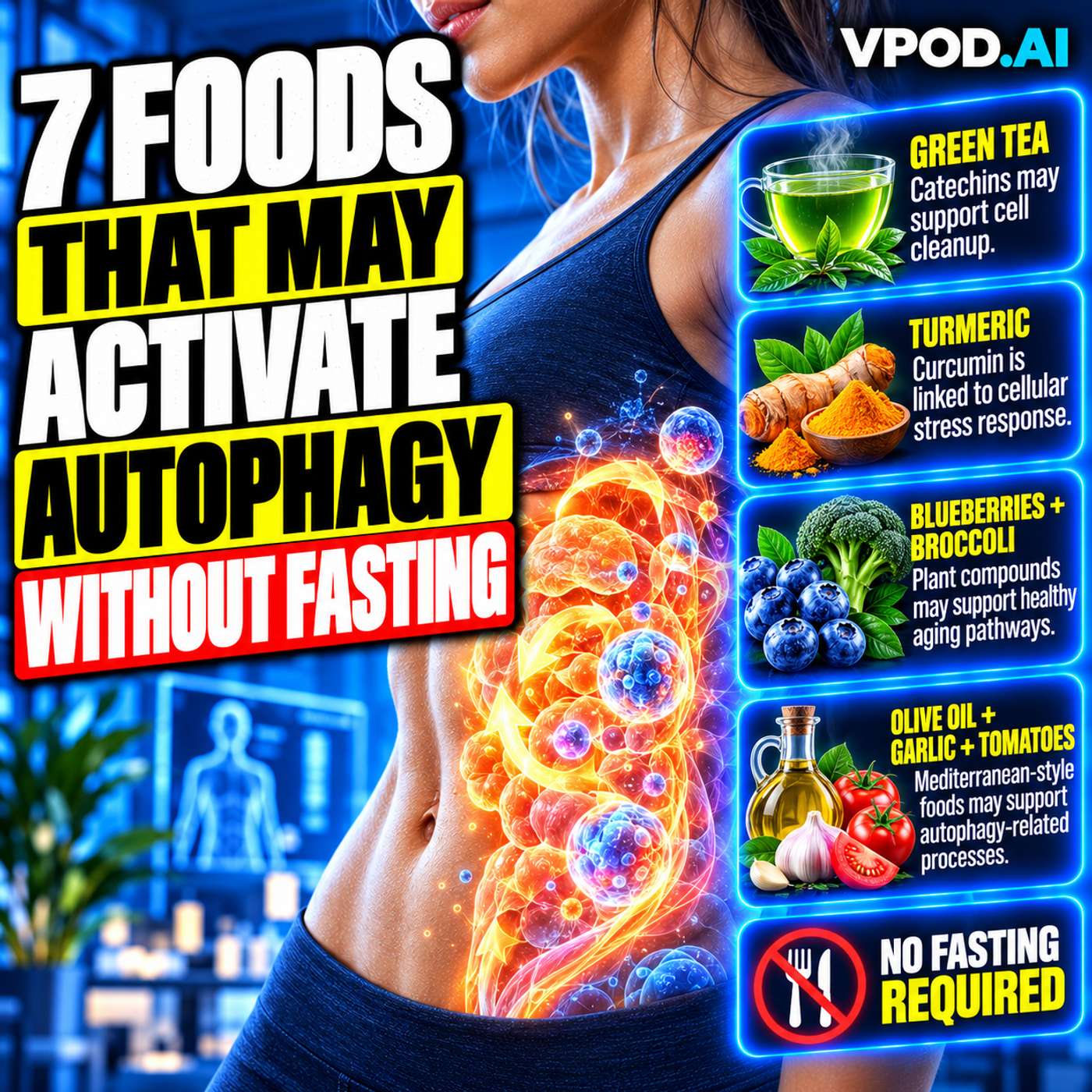





What if some of the foods you eat every day could help activate your body’s natural cellular cleaning and repair processes, even when you’re not fasting?
Autophagy is the process your body uses to recycle damaged cellular components, remove cellular waste, and maintain healthy cell function. While fasting is widely discussed as a way to influence this process, emerging research is exploring whether certain food compounds can affect the same biological pathways.
In this episode of vpod.ai, host Mike and guest expert Susan explore seven everyday foods and the fascinating molecular science behind their potential effects on autophagy, cellular health, and healthy aging.
From black coffee and green tea to extra-virgin olive oil, turmeric, mushrooms, and dark chocolate, they examine how naturally occurring compounds interact with cellular pathways such as AMPK, mTOR, and sirtuins.
What You’ll Discover in This Episode:
- Black Coffee and Chlorogenic Acid: How compounds in coffee may influence AMPK signaling, a pathway involved in cellular energy balance and autophagy.
- Green Tea and EGCG: Why green tea polyphenols are being studied for their potential effects on cellular repair and growth-related signaling.
- Extra-Virgin Olive Oil: The role of oleocanthal and its potential influence on inflammation and cellular maintenance pathways.
- Turmeric and Black Pepper: How curcumin interacts with cellular signaling and why piperine is often discussed in relation to curcumin absorption.
- Spermidine-Rich Foods: Why wheat germ, shiitake mushrooms, aged Parmesan cheese, and soybeans are attracting attention in healthy aging research.
- Barberries and Berberine: How berberine may influence AMPK activity and metabolic processes associated with cellular maintenance.
- Dark Chocolate, Grapes, and Resveratrol: The potential relationship between resveratrol, sirtuins, and cellular stress-response pathways.
Mike and Susan also explore the biological relationship between mTOR and AMPK, why nutrient availability influences cellular activity, and how scientists are investigating the connection between diet, autophagy, and longevity.
The episode brings these concepts into everyday life through practical food examples, including whole-leaf green tea, cold olive oil dressings with turmeric and black pepper, spermidine-rich ingredients, and dark chocolate.
Whether you’re interested in longevity science, cellular health, nutrition, intermittent fasting, or the biology of aging, this conversation offers a closer look at the research behind food compounds that may influence your body’s natural maintenance systems.
The key takeaway? Food does more than provide energy. Its bioactive compounds can interact with complex cellular signaling networks, although evidence that these foods reliably activate meaningful autophagy or slow aging in humans remains limited.
Listen to the full episode to explore the science of autophagy, discover the seven foods discussed, and consider how everyday nutrition fits into the broader conversation about metabolic health and healthy aging.
Subscribe to vpod.ai for more conversations about health, nutrition, longevity research, and the science behind everyday wellness. Share this episode with someone interested in the connection between food and cellular health.
Interested in sponsoring vpod.ai? For just $25, your message can be featured across major podcast platforms, including Apple Podcasts, Spotify, Amazon Music, and more.
Visit https://vpod.ai to get started.
Health Disclaimer: This episode is intended for educational purposes only and does not replace professional medical advice. Many autophagy findings discussed come from laboratory or animal research and should not be interpreted as proven anti-aging benefits in humans. Fasting, supplements, and dietary changes may not be appropriate for everyone. Consult a qualified healthcare professional before making significant changes to your health routine.