

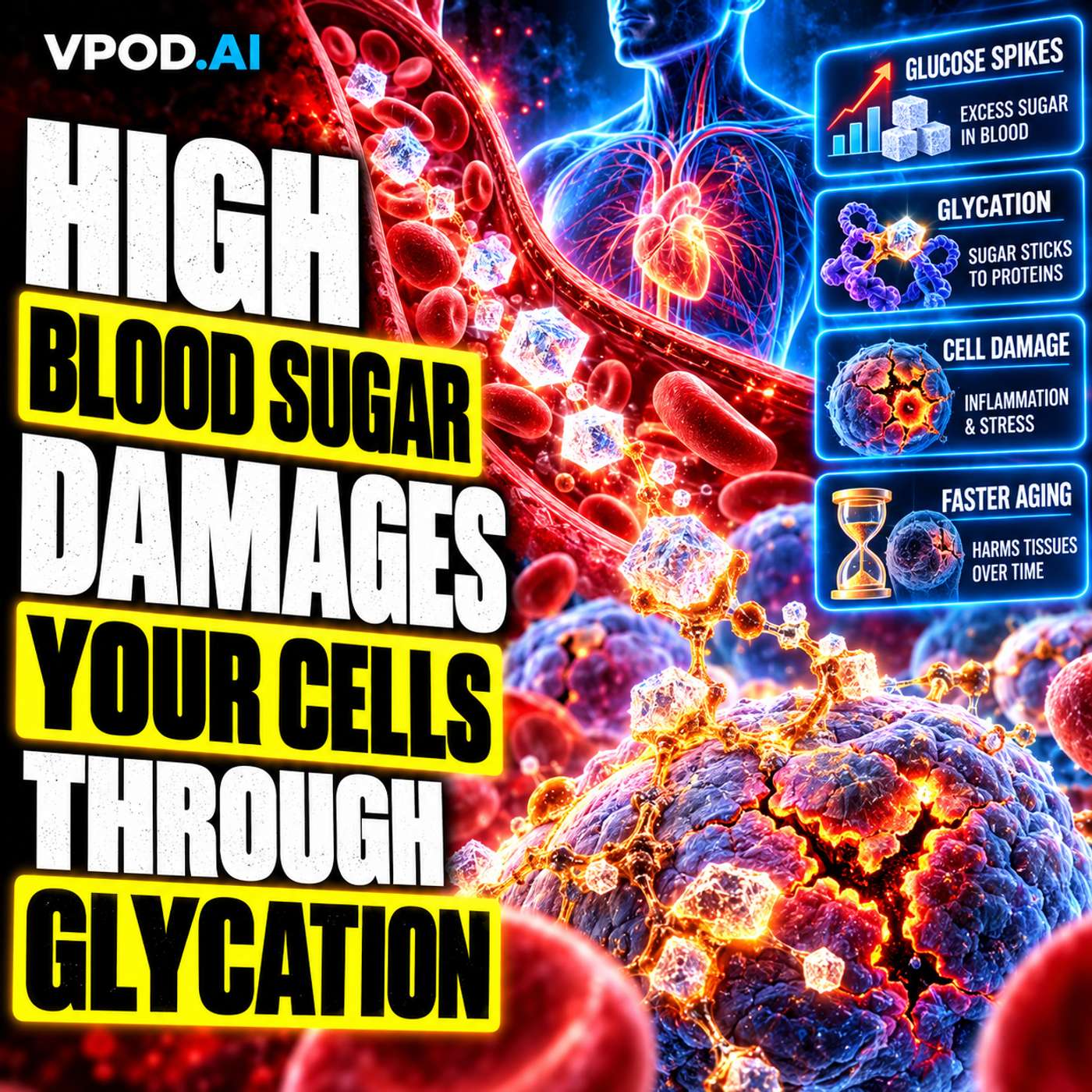





Your A1C can measure average blood sugar—but does it reveal everything happening to your cells?
In this episode of vpod.ai, Mike and Susan explore glycation: the process described in the episode in which glucose reacts with proteins and contributes to the formation of advanced glycation end products (AGEs).
The conversation takes a closer look at vitamin B1, transketolase, and benfotiamine—a fat-soluble derivative of thiamine discussed for its potential role in protecting cells from glucose-related damage.
You’ll learn:
• What glycation is and how AGEs form
• How elevated glucose can affect proteins and blood vessels
• Why vitamin B1 is important for glucose metabolism
• How transketolase redirects reactive glucose byproducts
• Why standard thiamine and benfotiamine behave differently
• What the episode says about benfotiamine and diabetic neuropathy
• The connection discussed between glycation and vascular health
• Why the brain may also be vulnerable to glycation
• What A1C measures—and what the episode argues it may not reveal about cellular damage
• The supplementation amounts discussed in the research covered in the episode
The episode also examines an important idea: two people with the same A1C could potentially have different underlying biological conditions and levels of glucose-related cellular stress.
This discussion is educational and should not replace personalized medical advice, diagnosis, or treatment. Talk with a qualified healthcare professional before starting a new supplement, particularly if you have diabetes, take medication, or have an existing medical condition.
Subscribe to vpod.ai for more conversations exploring nutrition, metabolism, and the biology behind everyday health.