

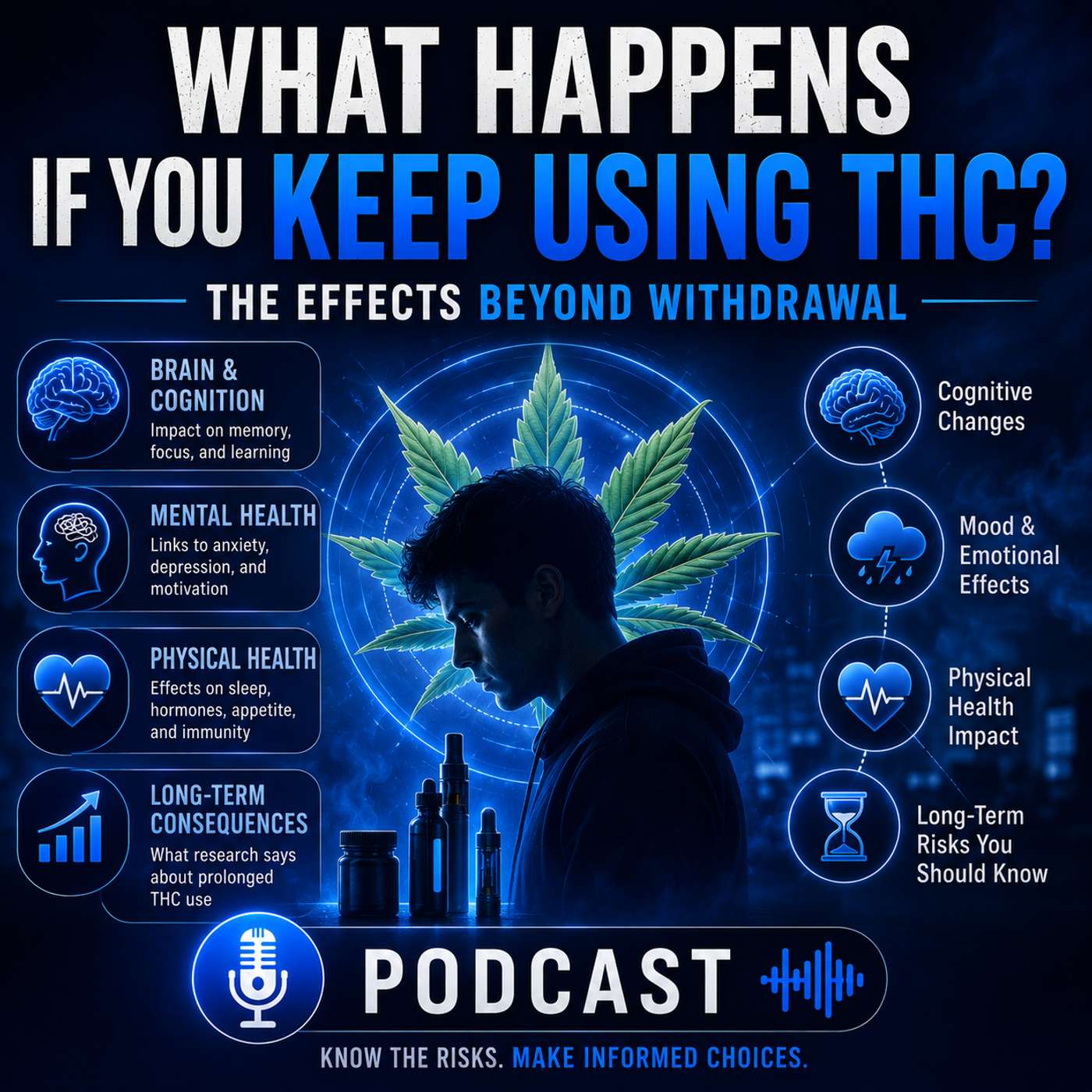





What happens if you don’t suddenly stop using cannabis?
After a listener raised that important question, this episode examines a distinction that often gets lost in conversations about cannabis: withdrawal symptoms from stopping and the potential consequences of continued use are not the same thing.
Using the analogy of a check-engine light, the conversation explores why avoiding an abrupt stop doesn’t necessarily mean avoiding health risks. Continued regular cannabis use carries a different risk profile from cannabis withdrawal, involving areas such as memory, attention, learning, executive function, respiratory health, mental health, dependence, and cannabis use disorder.
The episode also breaks down what happens when regular users suddenly stop. You’ll hear about the Marijuana Withdrawal Symptom Checklist and symptoms including cravings, irritability, nervousness, depression, anger, restlessness, sleep problems, decreased appetite, strange dreams, and headaches.
The discussion explores:
• How THC interacts with the endocannabinoid system
• Why continued cannabis use can affect memory and executive function
• The difference between tolerance, dependence, and cannabis use disorder
• Why stopping cannabis can trigger sleep problems and vivid dreams
• How REM rebound may contribute to strange dreams after quitting
• Acute risks that can affect occasional cannabis users
• The dramatic increase in THC potency in modern cannabis products
• How flower, edibles, vape products, extracts, and dabs complicate dosing
• Why cannabis impairment is difficult to measure using blood THC levels
• Challenges surrounding cannabis, driving, and DUI thresholds
• Concerns about pesticides, combustion, concentrates, and product testing
• The differences between continuing use, stopping suddenly, and gradually reducing use
The episode also examines the regulatory challenges created by today’s cannabis market, where products can differ dramatically in potency and delivery method. While older cannabis research often focused on much lower THC concentrations, the transcript discusses commercial flower reaching around 24% THC or more and concentrates reaching dramatically higher levels.
The central takeaway is simple: withdrawal and the consequences associated with continued use arise through different mechanisms. Avoiding withdrawal does not automatically mean avoiding the risks associated with cannabis use.
Follow vpod.ai for more educational conversations examining the science, health questions, and policy issues shaping everyday life.