
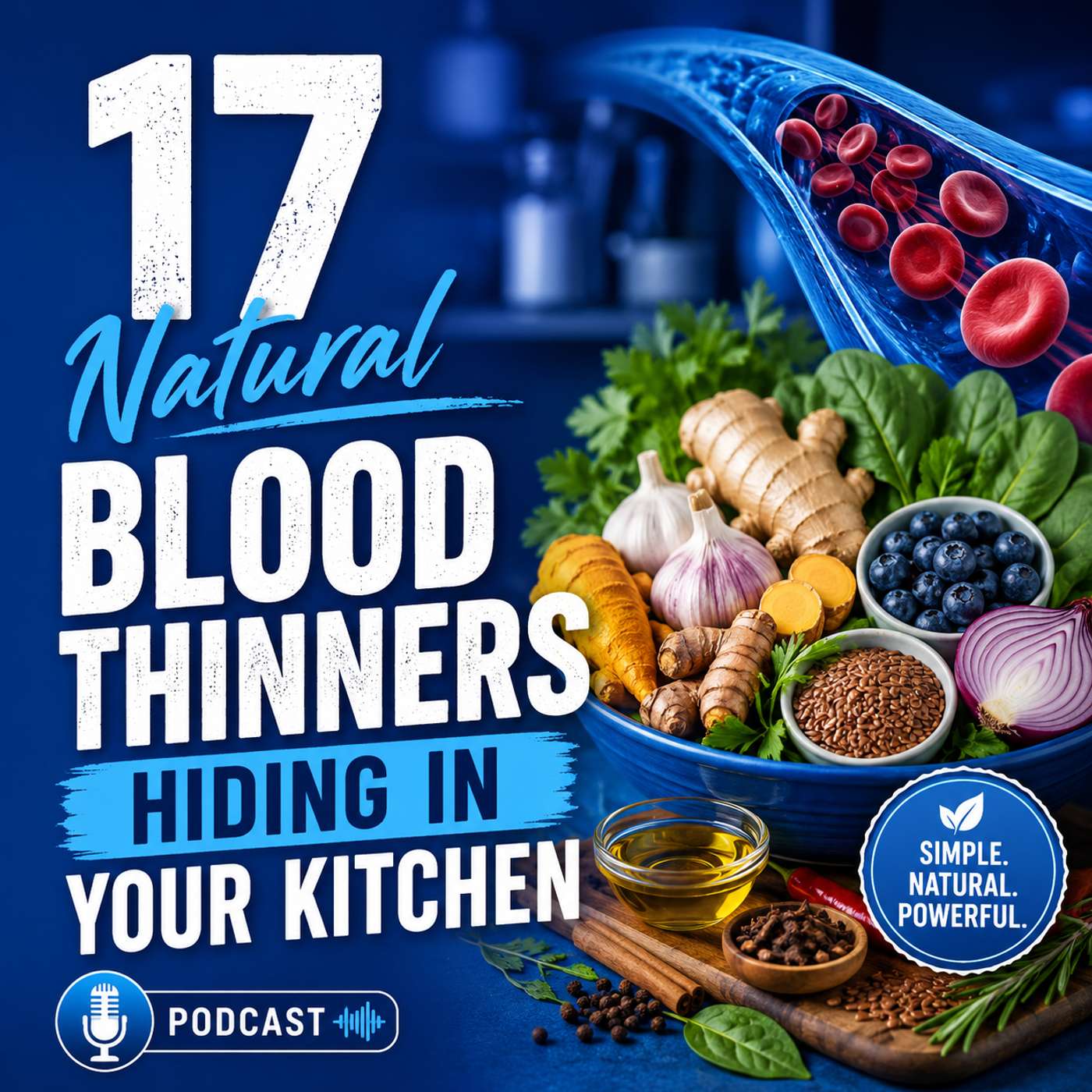





Your spice rack may be doing more than adding flavor to dinner. Everyday ingredients such as garlic, ginger, cinnamon, cayenne, and turmeric contain compounds that can affect platelets, coagulation, and the way blood clots form.
In this episode of vpod.ai, Mike and Susan explore 17 spices, foods, herbs, and supplements described in the episode as natural blood thinners—and explain why “natural” does not automatically mean harmless.
You’ll hear about:
- The difference between anticoagulants and antiplatelets
- Why blood thinners help prevent clots but do not dissolve existing clots
- How cayenne’s salicylates produce aspirin-like effects
- How cinnamon’s coumarin can interfere with vitamin K
- What happens chemically when garlic is chopped or crushed
- Why research on ginger’s anti-clotting effects produces mixed results
- How turmeric and curcumin may interact dangerously with prescription anticoagulants
- The changing guidance surrounding cranberry juice and blood thinners
- The “vitamin K paradox” involving leafy greens and anticoagulant medication
- How vitamin E, fish oil, evening primrose oil, and grape seed extract may affect clotting
- The potential effects of dong quai, ginkgo biloba, NAC, melatonin, willow bark, and aloe vera
- Why combining supplements with prescription blood thinners can increase bleeding risk
- What NSF, USP, and ConsumerLab testing seals can tell you about supplements
The conversation also tackles one of the episode’s biggest safety messages: supplements aren’t regulated in the same way as prescription medications, and natural products should never be used to replace prescribed blood thinners without medical direction.
Could heart care eventually include highly personalized dietary recommendations based on an individual’s clotting biology? Mike and Susan close by exploring how future “culinary prescriptions” could change the relationship between food and cardiovascular medicine.
Listen to the full episode, subscribe to vpod.ai, and share it with someone who wants to know what everyday foods and supplements may be doing inside the bloodstream.