
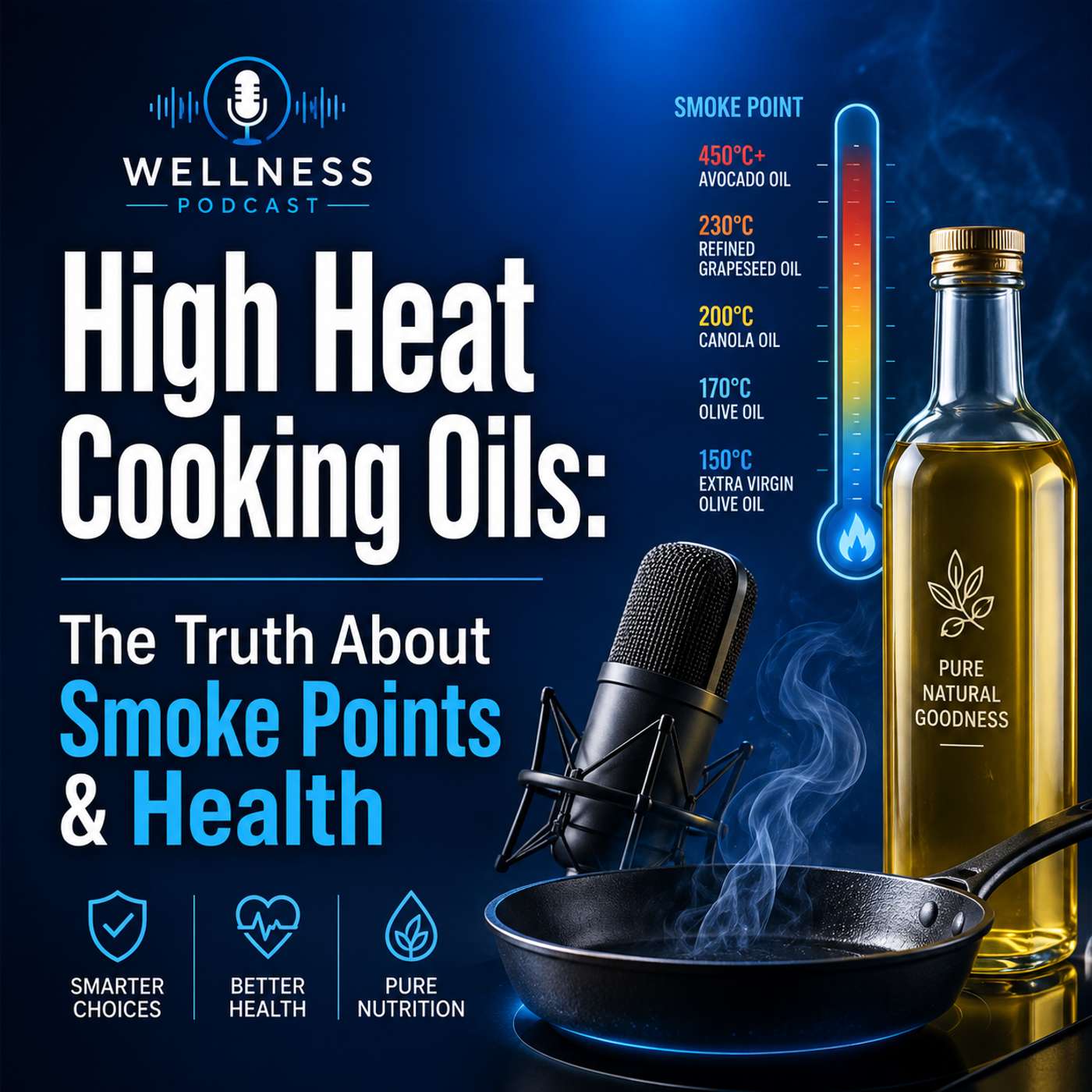





What really happens when cooking oil starts smoking in your pan? This episode explores the science behind high-heat cooking, revealing how different oils respond to heat and why choosing the right one can affect both flavor and long-term health.
Join Mike and guest expert Susan as they break down the chemistry of smoke points, explain what happens when oils degrade, and compare popular cooking oils for searing, roasting, stir-frying, grilling, and deep frying.
In this episode, you’ll learn:
- What a smoke point is and why it matters.
- How overheated oils can form harmful compounds.
- Why 392°F is an important benchmark for high-heat cooking.
- The strengths and limitations of algae oil, avocado oil, rice bran oil, peanut oil, refined olive oil, and common seed oils.
- Why extra virgin olive oil isn’t always the best choice for high-heat cooking.
- Which oils should never be heated, including flaxseed oil.
- The difference between heat stability and heart health.
- Practical tips for matching the right cooking oil to your cooking method.
Whether you’re a home cook, health-conscious eater, or simply curious about the science of cooking, this episode offers practical insights to help you make smarter choices in the kitchen.
Subscribe for more evidence-based discussions on nutrition, food science, and healthier cooking techniques. If you found this episode helpful, share it with friends and leave a review to help more listeners discover the show.