
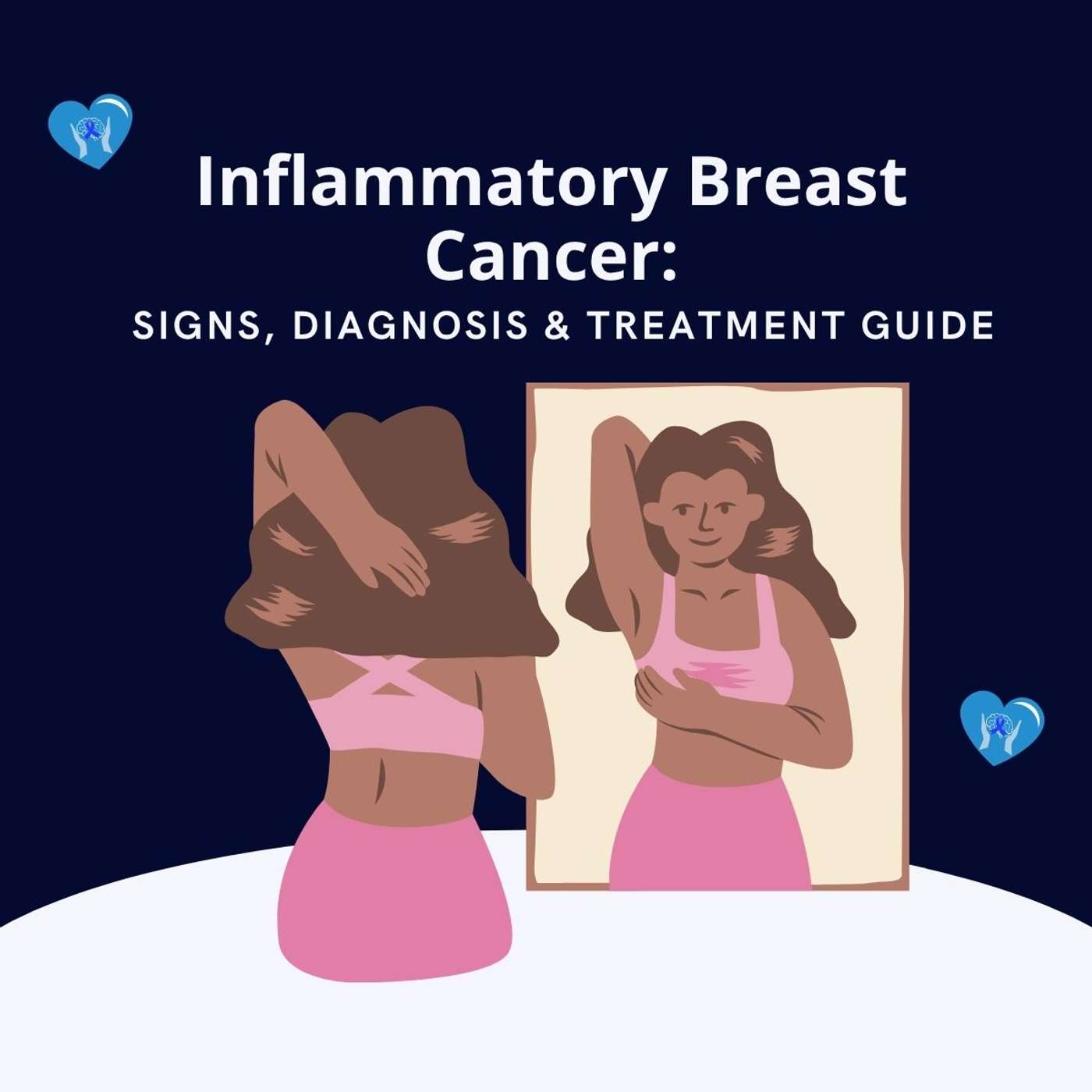





In this powerful deep dive into Inflammatory Breast Cancer (IBC), we unpack:
⚠️ What it is & why it’s unique
- IBC is rare and aggressive—only 1–5% of breast cancers—but often mimics benign conditions like mastitis.
- Unlike other breast cancers, it typically doesn’t form a lump, instead caused by cancer blocking lymph vessels, which leads to redness, heat, swelling, and the telltale “peau d’orange” texture.
🔍 How it’s diagnosed
- Diagnosis relies on recognizing visual symptoms involving at least a third of the breast within six months, aided by diagnostic mammograms, ultrasounds, and breast MRI.
- Biopsy is needed—often including skin—to confirm breast cancer, as IBC is a clinical diagnosis (T4D stage) based on presentation.
- Tests include HER2 and hormone receptors (ER/PR), genetic profiling (PIK3CA, AKT1, PD-L1), and BRCA screening. Fertility preservation is considered early due to treatment risks.
🛡 Treatment overview
- Neoadjuvant systemic therapy: Chemo—plus HER2‑targeted or immunotherapy if needed—to shrink disease pre‑surgery.
- Surgery: Modified mastectomy with lymph node removal; lumpectomy is not recommended for IBC.
- Radiation (adjuvant): Typically 5–6 weeks post‑surgery; newer techniques may shorten this duration.
- Post‑treatment: Endocrine therapy (if HR‑positive) for 5–10 years; evolving use of ADCs, CDK4/6 inhibitors, immunotherapy, and emerging targeted agents.
📊 Prognosis & research
- IBC is always advanced at diagnosis—either stage III (locally advanced) or stage IV (metastatic).
- 5‑year survival: ~53% with regional spread, ~22% with distant metastasis—underscoring both its severity and urgency for ongoing research.
- Dedicated funds like the IBC Network Foundation (>$1.8M invested) are driving breakthroughs—identifying IBC‑specific mutations and enabling innovative therapies.
👥 The power of advocacy
IBC demands patient vigilance. Your voice can be life‑saving—insist on follow-up if symptoms persist, ask in-depth questions, seek specialists with IBC expertise, and explore clinical trials. Peer support also helps tremendously.